
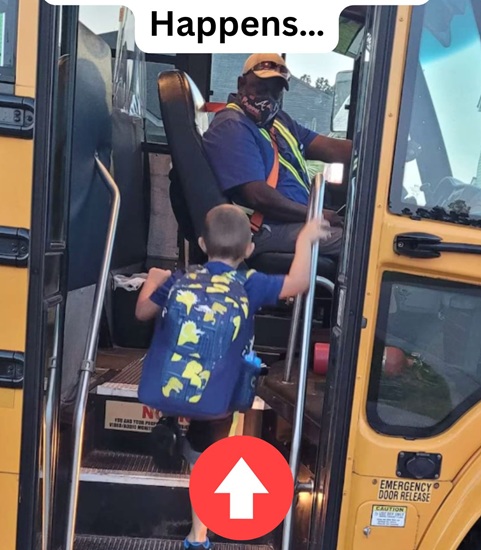
A South Carolina mother has shared a heartfelt account highlighting the positive influence of a school bus driver who played an important role in her young son’s early school experience.
The story involves Kelly Isenberg, a mother from Summerville, South Carolina, and her six-year-old son Kameron, who attends school within the Berkeley County School District.
According to the family’s account, Kameron began building a meaningful connection with his school bus driver shortly after starting kindergarten, during what was an important and emotional transition period for him.
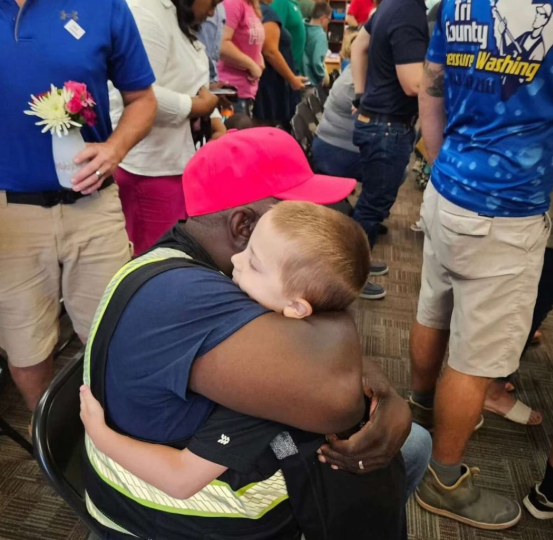
The bus driver, identified as Charles Frierson, first met Kameron on his very first day of school, when the child was adjusting to new routines, classmates, and a structured school environment.
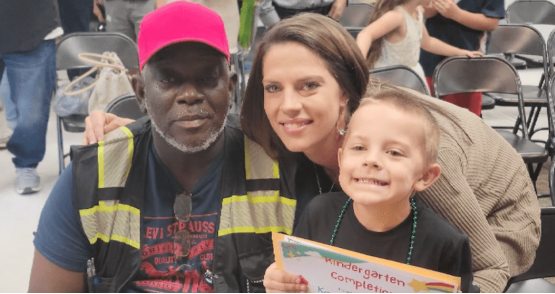
From the beginning, the interaction between the child and the bus driver was described as warm and friendly, with Kameron feeling comfortable enough to initiate conversations during his daily rides.
Over time, these short conversations became a consistent part of Kameron’s routine, helping him feel more at ease during his commute to and from school each day.
Kameron’s teacher, Stephanie Williams, later noted that the bond between the student and the bus driver appeared to develop naturally, without any formal arrangement, through simple daily interaction.
As the relationship continued, Kameron began to look forward to seeing Frierson, which contributed positively to his attitude toward school and his overall emotional adjustment in the classroom.
His mother, Kelly Isenberg, observed changes in her son’s confidence and behavior, explaining that he gradually became more comfortable with school activities and social interactions.
She later shared her appreciation in a letter to the school district, emphasizing how meaningful the support from the bus driver had been during her son’s transition into kindergarten.
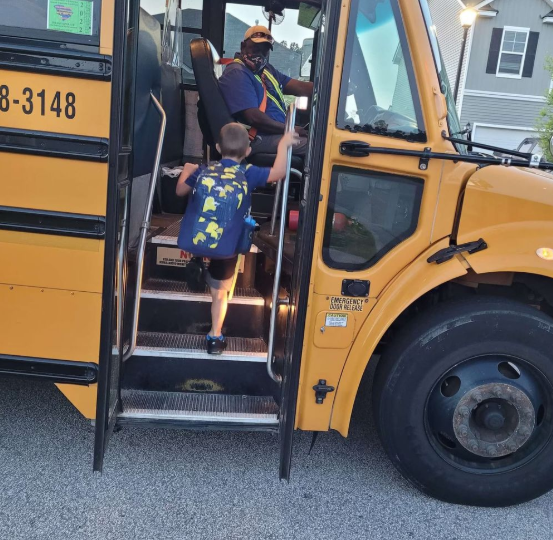
According to the family’s description, Frierson often engaged Kameron in friendly conversations during bus rides, helping to create a welcoming and supportive environment for the child.
In addition to daily greetings and conversations, Frierson occasionally offered small acts of kindness, such as sharing food during breaks or encouraging Kameron during school-related activities.
These gestures, while simple, contributed to building trust and familiarity between the child and the bus driver over time.
The family also mentioned that Frierson made efforts to stay involved in Kameron’s life beyond the school bus, including attending youth activities such as baseball games when possible.
This level of engagement helped strengthen the bond between them, turning a routine transportation role into a meaningful mentorship-like relationship.
Frierson, who has worked as a school bus driver for several years within the district, has described his role as more than just transporting students from one place to another.
He has stated in general terms that interacting with students during daily routes, even through brief conversations, can have a positive impact on their confidence and school experience.
For Kameron, those daily interactions appeared to provide emotional reassurance during a period of adjustment, helping him feel more secure and supported in a new environment.
His teacher reported that Kameron became more engaged in classroom activities over time and showed noticeable improvement in his willingness to participate.
She also observed that he appeared happier and more confident when arriving at school, particularly on days when he interacted with Frierson during the bus ride.
The relationship between student and driver became a consistent source of encouragement, reinforcing positive feelings toward school attendance and learning routines.
Over time, Kameron began referring to Frierson in an affectionate and familiar way, reflecting the comfort he felt in their interactions.
Frierson, in return, described the child as “my little buddy,” a phrase that reflected the friendly and supportive nature of their connection.
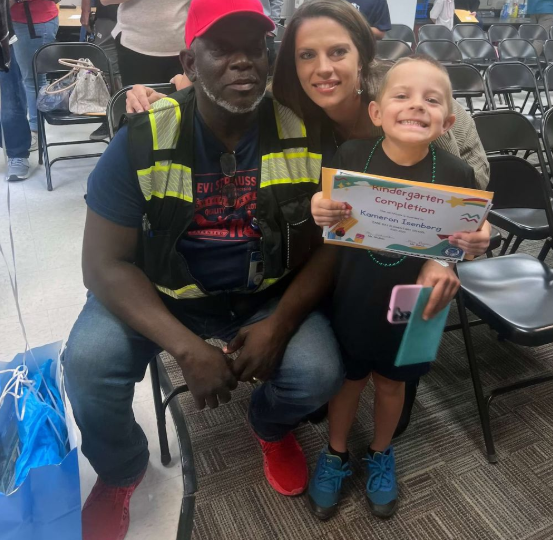
This mutual recognition helped reinforce a sense of trust, which is often important for young children adapting to structured educational environments.
The family noted that even outside the regular school year, Kameron continued to express excitement about maintaining contact with Frierson.
Plans for the future included simple activities such as meeting for ice cream or continuing friendly conversations during the school year.
While these plans are informal, they highlight the lasting impression that small daily interactions can have on a child’s emotional development.
Educators often emphasize the importance of supportive relationships in early childhood education, particularly during transitional stages such as starting kindergarten.
In this case, the connection between a student and a transportation staff member demonstrated how school community roles can extend beyond their traditional responsibilities.
The Berkeley County School District, like many school systems, relies on bus drivers not only for transportation but also as trusted adults who interact with students daily.
This story reflects how those interactions can sometimes play a meaningful role in shaping a child’s comfort level and overall school experience.
For Kameron’s family, the experience has been described as a positive example of community care within the school environment.
His mother expressed gratitude for the kindness shown by Frierson, emphasizing how unexpected support can make a meaningful difference in a child’s life.
The story also highlights how early school experiences can be influenced by consistent, positive relationships outside the classroom setting.
While teachers play a central role in education, other staff members, including bus drivers, cafeteria workers, and support personnel, also contribute to a child’s daily environment.
In Kameron’s case, the bus ride became more than transportation, turning into a space of comfort, conversation, and emotional support.
The gradual development of this bond shows how trust can form through repeated, simple interactions over time.
Such relationships can be especially important for young children who are still learning how to navigate school routines and social settings.
As Kameron continues his education, his family hopes that these positive early experiences will support his long-term confidence and development.
The story has resonated with many because it highlights the impact of kindness in everyday roles that are often overlooked.
It serves as a reminder that small gestures, repeated consistently, can contribute significantly to a child’s sense of safety and belonging.
Ultimately, the relationship between Kameron and Charles Frierson reflects how community members within a school system can positively influence a child’s life.
Through patience, attention, and simple acts of kindness, a routine school bus ride became a meaningful part of a young student’s journey.

