
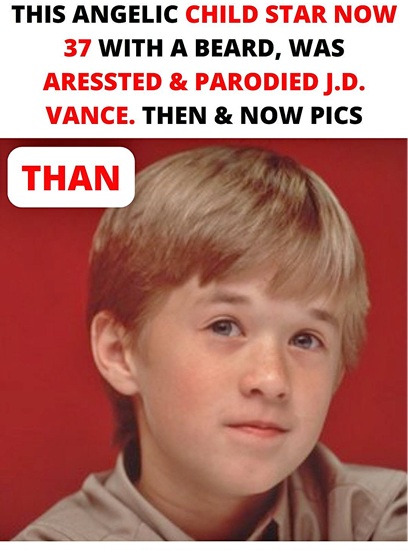
Haley Joel Osment became famous at an age when most children are still discovering what they enjoy doing, yet his career continued long after the intense attention surrounding his earliest roles began to fade. Born on April 10, 1988, in Los Angeles, Osment entered the entertainment industry as a young child and quickly developed a reputation for delivering unusually mature performances. Over time, his appearance changed naturally, his roles became more varied, and his career shifted away from child-star fame toward steady work as an adult performer.
Before The Sixth Sense made him internationally recognizable, Osment had already begun building experience in commercials, television, and film. One of his earliest major movie appearances came in 1994, when he played Forrest Gump Jr. in Forrest Gump. Although the role was small, appearing opposite Tom Hanks in such a successful film introduced Osment to a very large audience at an unusually young age.
He also worked regularly on television during the early years of his career. Osment appeared in productions such as Thunder Alley and The Jeff Foxworthy Show, while taking guest roles in other series. These projects gave him experience working on professional sets and performing alongside adult actors long before he received the role that would define his childhood career.
That role came in 1999 with M. Night Shyamalan’s The Sixth Sense. Osment played Cole Sear, a frightened and emotionally isolated boy who tells psychologist Malcolm Crowe, played by Bruce Willis, that he can see dead people. The film became one of the most successful and widely discussed movies of the year, and Osment’s performance received enormous critical attention.
The famous line “I see dead people” became deeply assoiated with the movie, but Osment’s work went far beyond delivering one memorable sentence. His performance required him to communicate fear, sadness, loneliness, trust, and vulnerability with unusual control for a child actor. His scenes with Toni Collette, who played Cole’s mother, were especially important to the emotional impact of the story.
Osment’s work earned him an Academy Award nomination for Best Supporting Actor. He was only eleven years old when the film became an international phenomenon, placing him among the relatively small number of young performers ever recognized by the Academy in an acting category. The nomination transformed him from a successful child actor into one of Hollywood’s most closely watched young talents.
The attention surrounding The Sixth Sense also created a public image that remained attached to Osment for years. Audiences remembered the blond hair, round face, serious expression, and emotional intensity of Cole Sear. Because the film became so famous, many viewers continued to associate Osment with that childhood appearance even as he naturally grew older.
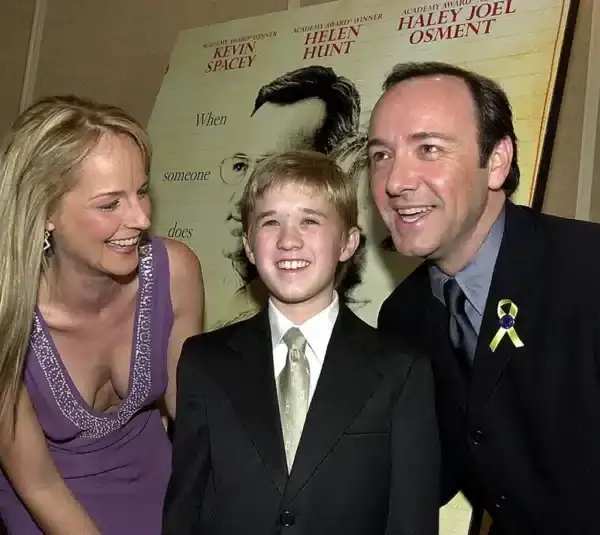
Rather than disappearing after one successful role, Osment continued working in major productions. In 2000, he starred in Pay It Forward alongside Helen Hunt and Kevin Spacey. The film gave him another emotionally demanding role and further established that his success in The Sixth Sense had not been limited to a single performance.

The following year, Osment starred in Steven Spielberg’s A.I. Artificial Intelligence. He played David, an advanced robotic child designed to experience love and attachment. The role required him to portray a character who was not human while still creating an emotional connection with viewers, making the performance very different from the naturalistic fear he expressed in The Sixth Sense.
A.I. Artificial Intelligence explored themes including abandonment, identity, family, artificial consciousness, and the desire to be loved. Osment carried much of the film’s emotional weight despite working within an ambitious science-fiction story. His performance received additional recognition and demonstrated his ability to handle complex material while still very young.
In 2003, Osment appeared in Secondhand Lions alongside Michael Caine and Robert Duvall. The film allowed him to work with two highly experienced actors while transitioning toward roles better suited to his changing age. He also continued doing voice work, including the role of Mowgli in The Jungle Book 2.
Voice acting became an especially important part of Osment’s career through the Kingdom Hearts video-game franchise. He provided the English-language voice of Sora, the central character in the series, and continued returning to the role across multiple installments. That work introduced him to an audience that knew him for something completely separate from his early film career.

As Osment moved through adolescence, he faced a challenge that affects many actors who become famous as children. Audiences had a very specific image of him, but he was growing into an adult. His face, body, voice, hairstyle, and overall appearance changed naturally, while the types of roles available to him also changed.
Instead of trying to preserve the exact image that had made him famous, Osment gradually moved toward a different professional identity. Education became part of that process. He attended New York University and studied at the Tisch School of the Arts, spending several years developing his craft and experiencing life away from the constant attention of Hollywood.
Osment graduated from NYU in 2011. His years in New York helped create some distance between his childhood career and his adult work. He also gained experience in theater, an environment that requires a different type of discipline from film and television.
In 2008, Osment made his Broadway debut in David Mamet’s American Buffalo. Performing live onstage meant working without the safety of repeated takes or editing. Theater required sustained concentration, timing, and consistency, giving him another way to expand beyond the roles audiences had known him for as a child.
Some viewers interpreted the quieter period of his career as though he had disappeared from acting completely. That description is misleading. Osment continued working, studying, performing onstage, doing voice work, and eventually taking increasingly varied film and television roles.
As an adult, he deliberately moved toward characters that looked and behaved very differently from the vulnerable children he had once played. Comedy became a significant part of his work. He also accepted eccentric, awkward, villainous, and supporting roles that allowed him to experiment rather than recreate his childhood success.
His credits eventually included projects such as Entourage, Sex Ed, Yoga Hosers, Silicon Valley, Future Man, The Kominsky Method, What We Do in the Shadows, and The Boys. These productions exposed audiences to a very different Osment from the child they remembered from the late 1990s.
His role in Silicon Valley was particularly memorable because he played Keenan Feldspar, an eccentric entrepreneur involved in virtual reality. The performance relied on comedic timing and character behavior rather than nostalgia. It gave Osment an opportunity to disappear into a role instead of simply being recognized as the former child star from The Sixth Sense.
His physical appearance also attracted renewed public attention. As an adult, Osment began wearing facial hair and at times grew a full beard. That naturally made him look very different from the clean-shaven child audiences remembered. Some online headlines exaggerated this change by calling him “unrecognizable,” even though the transformation was simply the result of growing from childhood into adulthood.
Osment himself has spoken humorously about the attention his beard received. In an interview, he explained that he had grown facial hair partly because he thought it might make him less recognizable in public. He joked that the strategy did not necessarily work as well as he had hoped.
The change in appearance actually helped support the type of career he was building. Rather than being limited to youthful or nostalgic roles, Osment could play a wider range of characters. His adult look gave him greater freedom to appear as professionals, villains, comic figures, unusual personalities, and other supporting characters.
His career was not without difficult moments. In 2006, when he was 18, Osment was involved in a car crash in California. He later pleaded no contest to misdemeanor driving under the influence and marijuana possession. The court imposed probation, educational requirements, counseling, and a fine.
The incident became widely reported because Osment had been famous since childhood. Years later, he described it as a serious mistake made when he was young. He has not portrayed it as an inevitable consequence of being a child actor, and he has pushed back against the broader assumption that early fame automatically leads to personal instability.
That perspective is important because former child performers are often discussed through a narrow stereotype. Public conversations can sometimes focus only on those who experience highly visible difficulties. Osment has noted that many young actors also have supportive experiences, continue their education, build stable adult careers, and move through the industry without following the most dramatic public narratives.
His own career demonstrates a more complicated reality. He experienced enormous fame, stepped away from the most intense spotlight, pursued education, worked in theater, continued with voice acting, and gradually established himself as a dependable adult character actor.
Osment’s relationship with The Sixth Sense also appears to have remained positive. He has not tried to erase the role or pretend it did not matter. Instead, he has spoken about the experience with appreciation while continuing to build a career that extends far beyond Cole Sear.
He has specifically recalled working with M. Night Shyamalan and Bruce Willis with respect. Osment has described the trust he felt from the adults around him during production, an important factor for a young performer handling emotionally difficult material.
That support likely contributed to the confidence visible in his performance. Cole Sear is frightened throughout much of the film, yet the character also has moments of intelligence, empathy, and emotional strength. Osment’s ability to balance those qualities became one of the reasons the performance was so widely praised.
The film has remained culturally significant for more than two decades. Its twist ending, atmosphere, performances, and dialogue continue to be discussed, ensuring that Osment will probably always be associated with the movie to some degree.
Rather than treating that association as a burden, he appears to have found a way to let it coexist with his later work. Viewers may recognize him first as Cole, but they can then encounter him in completely different characters across comedy, television, animation, and streaming productions.
His voice work deserves particular attention because it represents one of the most consistent parts of his career. Through Kingdom Hearts, Osment has remained connected to a major entertainment franchise for years. Fans of the games may know his voice even if they are less familiar with his childhood movie roles.
The role of Sora also demonstrates his versatility. Voice acting requires a performer to communicate personality, emotion, and energy without physical expression. Osment has returned repeatedly to the character, helping maintain continuity across a franchise with a large international following.
His younger sister, Emily Osment, also became a successful performer. She became widely known through television projects including Hannah Montana and continued acting into adulthood. The siblings therefore share the unusual experience of growing up in an entertainment family while developing distinct careers.
Haley Joel Osment’s own professional life now spans more than three decades. That longevity is especially notable because his most famous performance arrived before he was a teenager. Many actors would find it difficult to remain active after becoming so strongly identified with a single childhood role.
Osment managed to do so by changing expectations rather than trying to preserve them. He allowed his public image to evolve and accepted roles that did not always place him at the center of a production. Supporting parts, character roles, and comedy became valuable ways to keep expanding his range.
That approach also helped him avoid being trapped by nostalgia. Instead of repeatedly playing versions of the same sensitive child, he began portraying people who could be strange, arrogant, awkward, humorous, threatening, or eccentric.
In Future Man, for example, Osment appeared in a deliberately exaggerated comedic environment. In The Kominsky Method, he worked within a series centered on aging, acting, and relationships. In What We Do in the Shadows, he became part of a highly stylized supernatural comedy.
His appearance in The Boys further demonstrated his willingness to take unusual supporting roles within darker and more satirical material. Each project moved him further away from the narrow image created by his earliest fame.
More recently, Osment continued appearing in film and television projects, including Blink Twice. His ongoing work shows that his career did not depend on a dramatic comeback narrative. He simply continued acting in different forms and genres.
He also appeared as a guest performer in the second season of Netflix’s Wednesday, further connecting him with contemporary streaming audiences. Roles like these show how thoroughly his career has crossed generations.
Someone who first watched Osment in The Sixth Sense as a child may now encounter him in a modern streaming series decades later. Younger viewers, meanwhile, may discover his adult work first and only later realize that he was once one of the most famous child actors in Hollywood.
That generational contrast makes his career especially interesting. His childhood success belongs to one era of Hollywood, while his adult roles exist within an industry increasingly shaped by streaming platforms, ensemble television, franchise voice work, and character-driven comedy.
His transformation therefore involves much more than appearance. The deeper change is professional. Osment moved from being a young leading performer whose face appeared on movie posters to becoming an adult actor comfortable contributing to ensembles and unusual supporting roles.
This shift can sometimes be mistaken for a decline because Hollywood often measures success through constant leading roles. Yet longevity in acting can take many forms. A performer who continues working consistently across different media for decades has achieved something very different from a brief period of celebrity.
Osment’s career reflects that kind of longevity. He has worked in major films, television series, theater, animation, video games, independent productions, and streaming projects. Few performers who began so young manage to develop experience across such a broad range of formats.
His current appearance also reflects the normal passage of time. The child with light hair and soft features from 1999 became a man with facial hair and a more mature appearance. Describing this as a mysterious transformation can make a simple process seem more dramatic than it really is.
The more meaningful story is what happened professionally during those years. Osment continued learning, experimenting, and adapting. He did not remain frozen in the role that made him famous.
That ability to adapt is one reason his career remains active. The entertainment industry changed dramatically between the late 1990s and the 2020s, but Osment found ways to work within each new environment.
His career began during an era dominated by theatrical releases and network television. It later expanded into premium cable, independent film, streaming platforms, large video-game franchises, and modern television comedy.
Through all of those changes, acting remained the central thread. Osment may no longer receive the same kind of intense media attention he experienced at eleven, but that does not mean his career became insignificant.
In many ways, the quieter adult phase allowed him to become more versatile. Without needing to maintain the image of a child prodigy, he could take risks that might once have seemed surprising.
His willingness to appear in comedy has been especially important. Comedy allowed audiences to see a playful and self-aware side of a performer who had originally become famous through serious dramatic material.
That shift also changed the emotional relationship between Osment and viewers. Instead of always seeing him as the frightened boy from The Sixth Sense, audiences could watch him play characters designed to be funny, irritating, strange, or even unsettling in entirely different ways.
Such reinvention is not always easy for former child stars. The public often remembers people at the age when they first became famous, even after decades have passed. Osment’s adult career has gradually challenged that frozen image.
He has also spoken with perspective about the advantages and difficulties of early fame. His comments suggest that he understands how unusual his childhood was while still recognizing that it also gave him opportunities many performers never receive.
The Academy Award nomination remains one of the most important milestones of his early career. Receiving that level of recognition at eleven created expectations that would have been difficult for any young actor to carry indefinitely.
Instead of trying to top that achievement immediately, Osment eventually built a different kind of career. His adult work is less about awards-season intensity and more about range, consistency, and the freedom to take unusual parts.
That does not erase his early accomplishments. The Sixth Sense, A.I. Artificial Intelligence, and Secondhand Lions remain important parts of his filmography and helped establish him as one of the strongest young performers of his generation.
It simply means that those films are now part of a much larger story. Haley Joel Osment is no longer only the child actor who delivered one famous line in 1999.
He is an adult performer with years of training and experience across multiple formats. His résumé includes drama, comedy, theater, animation, video games, independent film, and major television productions.
At 38, Osment has spent most of his life working in entertainment. That fact alone demonstrates how misleading it can be to describe him simply as a former child star.
He began as a child star, but he did not remain one. He became an adult actor who learned how to work without depending entirely on the image that first made him famous.
The beard, mature appearance, and different types of roles are simply visible signs of that larger transition. The real transformation occurred in the choices he made about how to continue performing.
His story is therefore best understood as a gradual evolution rather than a dramatic rise, disappearance, and return. There were periods when mainstream audiences saw less of him, but he continued developing professionally.
Education, theater, voice acting, television, and supporting roles all contributed to that development. Each step moved him further from the narrow expectations attached to childhood fame.
Today, Osment can appear in a project without the entire production depending on nostalgia for The Sixth Sense. That freedom is significant because it allows him to function as a working character actor rather than as a celebrity defined by one period of his life.
For longtime fans, his changing appearance may still create an initial moment of surprise. That reaction is understandable because many people remember him most clearly at age eleven.
Yet the difference between then and now is simply the result of more than two decades passing. The child actor grew up, changed physically, went to university, worked onstage, and continued building a career.
The same performer who once stood beside Bruce Willis in The Sixth Sense can now appear in a modern comedy or streaming series and play an entirely different kind of person.
That versatility is arguably the most important achievement of his adult career. It shows that early fame did not completely determine what kind of performer he would become.
Haley Joel Osment’s journey through Hollywood has included extraordinary childhood success, difficult moments, education, professional experimentation, and a steady transition into adult character work.
His story continues to evolve because he continues to act. The most famous chapter may always be the one that began with The Sixth Sense, but it is no longer the only chapter worth remembering.
From a young Oscar nominee to an experienced adult performer, Osment’s career demonstrates how dramatically a professional identity can change over time. His face changed, his roles changed, and the industry around him changed as well.
What remained consistent was his commitment to performance. That continuity is what ultimately connects the child actor audiences discovered in the 1990s with the versatile adult actor still working today.

