
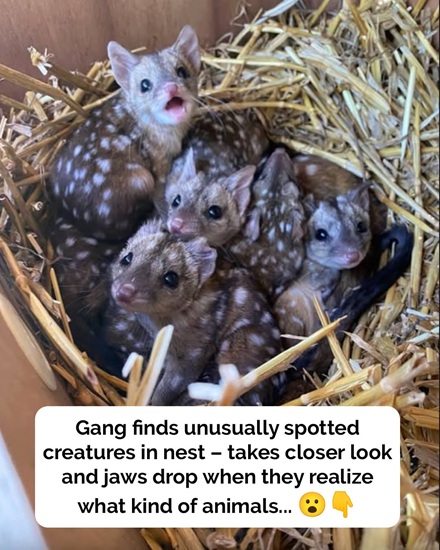
In a remarkable conservation success, ecologists working in Western Australia have announced encouraging news for one of the country’s native marsupial predators. Researchers at Mt Gibson Wildlife Sanctuary recently discovered newborn western quolls, also known by their Noongar name, chuditch, marking an important milestone in an ongoing wildlife restoration program. The discovery provides evidence that the animals are successfully adapting to their new environment and reproducing naturally after being reintroduced to an area where the species had previously disappeared.
The western quoll (Dasyurus geoffroii) is one of Australia’s native carnivorous marsupials. Although it is roughly the size of a domestic cat, it plays an important ecological role by helping regulate populations of insects, small reptiles, birds, and other small animals. As a native predator, the western quoll contributes to maintaining balanced ecosystems, making its conservation important not only for the species itself but also for the broader health of Australia’s unique natural environments.
Historically, western quolls occupied large areas across mainland Australia. Fossil records and historical evidence indicate that the species once ranged over much of the continent before experiencing a dramatic decline following European settlement. Over time, habitat loss, changes to the landscape, introduced predators such as foxes and feral cats, and other environmental pressures contributed to a significant reduction in their population and distribution.
Today, wild western quolls are found primarily in the south-western region of Western Australia, where conservation programs continue working to protect remaining populations. Because the species occupies a much smaller range than it once did, wildlife organizations have invested considerable effort into habitat management, predator control, scientific monitoring, and carefully planned reintroduction projects aimed at expanding the animal’s presence within suitable protected areas.
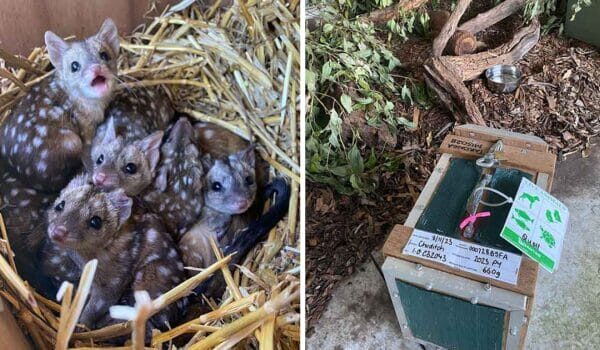
One such effort is taking place at Mt Gibson Wildlife Sanctuary, a large conservation reserve managed by the Australian Wildlife Conservancy (AWC). The sanctuary provides extensive protected habitat where native wildlife can live with reduced threats from introduced predators. Conservation scientists selected the location because of its suitable landscape, ongoing ecological management, and long-term commitment to restoring native Australian species.
Before the recent reintroduction program, western quolls had become locally extinct within the Mt Gibson area. Reintroducing a species after local extinction requires years of planning, scientific assessment, veterinary care, habitat preparation, and continuous monitoring. Conservation teams must evaluate food availability, shelter, predator risks, breeding potential, and overall ecosystem health before animals are released into their new environment.
After months of preparation, researchers carefully released western quolls into the sanctuary while closely observing how they adapted. Monitoring involved a combination of camera traps, field surveys, tracking techniques, and regular health assessments designed to understand how the animals were adjusting. These methods allow scientists to collect valuable information without causing unnecessary disturbance to the wildlife.
The recent discovery of newborn quolls represents one of the strongest indicators that the reintroduction program is progressing successfully. Successful reproduction suggests that the animals are not only surviving but also finding suitable habitat, adequate food resources, and safe conditions necessary to raise young. For wildlife conservation projects, the birth of offspring often signals that a reintroduced population is beginning to establish itself naturally.
Marsupials have a unique reproductive process that distinguishes them from most mammals. After birth, the tiny, underdeveloped young continue their development inside the mother’s pouch, where they nurse and grow before eventually venturing outside. Researchers carefully monitor pouch young because they provide important evidence about breeding success and the long-term prospects of a recovering population.
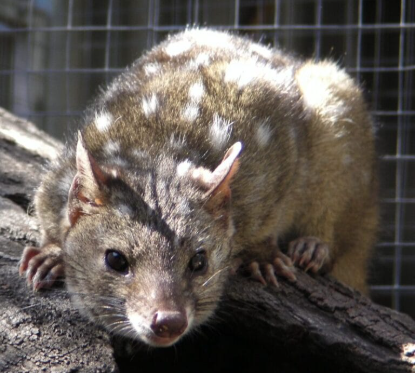
According to the Australian Wildlife Conservancy, regular monitoring has shown positive signs since the western quolls were released. Senior Field Ecologist Georgina Anderson explained that observing the first pouch young indicates the animals have adjusted well to their surroundings and are responding positively to the protected habitat provided by the sanctuary. Such findings are encouraging for conservation teams that have invested significant time and resources into restoring the species.
Monitoring wildlife populations requires patience and consistency. Scientists routinely inspect camera trap images, record animal movements, observe breeding activity, and evaluate habitat conditions throughout the year. Every new observation contributes valuable scientific data that helps conservationists understand how restored populations develop over time and whether additional management actions may be needed to support their continued success.
One western quoll in particular has become well known among researchers working at Mt Gibson. Nicknamed “Aang,” the animal frequently appears on camera traps placed throughout the sanctuary. According to Georgina Anderson, Aang is one of the largest and most distinctive quolls in the population. Researchers have observed him regularly visiting multiple monitoring sites, often collecting the chicken bait used to attract wildlife to cameras and occasionally disrupting bait canisters in the process. His repeated appearances have made him a familiar and memorable individual among the conservation team.
The successful arrival of newborn western quolls represents more than a single positive event. It demonstrates how carefully planned conservation initiatives, supported by scientific research and long-term habitat management, can contribute to the recovery of native wildlife. While continued monitoring remains essential, these early results provide encouraging evidence that western quolls are beginning to re-establish themselves in an area where they had once disappeared.
The encouraging results at Mt Gibson Wildlife Sanctuary highlight the importance of long-term conservation planning. Reintroducing a native species is rarely a quick process, as it requires years of scientific research, habitat management, and continuous monitoring. Every stage of a reintroduction project is carefully evaluated to maximize the likelihood that the animals will establish a healthy, self-sustaining population. The birth of young western quolls represents one of the clearest signs that these efforts are moving in a positive direction.
Conservation organizations emphasize that restoring native wildlife benefits entire ecosystems rather than a single species alone. As a carnivorous marsupial, the western quoll helps regulate populations of insects, small mammals, reptiles, and other prey species. Maintaining a balanced predator-prey relationship supports healthier ecosystems and contributes to greater biodiversity across protected landscapes. Scientists often describe native predators as important components of ecological stability because they help maintain natural population dynamics.
Australia is home to many unique marsupials found nowhere else in the world. Species such as kangaroos, koalas, wombats, numbats, and quolls have evolved over millions of years to occupy specialized ecological roles. Protecting these animals preserves not only Australia’s remarkable biodiversity but also valuable scientific knowledge about evolution, ecology, and wildlife conservation. Each successful recovery project provides lessons that may benefit future efforts involving other threatened native species.
One of the greatest challenges facing many Australian mammals is the presence of introduced predators, particularly feral cats and European red foxes. These non-native predators have had significant impacts on numerous small and medium-sized native mammals. For this reason, wildlife sanctuaries often implement extensive predator management programs before vulnerable species are reintroduced. Creating safer environments gives native animals a greater opportunity to survive, reproduce, and establish stable populations.
Habitat quality is another essential factor in successful conservation. Western quolls require suitable shelter, reliable food sources, and enough space to hunt and reproduce naturally. Protected reserves such as Mt Gibson provide large areas where native vegetation is maintained and ecological processes can continue with reduced human disturbance. Healthy habitats support not only quolls but also many other native plants and animals that share the same environment.
The use of modern technology has become increasingly valuable in wildlife conservation. Camera traps, motion sensors, GPS tracking, and field surveys allow researchers to observe animals with minimal disturbance. These tools help scientists understand movement patterns, breeding success, survival rates, and habitat use while collecting valuable long-term data. Information gathered through ongoing monitoring enables conservation teams to make evidence-based decisions about future management strategies.
The western quoll known as Aang has become a familiar subject during these monitoring efforts. According to the Australian Wildlife Conservancy, he frequently appears on camera traps placed throughout the sanctuary and is well known for visiting several monitoring locations. Researchers have observed his curious behavior, including collecting chicken bait used as wildlife lures and occasionally interfering with bait containers. Such observations not only provide useful scientific information but also help researchers recognize individual animals within the growing population.
Public interest in stories like the western quoll’s recovery can also play an important role in supporting conservation. Positive examples of successful wildlife restoration help increase awareness of biodiversity conservation and encourage appreciation for native species. Educational outreach allows people to better understand how scientific research, habitat protection, and long-term environmental management contribute to preserving wildlife for future generations.
Although the recent births represent encouraging progress, conservationists note that continued monitoring remains essential. Wildlife populations naturally experience changes over time due to environmental conditions, food availability, weather, disease, and other ecological factors. Scientists will continue observing the Mt Gibson population to evaluate breeding success, population growth, genetic diversity, and overall ecosystem health over the coming years.
The recovery of species that were once locally extinct demonstrates that carefully planned conservation programs can produce meaningful results when supported by scientific research and long-term commitment. Similar restoration efforts around the world have shown that protecting habitat, reducing threats, and monitoring wildlife can help vulnerable species recover under the right conditions. Each successful project contributes valuable knowledge that may assist future conservation initiatives.
Researchers also emphasize that conservation is an ongoing process rather than a single achievement. Even after a species begins reproducing successfully, continued habitat protection, ecological monitoring, and responsible land management remain necessary to ensure long-term stability. Sustained collaboration between scientists, conservation organizations, land managers, Indigenous communities, government agencies, and local stakeholders often plays a key role in maintaining healthy wildlife populations.
The discovery of newborn western quolls at Mt Gibson Wildlife Sanctuary stands as an encouraging example of what can be achieved through evidence-based conservation. While much work remains to secure the long-term future of the species, the successful establishment of breeding animals offers genuine optimism. It reflects years of careful planning, scientific expertise, and dedicated fieldwork aimed at restoring one of Australia’s remarkable native marsupials to a landscape where it had once disappeared.

