
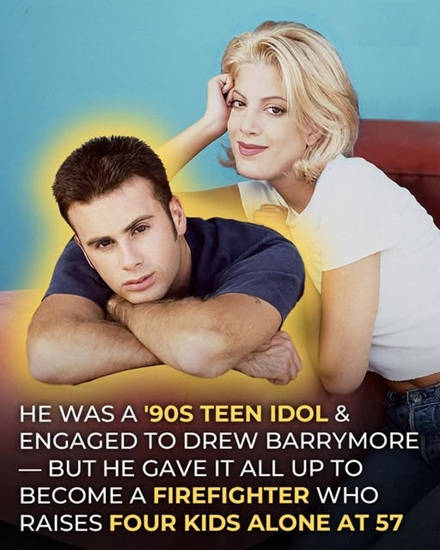
In the mid-1990s, Jamie Walters was one of those television faces that seemed almost impossible to escape. He was an actor, singer, guitarist, and young celebrity whose music and television career placed him directly in front of millions of viewers. His single “How Do You Talk to an Angel,” connected with the television series The Heights, reached No. 1 on the Billboard Hot 100 in 1992. Soon afterward, Walters became even more recognizable when he joined Beverly Hills, 90210 as Ray Pruit.
For a period, his face appeared in entertainment magazines, fans attended his public appearances, and his music career appeared to be moving alongside his growing television success. But one storyline on 90210 would dramatically change the public’s perception of him. Walters joined Beverly Hills, 90210 during its fifth season as Ray Pruit, a musician who became romantically involved with Donna Martin, played by Tori Spelling. At first, Ray was presented as a talented young man from a different background than many of the show’s central characters.
The relationship also gave Walters an opportunity to perform music on the series, connecting his acting career with the recording career he was already pursuing. However, the character eventually became increasingly troubled, and the storyline took a much darker direction when Ray became abusive toward Donna. Walters later recalled being deeply concerned when he discovered what the writers planned to do with his character. In an interview with Entertainment Weekly, Walters remembered reading the script and immediately worrying about what the storyline might mean for his career.
His concern was understandable because Beverly Hills, 90210 had an enormous and highly engaged audience. Television characters could become strongly associated with the actors portraying them, particularly on a series that inspired such intense loyalty among viewers. Once Ray became physically abusive toward Donna, Walters discovered that some viewers were having difficulty separating the fictional character from the real person playing him. The consequences extended far beyond reactions to the television storyline itself.
Walters has described being confronted by people in public who appeared to hold him personally responsible for Ray Pruit’s actions. According to his later recollections, strangers approached him in places such as grocery stores and criticized him because of what his fictional character had done to Donna. He also received hostile reactions from viewers who treated the events shown on television as though they reflected Walters himself. The experience demonstrated an unusual downside of playing a convincing television villain: audiences remembered Ray’s behavior, but some did not maintain the distinction between the character and the actor portraying him.
The storyline also arrived at a difficult moment for Walters’ recording career. He had already experienced major musical success before becoming Ray Pruit. “How Do You Talk to an Angel” had topped the Billboard Hot 100, and he later released music under his own name through Atlantic Records. Appearing on 90210 initially seemed capable of giving him an extraordinary platform because the series allowed him to act and perform music before a huge television audience. Instead, Walters later said the situation became a “double-edged sword.” The enormous exposure helped make him recognizable, but the negative reaction to Ray followed him outside the program.
Eventually, the writers faced a storytelling problem of their own. Once Ray had become abusive toward Donna, maintaining him as a conventional romantic interest became increasingly difficult. Walters later suggested that the storyline had effectively placed the character in a corner from which there were few believable ways to return. Ray’s role was reduced, and Walters ultimately left the series after appearing during Seasons 5 and 6, although he later made another appearance. The character who had once offered Walters an opportunity to combine acting and music had instead become permanently connected with one of the most controversial chapters of his television career.
Despite what happened professionally, Walters has spoken positively about Tori Spelling herself. The disturbing behavior belonged to the fictional relationship between Ray and Donna, not the real-life relationship between the performers. Walters remembered enjoying his time working with Spelling and described her warmly in later interviews. That distinction is important because the fictional storyline was sometimes interpreted by viewers as something much more personal. Years afterward, Spelling herself would publicly describe Walters in positive terms, reinforcing how different the real person was from the character audiences remembered.
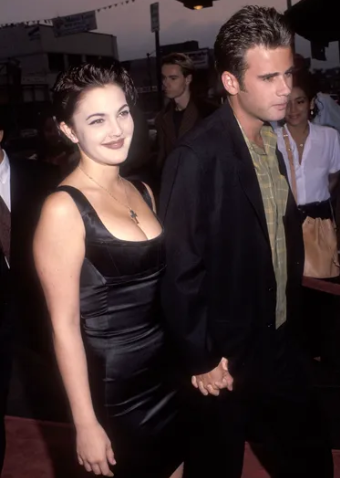
At roughly the same period that Walters was becoming famous, another highly publicized part of his personal life was unfolding. He became romantically involved with Drew Barrymore in the early 1990s. Walters has said that they were introduced after a shared professional connection told him Barrymore was interested in meeting him and invited him to a party. The two met, connected, and began a relationship. Barrymore was already a widely recognized actress, while Walters was emerging as a television and music star. Their relationship therefore attracted considerable attention from entertainment media.
Walters and Barrymore eventually became engaged. Their relationship took place during a complicated period in both of their young lives and careers, and Walters later remembered their time together fondly. He said they had a good time during the years they were involved. Their relationship became serious enough that they lived together and discussed a future. Walters also made a particularly permanent-looking declaration of affection: he had Barrymore’s name tattooed on his back. Friends had reportedly warned him against getting a romantic partner’s name tattooed, advice that became more memorable after the relationship ended.
The engagement did not lead to marriage. By 1994, Walters and Barrymore had separated, leaving him with both the memories of the relationship and the tattoo. He later indicated that the experience had taught him a lesson. The tattoo was subsequently altered, although traces of its original significance were not entirely erased. What could easily have become material for decades of public conflict instead largely remained part of their shared past. Neither needed to turn the relationship into an ongoing public dispute for it to remain an interesting piece of 1990s entertainment history.
Many years later, Barrymore unexpectedly revisited that period during an appearance involving former Beverly Hills, 90210 stars Tori Spelling and Jennie Garth. The conversation produced an unusual collision between two different parts of Walters’ past: his former fiancée and actresses associated with the television series that had transformed his career. Barrymore enthusiastically remembered that she had dated Walters and had been engaged to him. Spelling responded positively as well, describing him as a good person, while Garth agreed that he remained one.
Walters’ response to hearing about the conversation was restrained and friendly. He said he was flattered that Barrymore continued to think positively about him. There was no attempt to turn the renewed attention into a public feud or to rewrite their relationship decades later. By then, Walters’ life had already moved far beyond the world in which celebrity relationships, television ratings, and album sales determined his daily schedule. His most significant transformation had taken place away from entertainment cameras.
As Walters approached a different stage of adulthood, his priorities began changing. He has explained that he started thinking seriously about having a family and building a more stable life. Entertainment could provide extraordinary opportunities, but it could also be unpredictable. Acting jobs ended, recording contracts changed, and public attention could disappear almost as quickly as it arrived. Walters still had friends working in entertainment and understood the industry well, but he began questioning whether it was the career he wanted to depend upon while raising a family.
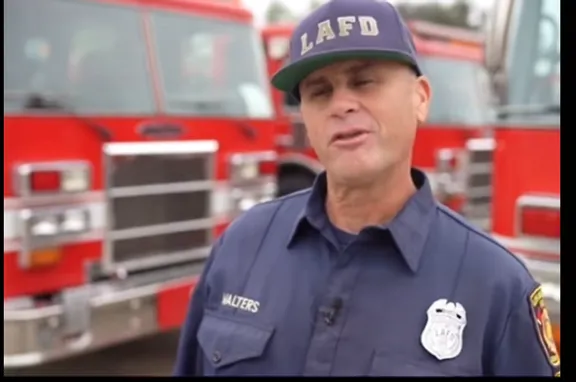
An old interest offered another possibility: firefighting. Rather than treating the idea as a publicity stunt or temporary celebrity experiment, Walters pursued the profession through the same process required of applicants seeking the job. He has described the hiring process as taking approximately three years. It involved written testing, medical examinations, background investigations, psychological screening, and physical agility requirements. For someone who had previously performed before screaming crowds and worked on major television productions, this was an entirely different measure of professional success.
The transition was not immediate. Becoming a professional firefighter required Walters to continue through a lengthy process without any guarantee that his earlier celebrity would matter. In fact, fame offered little advantage when completing physical tests or meeting professional requirements. Walters continued with the application process and eventually entered a fire training academy in 2003. The former television star was now learning skills designed not for a television set but for emergency response and public safety.
His decision has sometimes been described as though Walters simply disappeared from Hollywood after 90210, but the reality is more nuanced. He continued making music and remained connected with people in entertainment. What changed was the role entertainment played in his life. Instead of needing acting or recording to provide his primary identity and income, Walters built a career outside the industry. Firefighting offered a form of stability and responsibility that was very different from the unpredictable world he had experienced during his twenties.
The contrast naturally fascinated people who remembered him from television. During the 1990s, fans might have waited at malls to see him perform or purchased magazines because his photograph appeared inside. Years later, someone experiencing an emergency could encounter the same person wearing firefighter equipment rather than holding a guitar. Walters has even recalled situations in which people recognized him through his emergency work and connected him immediately with Ray Pruit. It was another reminder of how strongly Beverly Hills, 90210 remained attached to his public identity.
The strange longevity of Ray Pruit demonstrates just how powerful popular television can be. Walters played numerous roles and had a genuine recording career, yet for many viewers one fictional storyline remained the defining memory. The hostility he encountered after Ray abused Donna also illustrates how celebrity culture operated before social media became the dominant way audiences interacted with performers. There were no modern comment sections required for viewers to express anger. They could confront an actor in a supermarket, send letters, or react directly when they encountered him.
With time, however, attitudes toward Walters and the character became more nuanced. Fans who revisited 90210 years later were more likely to recognize the obvious distinction between an actor and the fictional person he portrayed. The very fact that viewers disliked Ray so intensely also reflected the effectiveness of the performance and the emotional investment audiences had in Donna Martin. Walters had been hired to play a character, and the scripts determined the character’s actions. His later comments make clear that he understood the professional consequences of that storyline even while it was being developed.
The story eventually came full circle in another unexpected way. In 2019, several members of the original cast participated in BH90210, a meta-style revival in which the actors played heightened versions of themselves. Walters appeared as himself, briefly reconnecting with the television franchise that had shaped so much of his public reputation. Nearly two decades after leaving the entertainment industry as his primary profession, he could return to the world of 90210 without needing it to define what came next.
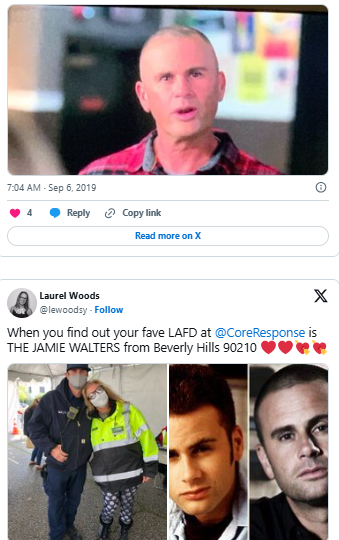
Meanwhile, photographs and discussions of Walters in later years generated a different kind of fan reaction. Some longtime viewers were surprised by how much he had changed since his days as the young musician playing Ray. Others thought he remained immediately recognizable. Online discussions included positive reactions to the fact that he had built a career helping people through emergency services. The comments reflected something very different from the hostility he remembered receiving at the height of the Ray Pruit controversy.
Music also remained part of Walters’ life. Leaving entertainment as a full-time career did not require him to abandon the instrument or talent that originally brought him national attention. His musical history remains substantial regardless of what happened afterward. Reaching No. 1 on the Billboard Hot 100 is an accomplishment relatively few performers achieve, and “How Do You Talk to an Angel” remains closely associated with early-1990s popular culture. His later career change did not erase that achievement any more than becoming a musician erased his later work.
What makes Walters’ story unusual is therefore not simply that a television actor became a firefighter. It is the sequence of events that preceded the decision. In only a few years, he experienced a chart-topping single, a recording contract, major television exposure, an engagement to one of Hollywood’s most recognizable young actresses, enormous fan attention, and then an unexpectedly damaging association with a fictional character. Those events could easily have encouraged someone to spend years trying to recreate the brief period when everything appeared to be moving upward.
Walters chose another direction. His explanation has generally been far less dramatic than the headlines surrounding his earlier life. He wanted stability. He wanted to raise a family. He was interested in firefighting. He understood that entertainment could be difficult unless a performer remained consistently successful. Instead of treating a different profession as a defeat, he pursued the requirements necessary to enter it and built another career.
That does not mean the Hollywood chapter disappeared. Drew Barrymore could mention their engagement decades later, and viewers immediately remembered the story. Tori Spelling could discuss him warmly, and fans remembered Donna and Ray. A photograph could appear online and suddenly inspire another wave of nostalgia among 90210 viewers. Walters could return briefly for BH90210, and the connection would become visible again. Fame had become something he could revisit rather than something he needed to maintain every day.
His experience also provides a useful reminder about the distance between entertainment and reality. Ray Pruit was a fictional character whose harmful actions were written as part of a television drama. Jamie Walters was the performer assigned to portray those actions. The public reaction he described showed what can happen when that boundary becomes blurred. The fact that Walters later spent years working in emergency services makes the contrast between the fictional character and the real person especially striking.
There is no need to turn the story into a claim that Walters completely rejected entertainment or regretted everything about fame. His own comments present something more complicated. He has acknowledged the opportunities that came from appearing on a hugely successful television series while also describing the professional difficulties created by Ray’s storyline. He continued playing music, maintained friendships with people in entertainment, and eventually returned to the 90210 universe for a brief appearance.
Likewise, his relationship with Drew Barrymore does not need to be transformed into a dramatic feud to remain notable. They were young, they became engaged, the relationship ended, and both continued with their lives. Decades later, Barrymore could remember the engagement publicly and Walters could respond with appreciation rather than hostility. Spelling and Garth’s positive comments about him added another perspective from people who knew him during the period when audiences were reacting so strongly to his fictional character.
Looking back, the most remarkable part of Jamie Walters’ career may be how many completely different lives seemed to fit into it. He was the young musician whose voice reached the top of the Billboard chart. He became a television actor watched by millions. He experienced intense celebrity attention and a highly publicized engagement. He then became associated with a fictional storyline so strongly that strangers reportedly confronted him over something his character had done.
And after all of that, he went through years of testing and training to enter a profession in which celebrity status offered little practical value. Instead of scripts and recording studios, his working life involved emergency response. Instead of being recognized because someone had purchased his album, he could be recognized while helping people during moments when entertainment was probably the last thing on their minds.
That is ultimately why his story continues to attract attention decades after Ray Pruit left Beverly Hills, 90210. It is not simply a story about someone who became famous and then disappeared. Walters did not disappear. He changed careers, continued living outside the constant celebrity spotlight, kept music in his life, and occasionally returned to the entertainment world that first made him recognizable.
For people who remember the 1990s, the contrast can still be surprising. The young man holding a guitar on television and the experienced emergency responder seen years later are the same person at different stages of life. The Billboard hit, the engagement to Drew Barrymore, the controversy surrounding Ray and Donna, the long firefighter application process, and the later BH90210 appearance are not separate legends about different celebrities. They belong to one unusually varied career.
Jamie Walters once worried that a television script was going to hurt his career, and his later accounts indicate that the concern was justified. But losing control over one version of his public image did not prevent him from deciding what came afterward. The television audience remembered Ray Pruit for years. Walters, meanwhile, built a life in which Ray was only one chapter.
Perhaps that is the most accurate way to understand what happened after the screaming fans, magazine covers, hit record, famous relationship, and television controversy faded. Walters did not need to erase his earlier career, and he did not need to spend the rest of his life recreating it. He could still make music, acknowledge the unusual experiences of his twenties, reconnect with former colleagues, and appreciate the opportunities that fame had given him.
But he could also choose something completely different. After years in an industry built around being seen, Jamie Walters entered a profession where the purpose of showing up was not to be recognized at all. It was to do the job in front of him. And for a man once unable to walk through a grocery store without strangers confusing him with a fictional character, that may be one of the most unexpected turns in his entire story.

