When Hives Keep Coming Back: What Urticaria Can Really Mean
It may begin with one itchy patch.
Then another appears nearby.
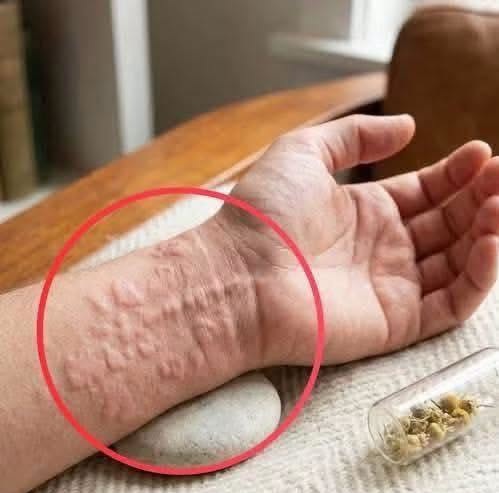
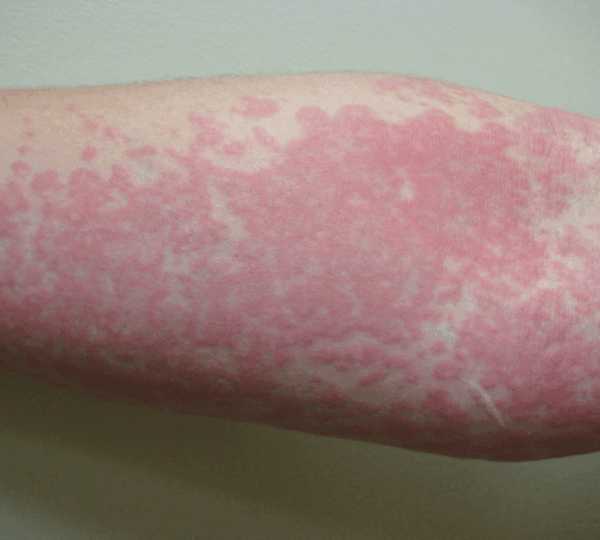
Within minutes, the skin can develop raised welts that look round, irregular or even ring-shaped.
Some remain separate.
Others merge into larger areas.
And just when one patch seems to disappear, a new one may appear somewhere else.
This is the pattern many people know as hives.
Doctors call it urticaria.
And while it can look dramatic, the most important clues are often not how large the welts are.
They are how long they last, what seems to trigger them and whether anything more serious is happening at the same time.
What Actually Causes Urticaria?
Urticaria develops when certain immune cells in the skin, especially mast cells, release histamine and other inflammatory substances.
Those chemicals cause small blood vessels to widen and become more permeable.
Fluid then moves into the surrounding tissue.
That creates the raised swelling called a wheal or weal.
The itching can be intense.
But the marks are usually temporary.
A typical hive often disappears within 24 hours.
That does not mean the whole episode is over.
New welts may continue appearing in different places.
And that distinction matters.
One Hive Can Vanish While the Condition Continues
Many people become confused because the marks move around.
A welt on the arm disappears.
Then another develops on the back.
Later, the legs may become involved.
This shifting pattern is typical of urticaria.
The individual lesions are short-lived.
The condition itself may continue for days, weeks or much longer.
That is how doctors begin separating acute urticaria from chronic urticaria.
But before duration is considered, there is another symptom worth understanding.
Swelling can sometimes go deeper.
When the Swelling Is Under the Skin
Urticaria can occur together with angioedema.
Angioedema affects deeper tissue and often appears around the lips, eyelids or other soft areas.
It may feel tight, sore or painful rather than simply itchy.

The swelling can last longer than a typical hive.
For many people, it remains uncomfortable but manageable.
However, swelling of the tongue or throat changes the situation completely.
Breathing Difficulty Is a Red Flag
Hives accompanied by throat swelling, difficulty breathing, wheezing, severe dizziness, faintness or a feeling of chest tightness may signal a serious allergic reaction.
That can include anaphylaxis.
In that situation, waiting for the rash to pass is not appropriate.
Emergency medical care is needed.
This is one of the most important distinctions to make.
Ordinary hives are often unpleasant.
Airway symptoms can be life-threatening.
Once that is understood, the next major question becomes duration.
Acute Urticaria Lasts Less Than Six Weeks
When hives begin suddenly and resolve within six weeks, they are considered acute urticaria.
Many episodes end much sooner.
Sometimes within hours.
Sometimes within a few days.
Possible triggers include infections, medications, foods and insect stings.
But not every episode has an obvious cause.
That is a useful correction to a common misconception.
Even acute hives may appear without one clear trigger.
Infections Are a Common Association
Viral infections can trigger urticaria.
This is especially common in children.
A cold or another viral illness may be present shortly before or during the outbreak.
The immune response connected to the infection can activate mast cells and produce hives.
That does not automatically mean the person has developed a new allergy.
And this is why timing matters.
A rash that appears during an illness may have a very different explanation from one that repeatedly appears after a particular food.
Foods Can Trigger Hives Too
True food allergy can cause urticaria.
Common allergenic foods include peanuts, tree nuts, shellfish, eggs and milk.
When food is responsible, symptoms often occur relatively soon after eating.
Other allergic symptoms may appear as well.
Swelling.
Vomiting.
Breathing problems.
Or dizziness.
But repeated chronic hives are not automatically caused by food.
That assumption can lead people into unnecessary restrictive diets.
The pattern needs to make sense.
Medications Can Also Be Involved
Some drugs can trigger or worsen urticaria.
Examples include certain antibiotics and nonsteroidal anti-inflammatory drugs.
A reaction may appear shortly after a medication is started.
Or symptoms may worsen in someone already prone to hives.
That is why medication history matters.
But again, one episode does not automatically identify the cause.
Sometimes several possible triggers are present at once.
And sometimes none can be proven.
Chronic Urticaria Is About Persistence
When hives, angioedema or both continue to recur for six weeks or more, the condition is classified as chronic urticaria.
The lesions may appear daily.
Or they may come and go.
Individual welts still often fade within 24 hours.
New ones simply replace them.
That repeated cycle can be exhausting.
And chronic urticaria is not always driven by an outside allergy.
In many cases, the process appears to come from within the immune system itself.
Chronic Spontaneous Urticaria Often Has No Obvious External Trigger
In chronic spontaneous urticaria, hives repeatedly develop without a clear physical trigger such as cold, pressure or scratching.
Many cases are thought to involve autoimmune mechanisms.
The immune system may activate mast cells inappropriately.
That leads to histamine release even without a classic allergen.
This helps explain why extensive allergy testing often fails to identify one simple cause.
It also explains why avoiding random foods does not always help.
The problem may not be an external trigger at all.
Some People Have Inducible Urticaria Instead
Another group of hives is called chronic inducible urticaria.
Here, the reaction can be triggered by a specific physical stimulus.
Pressure.
Cold.
Heat.
Sunlight.
Scratching.
Exercise.
Or an increase in body temperature.
These forms are different because the trigger can often be reproduced.
And sometimes the skin gives the clue almost immediately.
Dermographism Can Make the Skin “Write”
In dermographism, pressure or scratching creates raised lines on the skin.
A fingernail may leave an itchy swollen mark exactly where it passed.
Tight clothing or friction can also provoke a response.
The reaction can appear within minutes.
The name comes from the idea of “writing on the skin.”
For some people, the response is mild.
For others, everyday contact with clothing or scratching can become very irritating.
But the trigger pattern is usually clear.
Cold Urticaria Requires Particular Caution
Cold exposure can provoke hives in people with cold urticaria.
The trigger may be cold air.
Ice.
Cold objects.
Or cold water.
A small exposure may create a local reaction.
A large exposure can be more serious.
Immersion in cold water is especially important because a large area of skin becomes exposed at once.
In susceptible people, that can lead to a more generalized reaction.
This is why suspected cold urticaria should not be tested casually at home.
Heat and Exercise Can Trigger Another Form
Cholinergic urticaria often appears after body temperature rises.
Exercise may trigger it.
So can hot showers.
Spicy foods.
Emotional stress.
Or other situations that cause sweating.
The welts are often small and numerous.
They may be intensely itchy.
Most episodes resolve relatively quickly.
But in rare cases, more serious symptoms can occur.
That is another reason patterns should be taken seriously rather than dismissed.
Pressure Can Cause a Delayed Reaction
Some forms of urticaria appear immediately.
Delayed pressure urticaria does not always.
The reaction may develop hours after sustained pressure on the skin.
A heavy bag strap.
Tight clothing.
Prolonged standing.
Or sitting on a hard surface.
The swelling may feel deeper and more painful than ordinary hives.
And because it appears later, the connection to the original trigger can be easy to miss.
Sometimes the clue is hidden several hours earlier.
Sunlight Can Be a Trigger Too
Solar urticaria is uncommon.
In this condition, exposure to certain wavelengths of light can trigger hives.
The reaction may develop quickly on exposed skin.
Because sunlight is difficult to avoid completely, this condition can interfere with daily life.
Specialist testing may be needed to identify the wavelengths involved.
It is not the same as sunburn.
The mechanism is different.
Treatment Usually Begins With Antihistamines
For many people with urticaria, modern second-generation antihistamines are the first treatment used.
These medications reduce the effects of histamine.
That can decrease itching and wheal formation.
For chronic urticaria, doctors may recommend taking them regularly rather than only during visible flare-ups.
If symptoms remain uncontrolled, treatment may be adjusted under medical supervision.
Higher doses of certain antihistamines can sometimes be used in chronic disease according to specialist guidelines.
And if that still does not work, other therapies may be considered.
Omalizumab Can Be Used in Difficult Chronic Cases
For chronic spontaneous urticaria that remains uncontrolled despite antihistamines, specialists may consider omalizumab.
This is a biologic medication that targets IgE-related pathways involved in mast-cell activation.
It has become an important treatment option for some patients with persistent symptoms.
More advanced medications may also be used in difficult cases.
But the exact treatment depends on severity, medical history and response.
Chronic hives should not be treated with a one-size-fits-all approach.
Long-Term Steroid Use Is Usually Avoided
Corticosteroids can sometimes be used briefly during severe episodes.
But they are not generally the preferred long-term treatment for chronic urticaria.
Repeated or prolonged steroid use can cause significant side effects.
The goal is usually to control the mast-cell-driven process with safer long-term strategies.
That is why persistent symptoms deserve medical follow-up rather than repeated short-term fixes.
The longer the condition lasts, the more important the treatment plan becomes.
A Symptom Diary Can Help Reveal Triggers
When the cause is unclear, a diary can be useful.
Record when the hives appear.
What happened beforehand.
Medications taken.
Foods eaten.
Exercise.
Heat.
Cold.
Stress.
Pressure from clothing.
Or recent illness.
Photographs can help too.
By the time a doctor sees the patient, the lesions may already be gone.
A photo can preserve the appearance and distribution.
The goal is not to record every second of the day.
It is to find repeatable patterns.
Avoiding Proven Triggers Makes More Sense Than Avoiding Everything
When a trigger is confirmed, avoiding it can reduce flare-ups.
Someone with cold urticaria may need to avoid sudden cold exposure.
A person with dermographism may benefit from loose clothing and reduced friction.
Someone with cholinergic urticaria may learn which heat-related situations consistently provoke symptoms.
But broad restrictions without evidence can create unnecessary stress.
Eliminating dozens of foods at random may not help chronic spontaneous urticaria.
The treatment should follow the pattern.
Not fear.
Cool Compresses Can Ease Itching
Simple comfort measures may help during a flare.
Cool compresses can soothe itching.
Loose clothing may reduce irritation.
Gentle, fragrance-free skin products may be more comfortable than harsh soaps.
Keeping the skin cool can help some people.
Stress management may also be useful because stress can worsen symptoms in some individuals.
These measures do not cure the underlying condition.
But they can make outbreaks easier to tolerate.
Angioedema Without Hives Can Point Somewhere Else
Repeated swelling without any wheals deserves special attention.
One possible cause is hereditary angioedema, a rare genetic disorder.
This condition does not operate through the same histamine-driven pathway as ordinary urticaria.
Its diagnosis and treatment are different.
Blood testing may be needed.
And standard antihistamines may not work in the same way.
This is why recurrent unexplained swelling should not automatically be labeled “hives.”
The absence of wheals can change the diagnostic direction.
Chronic Hives Can Affect Sleep and Daily Life
The physical symptoms are only part of the burden.
Itching can interrupt sleep.
Visible welts may cause embarrassment.
Unpredictable flare-ups can affect exercise, work or social plans.
Some people begin worrying constantly about what might trigger the next episode.
That uncertainty can be exhausting.
The condition is not usually dangerous by itself.
But it can significantly affect quality of life.
And that impact deserves treatment too.
Not Every Case Needs Extensive Testing
Another common misconception is that chronic urticaria always requires a huge panel of allergy tests.
That is not usually the case.
Doctors often begin with the medical history and physical pattern.
Additional testing is guided by clues.
If symptoms suggest another autoimmune or systemic condition, targeted tests may be useful.
If the pattern strongly suggests an allergy, appropriate testing can be considered.
But testing without a reason can produce confusing results.
More tests do not always mean better answers.
The Pattern Matters More Than One Photograph
Two people can have similar-looking hives for very different reasons.
One may have an acute viral-triggered episode.
Another may have cold urticaria.
Another may have chronic spontaneous urticaria.
The appearance alone may not distinguish them.
Timing does.
Triggers do.
Duration does.
Associated swelling does.
And whether symptoms affect breathing matters most.
That is why one photograph can be useful.
But the history around the photograph is often even more important.
When Should Someone Seek Medical Advice?
Medical evaluation is reasonable when hives keep returning, persist for weeks, interfere with sleep or daily life, or occur together with recurrent angioedema.
It is also important when the cause is unclear and symptoms are worsening.
Emergency care is different.
Trouble breathing.
Tongue or throat swelling.
Severe dizziness.
Fainting.
Or other signs of anaphylaxis require immediate attention.
That line should never be blurred.
The Final Message Is More Reassuring Than It First Seems
Urticaria can look frightening.
The welts can appear suddenly.
They can spread quickly.
They can itch intensely.
And chronic cases can keep returning for months or longer.
But many forms are manageable.
The key is understanding which pattern is present.
Acute.
Chronic spontaneous.
Inducible.
With angioedema.
Or without it.
Once the pattern becomes clearer, treatment becomes more targeted.
And that is the real payoff.
The skin may be where the problem becomes visible.
But the timeline, triggers and associated symptoms are what tell the deeper story.
