
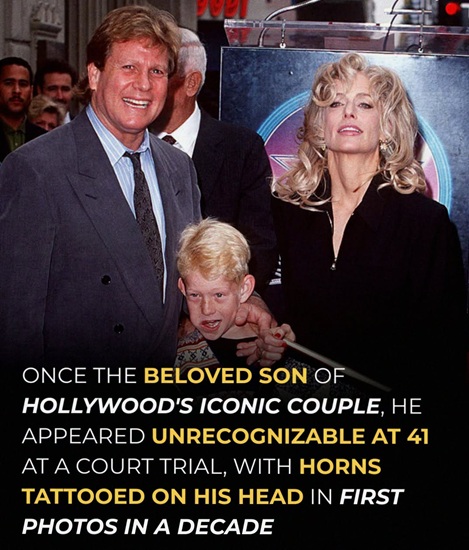
Farrah Fawcett became one of the most recognizable figures in American entertainment during the 1970s. Her breakthrough as Jill Munroe on Charlie’s Angels transformed her into an international television star, while her famous red-swimsuit poster became one of the era’s defining pop-culture images. Yet Fawcett spent much of her later career proving that she could take on considerably more demanding dramatic roles. Behind that extraordinary professional success was a complicated private life involving relationships, parenthood, serious illness and an enduring concern for her only child, Redmond O’Neal.
Fawcett demonstrated her dramatic abilities particularly strongly in the 1984 television movie The Burning Bed. She portrayed Francine Hughes, a real-life domestic abuse survivor whose case received national attention. The performance earned Fawcett critical praise and an Emmy nomination, helping audiences see her beyond the glamorous image associated with Charlie’s Angels. She later continued taking challenging roles in productions including Extremities and Small Sacrifices. These performances became an important part of her legacy and demonstrated the range she had developed as an actress.
Her personal relationships were followed intensely by the entertainment press. Fawcett married actor Lee Majors in 1973, when both were becoming major television personalities. Majors was particularly famous for The Six Million Dollar Man, and together they became one of Hollywood’s most recognizable couples. Their marriage eventually encountered difficulties, however, and by the end of the 1970s their relationship was falling apart. Fawcett subsequently became romantically involved with actor Ryan O’Neal, beginning another relationship that would remain significant for the rest of her life.
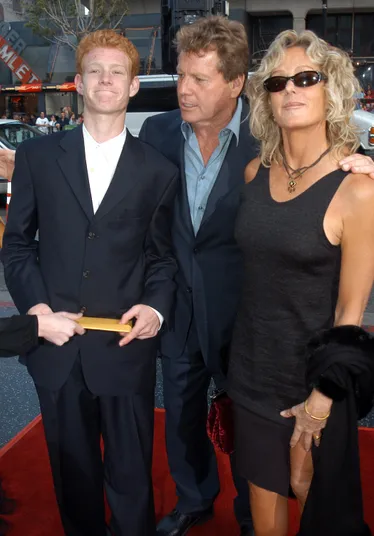
Different versions of how Fawcett and O’Neal first became romantically involved have circulated over the years, including recollections provided by O’Neal himself. Those personal accounts should not be treated as independently verified transcripts of exactly what happened between the three people. What is firmly established is that Fawcett and O’Neal became a couple around 1979. Fawcett and Majors ultimately divorced in 1982, while her relationship with O’Neal continued, although it would experience both separations and reconciliations over the following decades.
Fawcett and O’Neal never married, but in 1985 they welcomed their son, Redmond O’Neal. Parenthood became an important part of Fawcett’s life, even as her acting career continued. Their family life was not always peaceful, and both parents later discussed difficult periods involving their relationship and their son. Nevertheless, Redmond remained deeply important to Fawcett, something that became especially apparent during the final years of her life.
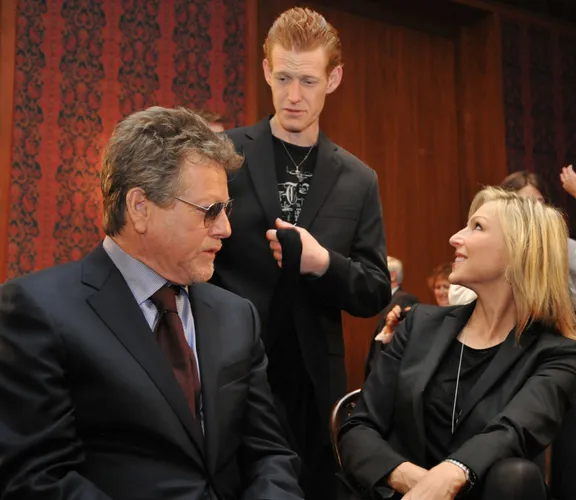
The relationship between Fawcett and O’Neal went through significant changes as the years passed. They separated during the 1990s but eventually became close again. One important development occurred after O’Neal was diagnosed with chronic myelogenous leukemia in 2001. Fawcett supported him through his illness, and their relationship strengthened again during that difficult period. O’Neal survived leukemia and later faced prostate cancer, remaining connected to Fawcett through the health crisis she would eventually experience herself.
In 2006, Fawcett was diagnosed with anal cancer. She underwent treatment and initially received encouraging news, but the cancer later returned and ultimately spread to her liver. Rather than keeping every aspect of her illness private, Fawcett allowed portions of her experience to be documented. The resulting documentary, Farrah’s Story, gave viewers an unusually personal look at her treatment, determination and struggle with a serious disease.
Her cancer battle also brought attention to a form of cancer that had received comparatively little public discussion. Fawcett traveled for treatment and continued seeking medical options as her illness progressed. The glamorous television star audiences remembered from the 1970s was now publicly confronting a difficult medical reality. Her willingness to document parts of that experience became another significant chapter in her public legacy.
At the same time, Fawcett remained deeply concerned about Redmond. By then, her son had experienced serious difficulties involving substance use, rehabilitation and encounters with the criminal justice system. His circumstances created additional emotional strain for the family while Fawcett’s health was declining. Accounts from people close to her consistently describe Redmond as one of her primary concerns during her final months.
Redmond was incarcerated during part of his mother’s final illness. Reports from that period described arrangements that allowed him to visit her while she was hospitalized. Ryan O’Neal later recalled how emotionally difficult those circumstances were for everyone involved. Some details surrounding those private hospital encounters come from personal recollections rather than independently recorded evidence, so they are best described as the accounts of those who were present.
As Fawcett became increasingly ill, friends and loved ones remained nearby. Ryan O’Neal and her longtime friend Alana Stewart were among those closely involved during her final period. Another close friend, Mela Murphy, later shared a particularly emotional memory from Fawcett’s final hours. Murphy said that one of the last things Fawcett expressed was the name of her son: “Redmond.”
According to Murphy’s account, she reassured Fawcett that Redmond would not be forgotten and that she would remain there for him. The moment offered a deeply personal glimpse into what reportedly occupied Fawcett’s thoughts as her life approached its end. After decades of television fame, magazine covers, movies and worldwide recognition, her concern remained focused on her son.
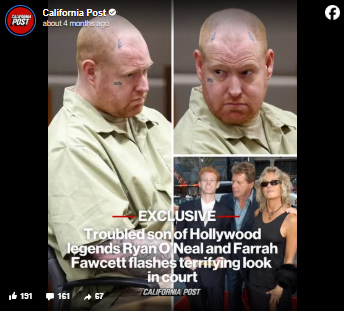
Farrah Fawcett died from anal cancer on June 25, 2009, at St. John’s Health Center in Santa Monica, California. She was 62 years old. Her death came approximately three years after her initial diagnosis and generated tributes from colleagues, fans and people who had followed her career since the 1970s. Her passing also renewed appreciation for the dramatic work she had pursued after becoming famous through Charlie’s Angels.
Redmond was permitted to attend his mother’s funeral while he was still in custody. His presence under those circumstances demonstrated how complicated the family’s situation had become. The funeral represented not only the loss of an internationally famous actress but also the loss of a mother whose concern for her son had remained prominent throughout her final illness.
Fawcett also took steps to provide financially for Redmond after her death. Her estate planning reportedly placed approximately $4.5 million for him into a trust rather than giving him unrestricted access to the entire principal. The arrangement included controls governing how the money could be used, with provisions intended to provide for Redmond while protecting the underlying assets.
Those restrictions were particularly relevant because Redmond had already experienced significant problems with substance use. Rather than simply transferring millions of dollars directly to him, the trust structure provided oversight. Reports indicated that Fawcett’s longtime business manager Richard Francis was involved in administering the trust, with provisions addressing Redmond’s financial and healthcare needs.
Unfortunately, Redmond continued facing significant difficulties following his mother’s death. His struggles with substance use and the criminal justice system remained subjects of public reporting. Because some of his later legal matters involve allegations rather than convictions, it is important to distinguish clearly between what authorities accused him of doing and what has actually been established through the judicial process.
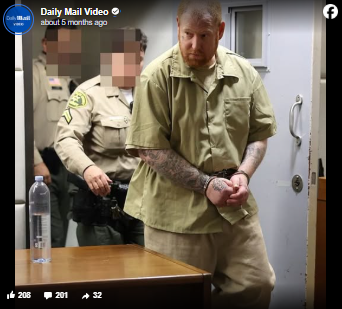
In 2018, Redmond was arrested following an alleged robbery at a convenience store in the Los Angeles area. Police alleged that a man entered the business with a knife, demanded money from an employee and left with cash. Redmond was arrested nearby, and authorities said they recovered a knife that matched the description provided during the investigation.
Additional allegations soon followed. Los Angeles authorities linked Redmond to several incidents and prosecutors filed numerous charges, including attempted murder and other offenses. Police alleged that multiple people had been attacked during a series of incidents. Redmond pleaded not guilty to the charges, meaning those accusations should not be described as proven criminal conduct unless established through the court process.
The proceedings later became complicated by questions about Redmond’s competency to stand trial. In 2019, he was reportedly found mentally incompetent to proceed and was subsequently committed to Patton State Hospital in California. A competency determination does not decide whether a defendant committed the alleged offenses. Instead, it concerns whether the individual is currently capable of understanding the proceedings and participating meaningfully in a legal defense.
For several years afterward, Redmond remained largely outside the public spotlight. His absence stood in sharp contrast to the extraordinary celebrity surrounding him from birth. He was the son of Farrah Fawcett and Ryan O’Neal and the half-brother of Tatum O’Neal, Griffin O’Neal and Patrick O’Neal. Yet being born into a famous Hollywood family did not protect him from serious personal difficulties.
Members of the O’Neal family had previously spoken publicly about their concern for Redmond. Tatum O’Neal, in particular, discussed his addiction problems and expressed fear about his future. Those comments reflected the seriousness with which family members viewed his circumstances rather than simply treating his difficulties as celebrity gossip.
Redmond’s father remained an important part of the broader family story until his own death. Ryan O’Neal died on December 8, 2023, at the age of 82. His death certificate identified congestive heart failure as the cause, with cardiomyopathy also documented. His death came more than 14 years after Fawcett’s passing and ended another chapter in the complicated history surrounding one of Hollywood’s most closely followed relationships.
Farrah Fawcett’s legacy, however, should not be reduced to the struggles experienced by her son or the details of her relationships. Her career included television success, modeling fame and dramatic performances that earned significant critical recognition. Her work in productions such as The Burning Bed and Small Sacrifices demonstrated abilities that extended well beyond the glamorous image that initially made her famous.
Her cancer journey also became part of that legacy. Through Farrah’s Story, viewers witnessed portions of a deeply personal medical struggle that most public figures would have chosen to keep entirely private. The documentary showed Fawcett pursuing treatment and attempting to maintain hope while her disease progressed. It also helped bring greater public attention to anal cancer.
Redmond’s later story remains separate from his mother’s accomplishments, even though their lives were deeply connected. His history includes addiction, psychiatric treatment and serious unresolved legal proceedings. Those circumstances deserve accurate and careful reporting rather than speculation, sensationalism or assumptions about guilt.
Likewise, the private difficulties experienced by the Fawcett-O’Neal family cannot be explained through a single cause. Addiction and serious mental-health problems are complex, and it would be misleading to attribute Redmond’s circumstances entirely to his parents, their fame or their relationship. Publicly available information can document events, arrests, court proceedings and family statements, but it cannot establish simplistic explanations for an individual’s life.
Perhaps the most poignant element of Fawcett’s final chapter remains the account of her concern for Redmond. According to Mela Murphy, Fawcett spoke her son’s name shortly before her death. Murphy then reassured her friend that she would continue looking out for him. Whether remembered as an actress, cultural icon or cancer-awareness advocate, that final account also presents Fawcett simply as a mother worried about her child.
Farrah Fawcett’s influence remains visible decades after her breakthrough on Charlie’s Angels. Her famous hairstyle and poster became symbols of an era, but her dramatic performances demonstrated that her career contained far more substance than those images alone suggest. She spent her later years confronting cancer publicly while remaining closely concerned about the future of her only son.
Her story therefore contains extraordinary professional success alongside deeply difficult personal circumstances. Fawcett died in 2009 at 62, while Ryan O’Neal lived until 2023. Redmond’s subsequent legal and personal difficulties continued long after both had become major figures in Hollywood history. Through all of those chapters, one detail remains particularly memorable: according to a friend who was beside her near the end, Farrah Fawcett’s thoughts in her final moments returned to Redmond, the son she had worried about and loved throughout his troubled adulthood.

