
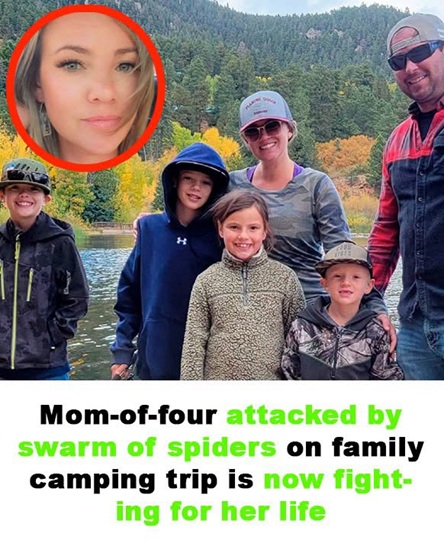
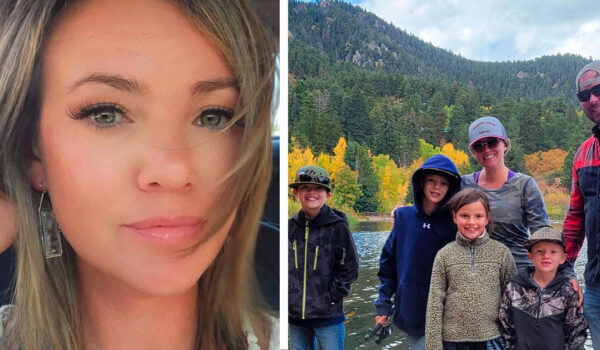
What began as a peaceful camping getaway for one Kansas family soon became an unexpected medical emergency that changed their lives. Britagne Miller, a mother of four from Goddard, Kansas, had planned nothing more than spending quality time outdoors with her husband, Jake, and their children at Cheney State Park. Instead, a series of spider bites led to a prolonged hospitalization, multiple medical procedures, and a recovery that continues months later.
Her experience has drawn attention because it demonstrates how quickly health conditions can become serious, particularly for individuals with existing medical challenges. On May 28, the Miller family gathered around a campfire while enjoying their holiday at Cheney State Park. During the evening, several spiders reportedly crawled onto Britagne’s body, leaving multiple bites on her legs and other areas of her skin. At the time, she did not believe the bites were anything unusual.
Like many people who spend time outdoors, she expected the irritation to disappear within a few days without requiring medical attention. There were no immediate signs suggesting the incident would develop into a life-threatening medical situation. Several days after returning home, however, one bite on her calf began changing rapidly.
The swelling increased significantly, and the pain became progressively more severe. Miller later explained that the discomfort spread from her lower leg into her foot and felt much more intense than an ordinary insect bite. As the symptoms continued to worsen instead of improving, she decided to seek emergency medical care. That decision proved extremely important, as doctors quickly determined that the problem extended far beyond a simple skin injury.
After being admitted to Wesley Hospital in Wichita on June 4, physicians conducted examinations that revealed a hematoma had developed in her leg. Doctors concluded that emergency surgery was necessary to prevent additional complications. During the operation, surgeons removed approximately 300 milliliters of accumulated blood from her calf and placed a drain to assist with healing. Although the surgery successfully treated the immediate issue, the recovery process soon became significantly more complicated than anyone had anticipated.
One factor contributing to the complexity of her treatment was Britagne’s existing medical history. According to information shared publicly by her family, she had previously been diagnosed with two blood-clotting disorders during an earlier pregnancy. She also lived with liver damage and had several allergies involving medications and certain foods. Those underlying conditions made routine medical care considerably more challenging because physicians needed to carefully balance treatments while minimizing additional health risks. Specialists from multiple medical disciplines worked together throughout her hospitalization.
As doctors continued monitoring her condition, new concerns emerged regarding her liver function. According to interviews Britagne later gave to local news organizations, physicians became increasingly concerned that she was experiencing end-stage liver failure. After approximately two weeks of treatment, she and her family were informed that her condition had become extremely serious. Miller later recalled that doctors discussed hospice care after explaining that her prognosis was uncertain. Hearing those conversations was understandably devastating for both Britagne and her loved ones.
Despite the seriousness of her condition, Britagne remained determined to continue fighting. She later explained that thoughts of her husband and four children gave her the motivation to keep moving forward during the most difficult moments of her hospitalization. Although there were times when the physical pain and emotional exhaustion felt overwhelming, she focused on her desire to return home to her family. That determination became one of the most important sources of strength throughout her recovery.
During her hospital stay, Britagne spent time in both the Medical Intensive Care Unit and the Cardiac Intensive Care Unit while receiving specialized treatment. Physicians administered blood transfusions, plasma, platelets, intravenous antibiotics, and numerous additional therapies designed to stabilize her condition. Her recovery required continuous monitoring as doctors adjusted treatment plans in response to changing medical needs. Every improvement represented progress, while every setback required immediate attention from her healthcare team.
Unfortunately, another major complication developed only days after surgery. According to reports, the surgical wound became infected with both a staph infection and a gram-negative bacterial infection. Those infections caused tissue damage that required additional emergency bedside procedures to remove affected tissue. Doctors also expanded her antibiotic treatment in an effort to control the infections and reduce the risk of further complications. These unexpected developments significantly extended her recovery and required additional weeks of hospitalization.
While Britagne remained hospitalized, her husband Jake devoted himself to supporting both his wife and their four children. Balancing those responsibilities eventually affected his employment. According to public statements made by the family, Jake lost his job because he could no longer maintain a regular work schedule while remaining present for his wife during her medical emergency. Although the financial consequences were difficult, he explained that staying beside his family remained his highest priority throughout the crisis.
Additional support came from Britagne’s mother, who traveled from Utah to Kansas to help care for the children while her daughter remained in the hospital. The family also created a GoFundMe campaign to assist with mounting medical expenses, transportation costs, household bills, specialist appointments, and future rehabilitation needs. Community members responded by offering financial assistance as well as messages of encouragement during an incredibly challenging period for the family.
Although Britagne has now returned home, her recovery continues. According to her family, she requires regular follow-up appointments, physical therapy, home healthcare services, and ongoing monitoring by medical specialists. Doctors have also indicated that she will likely need a liver transplant in the future. However, before such a procedure can safely take place, her blood-clotting disorders must first become stable enough to reduce the risks associated with major surgery. Achieving that stability may require many additional months of treatment.
One question that remains unanswered concerns the exact species of spider responsible for the original bites. Medical professionals have not confirmed which spider was involved. Experts note that Kansas is home to two venomous spiders commonly recognized as medically significant: the brown recluse and the black widow. Because no spider was captured or positively identified, specialists have not officially determined which species caused the injuries. Physicians instead focused on treating the complications that developed rather than identifying the source of the bite.
Experts continue recommending practical safety measures for people spending time outdoors, including checking clothing and footwear before wearing them, using gloves when handling stored materials or firewood, and seeking prompt medical attention whenever symptoms following an insect or spider bite become unusually severe. While many spider bites heal without serious complications, healthcare professionals emphasize that persistent pain, increasing swelling, fever, or signs of infection should always be evaluated by a medical provider.
Britagne Miller’s experience illustrates how an unexpected medical emergency can affect an entire family. It also highlights the importance of recognizing worsening symptoms, seeking timely medical care, and relying on the support of loved ones during prolonged recovery. Although significant challenges remain, her family continues expressing hope that ongoing treatment, rehabilitation, and future medical care will allow her to regain strength and gradually return to the everyday life she values most—spending time with her husband and four children.

