
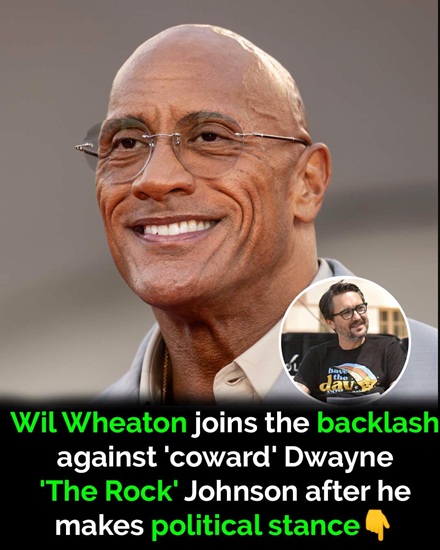
Public debate surrounding celebrity involvement in politics has resurfaced after Dwayne “The Rock” Johnson explained that he no longer intends to publicly discuss his political views. His comments, made during an interview with Esquire, quickly sparked widespread discussion online, with supporters and critics offering sharply different opinions about whether well-known public figures have a responsibility to speak out on political issues.
While some praised Johnson’s decision to focus on his work and avoid further political division, others argued that influential celebrities should continue using their platforms to address important public matters. Johnson has never been known as a politician, but his global popularity has often placed him at the center of conversations that extend far beyond entertainment.
Throughout his career, the actor and former professional wrestler has built a reputation for motivational messages, charitable work, and maintaining a generally positive public image. Because of his enormous social media following and worldwide recognition, many people have closely watched his comments whenever he has addressed topics beyond film and sports. His latest remarks, however, suggest that he now prefers to keep his personal political beliefs private rather than participate in ongoing public debates.
During the interview, Johnson explained that years of experience have changed how he views political discussions in the public eye. According to him, he has learned that his greatest passion remains storytelling, filmmaking, and creating entertainment for audiences around the world. Rather than becoming involved in political disputes, he said he wants to devote his attention to projects that bring people together through stories and creativity. Johnson described this approach as keeping “the main thing the main thing,” emphasizing that his professional work remains his highest priority.
The actor also expressed frustration with the increasingly confrontational nature of modern political discourse. He described today’s political environment as exhausting and said that constant arguments, insults, and hostility have made public political conversations less productive than they should be. Johnson noted that while politics affects many aspects of everyday life, he personally no longer enjoys participating in public discussions that often become dominated by conflict instead of constructive dialogue. His comments reflected a broader concern about the tone of political conversations rather than support for any particular political movement.
Instead of public exchanges between famous figures, Johnson suggested that individuals with opposing viewpoints could benefit from speaking directly with one another in private conversations. He said meaningful dialogue often becomes difficult when discussions take place through social media posts, interviews, or public speeches where disagreements are amplified for large audiences. Johnson referenced comments made by musician Bruce Springsteen criticizing Donald Trump and said his immediate thought was that people with different opinions should have opportunities to sit down together and talk face to face rather than continue exchanging criticism from a distance.
Johnson’s position attracted immediate attention across social media platforms, where reactions varied considerably. Some users agreed that celebrities should not feel obligated to publicly endorse political candidates or discuss every major political issue. Others argued that public figures possess significant influence and therefore have a responsibility to use their voices to encourage civic engagement or speak against actions they consider harmful. The discussion quickly expanded beyond Johnson himself, becoming part of a larger debate about the appropriate role of entertainers in political life.
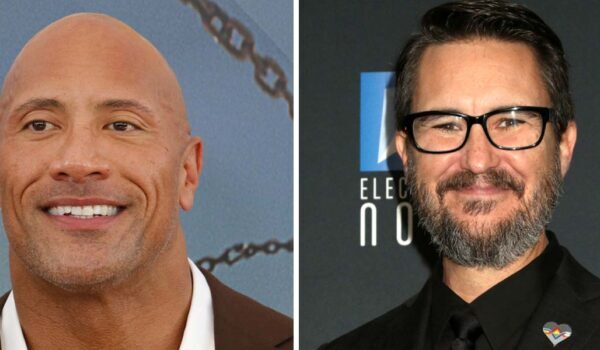
Among those who criticized Johnson’s decision was actor Wil Wheaton, who responded to a social media post shared by fellow actor George Takei. Wheaton described Johnson’s decision as disappointing and characterized it as an example of avoiding responsibility. Takei similarly argued that remaining silent on political issues can amount to complicity, suggesting that influential public figures should continue speaking openly about matters they believe affect society. Their criticism received significant attention online and further fueled conversations among supporters and opponents of Johnson’s decision.
Johnson’s decision did not emerge without context. During the 2020 United States presidential election, he publicly endorsed Joe Biden, marking one of the rare occasions when he openly supported a presidential candidate. At the time, Johnson explained that he believed endorsing Biden was the right decision based on his personal views and what he considered to be in the country’s best interest. The endorsement generated extensive media coverage because Johnson had previously remained largely neutral in partisan politics despite frequent speculation about whether he might one day seek public office himself.
In later interviews, Johnson reflected on the consequences of that endorsement and acknowledged that the public response influenced his thinking. Speaking in 2024, he explained that while he stood by making the decision he believed was appropriate at the time, he also recognized that the endorsement contributed to political division among some of his audience. Johnson said seeing people become increasingly divided over political disagreements was deeply troubling to him and ultimately played an important role in his decision to step away from public endorsements in future elections.
Although Johnson has chosen not to publicly support presidential candidates moving forward, he has continued commenting on events that involve public safety or violence. Following the attempted assassination of Donald Trump during a campaign rally in Pennsylvania in July 2024, Johnson strongly condemned the attack. He stated that regardless of political beliefs or opinions about any candidate, there is no place for political violence. His remarks emphasized respect for democratic processes and the importance of rejecting violence regardless of political affiliation.
Public reaction to Johnson’s comments demonstrates how divided opinions remain regarding celebrity involvement in politics. Supporters argue that entertainers should have the same freedom as anyone else to keep their personal political beliefs private without facing criticism. Others believe celebrities who have built large audiences possess a unique opportunity to influence public discussion and therefore should continue speaking openly about important social and political issues. Neither perspective has achieved universal agreement, ensuring that debates over celebrity responsibility are likely to continue whenever prominent public figures address political topics.
Ultimately, Johnson’s decision represents a personal choice shaped by years of public experience, media attention, and reflection on the consequences of political engagement. Whether people agree or disagree with his position, the discussion surrounding his comments illustrates the growing challenges faced by public figures navigating an increasingly polarized environment. As conversations continue online and in the media, Johnson has made clear that he intends to focus primarily on his work as an actor, producer, and storyteller while leaving his future political choices between himself and the ballot box.

