
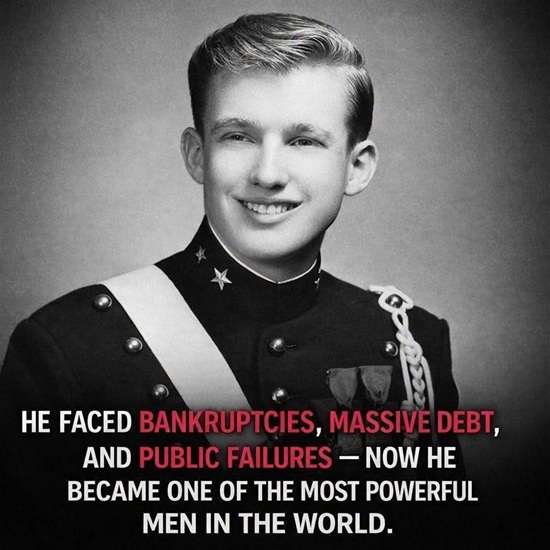
Donald Trump has been one of the most recognizable figures in American business, entertainment, and politics for several decades. Throughout his public career, he has attracted significant attention for his real estate projects, business ventures, television appearances, and political campaigns. Supporters and critics alike have closely followed his career, making him one of the most discussed public figures of the modern era. Because opinions about Trump vary widely, it is important to distinguish between documented historical events and personal interpretations.
A factual review of his career shows a series of notable successes, significant business challenges, media prominence, and an eventual transition into national politics. Donald John Trump was born on June 14, 1946, in Queens, New York City. He is the son of real estate developer Fred Trump, who built residential housing projects primarily in the New York metropolitan area. After attending the New York Military Academy, Trump enrolled at Fordham University before transferring to the Wharton School of the University of Pennsylvania, where he earned a bachelor’s degree in economics in 1968.
Shortly afterward, he joined the family real estate business, where he began working alongside his father while seeking opportunities to expand into larger commercial developments in Manhattan. During the 1970s and 1980s, Trump became increasingly involved in major real estate projects in New York City. His developments included hotels, office buildings, residential towers, and commercial properties that contributed to the growth of the Trump brand.
One of his best-known projects was Trump Tower on Fifth Avenue, which opened in 1983 and became both a commercial property and his longtime business headquarters. During this period, his name became closely associated with luxury real estate, and he frequently appeared in newspapers, magazines, and television interviews discussing business and urban development.
As his business activities expanded, Trump also invested in casinos, hotels, golf courses, and other ventures. Some of these projects achieved commercial success, while others encountered financial difficulties. During the late 1980s and early 1990s, several businesses connected to Trump’s organization faced substantial debt as economic conditions changed and the real estate market weakened. Public reports from that period documented negotiations with lenders and financial restructuring agreements designed to reduce debt and allow certain businesses to continue operating. These events became widely covered by financial media and represented one of the most challenging periods of his business career.
Although several companies associated with Trump’s business interests underwent bankruptcy proceedings during different periods, it is important to distinguish between corporate bankruptcies and personal bankruptcy. Public records show that some of Trump’s business entities used Chapter 11 bankruptcy protection, a legal process available under United States bankruptcy law that allows companies to reorganize their financial obligations while continuing operations. Donald Trump himself did not file for personal bankruptcy. The restructuring of various companies became a major topic of public discussion and remained an important part of his business reputation for many years.
Following those financial challenges, Trump continued expanding his business activities across several industries. In addition to real estate development, he invested in golf resorts, licensing agreements, hotels, and international branding partnerships. Rather than relying exclusively on owning physical properties, many later business arrangements involved licensing the Trump name to independently owned developments. This strategy allowed the Trump brand to appear on hotels, residential buildings, golf facilities, and commercial projects in several countries while expanding public recognition of his business identity.
Trump’s public profile increased further through his work in television. In 2004, he became the host of the reality television program The Apprentice. The series featured contestants competing in business-related challenges, with the winner receiving an employment opportunity within the Trump Organization. The program achieved strong television ratings during its early seasons and introduced Trump to audiences who may not have closely followed his business career. His signature phrase, “You’re fired,” became widely recognized in popular culture and further strengthened the public visibility of his personal brand.
Long before entering politics, Trump had occasionally expressed interest in public office and commented on national political issues. Over several decades, he discussed topics including trade, taxation, immigration, and economic policy through interviews, books, speeches, and media appearances. Although he considered political campaigns at various times, he formally announced his candidacy for President of the United States in June 2015. His campaign attracted extensive media attention and introduced themes that would remain central throughout the election cycle, including border security, immigration policy, international trade, and economic competitiveness.
During the 2016 presidential campaign, Trump secured the Republican Party’s nomination after defeating numerous primary opponents. In the general election held in November 2016, he defeated Democratic nominee Hillary Clinton and became the 45th President of the United States. His election represented an unexpected outcome according to many political analysts and opinion polls published during the campaign. The result marked one of the most closely examined presidential elections in modern American history and signaled a significant shift in the country’s political landscape.
Trump’s transition from businessman and television personality to President of the United States remains one of the most widely discussed developments in contemporary American politics. His career before entering public office included periods of business expansion, financial restructuring, media prominence, and extensive public attention. These experiences shaped his public image and influenced how both supporters and critics viewed his leadership. Regardless of political perspective, his path from the real estate industry to the presidency represents an important chapter in recent American history and continues to be studied by journalists, historians, political scientists, and business analysts.
Donald Trump’s presidency, which began in January 2017, was marked by significant attention from both domestic and international media. Throughout his time in office, his administration focused on a range of policy priorities, including tax reform, deregulation, immigration, trade negotiations, judicial appointments, and foreign policy initiatives. Many of these actions generated extensive public debate and were closely examined by government institutions, academic researchers, journalists, and policy experts. As with many modern presidents, assessments of his administration differ depending on the source and the specific policy being discussed.
One of the most significant legislative achievements during Trump’s first term was the Tax Cuts and Jobs Act of 2017, which made substantial changes to the United States tax system. The administration also emphasized reducing federal regulations in several sectors and appointed numerous federal judges, including three justices to the United States Supreme Court. In international affairs, the administration renegotiated the North American Free Trade Agreement, resulting in the United States-Mexico-Canada Agreement (USMCA), and participated in diplomatic initiatives in several regions. Supporters viewed many of these actions as important policy accomplishments, while critics expressed differing opinions regarding their long-term economic and political effects.
Like other recent presidents, Trump’s administration also faced major challenges. The COVID-19 pandemic, which emerged during the final year of his first term, became one of the most significant public health emergencies in modern history. Federal, state, and local governments implemented various measures in response, while healthcare systems, businesses, schools, and communities adapted to rapidly changing circumstances. The pandemic affected nearly every aspect of public life and became a central issue during the 2020 presidential election campaign. Historians continue to study how governments around the world responded to this unprecedented global event.
Following the 2020 presidential election, Democratic nominee Joe Biden was certified as the winner according to the official electoral process. Trump publicly challenged the election results through legal actions and public statements. Numerous courts reviewed election-related claims, and state officials completed the certification process according to established legal procedures. The events surrounding the election, including the certification process and subsequent public debate, became one of the most extensively documented periods in recent American political history. These developments continue to be examined by legal scholars, historians, and political scientists.
After leaving office in January 2021, Trump remained an active figure in American politics. He continued speaking at public events, supporting political candidates, communicating with supporters, and participating in national policy discussions. His influence within the Republican Party remained significant, and speculation about a future presidential campaign continued for several years. Political analysts frequently noted that he maintained a prominent position in national political conversations even after completing his first presidential term.
In 2024, Trump secured the Republican Party’s presidential nomination and subsequently won the presidential election, returning to the White House as the 47th President of the United States. His election made him only the second individual in American history to serve two non-consecutive presidential terms, following Grover Cleveland in the nineteenth century. The outcome represented another historic moment in United States politics and reflected the continued importance of his role within the national political landscape. His return to office attracted extensive international attention and renewed discussion regarding the direction of American domestic and foreign policy.
Throughout his public career, Donald Trump has remained one of the most widely recognized political figures in the world. His activities have consistently generated significant media coverage across television, newspapers, digital publications, and social media platforms. Scholars who study political communication have often pointed to his frequent public engagement and ability to remain at the center of national discussion as notable aspects of his communication style. Regardless of differing political viewpoints, his visibility has made him one of the most recognizable public figures of the twenty-first century.
Public opinion regarding Trump’s legacy continues to differ substantially. Supporters often point to his economic agenda, judicial appointments, immigration policies, and other initiatives as important accomplishments. Critics have expressed concerns regarding various policy decisions, leadership style, and political rhetoric. These differing interpretations are common when evaluating political leaders, particularly those who have served during periods of significant national debate. Historians generally note that comprehensive assessments of presidential administrations often continue evolving for many years after a presidency concludes as additional historical evidence becomes available.
Trump’s career illustrates the unusual path of an individual who achieved prominence across several fields before entering politics. Beginning in real estate development, expanding into branding and entertainment, and eventually serving as President of the United States, his professional life has crossed multiple industries over several decades. Business successes, financial restructuring, television exposure, and political campaigns each contributed to shaping his public profile. These experiences have made his career the subject of numerous books, academic studies, documentaries, and journalistic investigations.
Today, Donald Trump’s place in modern American history remains the subject of ongoing research and public discussion. His business career, media presence, and political leadership have influenced conversations about leadership, communication, branding, elections, and public life in the United States. While opinions regarding his presidency continue to vary among individuals and organizations, his impact on contemporary American politics is widely recognized. Future historical analysis will continue examining his policies, campaigns, and public career within the broader context of twenty-first-century political history.

