
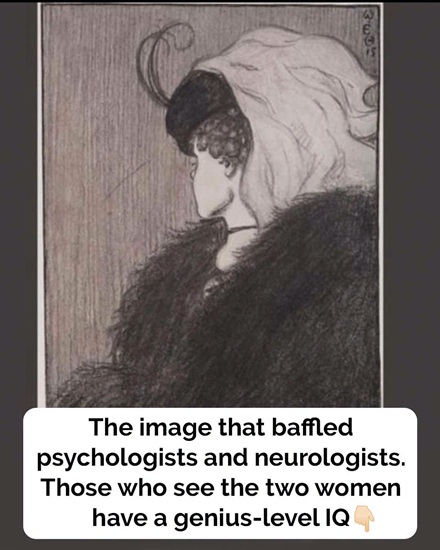
Optical illusions have always intrigued humans because they challenge how we interpret what we see. At first glance, an image may look completely straightforward, but after a closer look, it can reveal hidden shapes, alternative meanings, or entirely different scenes. These illusions work by interacting with the way the brain processes visual information. Instead of showing a single fixed interpretation, the image allows multiple possibilities, and the brain switches between them.
This makes optical illusions both entertaining and educational, as they reveal how perception can change depending on focus. Over time, such images have become widely shared across books, media, and the internet, where they continue to attract millions of curious viewers. One of the most well-known optical illusions ever created is the “Young Girl / Old Woman” drawing. This image has been circulating for well over a century and remains one of the most recognized visual puzzles in history.
It is believed that early versions of this illustration appeared around the late 1800s, a time when printed postcards and illustrated art were commonly shared for entertainment and communication. During that era, visual puzzles like this were often distributed without explanations, allowing people to discover hidden meanings on their own.
To understand its historical background, it helps to remember that the late 19th century was a period of rapid technological and cultural change. Printed artwork played a major role in everyday life, and creative illustrations were widely appreciated by the public.
The Artist and the Creation of the Illusion
The most famous version of this illusion is commonly linked to British cartoonist W.E. Hill. He was known for creating drawings that contained clever visual tricks and multiple interpretations within a single image.

One of his best-known works is often referred to as “My Wife and My Mother-in-Law,” which is closely related to the same visual concept as the “Young Girl / Old Woman” illusion. The idea behind the artwork is simple but powerful: one drawing can represent two completely different people depending on how it is viewed.
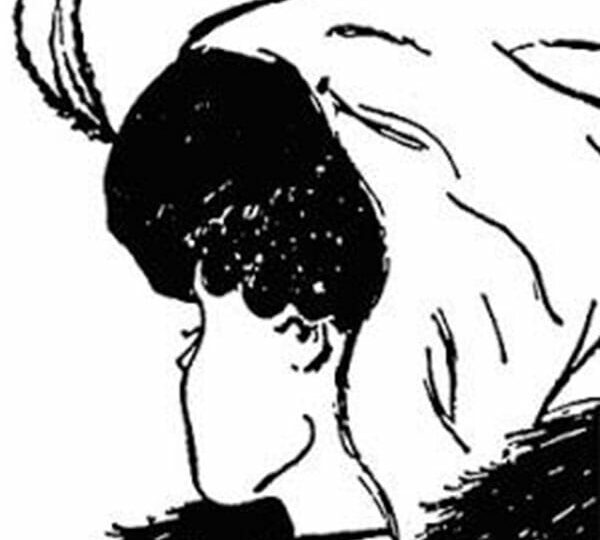
In this image, some viewers immediately see a young woman looking away, while others recognize the face of an older woman looking downward. Both interpretations exist within the same set of lines, yet the brain can only focus on one at a time.
How the Illusion Works in the Brain
This type of image is known as a bistable illusion, meaning it contains two valid visual interpretations that alternate depending on perception. The brain tries to organize visual input into familiar patterns, such as faces or shapes, to make sense of what it sees.
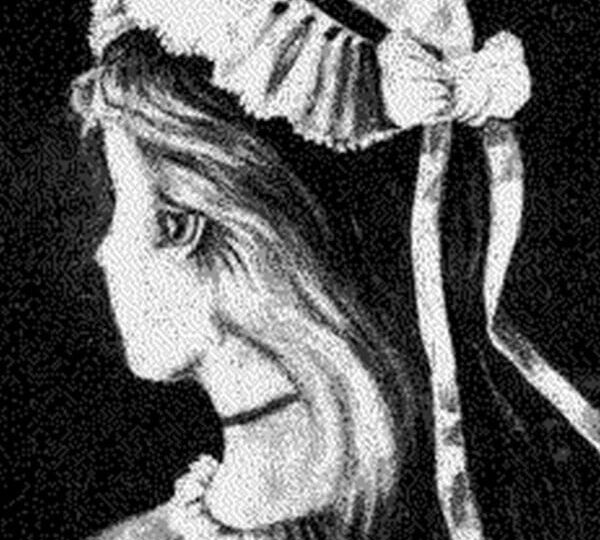
In this case, certain lines serve dual purposes. A single shape may represent part of a chin in one interpretation and a nose in another. Similarly, curves and shadows can shift between hair, facial features, or clothing depending on how the viewer perceives them.
Because of this, people often experience a “switching effect,” where their perception suddenly changes after noticing the second interpretation.
Why Many People Only See One Image at First
It is very common for viewers to initially see only one version of the illusion. The brain tends to lock onto the first interpretation it recognizes and ignores alternative patterns.
This happens due to how perception works. The mind prioritizes familiar shapes and builds a stable interpretation of the image rather than constantly switching between possibilities. This natural tendency makes it harder to immediately see both images.
However, once someone points out the second interpretation, most people are able to see it clearly, often experiencing surprise at how obvious it becomes afterward.
The Psychological Importance of Optical Illusions
Optical illusions are not only entertaining but also valuable in psychological and scientific research. They help experts understand how human perception works and how the brain interprets visual data.
These images demonstrate that perception is not a direct reflection of reality. Instead, it is an interpretation created by the brain based on patterns, experience, and focus.
Because of this, illusions like the “Young Girl / Old Woman” drawing are often used in studies related to cognition, attention, and visual processing.
Why This Illusion Became So Popular Online
In the modern internet era, this classic illusion has gained renewed popularity. It is frequently shared on social media platforms where users challenge others to find both hidden images.
Its simplicity is one of the main reasons for its success. Unlike complex puzzles, this illusion requires no special knowledge—just observation and a shift in perspective.
People often share their reactions after discovering the second image, making it a viral topic across different online communities.
Why Optical Illusions Remain Timeless
Even after more than a hundred years, optical illusions like this continue to attract attention. Their appeal comes from the fact that they reveal something fundamental about human perception.
They show that what we see is not always objective reality, but rather how our brain chooses to interpret visual information. This makes them interesting across many fields, including psychology, education, and art.
Because they are simple yet thought-provoking, they remain popular across generations and continue to be shared widely today.
One Image, Two Realities
The “Young Girl / Old Woman” illusion is a perfect example of how a single image can contain multiple meanings. Depending on perception, it can represent two completely different faces, both equally valid.
Its lasting popularity shows how deeply people are fascinated by visual perception and the mysteries of the human mind. Even today, millions of viewers continue to experience the surprise of discovering both images hidden within the same drawing.
Ultimately, optical illusions remind us that seeing is not always straightforward, and that perspective plays a powerful role in how we understand the world around us.

