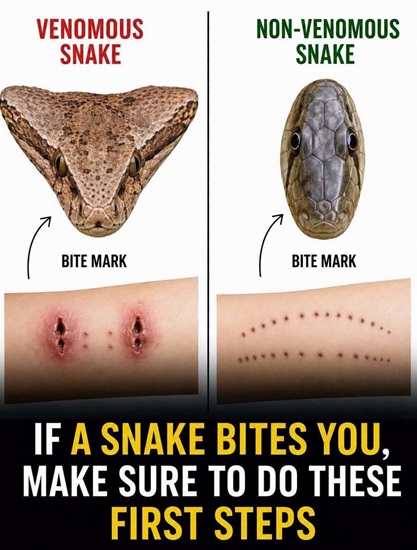
A snake bite should always be treated seriously because symptoms are not always immediate. Some venomous bites cause rapid pain and swelling, while others may initially appear mild before more serious effects develop. It is also possible for someone to be unsure what kind of snake caused the bite. For that reason, a person should never assume that a bite is harmless simply because the wound looks small or the pain is limited. The safest response is to move away from the snake, stay as calm as possible, reduce unnecessary movement, and seek professional medical care quickly.
The first step is making sure nobody else is bitten. Move the injured person and anyone helping them away from the snake without trying to chase, trap, or kill it. Approaching the animal creates an unnecessary risk and can turn one emergency into several. Even a snake that appears injured or dead should not be handled because reflex movements may still occur. Medical teams do not need someone to bring the snake to the hospital in order to begin evaluating the patient.
Once the area is safe, contact emergency medical services or arrange rapid transportation to an appropriate medical facility. If an ambulance is available, it is generally preferable because trained personnel can monitor the patient during transport. Tell the dispatcher approximately when the bite occurred, where on the body it happened, and what symptoms are present. Follow the instructions provided by emergency personnel rather than delaying care while attempting home remedies. Time is better spent reaching professional treatment.
Keep the bitten person as calm and physically still as possible. Fear is understandable, but running, unnecessary walking, or other strenuous activity should be avoided. If the person must move away from immediate danger, help them do so carefully and with as little exertion as practical. Once in a safe place, have them sit or lie down in a comfortable position. Physical activity can increase circulation, which is one reason unnecessary movement should be reduced.
If the bite is on an arm or leg, support the limb comfortably and avoid excessive movement. Do not massage the area or repeatedly lift and lower the limb in an attempt to change how venom moves through the body. Exact recommendations about limb positioning can vary by region and snake species, so local emergency guidance should take priority. The general principle is to keep the person still and avoid vigorous manipulation of the bite.
Remove rings, watches, bracelets, tight shoes, or restrictive clothing from the affected limb. Swelling can develop quickly, and items that are easy to remove at first may become difficult or dangerous to take off later. This should be done carefully and without delaying transportation. If an object is already trapped by swelling, do not force it off in a way that could cause additional injury.
The wound itself should be treated gently. Do not squeeze, cut, or aggressively scrub the bite. A clean, dry dressing can sometimes be used to cover the area if this does not delay emergency care. Avoid applying creams, chemicals, herbal preparations, or other substances. Venom already delivered into tissue cannot be effectively removed from the surface by washing or squeezing.
One of the most important parts of snake-bite first aid is understanding what not to do. Cutting the wound with a knife, razor, or other sharp object is dangerous and does not reliably remove venom. It can cause bleeding, infection, nerve injury, and additional tissue damage. The traditional idea of making cuts over fang marks should therefore be avoided.
Trying to suck venom out of the wound is also ineffective. This includes using the mouth or commercial suction devices. Venom begins interacting with tissue soon after the bite, and useful amounts cannot simply be pulled back out through the puncture marks. Oral suction can also introduce bacteria into the wound. Time spent attempting suction is better used contacting emergency services and preparing for transport.
Do not apply ice or frozen objects directly to the bite. Extreme cold does not neutralize venom and can damage already vulnerable tissue. The affected limb should also not be immersed in ice water. Although cooling the bite may seem logical, it can worsen local injury without providing a meaningful benefit.
Heat should not be applied either. Hot compresses, heated objects, or attempts to “burn out” venom can cause burns and additional tissue damage. Snake venom cannot be safely neutralized by applying extreme temperatures to the skin. Keeping the patient generally comfortable is appropriate, but direct heat or cold on the wound should be avoided.
Electric shock is another dangerous and unsupported treatment. Electricity does not reliably destroy venom inside the body. Instead, it can cause burns, heart rhythm problems, or other injuries. Similar warnings apply to chemicals or traditional substances sometimes placed on snake bites. None of these approaches replace medical treatment.
A tight tourniquet should not be improvised around the bitten limb. Completely restricting blood flow can cause severe tissue damage and may worsen complications. Snake-bite treatment is different from controlling life-threatening bleeding after major trauma. A tourniquet used incorrectly can create additional harm while doing nothing to solve the underlying envenomation.
Pressure immobilization is a more complicated topic because recommendations differ by region. In Australia, for example, pressure-immobilization techniques are commonly recommended for bites from several dangerous native snakes. In the United States, the same approach is generally not advised for many pit-viper bites because of the risk of worsening local tissue injury. This is why people should follow region-specific emergency instructions rather than relying on one universal internet technique.
Do not try to catch the snake for identification. If it remains visible from a safe distance, it may be useful to remember its general color, markings, size, and body shape. A photograph can sometimes help if it can be taken safely without approaching the animal or delaying care. However, personal safety must always come first. No photograph is worth another bite.
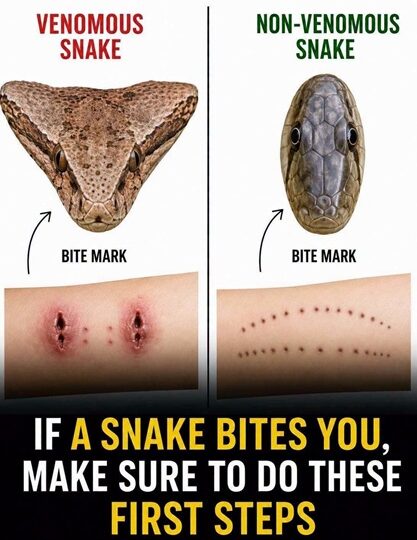
Snake identification is also more difficult than many people realize. Fear, poor lighting, distance, movement, and similarities between species can lead to mistakes. Juvenile snakes may look different from adults, and nonvenomous species can resemble venomous ones. Doctors therefore do not rely only on a patient’s identification of the snake. They also evaluate symptoms, local species, blood tests, and the progression of the bite.
Symptoms can vary significantly depending on the species, the amount of venom delivered, and where the bite occurred. Local symptoms may include pain, swelling, bruising, tenderness, or tissue changes. More serious effects can involve weakness, nausea, abnormal bleeding, dizziness, neurological problems, breathing difficulty, or low blood pressure. Different venoms affect the body in different ways, which is why medical evaluation is essential.
A bite that causes little pain at first may still require urgent attention. Some effects of envenomation can appear later. On the other hand, not every bite from a venomous snake necessarily delivers a dangerous amount of venom. So-called dry bites can occur, but that determination should be made through medical observation rather than assumption.
While waiting for emergency help, monitor the person’s condition. Watch their breathing, level of alertness, swelling, pain, skin color, and any new symptoms. If something changes, note approximately when it happened. This information can help medical staff understand how the condition is progressing.
If possible, remember or write down the time of the bite. Medical teams may also find it useful to know when swelling began or when other symptoms appeared. A simple timeline can be helpful, but do not spend excessive time measuring or marking the wound if it delays care. The priority remains transportation and professional treatment.
If the person becomes unconscious and is not breathing normally, follow emergency-dispatch instructions and begin CPR if you are trained and the scene is safe. Normal emergency resuscitation priorities still apply in severe cases. Continue until professional responders arrive or the person begins breathing normally.
Avoid giving alcohol after a snake bite. Alcohol does not neutralize venom and can interfere with judgment, hydration, and medical assessment. Caffeine and unnecessary stimulants are also best avoided while waiting for care. The patient does not need anything that could complicate symptoms or increase stress on the body.
Medication should be used cautiously. Some snake venoms interfere with blood clotting, so aspirin and certain anti-inflammatory pain medicines may be inappropriate. Do not automatically give ibuprofen, aspirin, or similar drugs unless a medical professional recommends them. Hospital staff can choose pain treatment based on the patient’s condition.
Food and drink also require common sense. Do not force someone to eat or drink if they are vomiting, becoming drowsy, having difficulty swallowing, or may need urgent procedures. In those situations, giving food or fluids can create a choking risk. Follow instructions from emergency personnel whenever possible.
Children should receive especially prompt medical attention because venom doses can be more significant relative to their body size. Older adults and people with serious health conditions may also face additional risks. However, any suspected venomous snake bite deserves appropriate evaluation regardless of the person’s age.
Pregnant patients also need urgent assessment. Serious envenomation can threaten both the pregnant person and the pregnancy. Decisions about antivenom and other treatment should be made by qualified clinicians. Avoiding treatment because of fear about medication can be more dangerous than obtaining professional care.
At the hospital, doctors may monitor vital signs, swelling, neurological function, and blood clotting. Laboratory tests can help determine whether venom is affecting the body. The patient may need to remain under observation even if early symptoms appear mild. Treatment decisions are based on the overall clinical picture rather than the appearance of the bite alone.
Antivenom is one of the main treatments used for significant venomous snake bites. It contains antibodies or antibody fragments designed to bind components of particular venoms. It should be administered in an appropriate medical setting where clinicians can manage both the envenomation and any possible reaction to treatment.
Not every snake bite requires antivenom. Some bites involve little or no venom, while others can be managed through observation and supportive care. In serious envenomation, however, antivenom can be lifesaving. Doctors decide whether it is needed based on symptoms, laboratory findings, suspected species, and how the patient’s condition changes over time.
Medical treatment may also include intravenous fluids, pain control, breathing support, blood-pressure management, repeated testing, and wound care. Severe cases can require intensive care. The exact treatment varies significantly depending on the snake and the patient’s response.
Antibiotics are not automatically needed for every snake bite. Doctors decide whether they are appropriate based on the wound and signs of infection. Surgery is also not routinely performed simply because swelling is present. Unnecessary procedures can create additional complications, so specialized medical judgment is important.
Recovery can range from relatively quick observation to days or weeks of treatment. Some people leave the hospital after clinicians determine that significant envenomation did not occur. Others require extended care because of tissue damage, neurological effects, abnormal blood clotting, or other complications. Follow-up appointments may also be necessary.
Preventing bites is easier than treating them. People hiking, working, or spending time in areas where snakes are common should wear appropriate footwear and clothing. Sturdy boots and long trousers provide some protection, although no clothing can eliminate the risk completely. Paying attention to where hands and feet are placed is equally important.
Never reach blindly into rock gaps, holes, woodpiles, thick vegetation, or dark storage areas. Snakes often rely on camouflage and may remain hidden until a person is very close. Use tools rather than bare hands when moving outdoor materials that have been sitting undisturbed.
Use a flashlight when walking outside at night in areas where snakes may be present. Good lighting can prevent accidental encounters by allowing a person to see the animal before stepping near it. Closed footwear is also safer than going barefoot or wearing open sandals.
Keeping property free of unnecessary clutter can reduce hiding places for snakes and rodents. Woodpiles, stored materials, and debris should be managed carefully. Rodent control can also reduce one factor that attracts some snakes. These steps lower risk but cannot guarantee that snakes will never appear.
Children should be taught never to touch or approach a snake. They do not need to identify whether it is dangerous. The safest rule is simply to move away and tell an adult. Wildlife should always be observed from a safe distance.
If a snake appears near a home, avoid trying to capture it personally. Give it space to move away when possible. If removal is necessary, contact an appropriate wildlife professional or local service. Handling snakes safely requires specialized knowledge and equipment.
People who work, camp, or hike in remote places should plan for emergencies in advance. Carry a charged phone or another communication device appropriate for the area. Tell someone where you are going and when you expect to return. In places without reliable cell coverage, satellite communicators or personal locator devices may be useful.
A basic first-aid kit can help cover a wound and manage other minor injuries, but it is not a substitute for medical care after serious envenomation. Commercial suction kits should not create a false sense of security. Communication and a realistic evacuation plan are far more important.
Travelers should also remember that snake-bite recommendations differ around the world. Species, venom effects, antivenoms, and first-aid protocols vary considerably between countries. Local emergency services and public-health guidance should take priority over generic advice found online.
In the United States, public-health guidance emphasizes prompt medical care and warns against cutting the bite, sucking out venom, applying ice, or using a tourniquet. Similar principles are supported by modern medical toxicology. The focus is on avoiding harmful interventions while getting the patient to an appropriate healthcare facility.
Globally, snakebite envenoming remains a major health problem, especially in regions where dangerous snakes are common and access to antivenom is limited. Agricultural workers and people living in rural communities can face particularly high risks in some countries. This broader reality is another reason snake bites should not be treated casually.
The safest general sequence is straightforward. Move away from the snake. Call for emergency help. Keep the injured person calm and still. Remove tight objects before swelling develops. Avoid cutting, suction, ice, heat, electric shock, and improvised tourniquets. Then reach professional medical care as quickly as possible.
The most important thing to remember is that first aid cannot neutralize venom at home. The goal is to prevent additional harm and keep the patient stable until trained professionals can evaluate and treat the bite. Calm decisions, rapid medical attention, and avoiding dangerous myths provide the best chance of a good outcome.
