
Snake bites are uncommon compared with many other outdoor injuries, but they remain an important public health concern in parts of Australia where venomous snake species are found. People who spend time farming, gardening, hiking, or working outdoors may occasionally encounter snakes, particularly during warmer months when reptiles are more active. While most encounters end without incident, understanding how to reduce the risk of snake bites and knowing how to respond appropriately can improve safety for individuals, families, and rural communities.
Public health authorities emphasize that preparation and evidence-based first aid are far more valuable than relying on myths or outdated advice. Contrary to popular belief, many snake encounters do not occur in remote wilderness areas. According to information published by Australian emergency medical organizations, a significant proportion of reported snake bites occur near homes, farms, sheds, gardens, and other residential properties. Snakes may enter these environments while searching for food, water, or shelter.
Rodents, which are attracted by stored grain, pet food, compost, or other food sources, can also attract snakes. Maintaining a clean property, controlling rodent populations, trimming overgrown vegetation, and reducing potential hiding places can make residential areas less attractive to wildlife. People who work outdoors can further reduce their risk by wearing appropriate protective clothing.
Long trousers, sturdy boots, gloves when handling vegetation or debris, and paying close attention when reaching into areas that cannot be clearly seen are simple precautions recommended by many safety organizations. Although protective clothing cannot prevent every bite, it may reduce the likelihood of direct skin contact in some situations. Remaining alert while walking through long grass, lifting firewood, or working around rocks and logs also helps reduce the chance of accidentally surprising a snake.
Australia is home to many snake species, but only a relatively small number are responsible for most medically significant envenomations. Studies conducted through organizations such as the Australian Snakebite Project have shown that species including the eastern brown snake, tiger snake, and red-bellied black snake account for many reported venomous bites requiring hospital treatment. At the same time, experts emphasize that accurately identifying a snake in the field is often difficult and should never place anyone at additional risk. The priority should always be moving to safety and obtaining medical care rather than attempting to identify or capture the animal.
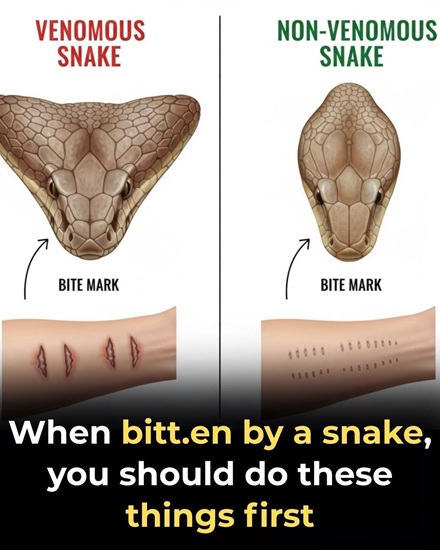
Not every snake bite results in venom being injected. Medical professionals describe some incidents as “dry bites,” meaning the snake bites without delivering a clinically significant amount of venom. A person may experience minor pain, swelling, or small puncture marks while showing no evidence of systemic poisoning. However, because it is impossible for most people to determine whether venom has been injected based solely on the appearance of the wound, every suspected snake bite should be treated as a medical emergency until healthcare professionals complete an appropriate assessment. Prompt evaluation remains essential regardless of initial symptoms.
When venom is injected, symptoms can vary depending on the snake species, the amount of venom delivered, and the individual’s response. Early symptoms may include pain or swelling at the bite site, while some people develop nausea, dizziness, weakness, blurred vision, difficulty speaking, muscle weakness, or changes in breathing. In certain cases, symptoms may not appear immediately, which is another reason why medical observation is important even if a person initially feels well. Healthcare professionals use clinical assessment together with laboratory testing and, when appropriate, venom detection methods to determine the most suitable treatment.
One important point emphasized by emergency physicians is that the appearance of the bite does not reliably indicate its severity. Some venomous bites may leave only small puncture marks or minor scratches, while more obvious skin injuries do not necessarily indicate severe envenomation. For this reason, decisions about treatment should always be based on professional medical assessment rather than on how dramatic the wound appears. Remaining calm and following recommended first-aid procedures provides the best opportunity for effective medical care.
The most effective approach to snake bite management begins long before an emergency occurs. Learning evidence-based first aid, keeping emergency telephone numbers readily available, carrying communication devices when working in remote areas, and ensuring that coworkers or family members know how to respond can all improve emergency preparedness. Public education has played an important role in reducing preventable complications associated with snake bites, and health authorities continue encouraging people to rely on scientifically supported recommendations instead of long-standing myths or home remedies.
When a snake bite is suspected, the first priority is to remain as calm as possible and seek professional medical assistance immediately. Although remaining calm can be difficult during a stressful situation, unnecessary movement may increase the spread of venom through the lymphatic system if venom has been injected. Emergency medical services should be contacted as soon as it is safe to do so, and the injured person should be monitored continuously until trained healthcare professionals arrive. Early medical evaluation is important because some symptoms may develop gradually rather than immediately after the bite.
One of the most widely recommended first-aid techniques for suspected venomous snake bites in Australia is the pressure immobilization method, which is supported by organizations such as the Australian Resuscitation Council. This technique involves applying a firm elastic bandage over the bite site and continuing the bandage along the entire affected limb while maintaining normal blood circulation. The purpose is not to stop blood flow but to reduce the movement of lymphatic fluid, which may slow the spread of venom. After the bandage is applied, the limb should be immobilized with a splint whenever possible, and the injured person should remain still until medical care is available.
Equally important is understanding which first-aid practices should not be used. Medical authorities advise against cutting the bite wound, attempting to suck out venom, applying ice directly to the area, using electrical devices, or placing tight tourniquets above the bite. Scientific research has shown that these methods do not remove venom effectively and may increase tissue damage or create additional medical complications. Similarly, alcohol should not be consumed as part of first aid because it offers no therapeutic benefit and may complicate medical assessment.
Experts also recommend not washing the bite site before medical evaluation unless specifically instructed by healthcare professionals. Small traces of venom that remain on the skin may assist clinicians when venom identification testing is appropriate. Leaving the wound undisturbed, aside from applying the recommended pressure bandage, can therefore provide useful information during hospital assessment. If it can be done safely, noting the time of the bite and the development of any symptoms may also help medical teams evaluate the situation more effectively.
Another important safety recommendation is to avoid attempting to capture, kill, or closely approach the snake after the incident. Doing so may place additional people at risk of being bitten. Modern medical treatment is based primarily on the patient’s clinical condition rather than on physically bringing the snake to the hospital. If the snake can be observed from a safe distance without increasing danger, a general description of its appearance may be helpful, but personal safety should always remain the highest priority.
Preventing snake bites is often more effective than treating them. Homeowners and land managers can reduce the likelihood of encounters by keeping grass trimmed, removing piles of debris where snakes may shelter, storing animal feed securely to discourage rodents, and checking outdoor work areas before beginning tasks. People walking in bushland or rural environments are encouraged to stay on established paths when practical, wear sturdy footwear, and remain attentive when stepping over logs, rocks, or thick vegetation where snakes may be resting.
Education also plays a central role in improving outcomes following snake bites. Community first-aid training, workplace safety programs, and public health education help ensure that more people understand how to respond appropriately during emergencies. Families living in rural areas may benefit from discussing emergency plans in advance, including knowing local emergency contact numbers, identifying the quickest route to medical facilities, and ensuring communication devices are available when working in isolated locations.
Although Australia is home to several venomous snake species, serious bites remain relatively uncommon compared with the number of people who safely enjoy outdoor activities every day. Most snakes avoid human contact whenever possible and will generally move away if given the opportunity. Respecting wildlife, maintaining awareness of the surrounding environment, and following evidence-based safety guidance allow people to reduce risk while continuing to work, travel, and enjoy outdoor recreation responsibly.
Ultimately, the most effective response to a suspected snake bite combines preparation, evidence-based first aid, and prompt medical care. Remaining calm, calling emergency services, applying pressure immobilization when appropriate, avoiding outdated first-aid myths, and allowing healthcare professionals to provide definitive treatment offer the best opportunity for a positive outcome. By relying on recommendations from recognized medical authorities rather than misinformation or folklore, individuals and communities can make informed decisions that support safety and improve preparedness whenever an unexpected encounter with wildlife occurs.

