
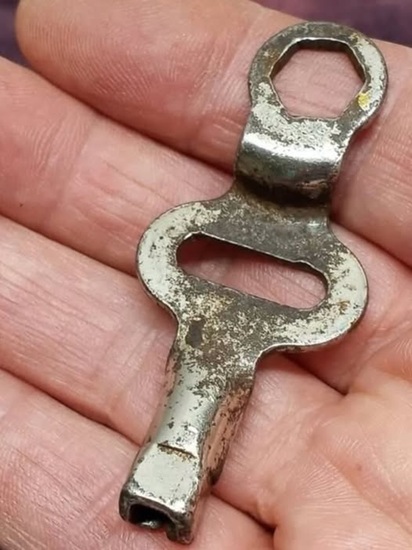
At first sight, this little metal object can be surprisingly difficult to identify. Its narrow body, simple handle and slotted end do not resemble the kitchen tools most people use today. Someone familiar only with ring-pull lids, peel-back seals and modern can openers might easily mistake it for a tiny piece of hardware. In reality, it belongs to an older style of food packaging. This type of tool is commonly known as a can key, winding key or twist key, and it was designed to open containers equipped with a specially prepared tear strip.
The opening system worked in a very simple way. Certain cans were made with a narrow metal band that had been scored or weakened so it could separate from the rest of the container. One end of that strip formed a small tab. The user placed that tab into the slot of the key and then began turning the tool by hand. As the key rotated, the strip wrapped around the shaft and gradually peeled away from the can.
This meant the container could be opened without cutting around the lid in the way a modern rotary can opener does. The key did not have to slice through solid metal. Instead, the can itself had already been manufactured with a defined path where the strip was meant to tear. The tool simply provided the force needed to pull and roll that strip away in a controlled manner.
Sardine tins became especially well known for using this type of opening system. Many people who remember older styles of preserved-fish packaging associate the little keys directly with sardine cans. The key could be supplied with the tin itself, so the customer already had the correct tool needed to open the package. That convenience made the system particularly practical for compact food containers.
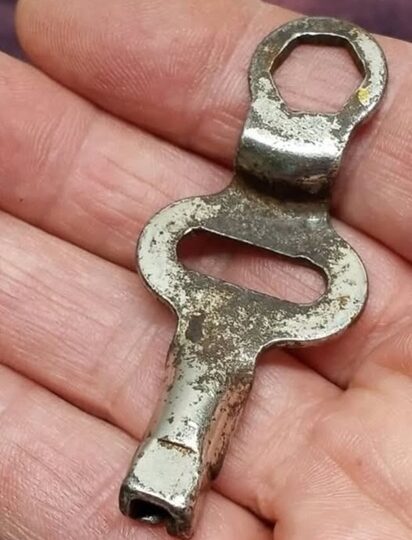
The same general winding principle was also used on other types of metal packaging. What mattered was not the exact food inside but whether the container had been designed with a compatible scored strip and starting tab. If those features were present, a small winding key could provide an effective way to open the can.
Using the tool required only a few basic steps. First, the person located the exposed end of the metal strip. That small tab was inserted through the narrow slot in the key. The key was then turned slowly, causing the strip to begin winding around the shaft. With each additional rotation, more metal separated from the container.
As the process continued, the strip formed a tight coil around the key. This was one of the most recognizable features of the system. Rather than producing a long, loose piece of metal, the removed band stayed wrapped around the tool. That helped keep the strip more controlled during opening.
The slot itself was therefore the essential working part of the key. It gave the small metal tab somewhere to lock in place before the winding began. Once the tab was secured, the key acted like a miniature hand-powered reel. The turning movement transformed a simple twist of the wrist into steady pulling force.
This was a clever mechanical solution because peeling thin sheet metal directly by hand would have been awkward and potentially dangerous. By winding the strip around a firm metal shaft, the user could apply pressure gradually. The hand did not need to grip the sharp strip directly, and the opening action became much more manageable.
The can and key were designed to work together as a complete system. A twist key could not simply open every ordinary metal can. The container needed the correct tear strip, scored edges and starting tab. Without those prepared features, the key had nothing to wind and would not function like a conventional opener.
Different manufacturers could place the strip in different locations. Some cans used a band close to the top, while others incorporated the opening section into the body of the container. In every case, the basic principle remained similar: the strip separated along a prepared path as it was wound around the key.
This style of can opening has a long history. Key-based opening mechanisms appeared during the nineteenth century and continued to be used in various forms for many decades. Over time, manufacturers refined the design while keeping the same basic idea of a slotted key that rolled away a metal strip.
The persistence of the system shows how effective its simplicity could be. It required no gears, springs, electric parts or complicated cutting mechanism. The user’s hand supplied the motion, the shaft supplied the winding surface, and the can’s tear strip provided the opening path.
The small size of the key was another practical advantage. It could be inexpensive to manufacture and easy to attach directly to the product. A large handle was not necessary because the tool only needed enough surface for the user to grip and rotate it. This helped keep packaging compact and costs relatively low.
In some cases, the key was intended mainly for use with the specific can it accompanied. Once the container had been opened, the small tool might be discarded together with the metal strip. Other people saved the keys in kitchen drawers, where some later survived long after the original packaging had disappeared.
That is one reason these tools can be so confusing today. Without the can, the key loses the context that once made its purpose obvious. A loose example can resemble a miniature wrench, an appliance part or an unidentified piece of hardware. Its design makes much more sense once the old tear-strip system is understood.
The tool also reflects a time when food packaging and opening devices were more closely connected. Instead of expecting every household to use the same general-purpose opener, a manufacturer could build the opening method directly into the package. The can, tab, strip and key all functioned together.
That arrangement offered real convenience as long as the key remained attached to the product. Losing such a small tool could make the package harder to open as intended. For this reason, manufacturers often secured the key to the can until the customer was ready to use it.
The relationship between these keys and sardine tins became especially memorable because preserved fish was frequently sold in flat metal containers suited to this kind of mechanism. Over time, the expression “sardine can key” became a familiar name for the object even though similar designs were not limited exclusively to sardines.
The broader term “twist key” is also useful because it describes exactly how the tool operates. Unlike a cutting opener, it works by twisting and winding. The metal has already been prepared to separate, so the user’s task is mainly to keep turning the key until the strip has been removed.
A related expression is “key-wind can.” This name emphasizes that the container itself was designed to be opened by winding away a narrow section of metal. The key was not an optional accessory added afterward; it was part of the intended opening system.
The growing coil of metal around the shaft was an important part of the action. As the strip became longer, it continued wrapping tightly around the key. This prevented much of the removed metal from hanging loose and made the winding process easier to manage.
The exposed edges could still be sharp, however, so these older cans required care. The system was practical, but it did not eliminate every risk associated with torn sheet metal. Modern easy-open packaging has developed different ways to reduce the need for this type of handling.
As packaging technology changed, the traditional winding key gradually became less necessary. Pull tabs, ring-pull lids and peelable seals allowed many containers to be opened without any separate tool. Other cans were standardized around general-purpose can openers that could be reused across many products.
This shift explains why younger generations may never have encountered a twist key in normal use. The object itself did not become less effective. The type of container it was designed for simply became less common.
That is a recurring pattern in everyday technology. A tool can disappear not because the tool stops working, but because the product around it changes. Once manufacturers redesign the package, an older accessory may no longer be needed.
The vintage can key is a good example of that process. Its entire purpose depended on the existence of a scored tear strip. When packaging moved toward different opening methods, the small key gradually disappeared from most kitchen routines.
For people who grew up with the older cans, the action may still be instantly recognizable. Insert the tab, turn the key, and watch the thin strip curl around the metal shaft. For someone seeing the object for the first time today, the purpose can seem almost impossible to guess.
That contrast helps explain why images of old household tools often become popular identification puzzles. The objects are not necessarily complicated. What has changed is the shared knowledge surrounding them.
A century ago, many ordinary consumers understood exactly what a can key was because they had seen or used one. Today, someone might find the same object in an antique box and assume it belonged to a machine or a toolbox rather than a kitchen.
The history also shows how much attention manufacturers once gave to making canned food practical to use. Preserving food inside a sealed metal container was only part of the challenge. Customers also needed a workable way to open that container once they were ready to eat its contents.
Earlier cans could be difficult to access because strong metal construction was essential for storage and preservation. As materials and manufacturing improved, inventors developed specialized opening systems. The winding key became one effective answer to that problem.
Its design was efficient because the can had already been engineered to tear in the correct place. The key did not need a sharp blade. It only needed to hold the tab securely and provide enough leverage to pull the strip along the scored lines.
This is why the object can appear almost too simple to have been useful. Modern kitchen tools often contain multiple moving parts, but the can key needed very little complexity. Its effectiveness came from the way the package itself had been designed.
Manufacturing such a tool could also be economical. A small stamped or formed piece of metal could perform the task without adding significant weight or bulk to the product. That mattered when a key might be included with large numbers of cans.
The simplicity of construction also made the tool durable enough for its intended purpose. There were no gears to jam or blades to sharpen. If the slot and shaft remained intact, the key could usually do the job it had been designed to perform.
This does not mean every surviving can key was identical. Manufacturers produced different shapes, handle styles and dimensions. Some keys were shorter or longer, while others had larger openings in the handle or different forms of grip.
Those differences can make identification more complicated. An unusual hole or geometric shape in the handle may tempt people to assign the object an additional function. Without clear documentation for a particular model, however, such secondary uses should not automatically be treated as confirmed facts.
The primary winding purpose is much easier to establish. The slotted shaft, tear-strip tab and rolling motion are well documented features of the historical opening system. That is the safest and most accurate way to describe an unidentified example when its original package is missing.
If the key is still attached to an old fish tin, the identification becomes even easier. The relationship between the parts is immediately visible. The tab fits into the slot, and the strip follows a prepared path around the container.
Once seen in that original context, every feature of the tool becomes logical. The handle gives the fingers something to hold. The shaft provides a place for the strip to coil. The slot captures the starting tab.
The can itself completes the mechanism. Without the scored band, the key would have no useful material to pull away. This is why the object is best understood as one component of an integrated package rather than as an independent cutting tool.
Vintage tools like this can also be valuable for understanding the history of everyday life. They reveal how common tasks were handled before modern packaging standardized so many routines.
A kitchen from an earlier period might contain a variety of specialized openers and small implements. Some were made for bottles, some for cans and others for particular forms of packaging. The sardine-style twist key belonged to this broader world of product-specific tools.
As those products changed, many of the associated tools disappeared. People no longer needed to learn the same opening methods, so the knowledge faded along with the objects.
The surviving keys therefore tell a small story about industrial design. They show how manufacturers used simple mechanical principles to solve practical problems with very little material.
They also demonstrate that an effective tool does not need to be complicated. Rotation around a shaft can create enough controlled pulling force to separate a scored strip of thin metal. That basic idea remained useful for many years.
Collectors of vintage kitchen items may recognize these keys immediately because they have seen them attached to old packaging. Others may need to see a demonstration before the purpose becomes clear.
Once demonstrated, the mechanism is easy to understand. The tab enters the slot, the key turns, the strip winds around the shaft, and the can opens along its prepared seam.
That straightforward sequence is what made the system successful. It relied on coordination between design and user rather than on mechanical complexity.
The key also illustrates how disposable packaging accessories could become historical artifacts. At the time, many were probably regarded as ordinary objects with little reason to preserve them.
Decades later, the same pieces of metal can attract interest because the system they belonged to has largely vanished from daily life. An object once considered forgettable can become a clue to how people bought, stored and opened food.
This transformation is common in the history of household technology. Familiar items become unfamiliar when new designs replace the tasks they once performed.
The vintage can key is especially striking because its appearance alone gives so little away. Without seeing the tear strip, the narrow slot can seem mysterious.
With the original mechanism explained, however, the design suddenly looks obvious. The slot is not decorative. It is the point where the opening process begins.
The key’s shape also reflects the amount of force required. The handle only needed enough area for the fingers to rotate it comfortably. Once the strip began winding, continued turning gradually completed the opening.
There was no need to make the tool much larger because the can’s scored metal did most of the work. The key guided and pulled rather than cutting a completely new path.
This division of work between container and tool is one of the most interesting aspects of the design. Modern people often think of the opener as doing everything. In the key-wind system, much of the opening mechanism was actually built into the can itself.
That distinction explains why a twist key could remain so small and simple. It was one part of a carefully planned packaging system.
As easy-open designs became more common, manufacturers found ways to place even more of the opening mechanism directly into the lid. Ring pulls and related systems allowed the consumer to open many containers using only the attached tab.
The old key therefore became unnecessary for many products. The function did not disappear; it was absorbed into a different packaging design.
This makes the tool a useful reminder of technological change that happens almost unnoticed. Everyday products are redesigned gradually, and consumers adapt until the previous system feels unfamiliar.
A person can live through such a transition without thinking of it as a major technological event. Yet decades later, the discarded tools clearly show how different ordinary routines once were.
The old can key also provides an example of packaging designed around convenience within the limits of its era. A manufacturer could offer a sealed metal container while still giving the customer a relatively easy way to open it without owning another specialized device.
That convenience depended on the key remaining with the can. If it was lost, the intended method became less practical.
Attaching the small key directly to the container helped solve that problem. It ensured that the opener traveled with the food from the manufacturer to the consumer.
For many canned-fish products, that arrangement became familiar enough that people could recognize the key instantly. The association with sardines remained especially strong even after other products had used related mechanisms.
Today, the nickname “sardine tin key” remains useful, but it should not always be treated as proof that an unidentified key originally came from a sardine can. Similar tear-strip systems appeared on other containers.
When the original package is unknown, describing the object as a vintage twist key or tear-strip can key is more precise. That wording explains the function without claiming more specific history than the evidence supports.
This careful distinction helps avoid misinformation when old objects circulate online. Vintage tools often attract confident but unsupported explanations.
A responsible description should separate what can be documented from what is merely possible. For this object, the winding function is well established.
The same caution applies to claims about extra features in the handle. A geometric opening may have had a secondary use on some specific design, but that does not mean every similar key served as a wrench or adjustment tool.
Without manufacturer information or other reliable documentation, such claims should remain tentative. The verified opening method is already interesting enough on its own.
The tool does not need an exaggerated story to make it worth discussing. Its historical role shows how a simple piece of metal solved a common packaging problem before modern easy-open lids became widespread.
Seen in isolation, it looks mysterious. Seen with the right can, it becomes a perfect example of practical design.
Its small size, slotted shaft and winding action were all shaped by one goal: to remove a prepared strip of metal from a sealed container with minimal effort.
That goal was achieved using remarkably few parts. The key had no complex mechanism because it did not need one.
Its success depended on the intelligence of the overall system rather than the complexity of the individual tool.
This is one reason old packaging devices can be so interesting. They reveal that innovation does not always mean adding more components.
Sometimes the best solution is to simplify the task by redesigning the product itself. The twist-key can did exactly that by preparing a controlled tear path before the customer ever opened the package.
The user then completed the process with a basic rotational movement. The result was practical, cheap and easy to reproduce.
For decades, that was enough to make the design useful across many products and households.
Eventually, other opening systems became more convenient and gradually replaced it. But the surviving keys still show how the older method worked.
They also preserve a small piece of everyday industrial history that might otherwise be forgotten.
A person finding one today may initially ask whether it belongs to a machine, a lock or a piece of furniture. The answer is much more ordinary and, in its own way, more interesting.
It was a kitchen and packaging tool created for a world in which some metal cans opened by winding away a narrow strip.
The mystery disappears once the original container is imagined beside it.
Insert the tab into the slot, rotate the key and continue turning as the metal curls around the shaft.
That simple motion explains the entire object.
What now looks like an unusual vintage artifact was once a straightforward household convenience.
Its history is a reminder that common technology can become unfamiliar surprisingly quickly when the products around it change.
The old can key did not need to be elaborate to be effective. It relied on a carefully designed strip, a small slot and the turning force of the user’s hand.
That combination allowed countless containers to be opened with a tool small enough to travel directly with the package.
Today, its usefulness may no longer be obvious, but its design still makes perfect sense once the original system is understood.
For that reason, the little twist key remains an interesting example of how earlier generations solved everyday problems through simple mechanical ideas.
It is not merely a strange piece of metal. It is evidence of a packaging method that once felt completely ordinary and later became largely unnecessary.
That is what gives the object its appeal now. A tool once designed to be used quickly and forgotten can survive long enough to become a small historical puzzle.
And once its real purpose is explained, the shape stops looking strange. Every part of it reflects exactly what it was meant to do.

