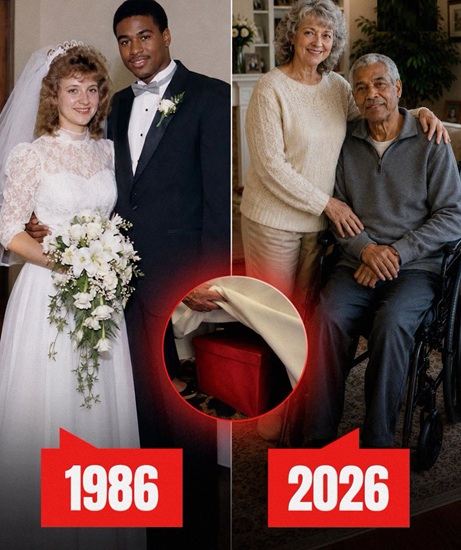
For thirty-two years, Frank and I shared the same dream. It was never a mansion by the sea, a luxury car, or a life filled with expensive possessions. Our dream was surprisingly simple: to take one unforgettable Mediterranean cruise together after years of work, sacrifice, and putting everyone else’s needs before our own. Every anniversary we placed another small amount of money into an old blue cookie tin that sat quietly on the highest shelf in our kitchen.
We called it “Our Big Adventure.” Whenever life became difficult, Frank would smile, tape the loose lid back into place, and promise, “Next year, Pam. Our time will come next year.” For a while, I believed him without question. We were raising children, paying bills, repairing the house, and helping relatives whenever someone needed us. Every time the savings account finally began to grow, another emergency seemed to appear. The furnace stopped working during one freezing winter. Daniel needed help paying for college. My aging mother required daily care after her health declined. Medical bills arrived one after another.
The blue tin slowly became less a symbol of travel and more a reminder of how quickly life can redirect even the best-laid plans. Frank never complained about those sacrifices. He believed family always came first, and I admired that about him. Yet there were moments when I quietly wondered whether our turn would ever arrive. Sometimes I would take the blue tin from the shelf, run my fingers across its dented lid, and imagine us standing on the deck of a ship watching the sun disappear into the Mediterranean Sea. Those moments kept the dream alive, even when reality suggested otherwise.
Nine months before our scheduled departure, everything changed. What we expected to be an ordinary doctor’s appointment became the beginning of a journey neither of us had imagined. Frank was diagnosed with pancreatic cancer. The news arrived without warning and transformed every future plan into uncertainty. Hospital visits replaced travel brochures. Medical appointments filled the calendar that once contained notes about ports, museums, and seaside cafés. Eleven weeks later, I stood beside his hospital bed holding his hand as I said goodbye to the man who had shared almost forty years of my life.
After the funeral, our home became painfully quiet. Every room carried memories that seemed louder than silence itself. Frank’s favorite chair remained exactly where he had left it. His coffee mug still sat in the kitchen cabinet. His reading glasses rested beside the newspaper he would never finish. Friends and relatives encouraged me to move forward, but grief rarely follows anyone else’s timetable. Some mornings I struggled simply to make breakfast, while other days I found myself talking to empty rooms as though he might answer from somewhere nearby.
The cruise tickets stayed untouched inside a kitchen drawer for three months. I could not bring myself to throw them away, yet I also could not imagine boarding a ship without the person who had planned every detail beside me. The dream no longer felt exciting. Instead, it reminded me of everything we had lost before we finally reached the moment we had spent decades waiting to experience together.
One afternoon, my daughter Mikayla quietly placed the travel documents on the kitchen table in front of me. She looked at me for a long moment before speaking.
“Dad didn’t spend thirty-two years saving for you to leave these in a drawer forever,” she said gently.
I stared at the envelopes without touching them.
“It won’t be the trip we imagined.”
“No,” she replied softly. “But it can still be the trip he hoped you’d take.”
Her words stayed with me long after she left the room.
Daniel saw the situation differently. He worried about me traveling alone so soon after losing my husband. He believed staying home was the safer choice, giving grief more time before making such a significant journey. His concern came from love, but every conversation ended the same way—with him asking me to postpone the cruise and me wondering how many times in life I was expected to postpone my own happiness.
The evening before my departure, I carefully packed my suitcase. Between sweaters and dresses, I folded one of Frank’s navy-blue shirts. I knew I would never wear it, but leaving it behind somehow felt impossible. It represented every morning coffee we had shared, every road trip we had taken, every ordinary day that had quietly become precious after he was gone. Packing that shirt felt less like carrying clothing and more like carrying a small piece of our life together.
Two days later, Mikayla drove me to the airport before sunrise. Neither of us spoke very much during the drive. Sometimes silence says everything that words cannot. Before I walked inside the terminal, she hugged me tightly.
“Promise you’ll text me whenever you can.”
I smiled through tears.
“I promise.”
As I boarded the plane, I looked back one last time toward the terminal windows. I wasn’t certain whether I was beginning a vacation, saying goodbye to the past, or learning how to live with grief. Perhaps it was all three. Whatever waited for me across the ocean, I knew one thing for certain.
For the first time in thirty-two years, I was finally taking the journey that had always been waiting for us.
The first few days aboard the ship felt unfamiliar, as though I were learning how to exist in a life that no longer looked the way I had imagined. Every sunrise over the water reminded me of conversations Frank and I had once shared while looking through travel brochures at our kitchen table. I often caught myself turning toward the empty chair beside me, ready to comment on the color of the sea or the distant coastline before remembering I was traveling alone. Although the sadness never disappeared, each new destination encouraged me to take another small step forward instead of remaining trapped in memories of what might have been.
As the cruise continued, I slowly began speaking with other passengers. Some were celebrating anniversaries, others were traveling with lifelong friends, and several, like me, were discovering what it meant to continue living after the loss of someone they deeply loved. Their stories reminded me that grief rarely follows the same path for everyone. Some people found comfort in conversation, others in quiet reflection, and many simply appreciated sharing a meal with someone who understood that healing does not happen overnight.
On the fifth evening, I dressed for the captain’s dinner wearing the blue dress Frank had always said brought out the color of my eyes. Standing outside the elegant dining room, I hesitated for a moment before taking a deep breath and walking inside. My place card directed me to Table Seven, the very table Frank had hoped we would share during our anniversary celebration. As I sat down, memories returned with surprising clarity, but instead of overwhelming me, they reminded me why I had chosen to make the journey.
Halfway through dessert, the captain approached my table and politely called my name. The room grew noticeably quieter as he explained that my late husband had left a special request to be carried out during the voyage. Rather than creating a dramatic spectacle, the captain spoke with warmth and respect, making it clear that Frank had carefully planned a personal surprise intended only to encourage me during a difficult chapter of my life.
Following the captain’s instructions, I reached beneath the table and found a neatly wrapped package with my name written across the top in handwriting I immediately recognized. My hands trembled as I carefully removed the wrapping paper. Inside was the old blue cookie tin that had accompanied us through more than three decades of dreams, disappointments, sacrifices, and hope. Someone had carefully repaired the loose hinge that had broken years earlier, leaving the tin looking both familiar and lovingly restored.
Resting inside the tin was a small handcrafted wooden model of a sailing ship along with a sealed envelope. According to a message that accompanied the gift, Frank had begun carving the model during his final months whenever he felt strong enough to spend time in the garage workshop. When his illness progressed, Mikayla quietly helped him complete the details while honoring his original design. Knowing that they had worked together on the project filled me with both sadness and gratitude, reminding me of the quiet acts of love that often take place without recognition.
I slowly opened the envelope and unfolded several handwritten pages. In the letter, Frank reflected on the many years we had spent postponing our own plans while helping family members through difficult circumstances. He thanked me for every sacrifice we had made together and acknowledged that, although many of those decisions had come from generosity and love, he sometimes wished we had also allowed ourselves to enjoy the dreams we had worked so hard to build. His words did not express regret for helping others but instead encouraged me to remember that caring for myself was equally important.
As I continued reading, Frank wrote that he hoped I would never allow grief to convince me that my own story had ended simply because his had. He encouraged me to keep traveling, continue learning, make new memories, and remain close to our children while also giving myself permission to pursue experiences that brought genuine happiness. He reminded me that love does not disappear when someone dies; instead, it often becomes the quiet encouragement that helps those left behind continue moving forward.
The letter also changed the way I viewed the years we had spent waiting. Rather than seeing them only as opportunities we had lost, I began recognizing them as evidence of the life we had built together—a life filled with raising children, supporting family, overcoming challenges, and remaining committed to one another through every season. While our long-awaited cruise had not unfolded exactly as we imagined decades earlier, completing the journey became a meaningful way of honoring both the dream itself and the partnership that had inspired it.
The following evening, I returned to the same dining room carrying the repaired blue tin with me. Instead of focusing on the empty chair beside mine, I found myself smiling at the conversations taking place around the table. The sea outside the windows looked just as beautiful as Frank had always promised it would. For the first time since his passing, I realized that remembering someone with love does not require remaining trapped in sorrow forever. Memories can accompany us without preventing us from embracing new experiences.
As the voyage drew to a close, I stood alone on the upper deck watching the sun slowly disappear below the horizon. The Mediterranean stretched endlessly before me, peaceful and calm beneath the evening sky. Holding the small wooden ship in my hands, I quietly thanked Frank for believing that one day I would find the courage to complete the journey we had dreamed about together. Although I could never recover the years that had passed, I could choose how to live the years still ahead.
When I finally returned home, I placed the repaired blue cookie tin on a shelf where I would see it every day—not as a reminder of postponed dreams, but as a symbol of perseverance, love, and new beginnings. The promise of “next year” had finally become “today.” While grief would always remain part of my story, it would no longer be the only chapter. Life, I realized, still held beautiful places to discover, meaningful friendships to build, and quiet moments of joy waiting just beyond the horizon. Sometimes the greatest tribute we can offer those we love is not simply remembering them, but continuing to live with the same hope, kindness, and courage they encouraged in us.
