
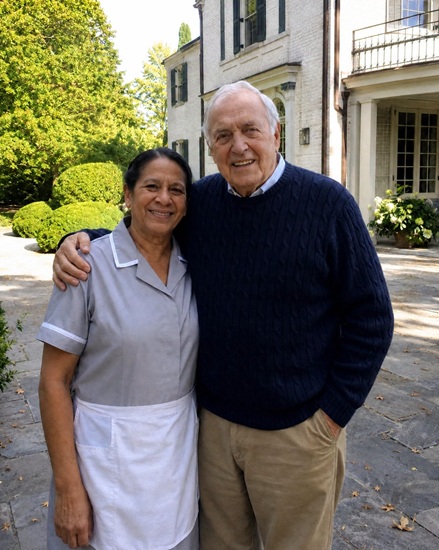
For nearly eighteen years, I unlocked the front door of the Whitaker mansion before sunrise. The house was magnificent, with polished marble floors, towering windows, and gardens that seemed to stretch endlessly toward the horizon. Yet despite its size and beauty, it rarely felt full. After Mrs. Whitaker passed away, the grand estate became unusually quiet, leaving only Mr. Whitaker and me to fill its empty halls with the routines of everyday life. Over the years, my work became more than cleaning rooms or preparing meals.
I came to understand his habits, his favorite books, the music he enjoyed in the evenings, and the stories he liked to revisit about the family he wished had remained closer. Mr. Whitaker treated everyone with kindness, regardless of their position. He often reminded me that respect was earned through character rather than wealth. On difficult days, he would invite me to sit for a few minutes in the kitchen after lunch so we could share tea before returning to our responsibilities.
We rarely discussed expensive possessions or business matters. Instead, we talked about ordinary life—my grandson Danny’s school projects, neighborhood events, gardening, and the memories he carried from decades spent building both his family and his company. Those conversations gradually transformed a professional relationship into one built on genuine trust and mutual respect.
There were moments when his compassion became impossible to forget. After my daughter passed away following a long illness, I returned to work sooner than I probably should have. I expected sympathy, but instead he quietly sat beside me without offering unnecessary advice or speeches. Sometimes silence speaks more powerfully than words ever can. He simply remained there until I was ready to continue with the day. That small act of kindness stayed with me for years because it reminded me that true generosity is often expressed through presence rather than promises.
Although Mr. Whitaker occasionally mentioned his son Julian, they did not seem particularly close. Julian rarely visited the estate, and when he did, the atmosphere inside the house noticeably changed. Staff members hurried to avoid his criticism, while Mr. Whitaker often appeared disappointed by how brief those visits became. Their conversations were polite but distant, ending almost as quickly as they began. I never involved myself in family matters, believing those relationships belonged to them alone, but it was difficult not to notice the emotional distance that had developed over the years.
When Mr. Whitaker’s health began declining, daily routines changed once again. Doctors, nurses, therapists, and specialists visited the mansion regularly. My responsibilities expanded beyond housekeeping to include preparing meals that followed medical recommendations, organizing medications, and helping create a calm environment where he could rest comfortably. Despite his illness, he continued expressing gratitude for even the smallest gestures. He often insisted that no one should ever feel invisible simply because their work happened quietly behind the scenes.
A few weeks before his passing, he called me into the library one afternoon. Sunlight poured through the large windows as he carefully handed me a framed photograph of the mansion taken during a golden sunset. Smiling gently, he explained that the house represented far more than stone walls and expensive furniture. To him, it symbolized decades of memories, friendships, celebrations, and people who had cared for one another. He encouraged me to keep the photograph as a reminder that loyalty and kindness often become the strongest foundations any home can have.
When Mr. Whitaker passed away peacefully several months later, the mansion felt emptier than I had ever imagined possible. Every room echoed with memories of conversations, birthdays, holiday dinners, and quiet afternoons spent reading beside the fireplace. I completed my work as usual while waiting for family members to arrive. The silence that settled over the estate during those first few days after the funeral seemed almost impossible to describe. It was not simply the absence of one man but the absence of the warmth that had made such a large house feel like a home.
Julian arrived shortly afterward, bringing lawyers, financial advisers, and several assistants. Unlike his father, he moved quickly from room to room discussing inventories, business documents, renovations, and future plans. Before long, he asked me to meet him in the study. Standing behind the large mahogany desk that had belonged to his father for decades, he slid an envelope across the polished surface. Inside was a letter confirming that my employment had ended along with a modest severance payment.
Although disappointed, I remained calm. I thanked him for informing me and quietly reminded him that his father had once expressed hope that I would always be treated fairly. Julian responded that circumstances had changed and explained that he intended to reorganize the household with entirely new staff. His decision was final. Rather than arguing, I simply asked whether I could keep the framed photograph Mr. Whitaker had personally given me. Julian glanced at it briefly before saying he had no interest in such a sentimental item and told me I could take it with me.
That evening I packed my few belongings into a small travel bag, thanked the remaining staff members for their friendship, and quietly left the estate that had been my workplace for almost two decades. As the bus carried me toward my daughter’s apartment, I looked down at the framed photograph resting on my lap and wondered what chapter of life would come next. I had no idea that within a few days, a single unexpected phone call would completely change everything I believed about my future.
Three days after leaving the Whitaker estate, I was sitting at my daughter’s small kitchen table, wondering how I would begin searching for work again. My résumé reflected nearly two decades spent caring for one household, and I worried that employers might consider me too old to start over. The framed photograph Mr. Whitaker had given me rested on the windowsill above the sink, catching the afternoon sunlight. Looking at it brought both comfort and sadness, reminding me that although I had lost my position, I would always be grateful for the years spent working alongside a man who treated people with kindness and respect.
The telephone interrupted the quiet. On the other end was Nathaniel, the attorney who had managed many of Mr. Whitaker’s legal affairs over the years. His voice was calm and professional, but there was an urgency that immediately caught my attention. He asked whether I was sitting down before explaining that several documents regarding Mr. Whitaker’s estate required my presence. Assuming he needed clarification about household records or personal belongings, I agreed to meet him the following morning without imagining that the conversation would become one of the most significant moments of my life.
When I arrived at the law office, Nathaniel welcomed me into a private conference room lined with shelves of neatly organized legal volumes. After offering me a seat, he carefully explained that Mr. Whitaker had updated his estate planning several months before his passing. He emphasized that every document had been prepared according to the law, witnessed correctly, and reviewed multiple times to ensure his wishes were clearly recorded. Listening quietly, I still believed the discussion would concern routine administrative matters rather than anything personally affecting me.
Nathaniel then explained that Mr. Whitaker had included a personal letter addressed to me, together with detailed instructions regarding several items that had remained private until after his death. He encouraged me to read the letter before discussing any legal matters. As I unfolded the pages, I immediately recognized the familiar handwriting of the man I had worked beside for so many years. His words expressed gratitude for my loyalty, compassion, and dedication during both joyful occasions and difficult seasons of life. Rather than focusing on material possessions, the letter reflected on the importance of trust, integrity, and treating others with dignity regardless of their position.
As I finished reading, Nathaniel carefully explained that Mr. Whitaker had arranged his estate according to his own considered decisions after consulting legal advisers. He reminded me that wills are personal legal documents reflecting an individual’s wishes and that every situation differs depending on family circumstances, applicable law, and the instructions left by the person creating the estate plan. His role was simply to ensure those wishes were carried out exactly as written. Although I was overwhelmed by the discussion, I appreciated the thoughtful and respectful way he explained each step of the legal process.
Later that day, Julian also arrived at the office accompanied by his legal representatives. The atmosphere remained professional throughout the meeting, with everyone given the opportunity to review the relevant documents. Rather than becoming an emotional confrontation, the discussion focused on the legal paperwork, the estate plan, and the written intentions Mr. Whitaker had formally recorded before his death. Nathaniel reminded everyone present that the purpose of the meeting was not to revisit family disagreements but to administer the estate according to the law and the documented instructions left behind.
At one point, I removed the framed photograph from my bag after remembering how carefully Mr. Whitaker had asked me to keep it. While examining the frame more closely, I noticed that the backing contained a small compartment I had never seen before. Inside was another handwritten note expressing appreciation for the countless ordinary moments that often go unnoticed—shared conversations, quiet evenings, and simple acts of kindness that had made the house feel like a true home. Reading those words brought back memories of the many years we had spent working together and reminded me that genuine respect is demonstrated through consistent actions rather than grand gestures.
The meeting concluded respectfully, with Nathaniel outlining the legal steps that would follow in accordance with the estate plan. Whatever differences had existed between family members, the documents themselves reflected Mr. Whitaker’s carefully considered decisions. As I left the office, I realized that the greatest gift I had received was not simply security for the future but the knowledge that my years of honest work, loyalty, and compassion had been sincerely valued by someone whose opinion meant a great deal to me.
Over the following weeks, life gradually settled into a new rhythm. Instead of dwelling on the uncertainty that had followed my departure from the estate, I focused on creating a stable home for my daughter, my grandson Danny, and myself. Danny continued drawing the imaginative spaceships his grandfather had always admired, while our evenings became filled with ordinary conversations around the dinner table. Those simple moments reminded me that a family’s greatest wealth is often measured not by property or possessions but by the love, encouragement, and security shared between generations.
Looking back, I came to understand that kindness is rarely forgotten, even when years pass quietly. Mr. Whitaker had built a successful life, but the legacy he chose to leave behind extended beyond material possessions. He demonstrated that respect, gratitude, fairness, and compassion are values capable of shaping lives long after someone is gone. His example encouraged me to face the future with confidence instead of fear, knowing that integrity often leaves the most enduring impression.
As I placed the framed photograph in a prominent place within our home, I no longer viewed it as a reminder of what I had lost. Instead, it represented a lifetime of honest work, meaningful friendships, and the quiet dignity that comes from treating others with kindness regardless of circumstance. Whatever challenges the future might bring, I carried forward one lesson above all others: true character is revealed not by wealth or social position, but by the respect we show the people who walk beside us each day.

