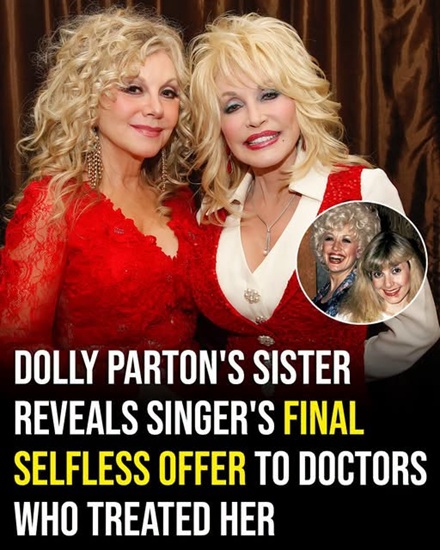
Dolly Parton spent decades building a career that made her one of the most recognizable entertainers in the world. Audiences knew the country music legend for her distinctive voice, unforgettable songs, sparkling stage clothes, humor and larger-than-life personality. Yet according to her younger sister Stella Parton, the compassionate person people believed they saw behind the celebrity image was very close to the woman her family knew privately.
Stella has described her older sister as thoughtful, generous and consistently interested in helping others. Following Dolly’s death, she shared a particularly moving memory that she believed illustrated those qualities during an extraordinarily difficult period. Dolly died on August 25, 2026, at the age of 80. Her representatives confirmed that her death followed a brief battle with cancer, although the specific type of cancer was not publicly disclosed. Her death came after a period of health difficulties that had caused her to reduce or postpone some professional commitments.
News of her passing prompted tributes from performers, friends and admirers around the world. For Stella, however, the loss was not primarily about saying goodbye to an entertainment icon. It was about losing the sister who had been part of her life since childhood. In her tribute, Stella recalled a private conversation that she said demonstrated Dolly’s concern for other people even while facing her own health problems.
According to Stella, Dolly told her that if doctors eventually reached a point where there was no realistic hope for her recovery, she would still be willing to let her medical team try experimental treatments. Stella said Dolly’s motivation was not simply the possibility of helping herself. She reportedly hoped that doctors might learn something from the experience that could benefit another patient in the future. The story should be understood precisely as Stella described it.
There has been no public medical confirmation establishing that Dolly actually received a specific experimental drug or participated in a particular clinical trial. Stella was describing what her sister told her she would be willing to do under certain circumstances. The distinction is important because willingness to participate in experimental treatment is not the same as actually receiving such treatment. No specific investigational medication or clinical protocol has been publicly identified in connection with the account.
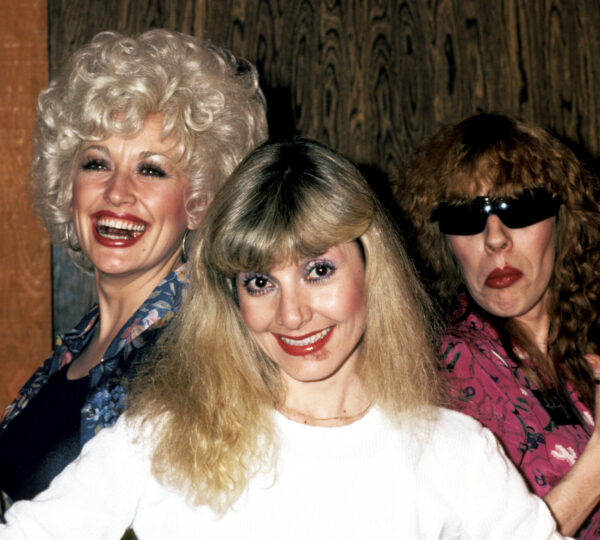
For Stella, however, the significance of the conversation had little to do with the technical details of medical treatment. What mattered was the intention behind Dolly’s words. She interpreted them as another example of a sister who continued thinking about other people even while confronting a serious illness of her own. That instinct, Stella suggested, was consistent with the person she had known throughout her life.
Stella described Dolly as one of the most generous and thoughtful people she knew. She also emphasized that the public personality audiences had admired for decades was not completely separate from the woman family members encountered privately. The costumes and stage presentation may have been deliberately theatrical, but Stella believed the kindness underneath them was genuine. According to her account, Dolly’s concern for others was not something switched on only when cameras were present.
That description is consistent with a long public record of philanthropy. Dolly spent decades supporting projects involving literacy, education, disaster recovery and medical research. Her wealth and fame gave her resources that most people do not possess, and she repeatedly directed some of those resources toward causes she considered important.
The best-known example is Dolly Parton’s Imagination Library. She created the book-gifting program in 1995 through the Dollywood Foundation. The project originally focused on children in the Tennessee area where Dolly had grown up. Its basic goal was simple: give young children regular access to books and encourage families to make reading part of everyday life.
Over the following decades, the program expanded far beyond its original community. Children in multiple countries became eligible to receive age-appropriate books from birth until age five. Millions of books were eventually mailed each month, and the total number distributed passed hundreds of millions. What began as a relatively small literacy initiative became one of the most recognizable philanthropic projects associated with any entertainer.
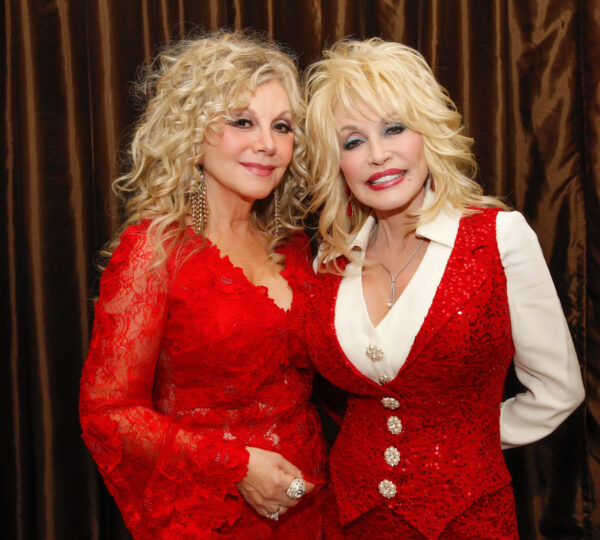
The inspiration was deeply personal. Dolly’s father, Robert Lee Parton, could not read or write. She frequently described him as intelligent and hardworking despite his lack of formal literacy. Dolly believed that being unable to read had limited some of the opportunities available to him, and she wanted other children to begin developing literacy skills as early as possible.
Her father’s response to the program became especially meaningful to her. Dolly said he was enormously proud of the Imagination Library and that his pride mattered deeply to her. The project allowed an experience from her own family history to become something that benefited children she would never personally meet.
This pattern appeared repeatedly throughout Dolly’s philanthropic work. Personal experiences often became starting points for broader efforts. Her connection with East Tennessee influenced her response to disasters affecting the region. Her childhood memories shaped her interest in literacy. Her financial success gave her the ability to support research and community programs on a scale that would have been impossible during the poverty of her early years.
One widely discussed example came in 2020, when Dolly donated $1 million to Vanderbilt University Medical Center to support coronavirus research. Her contribution helped fund research connected with the development of the Moderna COVID-19 vaccine. Dolly responded to the attention with characteristic modesty, emphasizing that she was pleased to have contributed to work that might help people.
The medical donation provides useful context for Stella’s later story. Dolly had already demonstrated a willingness to support scientific research financially. According to Stella, that same instinct remained during Dolly’s own illness, when she reportedly considered whether her personal medical circumstances might somehow produce useful knowledge for future patients.
Again, there is no need to exaggerate what Stella said. She did not provide evidence that Dolly enrolled in a specific experimental-drug trial. She did not identify a medication or describe a research protocol. The meaningful part of the story is that Dolly reportedly expressed willingness to participate if her doctors believed information gained from doing so could eventually help someone else.
Experimental medical treatments are carefully regulated and are not simply administered because a patient offers to try them. Clinical trials generally have eligibility requirements, safety protocols and ethical oversight. Whether a patient can receive an investigational treatment depends on many medical and regulatory factors. Stella’s recollection therefore should not be interpreted as medical advice or as a recommendation for unproven cancer therapies.
The type of cancer Dolly had has also not been publicly identified. Her representatives confirmed only that she died following a brief battle with cancer. Without additional information from the family or medical team, claims about a specific cancer, treatment plan or medication would be speculation. Responsible reporting should remain within the information that has actually been disclosed.
For Stella, those medical questions were secondary to the loss of a sister. Her relationship with Dolly had existed for decades before the final illness. The sisters grew up together in a family of 12 children in East Tennessee, sharing experiences that would remain important even after Dolly became internationally famous.
Their childhood was financially difficult but filled with family connections and music. Dolly frequently described growing up with limited material resources while emphasizing that the household contained affection, storytelling and songs. Several Parton siblings eventually became involved in music themselves, including Stella.
Those early experiences remained part of the sisters’ relationship throughout adulthood. Fame dramatically changed Dolly’s circumstances, but it did not erase the family history they shared. Stella could remember the international celebrity as the same older sister who had grown up beside her long before recording contracts, movies or business ventures entered their lives.
One of the clearest examples of that continuing connection was their habit of speaking early in the morning. Stella has described herself and Dolly as early risers. They would call each other while drinking coffee and use the time to catch up on family matters, gossip and whatever else happened to be on their minds.
Those conversations were ordinary in a way that Dolly’s professional life rarely was. There were no audiences, elaborate costumes or concert schedules involved. Two sisters simply talked before the day became busy. Stella later described those conversations as an important part of their relationship.
After Dolly’s death, the absence of that routine became particularly painful. Stella wrote about how Tuesday morning coffee would never feel exactly the same. That statement captured a type of grief that public tributes often cannot. The world had lost an internationally celebrated musician, while Stella had lost the person who was supposed to be on the other end of an early-morning telephone call.
Small routines often become some of the strongest reminders of someone after death. Awards and career achievements remain visible to the public, but family members may feel the absence most clearly through everyday habits. A telephone that no longer rings can carry more emotional weight than a public memorial.
For Stella, Dolly’s private humor was another important memory. She has spoken about how laughter helped members of the Parton family cope with difficult periods. Humor was something the sisters shared throughout adulthood and was partly connected with the atmosphere in which they had grown up.
That quality was also obvious in Dolly’s public personality. She frequently made jokes about herself, including her wigs, makeup and deliberately exaggerated fashion choices. She seemed comfortable acknowledging that her appearance involved considerable theatricality. Rather than allowing other people to define her image, she often turned it into part of the joke herself.
The humor helped make Dolly unusually approachable despite enormous fame. She could stand onstage in sparkling clothing and still speak in a way that audiences considered down-to-earth. That combination became one of the defining features of her public image.
According to Stella, it was not simply an act. The same humor and warmth appeared in private conversations. That does not mean Dolly’s stage persona was identical in every detail to her home life. The costumes and performance style were obviously part of entertainment. But Stella believed the personality beneath them remained recognizable.
Dolly’s family had already experienced considerable grief before her death. Several of the Parton siblings died during the years leading up to 2026. Stella had spoken publicly about how those losses affected her emotionally and creatively.
Her brother Floyd died in 2018, followed by Randy in 2021 and David in 2024. Stella described the losses as particularly difficult because of the emotional closeness created by growing up in such a large family. She used the idea of a deep or soul-level connection when discussing the bonds between siblings.
The grief affected her music as well. Stella said she experienced something resembling emotional paralysis and struggled with writing. For someone who had spent much of her life expressing emotions through songs, finding herself unable to create was especially difficult.
In 2026, she returned to recording after a lengthy period without releasing new music. Her version of “Stand by Me” became connected with the process of moving through grief. Stella described music as a form of therapy and a way to reconnect with a creative part of herself that loss had interrupted.
Dolly’s death added another profound loss to that already difficult period. This time, Stella was mourning the sister with whom she maintained regular conversations and a uniquely visible family relationship. The public attention surrounding Dolly’s death was enormous, but Stella’s own grief remained rooted in family history.
Dolly herself had also experienced major personal loss shortly before her death. Her husband, Carl Dean, died in March 2025 at the age of 82. The couple had been married for nearly 60 years. Carl generally avoided public attention, but Dolly consistently described him as central to her private life.
His death affected her deeply. Dolly released statements and music reflecting on their decades together. She continued working afterward, but losing a partner who had been part of virtually her entire adult life represented a major change.
Her health problems also became increasingly visible. Dolly postponed or reduced some commitments while dealing with medical issues. She nevertheless continued working on projects and communicating with fans.
Her representatives later confirmed that cancer had become part of that final period. They described her death as following a brief battle with the disease. Because the family has not publicly disclosed the precise diagnosis, there is no responsible basis for identifying a specific cancer.
That uncertainty does not prevent discussion of Stella’s account. Her sister was describing a conversation about Dolly’s attitude toward treatment rather than attempting to provide a medical history. The story belongs primarily within a discussion of character and generosity.
For Stella, Dolly’s willingness to consider experimental treatment for the potential benefit of future patients represented the same instinct visible throughout her charitable career. She believed her sister was always searching for ways to make something useful from whatever circumstances life presented.
That approach can be seen throughout Dolly’s biography. Growing up poor eventually became material for songs that connected with millions of people. Her father’s inability to read inspired an international literacy program. Her wealth allowed her to support communities facing disasters. Her fame gave charitable causes an audience they might not otherwise have received.
Dolly often seemed interested in turning personal experience outward. Rather than keeping every hardship private or treating it only as loss, she frequently transformed it into music, philanthropy or public encouragement.
Her songwriting provides numerous examples. “Coat of Many Colors” drew directly from childhood poverty and the love her mother put into making clothing from scraps of fabric. The song transformed a potentially painful childhood memory into a story about dignity, family and emotional wealth.
“I Will Always Love You” transformed a difficult professional separation from Porter Wagoner into one of the most famous compositions of Dolly’s career. Years later, Whitney Houston’s recording introduced the song to an enormous new global audience.
“Jolene” turned insecurity and jealousy into another enduring piece of songwriting. “9 to 5” transformed workplace frustration into a song recognized far beyond country music. Again and again, Dolly found ways to take complicated emotions and create something other people could use to understand their own experiences.
This creative instinct existed alongside an extraordinary work ethic. Dolly wrote thousands of songs, recorded numerous albums, toured extensively and appeared in movies and television. She also became a successful businesswoman.
Dollywood became one of the most visible examples of that business success. The Tennessee theme park connected her global celebrity with the region where she had grown up. It became a major tourist destination and employer while maintaining a strong association with Dolly’s personal story.
Her film career expanded her audience even further. 9 to 5 introduced her to viewers who may not have followed country music closely. Steel Magnolias became another widely remembered performance. Dolly proved capable of moving between music and acting while maintaining the same recognizable personality.
Yet philanthropy eventually became one of the most important parts of how people understood her legacy. By the later decades of her career, discussions of Dolly frequently mentioned the Imagination Library alongside her music.
That is an unusual achievement. Many entertainers donate money to charitable causes, but relatively few build programs that become independently recognizable institutions. The Imagination Library grew far beyond a celebrity endorsement.
Children receiving books through the program may not even understand who Dolly Parton was when their first package arrives. Their parents or caregivers may explain later. The practical benefit of the program does not depend on the child recognizing the celebrity behind it.
This gives the project a life separate from Dolly’s stage career. Songs require listeners. Movies require viewers. The Imagination Library functions through books arriving directly in homes.
That continuing work is one reason Stella’s message about honoring Dolly through generosity carries particular meaning. The legacy is not limited to remembering what Dolly already accomplished. It can also involve continuing the principles she tried to demonstrate.
Stella encouraged people who admired her sister to help others where they could. She did not suggest everyone needed enormous financial resources. Generosity can operate at many different scales.
Someone can donate money.
Someone else can volunteer time.
Another person can help a neighbor or relative.
A simple act of attention can matter to someone who feels forgotten.
The scale is different, but the underlying principle is similar.
For Stella, that principle represented something essential about Dolly.
The public saw a woman capable of commanding huge stages.
Stella saw the sister who still made time for morning calls.
The public saw multimillion-selling records.
Stella saw someone who wanted to know what was happening in the family.
The public saw glittering costumes.
Stella remembered coffee and gossip.
Both versions belonged to the same person.
That is perhaps the central point of her tribute.
Celebrity did not completely replace the person Dolly had been before fame.
She remained connected with family.
She maintained familiar routines.
She continued using humor.
And according to Stella, she continued thinking about other people even when her own health became increasingly serious.
The experimental-treatment conversation became powerful because it occurred within that context.
It was not presented as a heroic medical intervention.
It was not evidence that Dolly discovered or tested a cure.
It was not a recommendation for cancer patients to pursue unproven drugs.
It was simply something Stella said her sister was willing to consider.
If treatment could no longer save her, Dolly reportedly wondered whether doctors could still learn something.
For Stella, that question summarized her sister’s personality.
It shifted attention away from what Dolly might receive and toward what somebody else might gain.
The medical reality of experimental drugs remains much more complicated. New treatments require research, regulatory oversight and informed consent. Not every patient qualifies for every clinical trial, and not every experimental therapy is appropriate for an individual case.
Nothing in Stella’s tribute changes those facts.
Her recollection should therefore remain an account of Dolly’s intentions, not medical guidance.
The same restraint should apply to claims about Dolly’s cancer. Without disclosure from her family or medical team, there is no basis for naming a particular type. Reports or social-media speculation cannot substitute for official information.
What is publicly confirmed is narrower.
Dolly was 80.
She had experienced health difficulties.
Her representatives said she died after a brief battle with cancer.
Her sister later described conversations from that final period.
Everything beyond those facts should be presented carefully.
There is no need to invent additional details to make the story moving.
The verified story already carries enormous emotional weight.
One of the world’s most famous entertainers died.
Her sister lost a lifelong companion.
Their weekly routine ended.
And Stella remembered a conversation in which Dolly was reportedly still considering how her circumstances might benefit other people.
That is enough.
Dolly’s death also prompted enormous public reflection on the difference between fame and legacy. Fame can be measured through chart positions, ticket sales and media attention. Legacy is more complicated.
Her music is part of it.
So are the songs other artists recorded.
Her movies are part of it.
Dollywood is part of it.
The Imagination Library is part of it.
Her support for research and disaster relief is part of it.
And for Stella, private acts of kindness belong there as well.
Those private acts are more difficult to document.
They do not always generate photographs or press releases.
Often, only the people involved remember them.
That is why family tributes can add something biographies cannot.
They reveal the person between public events.
Stella’s memories of Tuesday mornings offer exactly that kind of detail.
Dolly could perform before thousands of people and still return to ordinary family conversation.
She could discuss major business projects one day and family gossip the next.
She could exist simultaneously as a global celebrity and someone’s older sister.
After death, those identities are remembered differently by different people.
Fans may play “Jolene.”
Musicians may study her songwriting.
Actors may remember working with her.
Philanthropic organizations may continue programs she supported.
Stella will notice the missing
