
The question of what happens after death has fascinated humanity for centuries, inspiring religious teachings, philosophical debates, and scientific inquiry.
Different cultures and belief systems offer varying interpretations, leaving the mystery ultimately unresolved and deeply personal. Some people believe in an afterlife shaped by faith, while others see death as a natural biological end.
Between these perspectives lies a growing interest in near-death experiences, often described as moments of awareness during life-threatening conditions.
These experiences are frequently reported by individuals who have been clinically close to death and later revived. While science continues to study these accounts, many remain unexplained, blending neurological, psychological, and spiritual interpretations.
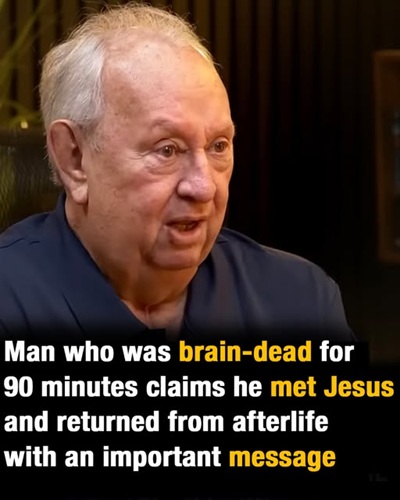
One such account comes from a man named Robert Marshall, who claims to have undergone an extraordinary experience following a severe medical emergency in 2024. His story has attracted attention online and through interviews.

Robert shared his experience publicly during an appearance on the Next Level Soul Podcast, where he described in detail what he believes happened during a prolonged medical crisis that left him unconscious.
According to his account, the incident began when he sought medical help for a serious physical condition. He reported having a large, swollen mass on his neck that was affecting his ability to breathe properly.
Medical professionals conducted various tests, including imaging scans and blood work, to determine the cause of his symptoms. At that point, his condition appeared serious but not necessarily life-ending.
However, his health rapidly declined, leading to what he later described as a life-threatening emergency. He claims that his body went into critical distress, requiring urgent medical intervention.
Robert later stated that he experienced multiple episodes of “code blue,” a term used in hospitals to indicate cardiac arrest or severe medical crisis requiring immediate resuscitation efforts.
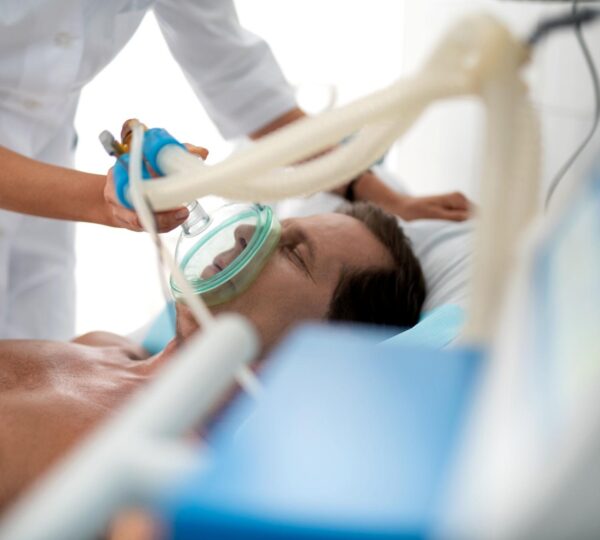
During this time, he was reportedly placed in a coma-like state that lasted for several days. Medical records referenced in his account suggest complications including respiratory failure and cardiac issues.
He described the medical condition as involving acute hypoxic respiratory failure, a serious state in which the body is deprived of sufficient oxygen, potentially leading to organ damage.
Such conditions are medically recognized as extremely dangerous and can result in altered consciousness, hallucinations, or memory disturbances, depending on the severity and duration of oxygen deprivation.
While in this state, Robert claims he experienced something beyond physical reality. He describes what he believes was not merely a near-death experience but an actual death followed by a spiritual encounter.
It is important to note that claims of “actual death” in such contexts are typically interpreted differently by medical professionals, who define death based on specific clinical criteria.
From a scientific perspective, patients in comas or cardiac arrest can sometimes regain consciousness, and their experiences are often studied under the category of near-death phenomena.
Robert, however, firmly believes his experience went beyond that definition. He states that he was “dead for three days,” a claim that reflects his personal interpretation rather than a medically verified conclusion.
During this period, he describes entering what he perceived as another realm. According to his account, this place was visually striking, filled with vivid natural elements and intense colors.
He recalled seeing large oak trees, expansive landscapes, and a peaceful environment that felt profoundly different from the physical world. These descriptions are common in many reported near-death experiences.
Another element he emphasized was the overwhelming sense of peace and love he felt. He described these emotions as far more intense than anything experienced in ordinary life.

Emotional sensations reported in such experiences are often characterized by calmness, detachment from pain, and a sense of unity, which researchers sometimes link to brain chemistry changes under stress.
In Robert’s account, the experience became even more significant when he described encountering a figure he identified as Jesus. This aspect reflects his personal religious beliefs and interpretation.
Encounters with religious figures are frequently reported in near-death experiences, often aligning with the individual’s cultural or spiritual background rather than presenting universally identical imagery.
Robert explained that during this encounter, he felt a strong emotional connection, particularly toward his family. He stated that he became aware of his wife’s distress during his medical crisis.
He described feeling her pain deeply, as though he could sense her emotions directly. This perception reinforced his desire to return to life in order to comfort and support her.
According to his story, he asked to be sent back. This request is another common feature in near-death narratives, where individuals express a desire to return due to unfinished responsibilities or emotional ties.
He claims that the figure he identified as Jesus responded to his request and engaged in a form of communication that he later interpreted as both compassionate and purposeful.
In recounting this interaction, Robert included statements that he believes were spoken to him, describing conditions under which he could return to life.
He reported being told that his physical brain had suffered severe damage. In medical terms, prolonged oxygen deprivation can indeed affect brain function, though recovery outcomes vary widely.
The account continues with the claim that he was promised restoration, including healing and recovery that would be difficult to explain through conventional medical understanding.
Such claims, while meaningful to the individual, are not considered verifiable evidence in scientific research. They are generally categorized as subjective experiences shaped by personal belief systems.
Robert later regained consciousness, which he interprets as a direct result of this encounter. From a medical standpoint, recovery after critical illness can occur due to a combination of treatment and physiological resilience.
His story has been shared widely, particularly through his book, where he expands on the details of his experience and its impact on his life.
The book presents his journey as transformative, describing how the event changed his outlook, beliefs, and priorities moving forward.
Stories like Robert’s often resonate with audiences because they touch on universal questions about life, death, and the possibility of something beyond physical existence.
However, experts in neuroscience and critical care caution against interpreting such experiences as definitive proof of an afterlife.
Research suggests that the brain under extreme stress can produce vivid and realistic experiences, sometimes involving imagery, voices, and emotional intensity.
These phenomena may be linked to changes in oxygen levels, neurotransmitter activity, and the brain’s attempt to process trauma during life-threatening events.
Despite scientific explanations, many individuals who undergo such experiences remain convinced of their spiritual significance, highlighting the complex relationship between belief and perception.
Robert’s account is one of many that contribute to ongoing discussions about consciousness and what happens at the edge of life.
While science continues to investigate these experiences, it does not currently support the conclusion that they provide direct evidence of life after death.
Instead, they are often studied as part of a broader effort to understand how the brain functions under extreme conditions.
At the same time, these stories hold personal meaning for those who experience them, often leading to lasting emotional and psychological changes.
Many individuals report increased appreciation for life, stronger relationships, and a shift in priorities following such events.
Robert has described similar changes, emphasizing gratitude, faith, and a renewed sense of purpose in his life after recovery.
His willingness to share his experience publicly has contributed to wider awareness and curiosity about near-death experiences.
Podcasts, books, and online platforms have made it easier for such stories to reach large audiences, sparking both interest and debate.
Skeptics argue that these accounts should be approached with caution, emphasizing the importance of evidence-based understanding.
Supporters, on the other hand, see them as meaningful insights into the human experience and potential glimpses of something beyond current scientific knowledge.
The truth likely lies somewhere in between, with elements of both physiological explanation and deeply personal interpretation.
What remains clear is that near-death experiences are complex and cannot be reduced to a single explanation.
They involve a combination of biology, psychology, and individual belief, making each account unique.
Robert’s story reflects this complexity, blending medical crisis with spiritual interpretation in a way that resonates with many people.
It also highlights the importance of critical thinking when evaluating extraordinary claims, especially those related to life and death.
Understanding the difference between personal experience and scientific evidence is essential in forming a balanced perspective.
At the same time, it is possible to respect individual stories without accepting them as universal truths.
Stories like Robert’s continue to inspire reflection on the nature of consciousness and the limits of human understanding.
They remind us that despite advances in science, many aspects of existence remain mysterious and open to interpretation.
For some, these accounts reinforce faith and belief in an afterlife. For others, they serve as a reminder of the brain’s remarkable capabilities.
Regardless of interpretation, they encourage ongoing curiosity and exploration into one of humanity’s oldest questions.
What happens after death may not yet have a definitive answer, but the search for understanding continues through both science and personal storytelling.
Robert Marshall’s experience stands as one example of how individuals attempt to make sense of extraordinary moments in their lives.
Whether viewed as spiritual revelation or neurological phenomenon, such stories contribute to a broader conversation about life, মৃত্যু, and what may lie beyond.

