
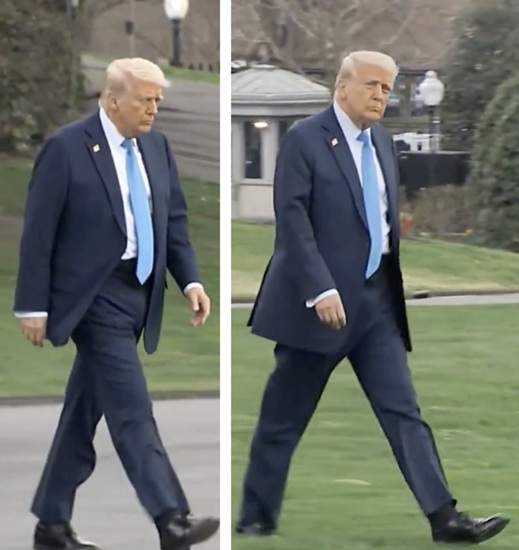
Viral photographs showing former U.S. President Donald Trump boarding Marine One have resurfaced across social media platforms, reigniting public interest in both the imagery and the broader political narratives surrounding them.
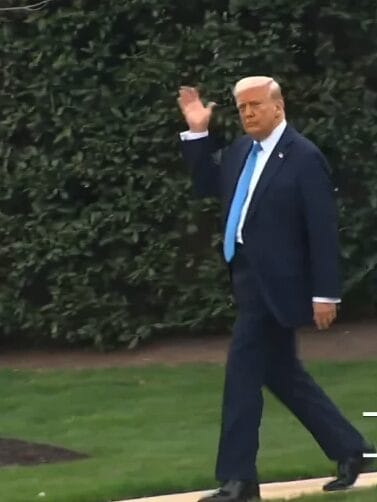
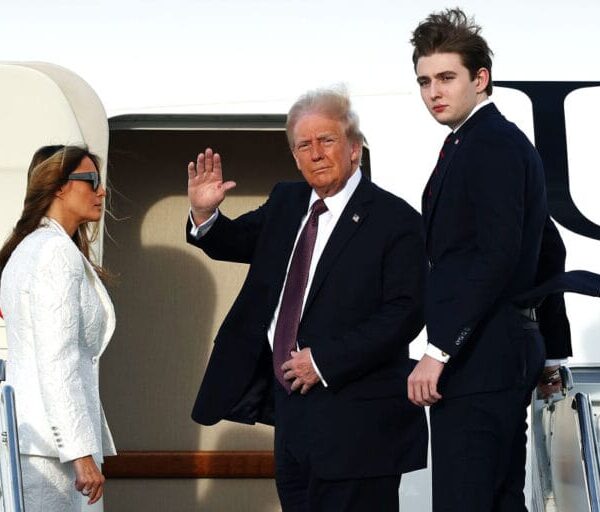
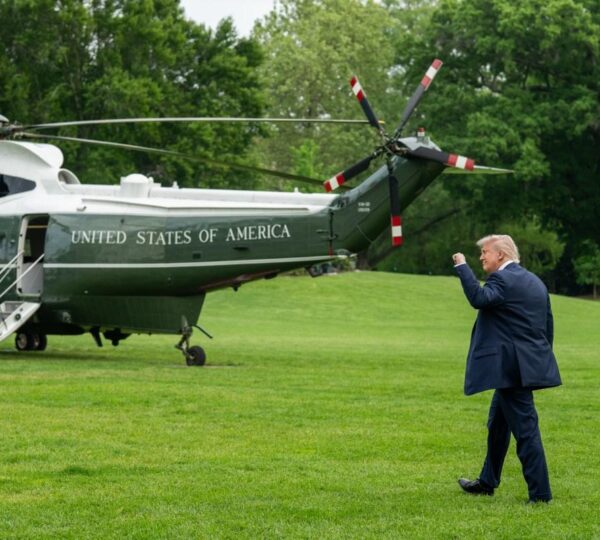
Originally circulated in 2025 by various online accounts, the images depict Trump walking across the White House South Lawn before boarding Marine One, the presidential helicopter used for official transport.
In recent months, these photographs have been widely reshared, often without additional context, contributing to renewed discussions about political symbolism, public perception, and the role of viral media in shaping narratives.
As with many widely shared political images, online users have interpreted the visuals in different ways, often focusing on appearance details rather than the broader official or historical context of the moment.
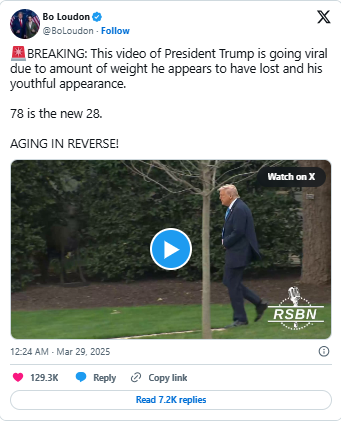
Some viewers have commented on Trump’s posture, clothing fit, and overall appearance in the images, suggesting changes in his physical condition compared with earlier public appearances.
Others have cautioned against drawing conclusions from isolated photographs, noting that lighting, camera angle, clothing choices, and timing can significantly influence how a person appears in still images.
Alongside the renewed circulation of these photos, unrelated online discussions have occasionally included speculation about Trump’s health, though much of this commentary remains unverified and based on social media interpretation.
At different times, online rumors have suggested various health-related scenarios involving public figures, but such claims should be treated carefully unless confirmed by credible and official medical or governmental sources.
In this case, there has been no publicly verified medical report supporting specific claims circulating online, and discussions largely remain in the realm of speculation and commentary.
The White House, in response to separate past rumors involving political figures’ health, has typically issued brief statements denying unconfirmed reports, although specific claims vary depending on the incident and timing.
Former President Trump himself has consistently stated in public appearances and interviews that he considers himself to be in good health and capable of maintaining a demanding schedule.
Public attention toward the health of political leaders is not uncommon, particularly for older figures who remain active in public life or continue to influence political discourse.
Trump’s age has frequently been referenced in media and online discussions, especially in comparison with other senior political leaders in the United States and abroad.
However, age alone does not provide a reliable indicator of a person’s medical condition, as individual health varies widely and requires professional evaluation rather than visual interpretation.
The resurfacing Marine One images have become a focal point for broader debates about how quickly visual content can spread online and how easily it can be reinterpreted over time.
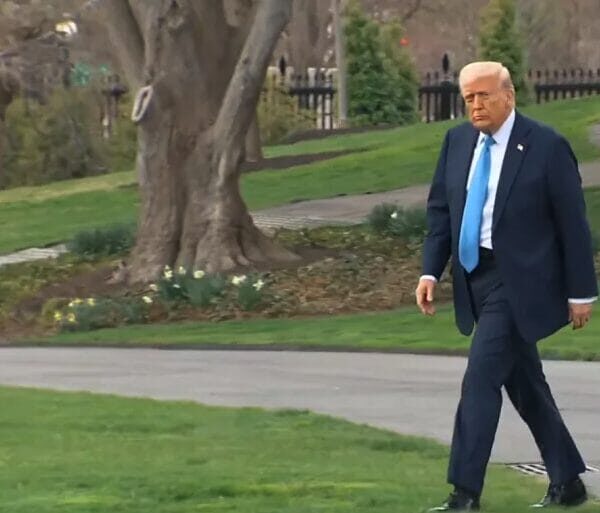
In many cases, the same photograph may be shared repeatedly with different captions, leading to shifting narratives that reflect current events rather than the original context of the image.
This phenomenon is common in digital media environments, where algorithms and user engagement often amplify emotionally charged or visually striking content.
Supporters of Trump in some online communities have interpreted the images positively, suggesting that he appears active and engaged during public appearances.
Others, however, have expressed caution, emphasizing that it is difficult to assess a person’s health or fitness based solely on photographs taken in controlled or brief public settings.
These differing interpretations highlight how political imagery often becomes a projection screen for broader opinions rather than an objective source of information.
In addition to appearance-based commentary, some online discussions have referenced Trump’s well-known dietary preferences, which have been widely reported by various media outlets over the years.
Reports and public appearances have previously shown him consuming fast food items, and such details have often been used in broader discussions about lifestyle and nutrition in high-profile political figures.
At the same time, media coverage has also noted that public figures may adjust their diets or habits over time, although specific personal health changes are not always publicly documented in detail.
It is important to distinguish between confirmed reporting and informal online commentary, especially when dealing with personal health topics involving public individuals.
Speculation about weight changes, medical treatments, or lifestyle shifts should not be treated as fact unless supported by reliable statements or verified sources.
The Marine One images themselves, regardless of interpretation, remain part of a broader archive of political photography that documents official movements and events involving U.S. leadership.
Such images are often captured by official photographers and media personnel, then redistributed across news platforms and social media channels for public viewing.
Once circulated online, these visuals can take on new meanings depending on timing, political climate, and public interest in the figures involved.
This dynamic illustrates how digital content can evolve beyond its original purpose, becoming symbolic in ways that extend far beyond the moment it was captured.
In the case of these specific images, their repeated resurfacing suggests ongoing public fascination with both the individual depicted and the broader political narrative surrounding him.
It also reflects how political figures often remain subjects of continuous scrutiny, even outside formal election cycles or official announcements.
Discussions about health, appearance, and stamina are particularly common for leaders or former leaders who maintain a visible presence in media and public events.
However, responsible reporting requires careful separation between verified information and interpretations based on visual perception or online speculation.
As of current publicly available information, no authoritative medical disclosure has confirmed the specific rumors circulating alongside these images on social media platforms.
This lack of verified data underscores the importance of relying on official statements and credible reporting when evaluating claims about any public figure’s health.
The viral nature of the Marine One photographs demonstrates how quickly political content can re-enter public discourse long after its original publication date.
In many cases, resurfaced images are detached from their initial context, allowing new audiences to interpret them in ways that differ from earlier reactions.
Such patterns are increasingly common in the age of social media, where content cycles are driven by engagement rather than chronology.
Ultimately, the ongoing conversation surrounding these images reflects a combination of political interest, media dynamics, and public curiosity about high-profile individuals.
While opinions remain divided, the most reliable approach is to focus on verified facts and avoid drawing conclusions from imagery alone.
This ensures that discussions remain grounded in accuracy, especially when they involve sensitive topics such as health or personal well-being.
As the images continue to circulate, they serve as a reminder of how digital media can shape narratives that extend far beyond the original moment captured in time.

