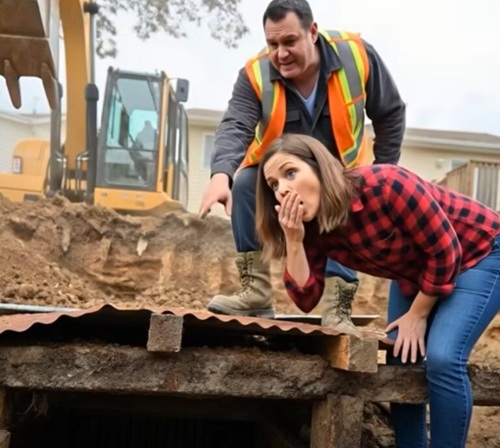
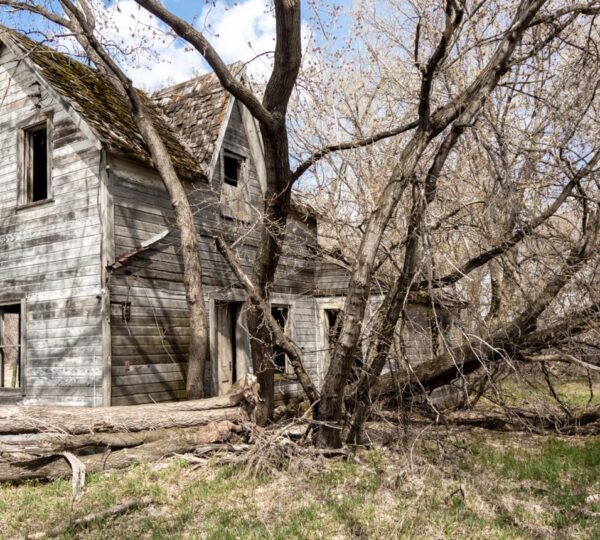
Daniel Harper never imagined that buying an old Craftsman home would change his life so deeply, yet the weathered property on Willow Creek Road immediately felt like a place full of hidden history and quiet potential.
The house had stood empty for more than ten years before Daniel purchased it, and most locals considered it beyond saving due to its age, neglect, and visible structural wear throughout the entire property.
Its roof sagged slightly in the center, wooden porch steps creaked under pressure, and peeling paint revealed decades of exposure to harsh weather conditions that had slowly worn the home down over time.
The backyard was even more overgrown, filled with thick weeds, tangled vines, and patches of wild grass that made it nearly impossible to see the original layout of the once carefully maintained garden space.
Despite these challenges, Daniel saw something different in the property, believing that beneath the decay there was still a strong foundation and a chance to rebuild something meaningful after a difficult personal chapter.
Recently divorced and searching for emotional stability, Daniel viewed the house not just as real estate, but as an opportunity for renewal, privacy, and a fresh start away from his previous life.
One of the most striking features of the property was a massive oak tree located near the center of the backyard, its wide branches stretching outward like protective arms over the neglected landscape below.
The tree appeared ancient, with a thick, deeply grooved trunk that suggested it had survived countless seasons, storms, and environmental changes while remaining firmly rooted in the same quiet place.
Shortly after moving in, Daniel spoke with his elderly neighbor, Mrs. Wheeler, who had lived in the area for most of her life and knew many of the neighborhood’s long-forgotten details.
She pointed toward the oak tree while leaning on the fence and explained that it had been part of the landscape for at least eighty years, possibly even longer according to family stories passed down locally.
Daniel listened politely, appreciating the history but not fully understanding how deeply connected the tree was to the property’s past or the lives of the people who had once lived there.
For several months, life at the house remained calm as Daniel focused on basic renovations, clearing debris, repairing interior walls, and slowly bringing order back to the neglected structure.
Everything changed one spring when a powerful storm swept across the region, bringing heavy rain, strong winds, and frequent lightning strikes that shook the entire neighborhood throughout the night.
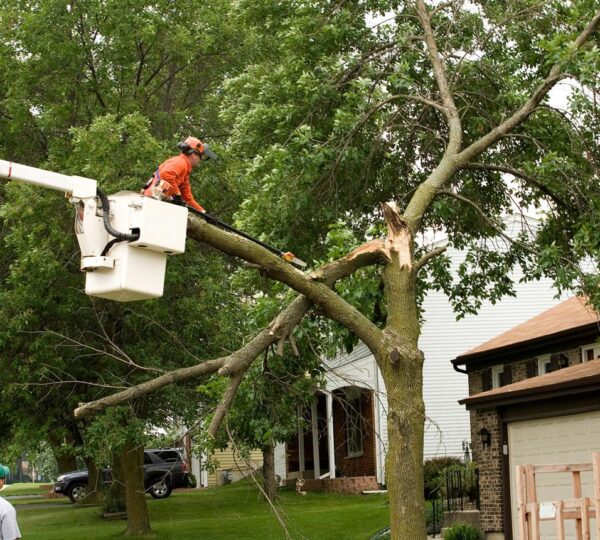
During the storm, the large oak tree in Daniel’s backyard was struck directly by lightning, splitting part of its trunk and leaving several major branches severely damaged and dangerously unstable.
The following morning revealed the extent of the destruction, as broken limbs scattered across the yard and deep cracks ran through the tree’s once-solid structure, making it unsafe to leave standing.
Concerned about safety risks, Daniel contacted a professional tree removal crew to assess and remove the damaged oak before it could collapse and cause further harm to the property.
A few days later, the crew arrived with heavy equipment, chainsaws, ropes, and protective gear, ready to carefully dismantle the tree piece by piece while minimizing damage to the surrounding yard.
Daniel watched from his patio as the workers began cutting through thick branches, each section falling to the ground with heavy thuds that echoed across the otherwise quiet neighborhood.
Hours passed as the team methodically worked their way through the trunk, gradually reducing the massive tree into manageable sections while carefully clearing debris from the surrounding area.
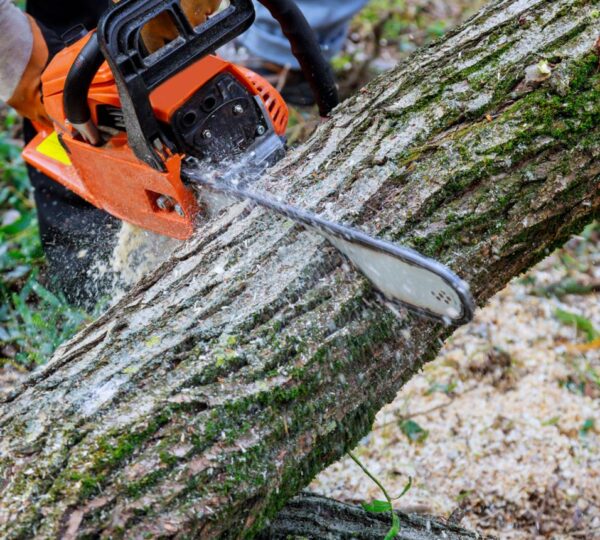
Near the base of the tree, one of the workers suddenly paused, turning off his chainsaw after noticing something unusual beneath the exposed roots and disturbed soil.
He called out to the rest of the crew and pointed toward a flat, wooden surface partially buried under layers of dirt that had shifted during the removal process.
At first, the team assumed it was simply part of an old root system or leftover construction material, but the shape and placement suggested something more deliberate and carefully built.
As they cleared away more soil, the outline of what appeared to be a wooden hatch became visible, complete with aging metal hinges that were heavily rusted from years underground.
The workers exchanged uncertain glances before continuing to carefully expose the structure, realizing that it had likely been hidden beneath the tree for decades without anyone noticing its presence.
Once fully uncovered, the hatch revealed a sturdy metal ring handle in its center, confirming that it had been intentionally designed as an access point to something below the surface.
Daniel stepped closer as the workers secured ropes around the handle and prepared to lift the heavy wooden door, which creaked loudly as it slowly opened for the first time in many years.
Beneath the hatch was a narrow opening leading to a small ladder that descended into darkness, suggesting the presence of an underground space built with clear purpose and careful planning.
Curiosity and caution filled the air as Daniel volunteered to climb down first, holding a flashlight tightly while carefully stepping onto the old wooden ladder leading into the hidden chamber below.
At the bottom, he discovered a small underground room reinforced with aged wooden beams, surprisingly intact despite years of being sealed away from the outside world above.
One wall contained simple shelves, while the far corner of the room held a large cedar chest that appeared untouched and preserved despite the passage of time and soil above.

Daniel opened the chest carefully, revealing bundles of old photographs tied together with string, each image showing glimpses of people and moments from a long-forgotten past connected to the house.
Many photographs featured a young woman standing beside the same oak tree, suggesting the tree had once been a meaningful landmark for the family who originally lived on the property.
On the back of one photograph were handwritten words identifying her as Margaret Whitmore, dated April 12, 1942, providing a clear historical connection to the wartime era.
Beneath the photographs were dozens of sealed letters addressed to Margaret, each one carefully preserved but never opened, as if they had been deliberately stored away and forgotten.
The letters were written by a man named Theodore Whitmore, who described daily life, personal reflections, and emotional messages intended for his wife while he was away during military service.
Many letters expressed hope about returning home and spending peaceful days beneath the oak tree they had planted together, which seemed to represent their shared dreams and future plans.
The final document in the collection was an official military notice confirming Theodore Whitmore’s death during service, bringing a tragic conclusion to the hopeful messages contained in earlier letters.
At the bottom of the chest, Daniel discovered a handwritten note from Margaret explaining her decision to keep the letters unread and preserve them beneath the oak tree as a personal memorial.

She wrote that the tree symbolized the happiest moment of their lives together, and she felt the location was the most meaningful place to preserve the memories they had shared.
Deeply moved by the discovery, Daniel decided not to keep the items and instead began researching local historical records to find any surviving relatives of the Whitmore family.
After several weeks of searching, he successfully located Emily Whitmore, the granddaughter of Margaret, who was still living in a nearby town not far from Willow Creek Road.
When Daniel presented the chest and its contents to Emily, she was deeply emotional, realizing she was holding a part of her family history she had never known existed.
Emily explained that her grandmother rarely spoke about her husband and had lived much of her life quietly, carrying memories that were never openly shared with younger generations.
Together, they carefully read the letters, uncovering a deeply personal story of love, hope, and loss that had remained hidden beneath the oak tree for many decades.
Several weeks later, Daniel and Emily held a small gathering in the backyard, where they planted a new oak tree in the exact location where the original tree had once stood.
Beneath the soil, they placed a small time capsule containing copies of the letters and photographs, ensuring that the story would remain preserved for future generations to discover.
A simple plaque was placed nearby, bearing the words, “Love grows deepest where it is remembered,” serving as a lasting tribute to the history of the home and its former residents.
For Daniel, the discovery transformed the property into something far greater than a renovation project, turning it into a place filled with memory, meaning, and unexpected historical connection.
The quiet house on Willow Creek Road no longer felt empty or forgotten, but instead stood as a reminder that even buried stories can resurface when the time is right.
