
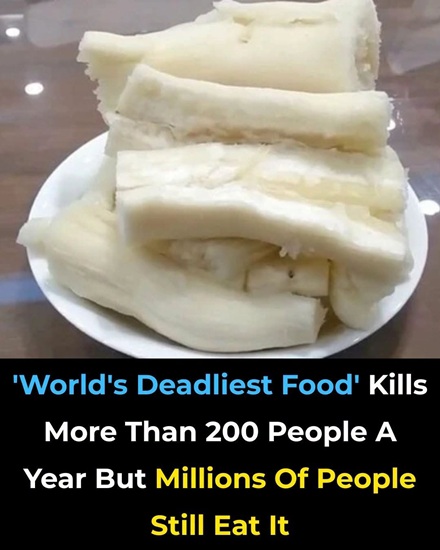
Cassava, also known as manioc or yuca, is one of the most important staple crops in the world, providing a primary source of carbohydrates for hundreds of millions of people across Africa, Asia, and South America. It is valued for its ability to grow in poor soils, withstand drought conditions, and produce reliable yields even when other crops fail. Because of this resilience, cassava plays a crucial role in global food security, especially in regions where access to diverse agricultural resources is limited.
However, despite its importance as a life-sustaining food, cassava also contains natural chemical compounds that require careful processing to ensure it is safe for consumption. Originally domesticated in South America thousands of years ago, cassava spread across the world through exploration, trade, and agricultural adaptation. Today, it is cultivated in tropical and subtropical regions where it has become a dietary cornerstone for many communities.
The plant contains cyanogenic glycosides, which are natural defense chemicals that protect it from pests and animals. When cassava is damaged, peeled, or improperly processed, these compounds can break down and release hydrogen cyanide, a toxic substance that interferes with oxygen use in the human body at a cellular level. The presence of these compounds does not make cassava inherently dangerous when properly prepared. Instead, the risk arises when traditional processing methods are not followed correctly.
In many cultures where cassava is a dietary staple, people have developed detailed preparation techniques over generations. These methods typically include peeling the root thoroughly, soaking it in water for extended periods, fermenting, drying, or cooking it thoroughly. Each of these steps helps reduce the concentration of toxic compounds to safe levels, making the food suitable for consumption.
Health authorities, including the World Health Organization, have studied cases where improperly prepared cassava has contributed to health problems. These incidents are most often linked to situations involving poverty, food shortages, or displacement, where individuals may not have access to the time, knowledge, or resources required for safe preparation. While such cases are relatively uncommon compared to the vast number of people who consume cassava safely every day, they highlight the importance of proper food handling practices and education.
One of the most serious health conditions associated with long-term exposure to insufficiently processed cassava is konzo, a neurological disorder that causes sudden and irreversible paralysis of the legs. This condition has primarily been observed in regions experiencing severe food insecurity, where diets are heavily dependent on bitter cassava varieties and lack sufficient protein. Protein plays a key role in helping the body detoxify cyanide, so nutritional deficiencies can increase vulnerability to its harmful effects. Konzo outbreaks, although rare on a global scale, demonstrate the importance of balanced nutrition alongside safe food preparation.
Despite these risks, cassava remains a vital and irreplaceable food source for many populations. It provides essential calories in areas where other crops may not thrive, and it is used in a wide variety of traditional dishes, including flour-based products, porridges, and regional specialties. For many communities, cassava is not seen as dangerous but rather as a dependable and familiar part of daily life, deeply rooted in cultural and agricultural traditions.
In recent years, agricultural scientists and public health organizations have worked to improve the safety and sustainability of cassava production. This includes developing improved cassava varieties with lower levels of cyanogenic compounds, as well as promoting better processing techniques through education and community outreach. These efforts aim to reduce health risks while preserving cassava’s essential role in global nutrition and food security.
It is important to emphasize that cassava does not pose a threat when properly prepared and consumed as part of a balanced diet. The idea of it being a “deadly food” is often based on misunderstanding or isolated cases rather than everyday reality. Like many natural foods, its safety depends on human knowledge and preparation methods. When handled correctly, cassava is not only safe but highly nutritious and essential for survival in many parts of the world.
Traditional knowledge plays a central role in ensuring cassava safety. Generations of communities that rely on this crop have developed precise methods to remove its toxic components, passing down this knowledge through daily practice and cultural teaching. This relationship between people and food demonstrates how human adaptation can transform a potentially harmful plant into a reliable source of nourishment.
Ultimately, cassava represents both the challenges and strengths of global food systems. It is a crop that has the power to sustain life under difficult conditions, yet it also requires respect, knowledge, and proper preparation. Its story is not one of danger alone, but of balance between nature’s chemical defenses and human ingenuity. When understood and prepared correctly, cassava stands as a powerful example of how traditional wisdom and modern science together can ensure food safety and global resilience.

