
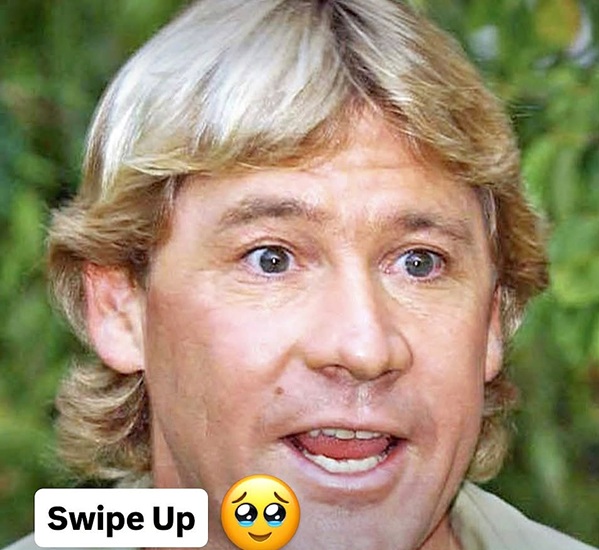
Twenty years have now passed since Steve Irwin died.
For many people, that still feels difficult to believe.
The man they remember from television seemed almost impossible to slow down.
He ran toward crocodiles.
Handled snakes with astonishing confidence.
Spoke about wildlife with endless energy.
And somehow made dangerous animals seem fascinating instead of frightening.
Then, on September 4, 2006, everything changed.
Irwin was 44 years old.
He was filming off the coast of Far North Queensland when a stingray struck him in the chest.
The injury was catastrophic.
And within a short time, one of the world’s most recognizable wildlife presenters was gone.
The shock was immediate.
But the story of that day began with something ordinary.
A change in filming plans.
Irwin and his crew had been working on a documentary titled Ocean’s Deadliest.
Weather conditions interfered with the original schedule.
Instead of abandoning the day entirely, the team moved into calmer water and looked for another opportunity to film wildlife.
That decision eventually led them toward a large stingray.
Stingrays are not generally known for attacking humans.
They usually avoid confrontation.
But when threatened, their tail barb can be extremely dangerous.
Irwin approached the animal while cameraman Justin Lyons recorded the encounter.
Then, in a matter of seconds, the situation became an emergency.
The stingray reacted defensively.
Its barb struck Irwin in the chest.
The crew immediately knew the injury was severe.
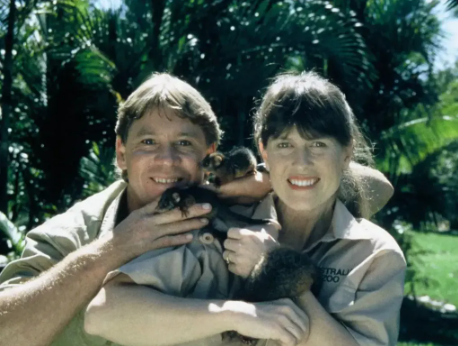
They rushed to help him.
Irwin was moved toward the boat.
Lyons later described trying desperately to keep him conscious.
The crew told him to think about his children.
They urged him to stay with them.
And then came the words that would be remembered for years.
According to Lyons, Irwin looked toward him and said:
“I’m dying.”
Those were the final words Lyons later said he heard from him.
The crew continued trying to save him.
But the damage was too severe.
The moment had been filmed.
That fact has created intense curiosity ever since.
But the footage has never been publicly released.
And that may be one of the most important decisions surrounding the tragedy.
Producer and longtime friend John Stainton saw the recording.
He later spoke about how difficult it was to watch.
Terri Irwin has said she never needed to see it.
She already knew how her husband died.
For her, watching those final moments would not change what happened.
It would only add another painful image.
That decision helped preserve some privacy around Steve’s death.
And twenty years later, that privacy feels especially meaningful.
Because almost everything else about Steve Irwin’s life had been shared with the world.
He was a television personality whose entire public identity was built around close encounters with wildlife.
People watched him stand beside crocodiles.
Handle venomous snakes.
Crawl through mud.
Walk through forests.
Enter rivers.
And talk directly into the camera as though the person watching was right there beside him.
His style was impossible to confuse with anyone else’s.
The khaki shirt.
The enthusiasm.
The accent.
The famous “Crikey!”
But those details were only the surface.
The purpose underneath remained remarkably consistent.
Irwin wanted people to understand animals.
Especially the ones they feared.
He believed fear often came from ignorance.
And that understanding could lead to conservation.
That philosophy had been part of his life long before television arrived.
Steve Irwin was born on February 22, 1962.
His parents, Bob and Lyn Irwin, were deeply involved in wildlife.
The family moved to Queensland and opened the Beerwah Reptile Park in 1970.
That park eventually grew into Australia Zoo.
Steve did not discover crocodiles as an adult.
He grew up around them.
Wildlife rescue and animal care were part of his childhood.
So was learning how dangerous animals behaved.
Those early experiences shaped everything that came later.
When The Crocodile Hunter began reaching international audiences, viewers saw something unusual.
A wildlife presenter who seemed as excited as a child every time he encountered an animal.
He could be talking about a massive crocodile.
A snake.
A lizard.
Or a small animal most people would barely notice.
His reaction was often the same.
Complete fascination.
That enthusiasm made the program entertaining.
But it also served a purpose.
Irwin wanted the audience to care about the animal.
Not just watch it.
He wanted viewers to understand that even frightening species had a place in the natural world.
That message helped turn him into much more than a television personality.
He became a conservation symbol.
His fame spread internationally.
Australia Zoo grew.
Conservation programs expanded.
And millions of children were introduced to wildlife through his television work.
Then came family.
Steve and Terri Irwin had two children.
Bindi was born in 1998.
Robert followed in 2003.
Both were very young when their father died.
Bindi was eight.
Robert was two.
That difference shaped how each child experienced his absence.
Bindi had direct memories.
She remembered his voice.
His personality.
The way he interacted with her.
Robert had fewer personal memories because he was so young.
For him, photographs, stories, video, and the work Steve left behind became especially important.
Twenty years later, both children are adults.
And both remain closely connected to wildlife.
Bindi has continued working with Australia Zoo and conservation projects.
Robert has developed his own identity through wildlife work and photography.
Their mother, Terri, has also continued the conservation mission.
The work Steve helped build did not stop in 2006.
That became especially visible on the twentieth anniversary of his death.
In September 2026, Terri, Bindi, and Robert each shared tributes.
Their messages were emotional.
But they were not centered only on the accident.
Terri remembered the period immediately before Steve died.
The family had spent time together during crocodile research.
Steve played with the children.
Climbed trees.
Built swings.
And shared ordinary family moments.
Those memories were not television scenes.
They were simply family life.
Looking back, Terri described that final period together as something like a long goodbye.
Not because anyone knew what was coming.
But because, in hindsight, those ordinary weeks became deeply precious.
That changes the way the story feels.
The public remembers September 4.
Terri remembers everything before it.
The trips.
The laughter.
The parenting.
The quiet moments.
The parts of Steve that never became a headline.
Bindi’s reflection also focused on something deeper than conservation.
For years, she said she thought her father’s greatest legacy was the wildlife work he left behind.
Over time, she began seeing it differently.
His legacy was also love.
Love for wildlife.
Love for the planet.
And love for his family.
That idea became even more meaningful after Bindi became a mother.
Her daughter, Grace Warrior, was born in 2021.
Grace never met Steve.
But she knows who he is.
She watches his old documentaries.
She sees his face.
Hears his voice.
And knows him through the stories her family tells.
She reportedly calls him “Grandpa Crocodile.”
That detail says something remarkable about television.
For millions of people, Steve’s recordings preserve a famous conservationist.
For Grace, they preserve a grandfather.
The same footage has two completely different meanings.
Robert’s connection to his father has taken another form.
He has continued wildlife work.
He has become known for photography.
And he has participated in conservation and crocodile research associated with the family’s projects.
His path is not identical to Steve’s.
Nor should it be.
But the influence is clear.
The same curiosity about wildlife remains.
The same willingness to work closely with animals remains.
And the same conservation message continues.
That continuity may be one of the strongest parts of Steve Irwin’s legacy.
Not imitation.
Continuation.
The family has not simply recreated The Crocodile Hunter forever.
They have continued the work in their own ways.
Australia Zoo remains central.
The wildlife hospital continues.
Research continues.
Conservation projects continue.
And the message Steve repeated for years remains familiar.
Protect animals.
Protect habitat.
Understand before you fear.
That last point becomes especially relevant when discussing the animal involved in his death.
The stingray should not be turned into a villain.
Stingrays do not normally attack people.
Their barb is defensive.
Steve’s death was an extraordinarily rare event.
The animal reacted.
It did not act with malice.
That distinction fits almost perfectly with the philosophy Irwin spent his career teaching.
Animals should not be hated because they can be dangerous.
Understanding behavior matters.
Context matters.
Respect matters.
Nature is not organized around human ideas of good and evil.
Animals respond to threats.
And humans sometimes place themselves close enough for those responses to become dangerous.
Irwin understood that better than most.
That does not make the accident less tragic.
It simply prevents the species from becoming unfairly associated with one extraordinary event.
There is another reason the anniversary deserves careful framing.
Twenty years is long enough for the final moment to start overshadowing the entire life.
The stingray.
The injury.
The final words.
The unreleased video.
Those details are dramatic.
They are easy to turn into headlines.
But if they become the main way Steve Irwin is remembered, something important gets lost.
His career was not about dying around wildlife.
It was about living for it.
He spent years encouraging people to care about species they might otherwise ignore.
He made conservation entertaining.
He made reptiles approachable.
He turned wildlife education into mainstream television.
And he created enthusiasm that outlived him.
That is the part his family keeps returning to.
The public may still be curious about the final recording.
His family does not appear interested in turning it into entertainment.
The footage remains private.
And perhaps that is exactly where it belongs.
The world already has thousands of hours of Steve alive.
Those recordings show the man his family wants remembered.
Excited.
Curious.
Passionate.
Laughing.
Teaching.
Working.
Running toward the next animal.
The final minutes add very little to that legacy.
They only explain how the story stopped.
His children, meanwhile, have spent two decades showing that the mission did not stop with him.
That difference matters.
A person’s life ends.
A legacy can continue.
That is visible in the conservation work.
In the zoo.
In the research.
In Robert’s photography.
In Bindi teaching Grace about her grandfather.
In Terri continuing work that began decades earlier.
Those things are active.
They are not monuments.
They are living consequences.
And that may be what Bindi meant when she described love as part of Steve’s greatest legacy.
Love is difficult to measure.
Conservation can be counted.
Animals can be rescued.
Habitats can be protected.
Research projects can be documented.
Love shows up differently.
It appears in what people keep doing after someone is gone.
A widow continuing shared work.
Children carrying forward the values they were taught.
A granddaughter loving someone she knows only through stories and recordings.
That may be one of the most moving parts of the twentieth anniversary.
Steve never met Grace.
Yet she recognizes him.
His voice still reaches her.
His excitement still reaches her.
And in some sense, his personality still occupies space inside the family.
That is something fame accidentally made possible.
The television archive was created for audiences.
Years later, it became a family archive too.
That is where the delayed payoff begins to become clear.
The most haunting part of Steve Irwin’s death may be the reported final sentence.
But his legacy was not built in that sentence.
It was built in everything he said before it.
Every time he explained why a crocodile mattered.
Every time he asked viewers not to fear a snake.
Every time he spoke about protecting habitat.
Every time he encouraged people to become wildlife warriors.
Those messages had years to spread.
The final words lasted only seconds.
One belongs to a private tragedy.
The other belongs to millions of people.
And twenty years later, that difference feels increasingly important.
Steve Irwin’s story should not end with the stingray.
That was how his life ended.
It was not what his life meant.
The meaning is visible in what remains.
Australia Zoo.
The conservation programs.
The research.
The wildlife hospital.
His family.
And the generations of viewers who learned that a frightening animal can also be extraordinary.
That is why the unreleased footage may never need to be seen.
The public already has the images worth keeping.
Steve running.
Steve laughing.
Steve wearing khaki.
Steve leaning toward the camera.
Steve telling people to look at an animal closely instead of turning away.
Twenty years after his death, the grief remains.
But the family message has become clearer.
Remember the life.
Not only the last day.
Remember the work.
Not only the accident.
Remember the love.
Not only the loss.
The world knows how Steve Irwin died.
His family would rather people remember why he lived the way he did.

