
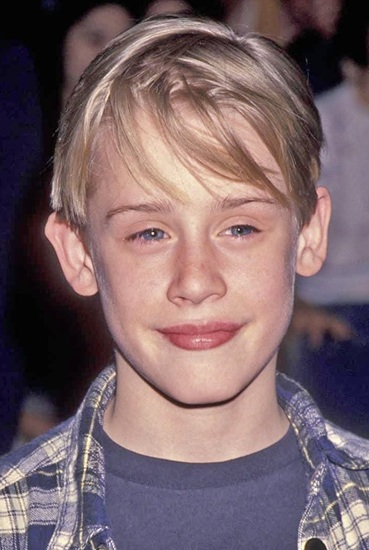
There are certain movie characters who never seem to grow older. Kevin McCallister is one of them. Every holiday season, audiences can return to the same suburban house and watch a clever young boy realize that his entire family has accidentally left him behind.
He is frightened. Then excited. Then surprisingly resourceful. And when two burglars arrive, he transforms the house into an elaborate collection of traps.
More than three decades later, the movie remains instantly recognizable.
So does the child at the center of it.
Macaulay Culkin.
For millions of viewers, Culkin will always be associated with one unforgettable image.
Hands pressed against his cheeks.
Eyes wide.
Mouth open.
A scream that became part of popular culture.
But while Kevin McCallister remained permanently young on film, Macaulay Culkin continued growing.
And the life that followed was far more complicated than simply being “the kid from Home Alone.”
Culkin was born in New York City on August 26, 1980.
He began performing at a very young age.
Before Home Alone, he had already appeared on stage and screen.
One particularly important early role came in 1989.
Culkin appeared alongside John Candy in Uncle Buck.
He played Miles Russell.
The role was not enormous.

But Culkin’s comic timing was difficult to miss.
He delivered lines with unusual confidence for such a young performer.
He could be funny without appearing to force the joke.
And he had the kind of expressive face that worked perfectly on camera.
That performance helped bring him to the attention of filmmaker John Hughes.
Then came the role that changed everything.
Kevin McCallister.
Home Alone was released in November 1990.
The premise was simple enough.
A large family prepares for a Christmas trip to Paris.
Chaos fills the house.
In the confusion, eight-year-old Kevin is accidentally left behind.
At first, he thinks his wish has come true.
No parents.
No siblings.
No rules.
He can eat what he wants.
Watch what he wants.
And live exactly as he pleases.
Then reality arrives.
Kevin discovers that being alone is not as easy as he imagined.
And eventually, two burglars decide that his supposedly empty house is an easy target.
That is when Kevin becomes the character audiences remember.
He plans.
Builds traps.
Defends the house.
And repeatedly outsmarts Harry and Marv, played by Joe Pesci and Daniel Stern.
The physical comedy became legendary.
But the movie needed more than traps to work.
Kevin also had to feel like a real child.
He could be confident one moment and frightened the next.
He missed his mother.
He worried about his family.
He confronted things that scared him.
And underneath all the slapstick was a story about a child realizing that independence does not mean much when the people he loves are gone.
Culkin carried much of that emotional weight.
He was only ten years old when the film was released.
Then something extraordinary happened.
Home Alone became an enormous commercial success.
The movie earned hundreds of millions of dollars worldwide.
Families returned to theaters.
Children imitated Kevin.
Lines from the movie entered everyday conversation.
And the film eventually became a holiday tradition.
Culkin’s life changed almost immediately.
He was no longer simply a working child actor.
He was famous.
Extremely famous.
Magazine covers followed.
Interviews.
Television appearances.
Awards.
New movie offers.
Suddenly, Hollywood had one of the most commercially valuable child performers of his generation.
But Culkin still had to grow up while all of that was happening.
His next major roles showed that Hollywood wanted more.
In 1991, he appeared in My Girl alongside Anna Chlumsky.
The film was very different from Home Alone.
It dealt with friendship.
Family.
Loss.
And grief.
Culkin played Thomas J. Sennett.
For audiences expecting another Kevin McCallister-style comedy, the emotional direction of the film could be surprising.
Then, in 1992, Culkin returned to the character that had made him internationally famous.
Home Alone 2: Lost in New York brought Kevin back.
This time, he was not accidentally left inside his family’s house.
He boarded the wrong flight.
His family went to Florida.
Kevin ended up in New York.
Alone again.
The setting allowed the sequel to become bigger.
Hotels.
Central Park.
Toy stores.
New York streets.
And eventually another confrontation with Harry and Marv.
The sequel became another major commercial success.
And by that point, Culkin’s childhood face had become inseparable from the Home Alone franchise.
More films followed.
The Good Son gave him a darker role.
He appeared in The Pagemaster.
Getting Even with Dad.
And Richie Rich.
For several years, Culkin seemed to be everywhere.
Then he wasn’t.
After Richie Rich in 1994, he stepped away from the relentless pace of mainstream filmmaking.
To viewers, the change could feel sudden.
One of the world’s most recognizable child actors had largely disappeared from major Hollywood movies.
People began asking what happened.
But “disappeared” was never quite the right word.
Culkin was growing up.
And after years of working intensely as a child, he wanted distance from the industry that had occupied so much of his early life.
That decision created an unusual situation.
The public still had access to ten-year-old Macaulay whenever it wanted.
Press play.
Kevin was there.
Same face.
Same voice.
Same Christmas.
Meanwhile, the actual person was becoming a teenager.
Then a young adult.
The movie remained frozen.
He did not.
That difference is one of the strangest parts of child stardom.
Most people leave childhood behind gradually.
Their old photographs stay inside family albums.
Perhaps a few embarrassing home videos remain.
Culkin’s childhood was different.
Millions of people could revisit it.
Again.
And again.
And again.
Every December.
That meant adulthood came with a challenge.
How do you build a new identity when strangers already feel they know the most famous version of you?
For a while, Culkin seemed comfortable staying outside mainstream Hollywood.
Then, as an adult, he began acting again.
But he did not simply return to the type of movies that had made him famous.
In 2003, he appeared in Party Monster.
The role could hardly have been further removed from Kevin McCallister.
Culkin played Michael Alig in a film about New York’s club scene.
For audiences who remembered only the little boy defending a Christmas-decorated house, the contrast was enormous.
Then came Saved! in 2004.
Again, Culkin was building an adult career on different terms.
He was not trying to become the child star again.
That would have been impossible.
Instead, he began choosing work that allowed him to experiment.
Acting was only one part of it.
Music became another.
Culkin became involved with The Pizza Underground, a comedy rock project that transformed songs associated with The Velvet Underground into pizza-themed versions.
The idea was intentionally absurd.
That was part of the appeal.
It also demonstrated something about Culkin’s adult public persona.
He was willing to be strange.
Playful.
And self-aware.
He did not seem interested in treating his childhood celebrity with constant seriousness.
Later, he became involved in Bunny Ears, a satirical comedy and lifestyle platform.
Again, humor was central.
Culkin had spent childhood being turned into a cultural icon.
As an adult, he increasingly seemed willing to joke about celebrity culture itself.
Including his own place inside it.
Then his acting career became more visible again.
In 2021, he joined American Horror Story: Double Feature.
The role introduced another version of Culkin to television audiences.
It was adult.
Dark.
Very far from his childhood movies.
He later appeared in The Righteous Gemstones.
Voice work and other television projects followed.
By the 2020s, it was increasingly inaccurate to describe him as someone who had simply abandoned acting.
His relationship with the profession had changed.
He worked selectively.
The nonstop childhood schedule was gone.
The freedom to choose had replaced it.
Then came December 1, 2023.
Hollywood gave Culkin one of its most recognizable honors.
A star on the Hollywood Walk of Fame.
It was the 2,765th star on the famous walkway.
And the ceremony created a reunion that immediately brought audiences back to 1990.
Catherine O’Hara attended.
The actress who had played Kevin’s mother, Kate McCallister, stood beside the adult Macaulay Culkin.
More than three decades earlier, audiences had watched her character desperately trying to get home to him.
Now she was helping honor his career.
The emotional connection was obvious.
Culkin was no longer the child standing beside his movie mother.
He was a man in his forties.
Yet the affection and shared history remained.
Natasha Lyonne also spoke at the ceremony.
The event recognized more than one famous childhood performance.
It recognized a career that had stretched across several different phases.
But something else had changed in Culkin’s life by then.
Something much more personal.
He had become a father.
Culkin has built a long-term relationship with actress Brenda Song.
The pair began dating after working together on Changeland.
They later became engaged.
And they have two sons.
Their first son, Dakota, was born in 2021.
Their second son, Carson, followed in 2022.
That development created an extraordinary contrast.
Macaulay Culkin had spent part of his own childhood being watched by millions.
Now he was responsible for protecting the childhoods of two boys of his own.
Culkin and Song have generally kept their children far more private than the level of exposure Culkin experienced growing up.
They occasionally discuss family life.
But they have also emphasized privacy.
That decision makes sense even without turning it into a dramatic statement about Culkin’s past.
Their sons did not choose celebrity.
Their parents did.
And being born to famous actors does not automatically mean every childhood moment belongs to the public.
There is also a funny side to Culkin’s family life.
His children can watch Home Alone.
Imagine that for a moment.
A father sits beside his children.
On the television is a ten-year-old version of himself.
Millions of other families see Kevin McCallister.
His children see a movie character who happens to look exactly like their father did decades earlier.
Culkin has joked about watching the film with them.
For a time, his sons did not fully understand that the child playing Kevin was actually their dad.
That may be one of the rarest parenting experiences imaginable.
Your children can watch your childhood in one of the most famous Christmas movies ever made.
And the film never changes.
Kevin is always young.
Macaulay is not.
By September 2026, Culkin is 46 years old.
More than 35 years have passed since the original Home Alone reached theaters.
That number explains something social media sometimes tries to make mysterious.
Why does Macaulay Culkin look different now?
Because decades passed.
That is what human beings do.
They age.
Faces mature.
Hair changes.
Bodies change.
Styles change.
Someone photographed at ten will obviously look different at 46.
The unusual part is not Culkin’s appearance.
The unusual part is that millions of people possess an extremely vivid mental image of him as a child.
Most adults are not constantly compared with photographs taken when they were ten.
Culkin is.
And every holiday season renews that comparison.
A new generation discovers Home Alone.
Children laugh at Kevin’s traps.
Parents remember watching the same movie when they were young.
Then some viewers search for the actor.
And discover that the boy on screen is now a middle-aged father.
The passage of time suddenly feels enormous.
But focusing only on appearance misses the more interesting transformation.
Culkin’s life changed far more than his face.
As a child, he was working inside an industry largely managed by adults.
As an adult, he could decide whether he wanted to participate.
He could leave.
Return.
Experiment.
Take unusual roles.
Make comedy.
Work in music.
Or spend time away from the spotlight.
That freedom may be one of the biggest differences between the two phases of his career.
The child actor had enormous fame.
The adult gained more control.
And perhaps that helps explain why his later career looks less conventional.
He does not appear to be chasing the level of visibility he had in 1990.
Very few people ever experience that level of fame at all.
Even fewer experience it before becoming teenagers.
Instead, Culkin has built a career that allows him to move in and out of public attention.
A television role here.
Voice work there.
A creative project.
An appearance.
Then family life.
That is a different definition of success.
And it is one audiences sometimes struggle to recognize.
Celebrity culture often assumes that staying constantly visible means winning.
If an actor disappears from blockbuster movies, people ask what went wrong.
But sometimes stepping away is a choice.
Sometimes working less is the goal.
Sometimes a person who experienced extraordinary fame very early does not need to spend adulthood trying to recreate it.
Culkin’s relationship with Home Alone also appears to have evolved.
He has not erased the movie from his life.
He can joke about it.
Celebrate it.
Talk about it.
Watch it with his children.
And reunite publicly with former cast members.
The movie remains important.
But importance is different from control.
Kevin McCallister is part of Macaulay Culkin’s story.
He is not the entire story.
That becomes especially clear when looking at the Walk of Fame ceremony.
Catherine O’Hara’s presence brought the past into the room.
Fans remembered the frantic mother trying to return to her forgotten son.
But standing beside her was no longer that child.
It was an adult actor.
A partner.
A father.
Someone with decades of experiences that happened after the movie ended.
That is where the delayed payoff begins.
At first, Culkin’s story looks like one of those familiar “then and now” transformations.
Here is the adorable child star.
Now look at him decades later.
But the visual comparison is the least meaningful part.
Of course he changed.
The real transformation is what happened to his relationship with fame.
As a child, fame happened to him at extraordinary speed.
As an adult, he learned to decide how much of it he wanted.
As a child, his image became public property in the cultural sense.
As a father, he and Brenda Song have tried to keep more of their sons’ lives private.
As a child, Kevin McCallister defined him.
As an adult, Culkin has had decades to define himself.
That does not require rejecting the past.
It requires placing it in perspective.
Home Alone will probably remain the first title attached to his name for generations.
There is nothing inherently wrong with that.
Actors spend entire careers hoping to create one character people remember.
Culkin did it before adolescence.
But his life did not stop when Kevin’s story ended.
That may sound obvious.
Yet nostalgia can make people forget it.
The movie remains exactly where audiences left it.
The actor does not.
While Kevin remained alone in the house, Culkin grew up.
He left mainstream movies.
Returned selectively.
Tried different creative projects.
Built relationships.
Became a father.
And eventually stood on the Hollywood Walk of Fame beside the actress who once played his mother.
There is something almost cinematic about that.
But perhaps the most meaningful scene happens away from Hollywood.
A father sitting with his children.
A Christmas movie playing.
A little blond boy appears on screen.
The children watch Kevin McCallister.
Their father watches a version of himself from more than three decades ago.
For the rest of the world, that child is an icon.
For Macaulay Culkin, he is the beginning of a much longer story.
And that may be the most interesting answer to the question of what happened to the boy from Home Alone.
Nothing mysterious.
He simply kept living.
Kevin stayed ten years old.
Macaulay Culkin grew up.

