
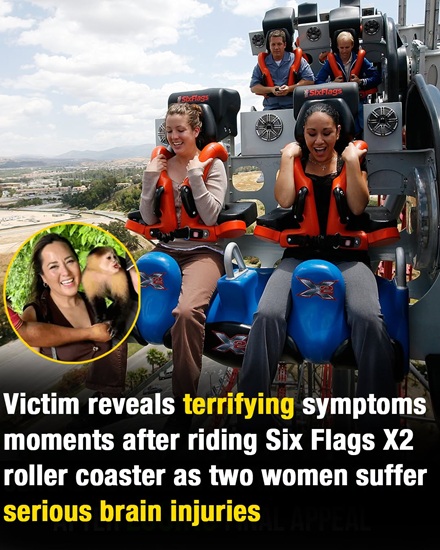
Two women suffered devastating brain injuries within less than a week of each other after riding the X2 roller coaster at Six Flags Magic Mountain in California in July 2026, according to reporting by CNN. Both women required emergency neurosurgery after becoming critically ill following their rides on the attraction. The cases involved Pamela Guillen, 40, of Hawaii, and Naomi Greer-Wilkinson, 25, of Los Angeles. Their experiences have brought increased attention to the high-intensity roller coaster and to previous reports and legal cases involving people who said they were seriously injured after riding it.
X2 is one of the most intense attractions at Six Flags Magic Mountain. The coaster can reach speeds of approximately 76 miles per hour and includes a drop of around 200 feet. One feature that distinguishes X2 from many conventional roller coasters is the design of its seats, which can rotate forward and backward independently as the train travels along the track. Six Flags has promoted X2 as an attraction intended for thrill seekers, but the coaster has also appeared in previous reports involving riders who experienced serious medical problems after using it.
The first of the two July 2026 cases involved Pamela Guillen. She visited Six Flags Magic Mountain with her daughter, who was celebrating her 16th birthday. According to CNN’s reporting, Guillen had reservations about riding X2 but ultimately decided to accompany her daughter. During the ride, she experienced repeated movement involving her head and the seat’s headrest. After the train returned to the station, her condition quickly became concerning.
Guillen began vomiting and soon lost consciousness. She was transported to a hospital, where medical imaging revealed a serious brain injury. Doctors diagnosed an acute subdural hematoma and brain compression, conditions that required urgent medical intervention. She underwent emergency brain surgery as doctors worked to relieve pressure and address the bleeding. What had started as a family trip to an amusement park had suddenly become a life-threatening medical emergency.

Guillen remained unconscious for a period following the incident. When she eventually regained consciousness, she was confronted with the consequences of both the injury and the emergency procedure. CNN reported that she initially had no memory of what had happened. Her recovery did not end when she left immediate critical care, either, as she subsequently described continuing symptoms including headaches, fatigue and difficulties with activities that had previously been routine.
Only six days after Guillen’s incident, Naomi Greer-Wilkinson also rode X2 while visiting the park with members of her family. According to CNN, Greer-Wilkinson was at Magic Mountain with her twin brother and younger sister. She became seriously ill after riding the coaster and lost consciousness. Emergency medical assistance was required, and she was transported to a hospital, where doctors determined that her condition was extremely serious.
Greer-Wilkinson underwent emergency brain surgery as well. Her family later described being warned by doctors that they needed to prepare for the possibility of a devastating outcome. When CNN published its investigation in late August 2026, Greer-Wilkinson remained hospitalized after the medical emergency. Her family’s public statements reflected both their fear about her condition and their concern about the circumstances surrounding her injury.
Her mother, Artemis Greer, publicly questioned why her daughter had been able to board the attraction. Greer-Wilkinson’s father also expressed anger and said that those responsible for decisions surrounding the ride’s operation had questions to answer. These comments represent the family’s views and concerns following Naomi’s injury. They should not be confused with a final determination by regulators or a court regarding legal responsibility for what happened.
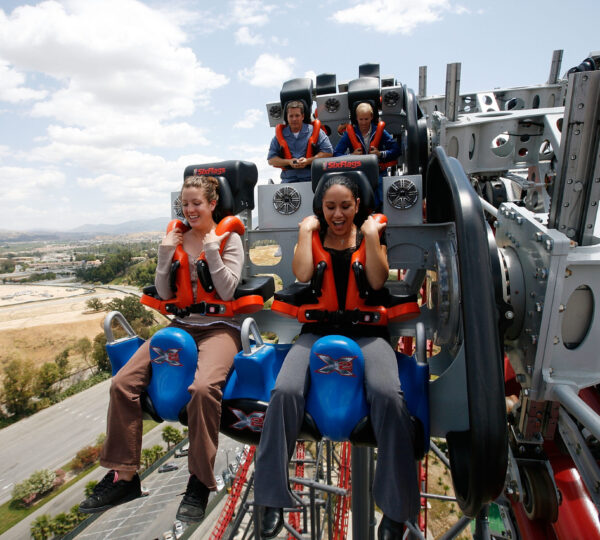
The medical professionals who treated Guillen and Greer-Wilkinson also raised serious concerns. In an email obtained and reported by CNN, members of the medical team expressed their professional opinion that the severe brain injuries requiring emergency neurosurgical treatment resulted from traumatic rapid acceleration and deceleration experienced while the women were riding X2. The doctors reportedly compared the nature of the injuries with trauma that could be associated with events such as a high-speed vehicle collision or a violent fall.
That assessment is significant, but it is important to describe it accurately. It represents the professional medical opinion of the physicians involved in treating the patients. It is not, by itself, the same thing as a final regulatory finding or court judgment establishing legal responsibility. Determining whether an amusement ride, its operation, another factor or a combination of circumstances caused an injury can involve medical evidence, engineering information, inspection records and legal analysis.
The two July incidents also drew attention because X2 had previously been connected to other reported injuries. CNN examined earlier cases stretching across many years, including lawsuits and medical records involving people who experienced serious symptoms after riding the coaster. Some riders reported striking their heads against their seats, while others developed symptoms that led them to seek emergency medical treatment.
One earlier case involved Lucy Alvarez, who was 46 when she rode X2 in 2021. According to reporting on her case, Alvarez said that the back of her head struck the ride’s headrest. She subsequently experienced symptoms including dizziness and head pain that continued after she returned home to San Diego. Her condition eventually prompted an emergency-room visit, where medical evaluation identified a traumatic subdural hematoma.
Alvarez has said that the consequences extended well beyond the initial injury. Her attorney has described continuing problems involving memory, balance and chronic migraines and has said the injury disrupted her education in nursing. Her claims became the subject of litigation involving Six Flags. Because such litigation involves disputed allegations, claims made by either side should be identified as claims unless and until they are established through an applicable legal process.
Another particularly serious case occurred in 2022 and involved 22-year-old Christopher Hawley. Hawley visited Six Flags Magic Mountain with his brother and cousin and rode X2. According to accounts associated with the subsequent legal case, the group experienced significant head movement during the attraction. Hawley later complained that he felt unwell and eventually lost consciousness.
Hawley was transported to Henry Mayo Newhall Hospital, where medical imaging revealed catastrophic brain trauma. He died the following day. His family later pursued wrongful-death litigation connected to the incident. Subsequent reporting stated that a coroner’s report attributed his death to blunt head trauma sustained in a park ride accident. His death became one of the most serious cases publicly associated with X2.
Hawley’s parents brought legal claims against parties connected with the attraction, alleging that their son’s fatal injuries occurred during the ride. The defendants disputed liability. Later developments in 2026 indicated that the wrongful-death litigation was resolved through settlements before the planned trial. The reported settlement terms were not publicly disclosed.
A settlement should not automatically be interpreted as an admission of wrongdoing. Civil cases can be settled for many reasons, and an agreement between parties does not necessarily establish the same conclusions that a judge or jury might reach after a trial. For that reason, the allegations made in litigation involving X2 should remain clearly distinguished from independently established findings.
The timing of the July 2026 cases has nevertheless generated substantial concern. Guillen and Greer-Wilkinson reportedly suffered severe brain injuries after riding the same attraction only six days apart. Both required emergency neurological surgery. Medical professionals involved in their treatment subsequently expressed the opinion that the rapid acceleration and deceleration experienced during X2 was responsible for their injuries.
X2 stopped operating in July and has remained closed. Six Flags has confirmed that the attraction is currently unavailable, although the company has not publicly provided a detailed explanation establishing precisely why the ride was closed or announced a confirmed reopening date. As a result, claims about exactly what prompted the shutdown should not be presented as established fact unless confirmed by the company or relevant authorities.
The closure itself also does not prove that investigators have determined the attraction is unsafe. A ride can be taken out of operation for numerous reasons, including inspections, maintenance, technical work or an investigation following an incident. Until regulators or Six Flags provide additional confirmed information, the most accurate description is simply that X2 remains closed while questions surrounding the recent cases continue.
Six Flags has previously defended the safety of the attraction in litigation involving other riders. Reporting on previous court proceedings indicates that the company has pointed to inspection procedures and has disputed claims that X2 was responsible for certain injuries. Those positions are relevant when presenting the broader history because the accusations involving the coaster have not gone uncontested.
The recent medical cases, however, are undeniably serious. Guillen and Greer-Wilkinson both required emergency brain surgery after riding X2 within days of each other. Their doctors have publicly expressed a professional opinion about the connection between their injuries and the forces experienced on the ride. Those facts can be reported without assuming the outcome of any investigation or assigning legal responsibility before such a determination exists.
Guillen’s recovery has also highlighted how a severe brain injury can continue affecting a person after the immediate emergency has passed. She survived the initial crisis and eventually regained consciousness, but she described continuing health challenges afterward. Her individual experience should not be generalized to every person who rides a roller coaster, but it demonstrates the seriousness of the trauma documented in her particular case.
Greer-Wilkinson’s family faced an even more uncertain situation when the cases became widely reported. As of CNN’s late-August report, she remained hospitalized following emergency surgery. Her parents publicly discussed their fears for her recovery and called for answers about why the attraction continued operating. Those statements convey the family’s position and emotional response rather than an official determination of fault.
The medical team’s assessment has become one of the most significant elements of the story. Doctors treating both women believed the severe injuries resulted from traumatic acceleration-deceleration forces experienced during the X2 rides. Such forces can cause the brain to move inside the skull, and subdural bleeding is a potentially life-threatening medical emergency. However, medical details should be interpreted by qualified professionals rather than used to make broad conclusions about the safety of roller coasters in general.
The broader history surrounding X2 has made the recent incidents particularly noteworthy. Reports involving previous riders have included allegations of traumatic brain injuries, persistent neurological symptoms and, in Hawley’s case, a fatal outcome. At the same time, each incident has its own circumstances, evidence and medical history. Combining every reported case into a single assumption of cause would go beyond what the available evidence can establish.
That distinction is especially important when information is shared on social media. A serious injury does not need exaggeration to attract attention. Presenting medical findings accurately, attributing statements to the people who made them and distinguishing allegations from proven conclusions provides readers with a clearer understanding of what is actually known.
There is also no basis for presenting the story as though the writer personally witnessed the incidents or represents residents of California. The information available publicly comes from reporting, medical information discussed by those involved, statements from family members, court records and responses connected with Six Flags. Keeping those sources clearly separated from the writer’s own voice prevents an informational article from becoming misleading.
For amusement-park visitors generally, these cases should not be interpreted as proof that riding any roller coaster will result in a brain injury. Millions of amusement-ride experiences occur under different circumstances, and individual medical risk can vary considerably. The significance of these particular cases comes from their severity, their close timing and the medical opinion provided by the physicians who treated both patients.
Likewise, it would be inaccurate to state that X2 has definitively been proven responsible for every serious injury previously associated with it. Some cases involve allegations made through civil litigation, and defendants have disputed responsibility. Other incidents involve medical findings or statements from riders and families. Accurate reporting requires maintaining those distinctions instead of converting every allegation into an established fact.
What can be stated with greater confidence is that two women experienced severe neurological emergencies following separate rides on X2 in July 2026. Both required urgent brain surgery. Guillen survived and entered a difficult recovery process, while Greer-Wilkinson remained hospitalized when CNN published its investigation in late August. Physicians who treated them connected their injuries, in their professional opinion, to traumatic acceleration and deceleration experienced during the attraction.
It is also confirmed through public reporting that X2 has been the subject of previous serious injury claims and litigation. Christopher Hawley’s death after his 2022 visit resulted in wrongful-death litigation that was ultimately settled in 2026. Lucy Alvarez has pursued a separate case involving the brain injury she says she suffered following her 2021 ride.
Six Flags Magic Mountain has not announced when X2 will reopen. Until an official reopening date or additional findings are released, speculation about the attraction’s future would be premature. The ride’s continued closure does, however, mean that visitors currently cannot experience an attraction that had long been marketed as one of Magic Mountain’s most intense roller coasters.
The story remains primarily about two families dealing with severe medical emergencies and the unanswered questions surrounding what happened. Guillen’s family watched what was supposed to be a birthday outing become an emergency hospitalization. Greer-Wilkinson’s relatives faced an equally frightening crisis only days later. Their experiences deserve to be described carefully without adding dramatic details that have not been independently established.
Future regulatory findings, medical evidence or legal proceedings may provide additional information about the July incidents. Until then, responsible reporting requires avoiding assumptions about issues that remain unresolved. Statements from doctors can be reported as medical opinions, comments from relatives can be attributed to the families, and allegations from lawsuits can be identified as allegations rather than treated as established conclusions.
For Six Flags and those responsible for amusement-ride oversight, the attention surrounding X2 is likely to continue as more information becomes available. For the families involved, however, the issue is much more immediate. Their focus has been on recovery, medical care and understanding how two young family outings resulted in severe neurological emergencies within such a short period.
The two cases have also become a reminder of why serious incidents involving amusement rides require careful investigation rather than speculation. Determining exactly what happened involves more than examining dramatic descriptions of a roller coaster. Investigators may need to consider medical records, ride operations, maintenance information, engineering data, witness accounts and other evidence before reaching conclusions.
Until that process produces additional confirmed findings, the essential facts remain striking on their own. Pamela Guillen and Naomi Greer-Wilkinson rode X2 at Six Flags Magic Mountain six days apart in July 2026. Both subsequently suffered severe brain injuries requiring emergency surgery. Their treating physicians have said they believe traumatic acceleration and deceleration during the rides caused those injuries.
Previous serious incidents associated with X2 have added context and raised additional questions, but they should be reported individually and accurately. Legal allegations are not automatically facts, settlements are not necessarily admissions of liability, and a ride closure does not by itself establish the reason behind it. Those distinctions are essential when covering a developing story involving health, safety and potential legal responsibility.
As of the latest reporting, X2 remains closed, and there is no confirmed public reopening date. The circumstances surrounding the injuries to Guillen and Greer-Wilkinson continue to receive attention, while their experiences have renewed scrutiny of earlier cases involving the attraction. Any new conclusions about responsibility or the coaster’s future should depend on verified information from regulators, medical professionals, court proceedings or Six Flags itself.
For now, the story requires neither speculation nor sensationalism to convey its seriousness. Two women experienced life-threatening medical emergencies after riding the same roller coaster less than a week apart, both underwent emergency brain surgery, and one remained hospitalized in critical circumstances when the investigation was published. Those documented events, together with the medical opinions and history of earlier claims surrounding X2, are substantial enough to warrant careful attention while the search for clearer answers continues.

