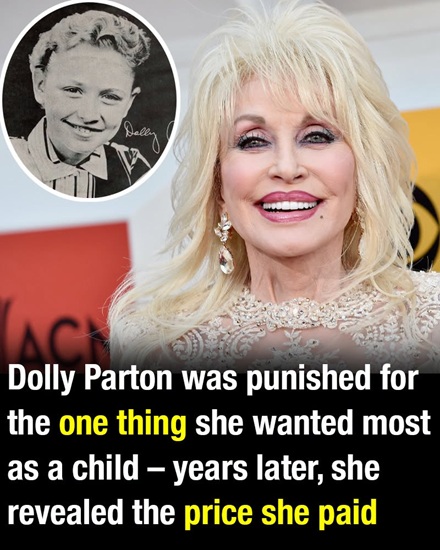
Dolly Parton’s life story has long represented far more than the success of a famous country singer. Born into a large family with limited financial resources, she eventually became one of the most recognizable entertainers in the world. Her career stretched across music, film, television, business and philanthropy, while her distinctive personality and unmistakable appearance made her a cultural figure recognized far beyond country music. Behind the awards, hit records and international fame, however, was a story shaped by an unusually modest childhood, a close relationship with family, years of persistence and an enduring desire to help other people.
Dolly Rebecca Parton was born on January 19, 1946, in Tennessee and grew up near the Great Smoky Mountains. She was one of 12 children born to Robert Lee Parton and Avie Lee Owens Parton. The family lived with very little money, and Dolly frequently spoke throughout her career about the difficult conditions surrounding her childhood. Her father worked hard to support the family, including through farming and construction-related work. Although he lacked a formal education and could not read or write, Dolly consistently described him with admiration and credited him with having a strong understanding of business and hard work.
The Parton household did not contain many of the conveniences that later generations would consider ordinary. With so many children sharing a relatively small living space, privacy was limited and everyday life could be difficult. Running water and modern bathroom facilities were not readily available to the family during Dolly’s earliest years. Yet when she later discussed this period, she generally emphasized something besides poverty. She remembered a home filled with relatives, stories, faith and especially music, explaining that although the family had little financially, she did not spend her childhood thinking only about what they lacked.
Her mother, Avie Lee, played an especially important part in developing Dolly’s imagination and musical interests. Music was woven into everyday family life, and songs provided entertainment in circumstances where expensive possessions were unavailable. Avie Lee sang traditional songs and encouraged her children’s creativity. Dolly quickly demonstrated a particularly strong interest in performing. Long before professional studios, large audiences or record contracts entered her life, she was learning how storytelling and melody could transform ordinary experiences into songs that other people could understand.
That early environment eventually became an important source of material for her songwriting. Rather than distancing herself from her upbringing after becoming successful, Dolly repeatedly returned to childhood memories in interviews and music. Family members, mountain communities, faith, poverty, relationships and personal ambition all became themes associated with her work. Her ability to transform specific experiences into universally understandable stories would eventually become one of the defining characteristics of her songwriting career.
Dolly also developed an interest in appearance and fashion while she was still young. The glamorous image that later became inseparable from her public identity was not something created entirely by the entertainment industry. She has explained that, as a child, she was fascinated by women whose colorful clothes, makeup and hairstyles stood apart from the conservative surroundings she knew. One local woman in particular became an unlikely fashion inspiration because of her dramatic makeup, high heels, bright clothing and carefully styled appearance.
Other people did not always approve of the appearance Dolly admired. She later recalled hearing adults criticize that woman while she herself thought the woman looked beautiful. That contrast stayed with her. Instead of adopting conventional expectations about how she was supposed to look, Dolly gradually created an exaggerated and deliberately glamorous style of her own. Big blonde hair, sparkling outfits, high heels and vivid makeup eventually became recognizable parts of the Dolly Parton image, and she often approached jokes about her appearance with humor rather than embarrassment.
Her determination to express herself was not always welcomed when she was young. Dolly later spoke openly about strict discipline within her upbringing and about the sacrifices she believed were necessary to pursue the life she imagined. Those experiences eventually found their way into her creative work. Rather than presenting success as effortless, she frequently acknowledged that ambition required difficult choices, persistence and the willingness to continue after disappointment.
Music remained the strongest force pulling her forward. Dolly began performing while she was still a child, appearing on local radio and television programs in East Tennessee. She wrote songs at a young age and received encouragement from relatives who recognized her ability. An uncle, Bill Owens, became particularly important in helping her develop professionally. Her childhood performances gradually gave her experience in front of audiences and reinforced her belief that music could become more than a hobby.
After finishing high school, Dolly made a decisive move that would change the direction of her life. She left East Tennessee for Nashville, arriving in the city in 1964 with ambitions of becoming a professional songwriter and performer. Nashville was already the center of the country music business, meaning Dolly was entering an industry filled with talented people pursuing similar dreams. Success was by no means guaranteed, but she had already decided that music would be the center of her professional life.
Around the same period, another important relationship began. Dolly met Carl Dean shortly after arriving in Nashville. Their first encounter has become a famous part of her personal history, with the pair meeting near a laundromat. Dean was very different from the public entertainer Dolly would become. He largely avoided publicity, rarely appeared at entertainment-industry events and preferred a private life away from cameras.
The couple married in 1966 in Ringgold, Georgia. Their ceremony was deliberately modest, reflecting a desire to keep the occasion personal. As Dolly’s fame increased dramatically over subsequent decades, Carl continued to remain outside the celebrity spotlight. That difference became one of the most unusual features of their marriage. One partner became internationally famous while the other maintained an intensely private existence, yet their relationship endured for nearly six decades.
Carl Dean died in March 2025 at the age of 82. Dolly announced his death publicly and reflected on the many years they had shared. She expressed gratitude for the support and sympathy she received while emphasizing the depth of their long relationship. Their marriage had lasted almost 60 years, making it an exceptionally enduring partnership within the world of celebrity entertainment.
Long before that personal loss, Dolly had established herself professionally through years of work in Nashville. One major breakthrough came through her association with country performer Porter Wagoner. Beginning in the late 1960s, Dolly appeared on his television program and performed alongside him. The partnership increased her national visibility and introduced her to a much larger country music audience.
Eventually, however, Dolly wanted greater independence. Leaving Wagoner’s professional organization became a significant turning point, and the complicated emotions surrounding that separation helped inspire one of her most famous compositions, “I Will Always Love You.” Dolly recorded and released the song in the 1970s, turning a professional farewell into a deeply emotional piece of songwriting. Decades later, Whitney Houston’s recording introduced the composition to an enormous new global audience.
That song represents only one part of Dolly’s extraordinary songwriting catalog. Over the decades, she wrote thousands of songs and recorded numerous country classics. Songs including “Jolene,” “Coat of Many Colors” and “9 to 5” became closely associated with her career. Her writing could move between heartbreak, humor, working life, family memories and personal resilience, allowing audiences from very different backgrounds to identify with the emotions contained in her music.
“Coat of Many Colors,” in particular, connected directly to her childhood. The song tells a story inspired by a coat her mother made from pieces of fabric when Dolly was young. Although the family could not afford expensive clothing, her mother turned the coat into something valuable through storytelling and affection. The song ultimately became a reflection on dignity, love and the difference between financial wealth and emotional richness.
“Jolene” demonstrated another side of her songwriting talent. Built around a memorable melody and a direct emotional appeal, it became one of the best-known songs in country music history. Its continued popularity across generations illustrates how Dolly’s compositions frequently moved beyond the period in which they were originally released. Musicians working in different genres have performed her songs, helping introduce her writing to audiences who may not ordinarily listen to traditional country music.
Her career eventually expanded far beyond recording studios. Dolly became a successful actress and appeared in films that introduced her to an even wider audience. Her role in the 1980 comedy “9 to 5,” alongside Jane Fonda and Lily Tomlin, became particularly memorable. Dolly also wrote and performed the film’s title song, which became another major hit and one of the defining recordings of her career.
Additional film and television work followed, but Dolly never abandoned music. Instead, she developed an unusually broad entertainment career in which different projects supported one another. She could release albums, perform concerts, act, write songs and appear on television while maintaining the same recognizable personality. This ability to move between entertainment formats helped her remain relevant through major changes in the music and media industries.
Her business activities also became an important part of her public legacy. Dolly became closely associated with Dollywood, the Tennessee theme park located near the region where she grew up. The attraction developed into a major tourism destination and an important employer in the area. For Dolly, its location carried special significance because it connected her international success directly to the East Tennessee communities that had shaped her childhood.
Despite enormous commercial success, philanthropy became one of the most consequential parts of her later public life. Dolly established the Dollywood Foundation and eventually created the Imagination Library, a literacy initiative designed to provide books to young children. The program began locally in Tennessee before expanding dramatically. Over time, it distributed books to children across multiple countries and became one of the projects most strongly associated with her charitable work.
The inspiration behind the literacy program was deeply personal. Dolly frequently connected it to her father, who had never learned to read or write. She has said that her father was proud of the Imagination Library and considered it among her most meaningful accomplishments. That connection illustrates an important pattern in Dolly’s philanthropy: many of her charitable projects grew from experiences within her own family rather than from a desire simply to attach her name to a cause.
Education was not the only area in which she provided assistance. Dolly and organizations associated with her supported scholarships, community projects, medical research and disaster recovery. Following devastating wildfires in East Tennessee in 2016, her My People Fund provided financial assistance to families who had lost their homes. The initiative demonstrated how her connection to the region remained active decades after she had become an international celebrity.
She also attracted widespread attention for supporting medical research. In 2020, Dolly donated $1 million to Vanderbilt University Medical Center to support coronavirus research. Vanderbilt later explained that her contribution helped support research connected with the Moderna COVID-19 vaccine. Dolly responded to the attention with characteristic modesty, emphasizing that she was pleased to have contributed to work that could help people.
Her charitable record earned significant recognition. In 2022, she received the Carnegie Medal of Philanthropy, an honor recognizing major contributions to philanthropy. During discussions of her charitable philosophy, Dolly repeatedly described giving as something driven by recognizing a need and helping when she was able. That straightforward approach became an important component of her public reputation.
Her career achievements were similarly extensive. Dolly accumulated major music awards and honors across decades of recording and performing. She became a member of the Country Music Hall of Fame and received recognition from numerous institutions. Her influence eventually extended well beyond country music, reflecting her work as a songwriter, performer and cultural figure.
In 2022, Dolly was inducted into the Rock & Roll Hall of Fame after initially expressing hesitation because she did not consider herself a traditional rock artist. She ultimately accepted the honor and later explored rock music more directly with her 2023 album “Rockstar.” The project featured collaborations and interpretations of well-known rock songs, demonstrating that even late in her career she remained willing to experiment rather than rely exclusively on past achievements.
Her humor also played an important role in maintaining her connection with audiences. Dolly was unusually comfortable making jokes about her own appearance, fame and public image. Rather than pretending that her glamorous presentation was natural or effortless, she openly acknowledged the wigs, makeup, costumes and theatricality involved. This self-awareness allowed her to control much of the conversation surrounding her appearance rather than allowing others to define it for her.
At the same time, Dolly was careful about maintaining boundaries around her private life. Although she shared stories about her childhood, marriage and career, she did not make every aspect of her personal relationships public. Carl Dean’s preference for privacy was respected for decades, even as public curiosity about him continued. Dolly demonstrated that a highly visible entertainment career did not necessarily require every part of a person’s life to become public property.
Family remained a recurring theme throughout her life and career. Growing up as one of 12 children meant that relatives were always an important part of her earliest memories. Several members of the Parton family also became involved in music and entertainment. Dolly nevertheless emerged as the most internationally recognized member of the family, while continuing to speak frequently about the influence of her parents and siblings.
Her relationship with younger performers also became part of her later legacy. Miley Cyrus, Dolly’s goddaughter, has frequently spoken about their close relationship and Dolly’s influence. The connection helped demonstrate how Dolly’s influence moved from one generation of performers to another. She was not simply remembered through old recordings; she remained connected to contemporary artists and audiences.
What makes Dolly Parton’s story particularly compelling is the contrast between the circumstances of her childhood and the scale of her eventual success. She grew up in a household where money was scarce and basic comforts could not always be taken for granted. Yet the environment also gave her many of the themes that later made her music distinctive: family loyalty, faith, humor, hardship, storytelling and determination.
Her life demonstrates that she never needed to erase her origins in order to become successful. Instead, she incorporated those origins into her public identity. The Tennessee mountains, her parents, her siblings and memories of childhood continued to appear in interviews and songs long after she had gained wealth and international recognition. Rather than treating her early poverty as something embarrassing, she transformed those experiences into stories about resilience and gratitude.
Dolly’s public image was similarly built on contrasts. She could be glamorous without taking glamour too seriously. She could become extraordinarily wealthy while continuing to discuss growing up with almost nothing. She could operate major businesses while presenting herself with warmth and humor. She could write songs that sounded simple while exploring complicated emotions underneath them.
Her songwriting remains one of the strongest foundations of her reputation. Long before celebrity branding and business ventures became part of her career, Dolly considered herself a songwriter. Her songs have been recorded by many other artists, crossed genre boundaries and continued to reach new audiences decades after they were written. That longevity is difficult to achieve and helps explain why her influence extends far beyond her own recordings.
Her philanthropy adds another dimension to that legacy. Millions of books distributed through the Imagination Library represent something tangible that exists independently of record sales or entertainment awards. Families who may never attend a Dolly Parton concert have nevertheless encountered her work through books delivered to their children. In this way, an initiative inspired partly by her father’s inability to read grew into an international literacy effort.
The story of Dolly Parton is therefore not simply the story of someone who became famous. It is the story of how childhood experiences can continue shaping a person after circumstances change completely. The same family that lived with limited financial resources helped give Dolly the musical traditions, stories and determination that eventually formed the foundation of an extraordinary career.
From a small home in the mountains of East Tennessee to stages around the world, Dolly Parton’s journey became one of the most recognizable stories in American popular music. She built her career through songwriting and performance, expanded into film and business, and used a significant portion of her influence to support education, health research and communities facing hardship.
Perhaps the most enduring part of her story is that success never required her to pretend that her beginnings had been different. She repeatedly acknowledged both the difficulties and the affection present in her childhood. Those memories became songs, those songs became a career, and that career eventually gave her the resources to create opportunities for other people.
Dolly Parton’s legacy ultimately reaches beyond any single hit song, movie, award or business achievement. Her influence can be found in the artists who performed her compositions, the children who received books through her literacy program, the communities supported by her charitable initiatives and the generations of listeners who connected with her storytelling. Her journey from rural Tennessee to international recognition remains an extraordinary example of how creativity, persistence, humor and generosity can combine to create a cultural legacy lasting far beyond the spotlight.
