
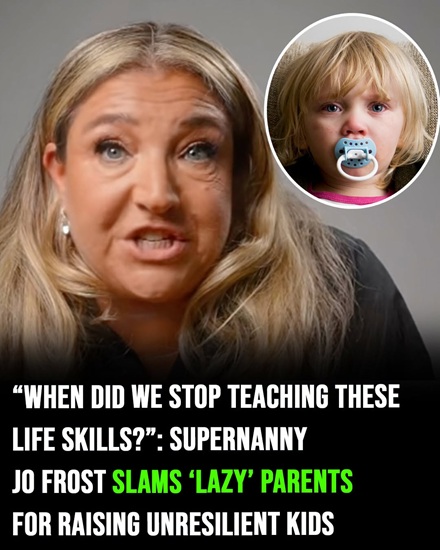
Jo Frost, widely recognized as the British parenting specialist from the long-running television format Supernanny, has recently drawn significant attention after sharing strong views about how modern parenting is evolving. In a video circulated on social media, she expressed concern about what she believes are increasing challenges in how children are being guided toward independence and everyday life skills. Her remarks quickly spread online and sparked broad discussion among parents and educators.
Frost, who has spent many years working directly with families through television programs and advisory work, used her platform to highlight patterns she has observed over time. She suggested that some children today may not be receiving enough opportunities to practice basic responsibilities appropriate for their age. According to her perspective, this can sometimes result in delays in developing confidence and self-reliance.
In her message, Frost made it clear that her intention was not to personally attack parents, but rather to raise awareness about behavioral trends she has encountered professionally. She acknowledged that modern life is often fast-paced and demanding, with many parents balancing work commitments, household duties, and limited time. However, she emphasized that convenience should not replace structured teaching moments in childhood development.
A key focus of her comments was the importance of allowing children to gradually learn essential everyday tasks. She referred to simple activities such as dressing independently, brushing teeth, using cutlery properly, and understanding basic hygiene routines. Frost suggested that when adults consistently step in too early, children may miss valuable learning experiences that help build independence.
She also addressed the use of comfort items such as pacifiers, often called “dummies” in the UK. While acknowledging their usefulness in early childhood, she suggested they should be phased out at an appropriate developmental stage. In her view, extended reliance on such items may delay certain aspects of emotional and behavioral growth if not managed over time.
Another major point in her discussion was the role of repetition and consistency in teaching children. Frost explained that life skills are not learned instantly, but through repeated practice, encouragement, and patient guidance. She encouraged parents to allow children to attempt tasks independently, even if the process is slower or less efficient at first.
She also highlighted the idea that children are naturally capable and often eager to learn new responsibilities when given the opportunity. According to her viewpoint, independence develops gradually through experience, and children benefit from being trusted with age-appropriate tasks under supportive supervision.
After her video was shared, it generated widespread reactions across social media platforms. Many viewers agreed with her observations and shared their own thoughts on how parenting has changed over time. Some users pointed out that increased use of digital devices and screen time may reduce communication between parents and children in everyday settings.

Other commenters emphasized that modern parenting comes with unique challenges that previous generations may not have faced in the same way. They noted that work-life balance, financial pressure, and time constraints can all influence how families organize daily routines and responsibilities.
A number of people supported Frost’s message about encouraging independence from an early age. They argued that children are often more capable than they are sometimes given credit for, and that learning practical skills early can help build long-term confidence, discipline, and problem-solving abilities.
At the same time, some individuals felt that labeling modern parents as “lazy” may be too simplistic. They argued that parenting styles differ widely across cultures and households, and that each family adapts based on their own circumstances. These perspectives highlighted that there is no universal approach to raising children.
Despite differing opinions, Frost’s main message centered on the idea of intentional parenting. She encouraged caregivers to actively guide children through developmental stages rather than consistently doing tasks for them. Her approach focused on gradual teaching, patience, and allowing children to learn through practice.
The broader conversation triggered by her comments reflects ongoing debates about how childhood development is influenced by modern lifestyles. While technology, busy schedules, and changing social expectations all play a role, many agree that helping children build independence remains an important part of upbringing.
In conclusion, Jo Frost’s remarks, shared through Supernanny discussions and online platforms, have reignited conversation about parenting approaches in today’s world. Whether fully agreed with or not, her message has encouraged reflection on how everyday habits, guidance, and teaching methods shape children’s growth and independence over time.

