That evening felt unusually heavy as rain pressed against the windows of my vehicle and turned every streetlight into a blurred glow. I stayed parked for a few moments longer than I should have, going through the same mental calculations I had done countless times before—rent. Medical bills, transport costs, and the constant pressure of trying to stay ahead of expenses that never seemed to stop growing. Life had slowly become a cycle of survival, where every choice carried weight.
My mother lived in a small apartment not far from my work route. Her health had been declining gradually, and each visit reminded me how fragile things had become. I brought her groceries, medication, and whatever I could afford, and she always greeted me with the same soft concern. Even when she was unwell herself, she still asked about me first, as if her own struggles came second.
I often told myself I was managing everything as best as I could, but the truth was more complicated. Work took most of my energy, and by the time I finished my shifts, exhaustion left little room for anything else. Still, I never missed seeing her. She was the only stable part of my life, the one person who made everything feel slightly less overwhelming.
One morning, during a short break at a coffee shop, I met a man who approached me as if he already knew my situation. He spoke directly, without hesitation, and quickly explained why he was there. He said he needed someone to visit his elderly mother in a nursing home, someone who could spend time with her and act as if they were her son.
At first, I thought it was inappropriate or misunderstood. But as he continued speaking, he explained that his mother suffered from memory loss and often believed her son never came to see her. He admitted that he was emotionally unable to face those visits himself, even though he still wanted her to feel cared for and not alone.
The offer he made was simple but difficult to ignore. The payment was more than I usually earned in several weeks. I hesitated, knowing something about it felt morally uncomfortable. But the pressure of my financial situation, especially my mother’s medical needs, made the decision harder than I expected.
Eventually, I agreed, convincing myself it would only be temporary and controlled. I told myself I was helping in a strange but harmless way, even though I understood the emotional complexity from the beginning. That decision marked the start of something I did not fully understand at the time.
The first time I entered the nursing home, everything felt quiet and slightly unfamiliar. The hallways were calm, filled with soft lighting and a sterile scent that lingered in the air. When I stepped into her room, she looked at me with a calm expression that immediately made the situation feel more real than I was prepared for.
I introduced myself with the name I had been given, and she welcomed me warmly. There was no hesitation in her reaction, only familiarity and kindness. She asked simple questions about my well-being, whether I had eaten, and if I was taking care of myself. Her concern felt genuine, which made the situation harder to emotionally separate from.
As time passed, I continued visiting regularly. What began as an arrangement slowly developed into something more emotionally layered. She started recognizing me with comfort and ease, and I began learning small pieces of her life through repeated stories and memories that didn’t always follow a clear timeline.
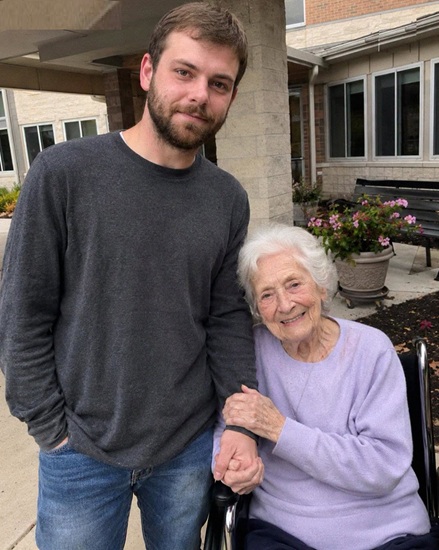
Despite the confusion in her memory, her emotional presence felt strong. She often held my hand while speaking, sometimes repeating phrases of care or worry. I had expected distance, but instead I found warmth, consistency, and a kind of trust that felt undeserved.
Gradually, I started spending more time there than required. I visited even on days I was not expected, telling myself it was just part of the arrangement, though it no longer felt that simple. The emotional boundary I had set in the beginning slowly became harder to maintain.
There were moments when she would look at me with unexpected clarity. In those moments, her words carried a calm certainty that made me question how she truly saw me. Whether she believed I was her son or simply accepted me as someone who brought her comfort no longer felt entirely clear.
After some time, I received news that she had passed away peacefully. The call came unexpectedly, and I remember sitting in silence for a long time afterward, unable to process the sudden finality of it. The routine I had fallen into was gone in an instant.
A few days later, I was informed that she had left something behind specifically addressed to me. At the nursing home, I was given a sealed letter written in her handwriting. In it, she acknowledged that she had known I was not her real son from the beginning.
She explained that although she understood the truth, she chose to accept my presence because of the kindness and companionship I offered her. Her words were not filled with anger or confusion, but rather gratitude and acceptance. She described the visits as moments of comfort during a difficult stage of her life.
She also left instructions regarding a small inheritance, asking that part of it be used to support other residents who had no visitors or emotional support. Reading her message created a shift in how I understood everything that had happened.
What I once saw as a transactional arrangement now felt more complicated. It was no longer just about identity or deception, but about human connection formed in an unexpected and imperfect way. The situation no longer fit into simple categories of right or wrong.
Later, when legal discussions began around her estate, tensions naturally followed. Questions were raised, documents were reviewed, and different interpretations of events emerged. The situation became more formal and structured, focusing on intent and responsibility.
Despite that, staff members from the nursing home shared their own observations. They described consistent visits, emotional interaction, and moments where she spoke positively about the companionship she received. Their accounts added another layer of context to the situation.
When the matter was eventually resolved, her written wishes were upheld. The inheritance remained valid, along with her request to support other residents in the facility. The outcome was treated not as a victory or loss, but as the fulfillment of her final instructions.
In the months that followed, I reflected often on the experience. I used part of what she left to support my mother’s medical care and slowly stabilized my own situation. At the same time, I contributed to improving conditions for residents who had limited support.
I continued visiting the nursing home even after everything was settled. Over time, the environment felt less like a place of obligation and more like a space of connection. Conversations with residents became part of a routine that felt meaningful in a different way.
Looking back, the entire experience reshaped how I understand responsibility, care, and human connection. What began as a difficult financial decision evolved into something far more complex, leaving behind lessons that stayed with me long after the situation ended.
Even now, I realize how unexpected circumstances can create bonds that don’t fit neatly into definitions or expectations. Sometimes, meaning is found not in intention alone, but in the presence we offer others during moments when it matters most.
