
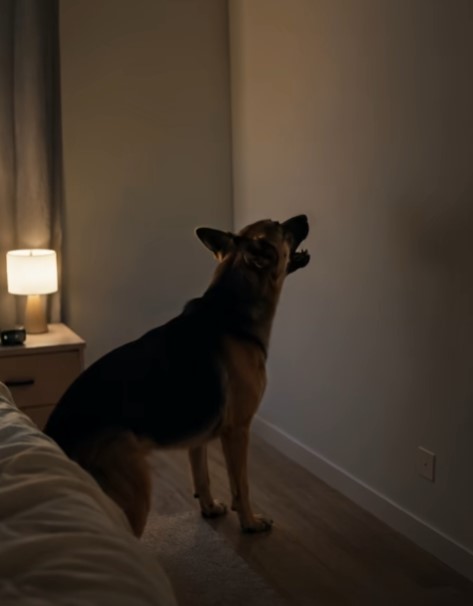
The family had spent a long time searching for a suitable home before they finally settled on the property that would later become the center of an unusual and unsettling experience. From the outside, the house looked peaceful and stable, with an aged but well-maintained structure that gave it a sense of character. The surrounding area was quiet, filled with tall trees that shifted gently with the wind, creating a calming atmosphere that made the property feel private and secluded.
Inside, the house had a traditional layout with spacious rooms and large windows that allowed natural light to brighten nearly every corner during the day. The wooden floors creaked slightly under footsteps, hinting at the age of the building, but nothing seemed out of place or concerning. At first impression, the family believed they had found a place where they could finally settle and build a long-term home together without disturbance or uncertainty.
Their Doberman, Rada, was initially calm and curious when she entered the house. Like many dogs adapting to a new environment, she explored carefully, walking through hallways, sniffing along door frames, and observing each room with focused attention. She appeared comfortable, showing no signs of fear or aggression. The family felt reassured by her behavior, interpreting it as a sign that the home was safe and suitable for them all.
However, after several days, subtle changes began to appear in Rada’s behavior that the family could not immediately explain. She started spending more time in the upstairs bedroom, particularly near one section of the wall. At first, it seemed like ordinary curiosity, something dogs often display when adjusting to new surroundings. But her attention did not fade with time. Instead, it became more consistent and focused.
Rada would sit directly in front of the same spot on the wall, staring for long periods without moving. Occasionally, she would tilt her head or shift slightly, as if trying to understand something hidden behind the surface. The family initially tried to dismiss the behavior, assuming she might be reacting to sounds or scents within the structure of the older house. Yet as the days passed, her fixation only grew stronger.
Soon, Rada began to vocalize her reaction. She would bark repeatedly at the wall, sometimes without warning, and her tone carried a level of intensity that made the family uneasy. At times, she would scratch at the surface, pacing back and forth in front of it before returning to the same position. Outside of that specific area, however, she behaved normally—eating, resting, and interacting with the family as she always had.
As the behavior continued, the household atmosphere slowly changed. What had once felt peaceful began to feel uncertain. The barking sometimes occurred late at night, breaking the silence and waking the family from sleep. The repetition of these events created stress and confusion, as no one could identify a clear cause. The family tried to calm Rada in different ways, but nothing seemed effective for long.
After several weeks of ongoing disturbance, the situation reached a point where the family felt they needed outside help. The behavior was too specific and too persistent to ignore. They decided to contact a professional builder to inspect the bedroom wall where Rada’s attention was always directed. Although the decision felt unusual, it was made out of growing concern and exhaustion from the repeated nightly disruptions.
When the builder arrived, he examined the structure carefully. The house, being older, contained areas that were not part of modern construction standards, including small gaps within certain walls. After a closer inspection, he identified a hollow section behind the exact area where the dog had been focusing. This discovery immediately raised questions, and the family agreed to open the wall cautiously to investigate further.
As part of the wall was removed, the room became filled with dust and silence. Behind the surface, there was a narrow concealed space that appeared untouched for many years. The atmosphere shifted noticeably, as everyone present became aware that they were uncovering something that had been hidden for a long time. The builder carefully reached inside the cavity and retrieved a small, old metal container.
The container was heavily worn, suggesting it had been sealed away for decades. When it was opened, it revealed several disturbing and unexplained items that immediately created concern among those present. The objects inside appeared personal and old, but their origin and purpose were unclear. The family reacted with shock and confusion, realizing that what they had found was not simply structural damage or leftover construction material.
Authorities were contacted immediately after the discovery. When investigators arrived, they began documenting the scene and reviewing the history of the property. It was revealed that the house had been associated with an unresolved missing person case many years ago, which had remained unsolved due to lack of evidence. The discovery inside the wall led to renewed attention on the case and prompted further investigation.
As the investigation continued, the family remained deeply affected by the events. What disturbed them most was the sudden change in Rada’s behavior after the wall was opened. Almost immediately, she stopped reacting to that area of the room. The barking ceased completely, and she no longer showed any interest in the previously disturbing spot. It was as if the source of her distress had been removed.
In the days that followed, the house gradually returned to a quieter state, but the emotional impact of the experience remained. The family often reflected on how their initial search for a peaceful home had unexpectedly led them into a situation filled with mystery and uncertainty. Although life eventually stabilized, the memory of the events and the discovery behind the wall stayed with them for a long time.

