A quiet evening inside a home often creates a sense of safety and routine, where nothing seems out of place and every sound feels familiar. In this case, the household began just like any other ordinary day, with no indication that anything unusual was happening. The environment was calm, and the family went about their normal activities without concern. However, subtle changes in behavior from a household pet would soon disrupt that sense of normalcy.
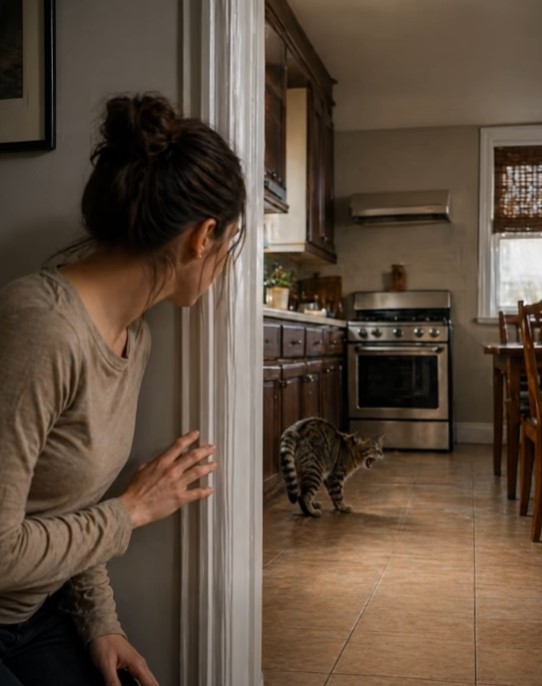
The family cat, usually calm, predictable, and relaxed, suddenly began acting differently in a way that immediately drew attention. Instead of resting or moving casually through the home, it began focusing intensely on a specific area near the kitchen. It paced repeatedly, stopped suddenly, and refused to move away despite attempts to redirect its attention. At first, this behavior was thought to be temporary or caused by minor discomfort.
Early Signs of Unusual Behavior
As time passed, the cat’s behavior became more persistent and difficult to ignore. It showed heightened alertness, fixed its gaze on one area, and maintained a tense posture that was unusual for its normal temperament. These signs indicated that something in the environment was triggering a strong reaction.
The owner attempted to calm the cat using familiar methods such as speaking softly, offering food, and gently guiding it away from the area. However, none of these efforts were effective. The cat remained in place, focused and unwilling to leave, which increased curiosity and concern.
At this stage, the behavior appeared to be more than simple restlessness. It suggested that the animal was reacting to something specific that could not yet be seen or understood.
Decision to Investigate the Area
Due to the continued intensity of the cat’s behavior, a closer inspection of the area became necessary. The focus was directed toward the kitchen stove, which was positioned near a narrow gap between the appliance and the wall. This space was not easily visible and had limited lighting, making it difficult to clearly observe.
As the investigation began, the cat reacted more strongly, hissing and showing defensive behavior. It positioned itself in a way that seemed almost protective, as if attempting to block access to the area. Despite this reaction, the decision was made to carefully examine the space more closely.
Slowly approaching and bending down to inspect the gap, the situation began to feel more tense. The environment was quiet, but the cat’s behavior suggested that something significant was present.
Discovery of an Unexpected Intruder
Inside the narrow space behind the stove, movement was eventually detected. After a closer look, it became clear that a snake had entered the home and was hiding within the confined area. The presence of the animal immediately explained the cat’s unusual behavior.
The discovery shifted the situation from confusion to concern within seconds. A wild animal inside a home presents a potential safety risk, and careful handling becomes necessary. The realization that the cat had detected the snake early highlighted the importance of its reaction.
The snake’s presence also raised questions about how long it had been inside the home and how it had entered such a restricted space without being noticed.
Escalation of the Situation
As the snake began to move, it slowly emerged from its hiding place, increasing the sense of urgency. Its movement toward more open areas of the kitchen made the situation more unpredictable. What had been a hidden presence was now becoming active within the living space.
The environment, once calm and familiar, now felt tense and uncertain. The need for caution became immediate, as both distance and safety were prioritized. The cat remained alert and focused, continuing to observe the animal closely.
At this point, it was clear that professional assistance would be required to safely handle the situation and remove the animal without risk.
Emergency Assistance and Safe Removal
Trained professionals or emergency responders were contacted to manage the situation. During the waiting period, the area was kept clear, and all movement near the kitchen was minimized to avoid provoking the animal further.
When help arrived, the situation was carefully assessed. Using proper tools and safety procedures, the responders located the snake and safely removed it from the home. The process was handled in a controlled and professional manner to ensure safety for everyone involved.
Once the animal was removed, the immediate threat was resolved, and the home environment gradually returned to normal.
The Cat’s Behavior After the Incident
After the situation was resolved, the cat’s behavior returned to its usual calm state. It no longer displayed signs of stress or alertness and resumed its normal routine within the home. This sudden return to normal behavior highlighted the temporary but intense nature of its earlier reaction.
The contrast between its earlier warning behavior and its calm afterward suggested that the cat had been responding to a real environmental stimulus. Its instincts had detected something that required attention long before it became visible to humans.
This type of response is often associated with animals that rely heavily on sensory perception to interpret their surroundings.
Understanding Animal Instinct and Awareness
Domestic animals such as cats have heightened senses that allow them to detect subtle changes in their environment. These may include movement, sound vibrations, or scent variations that are not easily noticeable to humans.
In many cases, animals react to these signals instinctively, without conscious reasoning. Their behavior can sometimes appear unusual or exaggerated, but it often has a logical explanation rooted in natural awareness.
In this situation, the cat’s reaction was likely triggered by early detection of movement or presence in a hidden space.
Importance of Observing Animal Behavior
This event highlights the importance of paying attention to changes in pet behavior. While not every behavioral shift indicates danger, consistent or intense reactions can sometimes signal that something in the environment requires attention.
Ignoring such signs may lead to missed warnings, while careful observation can help identify potential issues early. Pets often respond to environmental changes before humans are aware of them.
For this reason, unusual behavior should be observed and, when necessary, investigated with caution.
Hidden Risks Within Everyday Spaces
Even in familiar environments such as homes, unexpected situations can occur. Small openings, hidden gaps, or structural spaces may occasionally allow animals or pests to enter without immediate detection.
Regular awareness of these areas and routine maintenance can help reduce such risks. Ensuring that entry points are sealed and monitored is an important part of home safety.
In addition, being attentive to unusual sounds or animal behavior can serve as an early warning system for potential issues.
Final Reflection on the Incident
What began as a normal evening ultimately became an unexpected reminder of how quickly circumstances can change. A subtle behavioral shift in a household pet led to the discovery of a hidden animal inside the home.
The situation was resolved safely, but it left behind an important lesson about awareness, observation, and responsiveness. The cat’s behavior played a key role in identifying the issue before it escalated further.
This event demonstrates how attention to small details can sometimes prevent larger problems and ensure safety within everyday environments.
In everyday life, unexpected events can occur even in the most familiar surroundings. This incident shows how important it is to remain observant and responsive to changes in behavior, especially from animals that share our environment.
While the situation ended without harm, it reinforced the value of awareness, caution, and timely action. Sometimes, the smallest signs can reveal the most important warnings, and recognizing them can make all the difference.
