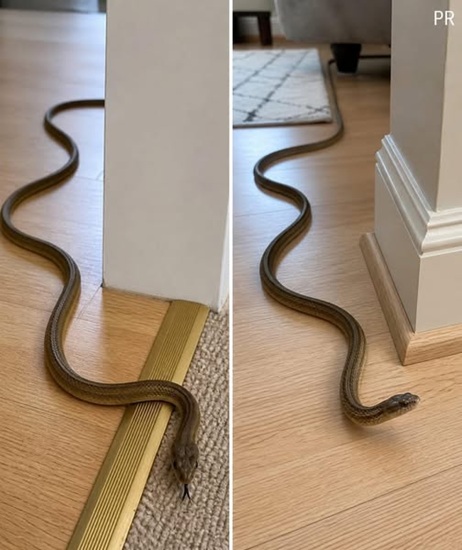
Finding a snake inside a home is often a moment that instantly triggers fear, surprise, and uncertainty for most people. It is an unexpected situation that disrupts the sense of safety people associate with their living space. In many cases, individuals may assume symbolic meanings or unusual interpretations when this happens, especially online. However, scientific and environmental explanations provide clear and practical reasons for why snakes enter homes.
These reasons are grounded in biology, survival behavior, and environmental conditions rather than mystery or coincidence. Snakes are reptiles that rely heavily on external temperatures to regulate their body heat. As cold-blooded animals, they cannot generate internal warmth like mammals. Because of this, they actively seek environments that help them maintain stable body conditions.
During colder seasons, snakes may enter warmer spaces, while in extreme heat they may seek cooler and shaded areas. Human homes can unintentionally provide both of these conditions, especially in basements, garages, and storage rooms.
Another significant reason snakes enter residential areas is the search for food sources. Snakes primarily feed on rodents such as mice and rats, as well as insects and small animals. If a home or its surroundings have a rodent problem, it can indirectly attract snakes. The presence of prey is one of the strongest environmental factors influencing snake movement. In this way, snakes are not targeting humans, but rather following natural food chains that already exist in the environment.
Homes located near natural habitats are more likely to experience occasional snake sightings. Areas close to forests, rivers, agricultural land, or undeveloped vegetation provide ideal conditions for wildlife activity. Even suburban environments with overgrown grass or abandoned structures can become pathways for snakes. These animals are not intruding in a deliberate sense; instead, they are moving through overlapping territories between natural ecosystems and human development.
Entry points in homes also play an important role in snake encounters. Snakes are surprisingly flexible and can enter through very small gaps or openings. Cracks in foundations, gaps under doors, broken vents, and unsealed windows are common access points. Because they do not require large openings, even minor structural vulnerabilities can allow entry. This is why proper home maintenance and sealing of potential entryways is essential for prevention.
There are many misconceptions about snakes entering homes, often influenced by myths or cultural beliefs. One common misconception is that a snake inside a house represents bad luck or a symbolic message. In reality, there is no scientific evidence supporting such interpretations. These beliefs are rooted in folklore rather than biology or environmental science. Snakes respond only to physical conditions, not human events or symbolic meanings.
Another widespread myth is that snakes intentionally enter homes to harm or attack humans. This is not supported by animal behavior studies. Snakes are generally non-aggressive and prefer to avoid human interaction whenever possible. When encounters occur, they are typically accidental or defensive in nature. A snake may react aggressively only if it feels threatened, cornered, or unable to escape.
It is also incorrect to assume that finding one snake inside a home automatically means there are many others present. While multiple snakes may exist in certain environments, a single encounter does not indicate infestation. In most cases, it is an isolated incident where the snake entered by chance and is simply seeking a way out. Understanding this helps reduce unnecessary fear and panic in such situations.
When a snake is discovered inside a home, the most important response is to remain calm and avoid sudden movements. Panic can increase risk and make the situation more difficult to manage. It is recommended to maintain a safe distance and ensure that children and pets are immediately removed from the area. Securing nearby rooms can help limit the snake’s movement while waiting for assistance.
Professional help should always be contacted when dealing with a snake indoors. Wildlife control services, pest management professionals, and trained responders have the proper tools and knowledge to handle these situations safely. Attempting to capture or kill a snake without expertise is strongly discouraged, as it can be dangerous and ineffective. In many regions, proper identification of species is also important for safety reasons.
Preventing snake encounters begins with reducing the conditions that attract them. One of the most effective methods is sealing potential entry points around the home. This includes repairing cracks in walls, installing door sweeps, and ensuring that vents are properly covered. Regular inspection of the building structure can significantly reduce the likelihood of wildlife intrusion.
Controlling rodent populations is also essential for prevention. Since snakes are often attracted by food sources, eliminating rodents reduces their incentive to enter residential areas. Proper food storage, sealed garbage bins, and pest control measures all contribute to a less attractive environment for snakes. This indirect approach is one of the most effective long-term strategies.
Outdoor maintenance plays an equally important role. Keeping lawns trimmed, removing piles of wood or debris, and reducing clutter in gardens helps eliminate hiding places for both rodents and snakes. Clean and organized outdoor spaces reduce the likelihood of wildlife approaching homes. This creates a natural barrier between human living areas and surrounding ecosystems.
Water management is another factor that can influence snake presence. Standing water or poor drainage can attract insects and rodents, which in turn attract snakes. Ensuring proper drainage systems and eliminating unnecessary moisture around the property helps reduce these risks. Even small environmental changes can significantly affect wildlife behavior.
Understanding snake behavior is essential for reducing fear and improving safety responses. Snakes typically prefer to avoid humans and will attempt to escape when given the opportunity. Defensive behaviors such as hissing, coiling, or remaining still are natural reactions to perceived threats. These behaviors are not signs of aggression but survival mechanisms.
It is also important to distinguish between venomous and non-venomous species in regions where both exist. However, identification should never be attempted without expertise. Misidentification can lead to unnecessary risk. Professionals are trained to assess and handle different species safely and accurately.
In the rare case of a snake bite, immediate medical attention is necessary. Remaining calm, limiting movement, and seeking emergency help can reduce complications. The type of snake involved determines the level of medical response required, which is why professional evaluation is critical. Quick action is essential in such situations.
Despite fear and misunderstanding, snakes play an important ecological role. They help control populations of rodents and insects, contributing to natural environmental balance. Without predators like snakes, certain pest populations could increase significantly, leading to ecological imbalances. This makes them an important part of many ecosystems.
Education about snake safety is essential for households, especially in regions where encounters are more common. Children should be taught to avoid touching or approaching snakes and to report sightings to adults immediately. Clear communication and awareness help reduce panic and improve safety outcomes during unexpected encounters.
In conclusion, the presence of a snake inside a home is almost always the result of environmental factors such as shelter, food availability, and access points. It is not linked to superstition or symbolic meaning. By understanding these factors and taking preventive measures, homeowners can significantly reduce the likelihood of encounters. Calm response, professional assistance, and proper maintenance are key to handling such situations safely and effectively.
