
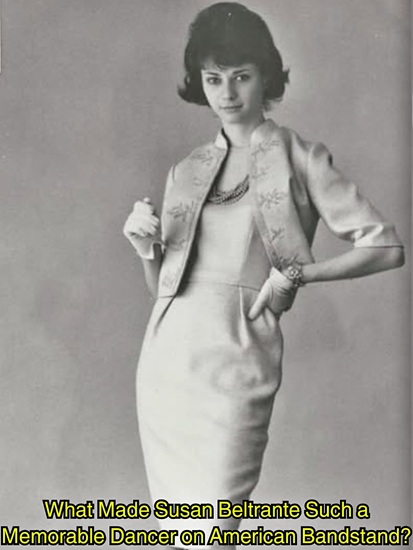
Before Susan Beltrante became one of the young dancers associated with American Bandstand, her connection with the television program began in a surprisingly simple way. She was the youngest of three Beltrante sisters connected with the famous Philadelphia dance show, and she initially came to the studio because of her older sister Rosalie. Historical accounts about the show’s regular dancers say Susan was only twelve years old when Rosalie first brought her along.
That created an unusual situation because the program had an official minimum age for teenagers admitted to its studio. Susan was younger than that requirement, making her earliest experiences very different from those of many regular dancers. During Dick Clark’s early years with the program, teenagers generally had to be between fourteen and eighteen years old to participate in the studio audience. Susan was therefore about two years younger than the official minimum when she first began accompanying Rosalie.
Historical accounts devoted to the Bandstand regulars state that Clark was aware of Susan’s actual age and advised her not to announce it because she would otherwise have to leave. Susan initially spent considerable time watching from the bleachers rather than immediately becoming one of the dancers regularly featured on camera. That beginning provides useful context for understanding her later visibility on the program.
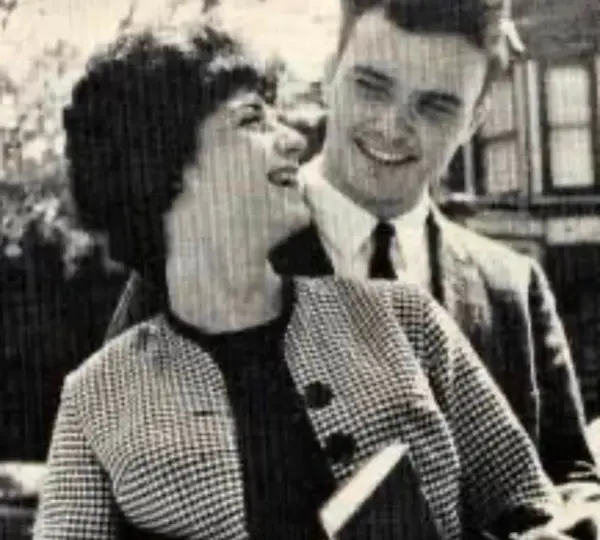
Susan did not arrive as an aspiring professional entertainer with a carefully planned television career. She was a young girl accompanying an older sister into a studio filled with teenagers, music, cameras, and dancing. From her place near the dance floor, she had an opportunity to observe a television phenomenon while it was becoming increasingly important to American youth culture. Over time, Susan moved from watching what happened around her to becoming part of the program herself.
Rosalie played an important role not only in introducing Susan to American Bandstand but also in the Beltrante household. Accounts about the family describe their mother as a waitress who worked long afternoon and evening hours. Rosalie, as the oldest sister, consequently helped care for her younger siblings. That family background makes Susan’s introduction to the television studio easier to understand. She was following an older sister who already carried significant responsibilities at home rather than independently pursuing television fame at twelve years old.
The Beltrante family ultimately had three sisters associated with the Bandstand scene: Rosalie, Mary, and Susan. Each became known within the program’s Philadelphia community, although their individual experiences were not identical. Mary, the middle sister, was born in 1943 and attended South Philadelphia High School. Historical material about the show’s dancers connects Mary with regular partner Steve Colanero. Rosalie was also well remembered among people who participated in the program, while Susan eventually became another familiar member of the same remarkable group of teenage dancers.
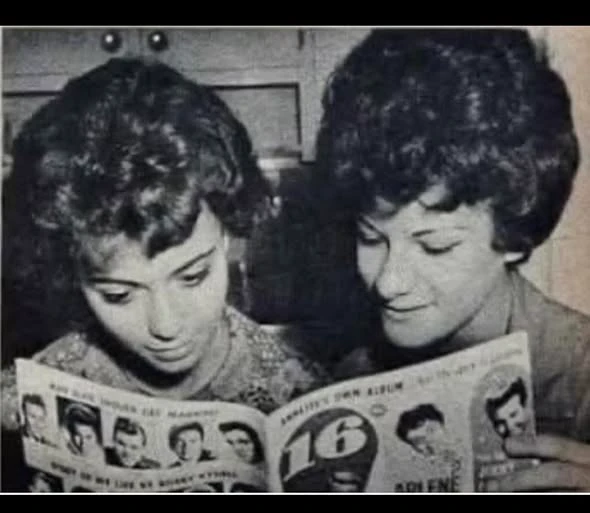
Their involvement occurred during a transformative period in American television. The program that eventually became American Bandstand began locally in Philadelphia in 1952 as Bandstand on WFIL-TV. Bob Horn served as its original host before Dick Clark took over in 1956. Clark did not invent the program, but his tenure fundamentally changed its reach and public identity. Under his leadership, the show combined popular records, teenage dancing, guest performers, and a carefully controlled image designed to make the emerging youth culture acceptable to a broad television audience.
A crucial moment came on August 5, 1957, when ABC began broadcasting the program nationally as American Bandstand. A television show that Philadelphia teenagers could attend locally was suddenly reaching households throughout the United States. The expansion transformed the significance of simply appearing on the dance floor. Teenagers who might previously have been recognized mainly by friends, classmates, and neighbors could now become familiar faces to viewers living far beyond Pennsylvania.
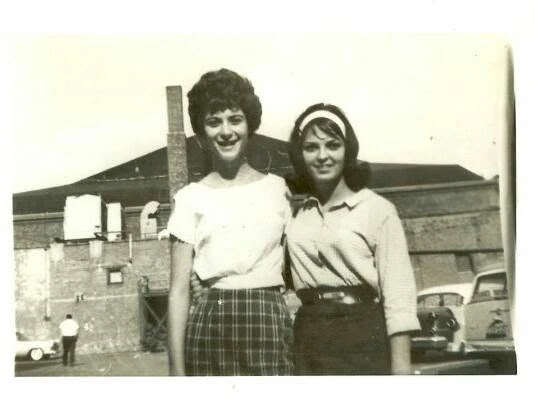
At the height of its early national popularity, historical estimates indicate that American Bandstand reached an audience of roughly twenty million viewers. That enormous exposure created an unusual form of celebrity for some of its regular dancers. Most were not professional actors or recording artists. They were teenagers who appeared repeatedly on camera while dancing to popular music. Nevertheless, viewers remembered their names, noticed their dance partners, followed their clothing and hairstyles, and sometimes sent them considerable amounts of fan mail.
Susan gradually became part of that world. Historical listings generally associate her regular appearances with the period from approximately 1958 through 1961. Bandstand histories connect her with Ed Kelly, also identified in some records as Eddie Kelly, as one of her dance partners. Photographs and recollections from the era demonstrate that dancers could also appear with different partners. What mattered most was that regular viewers began recognizing particular teenagers who returned to the studio again and again.
The dance floor may have looked relaxed on television, but participation came with numerous rules. Dick Clark and the production maintained standards governing both appearance and behavior. Boys were expected to dress neatly, often wearing shirts, ties, jackets, or sweaters. Girls were generally required to wear dresses or skirts with conservative tops. Clothing considered too revealing was prohibited, and girls were not permitted to appear on the program wearing trousers during that period.
Behavior was regulated as carefully as clothing. Historical accounts describe restrictions against smoking, chewing gum, profanity, and other conduct producers believed might damage the program’s family-friendly reputation. The goal was to present teenagers enjoying contemporary music while still appearing respectable to parents watching at home. That approach was particularly significant during a period when rock and roll remained controversial among some adults and was frequently associated with concerns about teenage rebellion.
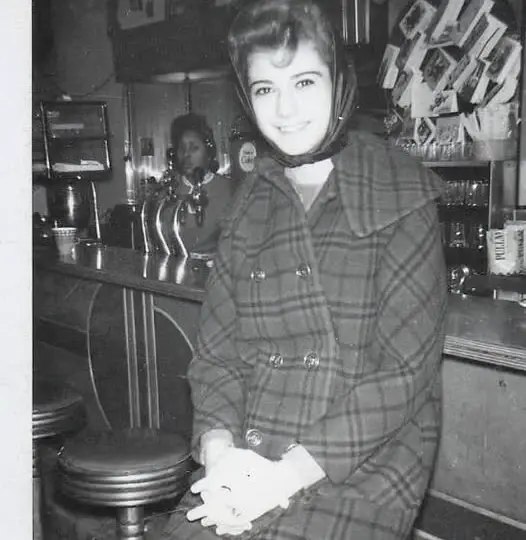
The program’s conservative appearance did not prevent its young dancers from influencing fashion. Quite the opposite occurred. Because millions of teenagers watched the regulars, clothing and hairstyles seen on American Bandstand could attract attention around the country. Peter Pan collars became one of the styles associated with female Bandstand dancers. Viewers could observe what ordinary teenagers were wearing in Philadelphia and then incorporate similar looks into their own wardrobes.
Dance trends spread in a similar fashion. The program became closely associated with numerous dances that defined youth culture during the late 1950s and early 1960s. Young viewers could watch teenagers perform new steps and then try those movements themselves. The rise of dances such as the Twist demonstrated television’s growing ability to accelerate cultural trends. Artists including Chubby Checker benefited enormously from television exposure during this period, while the dancers helped demonstrate how the music could be enjoyed.
Another familiar feature of the program was “Rate-a-Record.” Teenagers listened to new recordings and offered their opinions, providing viewers with an informal glimpse into what young listeners thought about current music. The expression about a song having a good beat and being easy to dance to became closely associated with the segment and the show’s wider reputation. It reflected the straightforward way the program connected popular recordings with the teenagers who actually bought and danced to them.
The regular dancers themselves occupied an unusual space between ordinary adolescence and national recognition. They were still students and members of Philadelphia families, yet their repeated television appearances could make strangers feel that they knew them. Fan mail arrived for popular dancers, and teen publications sometimes devoted attention to the people viewers regularly saw on the program. Recognition therefore developed without the traditional path normally associated with becoming an entertainer.
For Susan, that transformation was particularly striking considering how her involvement began. She had first entered the studio while younger than the official age requirement and spent much of her earliest time watching from the bleachers. A few years later, she was appearing among the regular dancers during the show’s nationally influential Philadelphia period. The distance between those two experiences was relatively small in years but enormous in visibility.
The three Beltrante sisters also became memorable within the social world surrounding the program. Later recollections by people associated with American Bandstand specifically remembered Rosalie, Mary, and Susan as the three Beltrante sisters. Their presence illustrates how the show developed its own community of recurring personalities. Viewers might tune in for the music, but many also became interested in the teenagers they repeatedly saw dancing together.
For the Beltrantes, however, television recognition existed alongside ordinary family responsibilities. Their mother’s work schedule and Rosalie’s role helping with younger siblings remained part of the family’s everyday reality. The contrast is important because it prevents their television appearances from being mistaken for the entirety of their lives. They could be recognizable to viewers across the country during a broadcast and still return afterward to the responsibilities of an ordinary Philadelphia household.
The broader history of American Bandstand also requires acknowledging aspects that complicate the nostalgic image often associated with the program. Historical researchers have documented racial discrimination and barriers affecting Black teenagers seeking admission to the Philadelphia studio audience. Black musicians were important contributors to the music featured on the program, but opportunities for Black teenagers to appear as dancers were significantly restricted. Recognizing this history provides a more complete picture of the program and the era in which Susan and the other regulars appeared.
Susan’s personal story does not require invented dialogue or imagined scenes to remain interesting. The documented circumstances are already unusual. She was reportedly twelve when Rosalie began bringing her to the studio, despite the program’s fourteen-year minimum age. Dick Clark was reportedly aware that she was younger than the rules allowed. Susan spent time observing from the bleachers before eventually becoming one of the teenagers associated with the program’s regular dance floor.
As Susan reached the appropriate age, she became increasingly involved in the world she had previously watched from nearby. Her appearances placed her among a generation of Bandstand dancers whose names remain preserved in histories, photographs, interviews, and memories from the show’s Philadelphia period. They included young people such as Arlene Sullivan, Kenny Rossi, Justine Carrelli, Pat Molittieri, Janet Hamill, Carole Scaldeferri, Norman Kerr, and many others who became familiar to regular viewers.
Their fame was unusual because it was built largely through repetition. There were no social-media profiles allowing dancers to communicate instantly with viewers, and most did not have professional publicity teams promoting them. Instead, audiences simply saw the same faces on television frequently enough to recognize them. A teenager could become popular because viewers liked a particular dance partnership, hairstyle, outfit, or personality visible through the television screen.
Susan’s participation coincided with a period when the television industry itself was changing rapidly. By the late 1950s, television had become a central feature of American homes, giving programs unprecedented power to spread music and fashion trends nationally. American Bandstand was particularly well positioned to influence teenagers because young people could watch others close to their own age interacting with contemporary music. The regular dancers helped transform records from something audiences merely heard into something they could also see interpreted through movement.
That influence extended to musicians as well. Performers who appeared on the program gained access to an enormous teenage audience, and exposure on American Bandstand could contribute significantly to a record’s popularity. Clark became one of the most influential figures in American popular music television. Yet the dancers remained an essential visual component of the program. Without them, the show would have been fundamentally different from the format viewers came to know.
By the early 1960s, Susan’s regular involvement with American Bandstand was coming to an end. Historical listings generally place the conclusion of her period as a regular around 1961. There was nothing unusual about young dancers eventually leaving the program. The show’s age restrictions meant participation was inherently temporary, and adolescence itself ensured that the teenagers viewers became familiar with would eventually move into different stages of their lives.
The television program continued after Susan’s departure. American Bandstand remained in Philadelphia for several more years before production relocated to Los Angeles in 1964. That move effectively closed the Philadelphia chapter that had produced the original generation of nationally recognized regular dancers. By that point, many teenagers who had helped establish the program’s early identity had already moved on from the studio.
Susan’s years on television therefore represent only a relatively short chapter of a much longer life. That is worth emphasizing because retrospective stories can sometimes make temporary fame appear to define an entire person. In reality, the young dancers experienced only a few years inside the unusual environment of national television before continuing into adulthood. Their appearances remain historically interesting precisely because cameras preserved a small portion of otherwise ordinary teenage lives.
The relationship between the Beltrante sisters and the program is similarly best understood without speculation about private family matters. Historical evidence establishes that Rosalie brought the younger Susan to the studio and that all three sisters became associated with American Bandstand. Those documented facts provide enough material to understand the importance of their shared experience without assigning private thoughts, motivations, or later relationships that cannot be reliably verified.
What makes Susan’s story especially memorable is the way it reflects the accidental nature of early television fame. She did not need to audition for a scripted character or launch a professional entertainment campaign. Her introduction came because she accompanied her older sister. The television program then expanded nationally at precisely the right historical moment, turning local Philadelphia teenagers into familiar faces for viewers across America.
Susan’s journey from the bleachers to the dance floor also mirrors the growth of American Bandstand itself. Both began on a relatively local scale before reaching something considerably larger. Susan started as a younger sister watching teenagers dance. The show started as a Philadelphia television production. Within a few years, Susan was a recognizable regular and American Bandstand had become one of the defining programs of American teenage culture.
Looking back decades later, surviving photographs and historical recollections preserve fragments of that era. They show teenagers dancing in carefully selected clothing beneath television lights, surrounded by other young people whose names once appeared in fan letters and magazines. Those images capture a world that existed before digital media made everyday visibility commonplace. In Susan’s era, appearing repeatedly on national television was an extraordinary experience for someone who otherwise lived an ordinary teenage life.
Her story also demonstrates why historical accuracy matters when revisiting nostalgic television. It is tempting to fill gaps with imagined conversations, emotions, or dramatic explanations, but doing so can blur the boundary between documented history and storytelling. Susan’s known experience is compelling without such additions. She was a young Philadelphia girl connected to the program through her sisters who became part of a nationally influential moment in television and popular music.
The most striking detail remains the beginning. A twelve-year-old Susan entered a studio whose official rules said she was too young to participate. According to historical accounts of the Bandstand dancers, Clark knew her actual age and told her not to reveal it. She spent much of that early period in the bleachers, watching a world she would soon join. As she grew older, she eventually stepped onto the dance floor and became part of the generation viewers remembered.
From there, Susan shared the Bandstand experience with Rosalie and Mary during a remarkable period for their hometown television program. The three sisters became part of a community whose influence extended far beyond the Philadelphia studio. Their clothing, dancing, partnerships, and repeated appearances reached teenagers who might never have visited Pennsylvania but nevertheless recognized the people appearing on their television screens.
Yet the television attention was temporary. Susan eventually left American Bandstand, as regular dancers inevitably did, while the program continued through new generations and eventually moved across the country. What remained were photographs, television footage, recollections, and historical records documenting the young people who helped establish the show’s identity during its early national years.
Susan Beltrante’s place within that history is therefore both modest and remarkable. She was not the creator or host of American Bandstand, nor was she one of the recording stars whose music appeared on the program. She was one of the teenagers whose presence made the show’s concept work: young people dancing to contemporary music while millions of other young people watched from home.
Seen from that perspective, the story is less about conventional celebrity than about being present at an important cultural moment. Susan happened to enter the Bandstand studio as a very young girl because of her older sister. She remained long enough to become one of its regular dancers during the years when the show was helping define how American teenagers encountered music, fashion, dancing, and television.
Decades later, the documented beginning remains perhaps the most distinctive part of her story. Susan Beltrante first entered the American Bandstand environment before she was officially old enough to participate, watched from the bleachers, and eventually became one of its recognizable young dancers. Together with Rosalie and Mary, she became part of the Philadelphia generation associated with the program’s rise to national prominence.
It is a story that does not need to pretend the narrator witnessed those events or personally knew the people involved. It can instead be appreciated for what the historical record supports: an unusual chapter in the life of a Philadelphia teenager and her sisters during the formative years of one of America’s most influential music television programs. Susan’s path from a twelve-year-old accompanying Rosalie to a familiar Bandstand regular remains a fascinating small piece of a much larger television history.

