
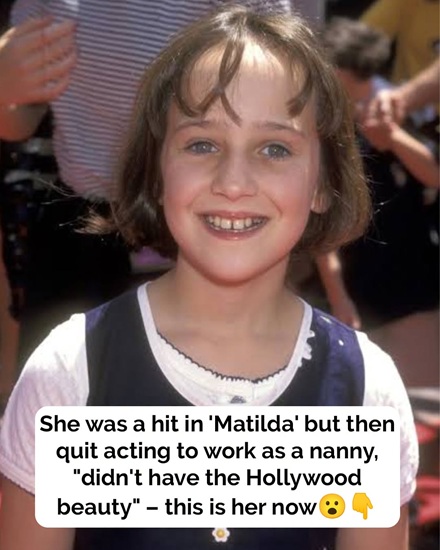
For millions of moviegoers who grew up during the 1990s, Mara Wilson became one of the most recognizable child actors of her generation. With her expressive performances, natural charm, and memorable screen presence, she appeared in several family films that continue to be watched decades later. Audiences first embraced her as the youngest daughter in Mrs. Doubtfire, later admired her performance in Miracle on 34th Street, and celebrated her starring role in Matilda.
Although her acting career began with extraordinary success at a very young age, Wilson’s life eventually followed a path that differed greatly from the one many expected. Born in Burbank, California, on July 24, 1987, Mara Elizabeth Wilson developed an interest in performing while she was still very young. Before appearing in major films, she participated in television commercials, gaining early experience in front of cameras.
Her family encouraged her interests while also emphasizing the importance of remaining grounded despite her growing success. In later interviews, Wilson has often credited her parents for helping her separate her professional work from her personal identity during a period when public attention arrived unusually early in her life. Wilson’s breakthrough arrived in 1993 when she was cast in Mrs. Doubtfire, the family comedy starring Robin Williams, Sally Field, and Pierce Brosnan.
Directed by Chris Columbus, the film became one of the year’s biggest commercial successes and remains one of the most beloved family comedies ever produced. Wilson portrayed Natalie Hillard, the youngest child in the family, and her warm, natural performance quickly won over audiences around the world. Although surrounded by experienced actors, she displayed remarkable confidence and emotional authenticity despite being only five years old during production.

Looking back years later, Wilson recalled that her parents consistently reminded her that acting was simply one part of her life rather than the definition of who she was. In interviews, she explained that whenever she became overly excited about her growing fame, her mother would gently remind her that she was still a child with responsibilities and a normal family life outside the entertainment industry. Those lessons, Wilson has said, helped her maintain perspective while experiencing an amount of public recognition that few children ever encounter.
Following the enormous success of Mrs. Doubtfire, Wilson quickly received another major opportunity when she was cast as Susan Walker in the 1994 remake of Miracle on 34th Street. The character had previously been portrayed by Natalie Wood in the celebrated 1947 version of the film. Wilson later described her audition in an essay for The Guardian, recalling that she honestly told the filmmakers she did not believe in Santa Claus. At the same time, she jokingly explained that she did believe in the Tooth Fairy and had even named the fairy after Sally Field, her on-screen mother from Mrs. Doubtfire. The story has since become one of Wilson’s favorite memories from her early acting career.
The success of these films established Wilson as one of Hollywood’s most recognizable child performers during the mid-1990s. Film studios increasingly viewed her as a dependable young actress capable of carrying emotionally driven family stories. Critics frequently praised her ability to balance humor with sincerity, while audiences appreciated the natural quality of her performances. As a result, she quickly became associated with uplifting family entertainment and appeared in promotional events, interviews, and magazine features throughout that period.

Wilson reached another career milestone in 1996 when she starred as Matilda Wormwood in Matilda, the film adaptation of Roald Dahl’s beloved novel. Directed by Danny DeVito, who also appeared in the film alongside Rhea Perlman, Matilda eventually became one of the defining family movies of the decade. Wilson’s portrayal of the intelligent and determined young girl resonated with viewers of many ages, and the film has continued to enjoy lasting popularity through television broadcasts, streaming platforms, and new generations of fans discovering the story.
While Matilda represented a major professional achievement, the same period brought profound personal heartbreak. During production, Wilson’s mother, Suzie Wilson, was battling breast cancer. She passed away in 1996, a loss that Wilson has described as one of the most significant events of her life. In interviews and later writings, Wilson has spoken openly about the deep grief she experienced and how difficult it was to understand such a life-changing event while she was still a young child working in the entertainment industry.
Reflecting on those years, Wilson has explained that losing her mother fundamentally changed how she viewed both herself and the world around her. She has said there was a clear distinction between her life before her mother’s death and everything that followed. Although audiences continued to see her smiling on screen, privately she was coping with an overwhelming emotional loss. Wilson has acknowledged that, during this period, she often wished she could simply experience childhood away from cameras and public attention.
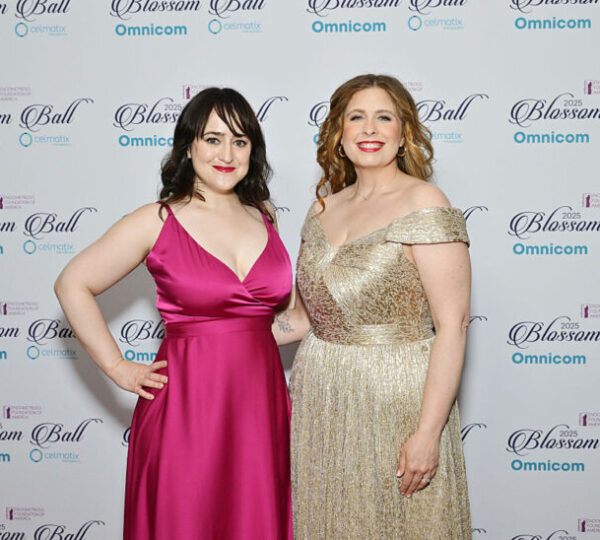
As her fame continued to grow, Wilson gradually realized that success did not necessarily bring happiness. In later interviews, she has said that despite being widely recognized and admired by audiences, she often felt emotionally exhausted. She has explained that while many people assumed child stardom must be exciting and glamorous, her personal experience was far more complicated. Looking back as an adult, Wilson has remarked that some of the years in which she was most famous were also among the most difficult periods of her childhood, shaping many of the reflections she would later share through her writing.
Following the success of Matilda, Mara Wilson continued acting, but she has since explained that her relationship with Hollywood began to change as she entered adolescence. Like many young performers, she experienced the transition from child actor to teenager at a time when the entertainment industry was rapidly changing its expectations of her. Wilson has written that she gradually noticed fewer opportunities becoming available, even though acting had been a central part of her childhood. Rather than viewing this as a single turning point, she has described it as a gradual process that unfolded over several years.
One of Wilson’s final major film roles came in 2000, when she appeared in Thomas and the Magic Railroad. By that time, she was around eleven years old and beginning to feel that many of the roles being offered no longer reflected her age or interests. In later interviews, she recalled reading scripts that emphasized the same “cute” image that had defined much of her childhood career. Wilson explained that she had begun to outgrow those characters and increasingly wanted opportunities that matched her own personal growth and changing perspective.
As Wilson entered her teenage years, she also experienced the ordinary changes associated with adolescence while doing so under the public spotlight. In essays she later published, she wrote candidly about struggling with confidence and feeling uncomfortable with the expectations that surrounded former child stars. She described herself during those years as an awkward teenager who no longer matched the public image that had made her famous. Those reflections represent her own personal experiences rather than a broader statement about the entertainment industry as a whole.
Wilson has also written about how she connected the decline in acting opportunities with changing beauty standards that she believed existed within Hollywood. Looking back as an adult, she explained that she developed the impression that remaining successful depended heavily on continuing to fit a particular image. She has acknowledged that this belief affected her self-confidence for many years, even though she eventually recognized that personal worth cannot be measured by appearance or public popularity. These reflections became an important theme throughout her later writing.
Despite those difficult experiences, Wilson has often said that leaving the center of Hollywood ultimately allowed her to build a more balanced and fulfilling life. Rather than pursuing constant public attention, she gradually shifted her focus toward education, writing, voice acting, and creative projects that allowed her greater independence. Over time, she found new ways to tell stories that did not depend on appearing in front of movie cameras, giving her the opportunity to explore different forms of creativity.
In 2016, Wilson published her first memoir, Where Am I Now? True Stories of Girlhood and Accidental Fame. The collection of essays explores her experiences growing up in Hollywood, dealing with unexpected fame, coping with personal loss, and eventually finding happiness outside the entertainment industry’s spotlight. The book received praise from many readers and reviewers for its honesty, humor, and thoughtful examination of childhood fame from the perspective of someone who experienced it firsthand.
Wilson later published another memoir, Good Girls Don’t: My Life Off the Set and On the Road with an Unlikely Feminist, continuing to reflect on the expectations placed upon young performers and the lessons she learned throughout adulthood. In her writing, she discusses topics including identity, confidence, relationships, and personal growth while explaining how her experiences as a child actor shaped her understanding of success. Rather than focusing solely on Hollywood, the memoir explores the broader process of discovering one’s own voice.
In addition to writing books, Wilson has contributed essays to major publications and has remained active through voice acting, podcast appearances, and public speaking engagements. She frequently discusses subjects related to childhood fame, storytelling, literature, and mental well-being from the perspective of someone who has experienced both widespread public recognition and life outside the entertainment industry’s spotlight. Her willingness to speak openly about these experiences has resonated with many readers who appreciate her thoughtful and reflective approach.
Over the years, Mrs. Doubtfire, Miracle on 34th Street, and Matilda have continued to reach new audiences through television broadcasts and streaming services. Many viewers who first watched Wilson’s films as children now introduce them to younger generations, allowing her performances to remain part of popular culture decades after their original release. Her work continues to be remembered not only because of nostalgia but also because the films themselves remain widely regarded as enduring family classics.
Today, Mara Wilson’s story illustrates that success can take many different forms throughout a lifetime. Although she stepped away from Hollywood at a relatively young age, she built a meaningful career as an author, essayist, and public speaker while continuing to share her experiences with honesty and perspective. Her journey reflects the challenges that can accompany childhood fame, as well as the possibility of creating a fulfilling life beyond early celebrity. Rather than being defined solely by the roles that made her famous, Wilson has established herself as a writer whose work encourages thoughtful reflection on identity, resilience, and personal growth.

