
Popping a pimple can feel like the quickest way to get rid of an unwanted blemish. Many people do it without giving the habit much thought, especially when a spot appears in a visible area such as the nose, upper lip, or chin. In most cases, squeezing a pimple leads to irritation, redness, swelling, or scarring rather than a serious medical problem. However, dermatologists have long warned that one particular area of the face deserves extra caution. This region, stretching approximately from the bridge of the nose to the corners of the mouth, is sometimes called the facial “danger triangle.”
The nickname sounds alarming, but it should be understood in the correct medical context. Popping a pimple in this area does not mean that an infection will automatically spread to the brain. Serious complications are rare. The concern exists because veins in the center of the face have connections with deeper veins located near the cavernous sinus, a structure behind the eyes and close to the base of the brain. In unusual circumstances, a significant bacterial infection in the central face can spread through these pathways and become medically serious.
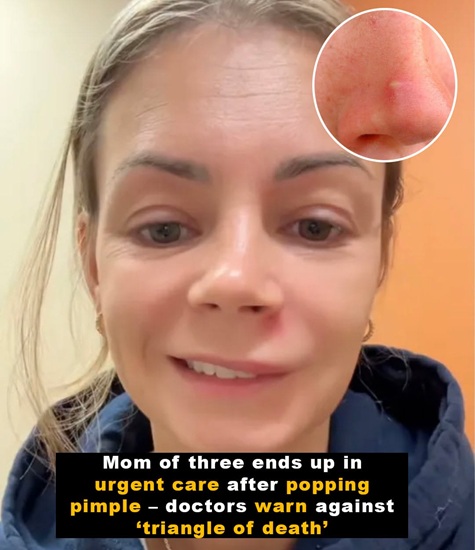
This issue received renewed attention after a woman named Lish Marie publicly shared an experience involving a blemish near her nose. According to reports about her account, Marie noticed what appeared to be a cyst-like pimple just below one of her nostrils. Like many people do when they notice an uncomfortable spot, she squeezed it. At first, she did not expect anything unusual to happen. Within several hours, however, she said her face began to swell and the affected area became increasingly painful.
Marie also noticed something concerning when she tried to smile. She said one side of her face moved normally while the swollen side did not respond in quite the same way. The combination of swelling, significant pain, and unusual facial movement convinced her that the situation required professional medical attention. Rather than continuing to treat the area herself, she went to an urgent care facility.
Reports about the incident stated that clinicians prescribed several medications, including antibiotics and steroids. Marie later said that she believed she had sought help very quickly, within hours of noticing that her condition was worsening. According to her account, she began improving the following day and was largely back to normal within several days. Her experience was widely shared online because it highlighted a medical concept many people had never heard about.
Still, Marie’s experience should not be interpreted as evidence that anyone who squeezes a pimple near the nose is likely to experience the same thing. Millions of people have picked or squeezed facial blemishes without developing a dangerous infection. The more useful lesson is that unusual or rapidly worsening symptoms should not be ignored. Significant swelling, severe pain, fever, eye problems, or neurological symptoms are very different from the minor redness that often follows ordinary skin irritation.
The facial danger triangle generally includes the nose and the area extending toward the corners of the mouth. The exact boundaries can vary slightly depending on how the region is described, but the center of the nose is always part of it. What makes this area anatomically important is the pattern of its venous drainage. Some facial veins communicate with veins leading toward the cavernous sinus, which is located deep inside the skull.
The cavernous sinus is a venous space situated behind the eyes. Several important nerves and blood vessels pass through or near it. Because of these anatomical connections, a serious infection in the face, nose, sinuses, teeth, or tissues around the eye can occasionally spread into this region. When infection contributes to a blood clot forming there, the condition is known as septic cavernous sinus thrombosis.
Cavernous sinus thrombosis is a genuine medical emergency, but it is uncommon. It is more often associated with significant bacterial infections than with a routine acne spot. Doctors have linked it with infections involving the sinuses, eye socket, teeth, nose, or central face. This is why physicians become more cautious when facial infections are worsening quickly or are accompanied by eye or neurological symptoms.
The symptoms of a serious cavernous sinus infection are very different from an ordinary pimple. Severe headache, fever, increasing facial pain, swelling around the eyes, bulging of an eye, double vision, difficulty moving the eyes, and other neurological changes can occur. These symptoms require urgent medical evaluation. They should not be managed by trying to squeeze or drain a blemish at home.
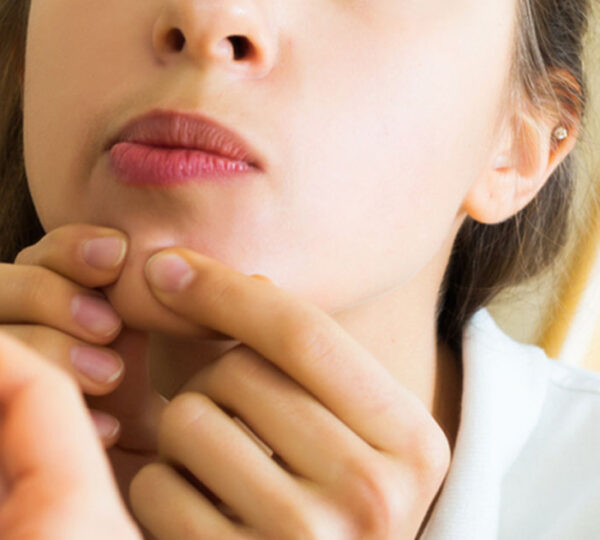
For most people, however, there are more common reasons to stop popping pimples. Dermatologists routinely warn that squeezing acne can worsen inflammation. When someone presses hard on a pimple, the contents are not always pushed cleanly outward. Some material can instead be forced deeper into surrounding tissue. This may cause a blemish to become larger, more painful, and more inflamed than it was beforehand.
Scarring is another common concern. Inflamed acne already places stress on the skin, and repeatedly squeezing, digging, or scratching adds additional trauma. This can damage the surrounding tissue and increase the chance that a permanent mark will remain after the original blemish heals. Dark or discolored spots may also persist after the inflammation disappears.
The risk is particularly important with deep cysts and nodules. These types of acne form below the surface of the skin and often feel painful or firm. They cannot usually be emptied safely by simply squeezing them. Applying heavy pressure may rupture inflammation deeper within the skin rather than bringing material outward. Dermatologists generally recommend leaving these lesions alone and seeking treatment if they are persistent, painful, or frequent.
The hands themselves can also introduce bacteria. During an ordinary day, people touch phones, keyboards, door handles, clothing, money, and many other surfaces. Even after washing, fingers and fingernails are not sterile surgical instruments. When a pimple is squeezed until the skin breaks, a small wound is created. That damaged surface provides bacteria with an easier opportunity to enter the tissue.
Healthy skin normally serves as an effective protective barrier. Its outer layers help prevent many microorganisms from reaching deeper tissues. Picking at acne deliberately disrupts that barrier. Most small wounds heal without serious problems, but avoiding unnecessary injury remains safer than repeatedly creating openings in inflamed skin.
Some dermatologists have used social media to explain why the danger triangle deserves special care. They emphasize that the issue is not that bacteria are guaranteed to travel “straight to the brain” after a pimple is squeezed. That phrase, frequently used in viral posts, oversimplifies the anatomy. The real concern is that an established infection can, in rare circumstances, spread through interconnected veins toward deeper structures.
This distinction is important because alarming descriptions can easily create unnecessary fear. Someone who has already popped a pimple near the nose should not automatically assume a serious infection is developing. Mild redness, tenderness, or irritation immediately afterward can occur simply because the skin has been traumatized. What matters more is whether symptoms are improving or becoming progressively worse.
Rapidly expanding redness or swelling deserves more attention than a small area that stays stable. Fever, worsening pain, warmth, pus drainage, or feeling generally unwell may suggest an infection. Significant swelling involving the nose or the tissues around an eye is also more concerning. If symptoms progress quickly, medical evaluation is a more appropriate response than continued home treatment.
Eye-related symptoms deserve particular caution because of the anatomy surrounding the cavernous sinus. New double vision, difficulty moving an eye, swelling around the eye, bulging of the eye, visual changes, or severe pain behind the eye should not be dismissed as ordinary acne. These symptoms can occur with serious infections that require professional assessment.
A severe headache together with fever and rapidly worsening facial or eye symptoms is another reason to seek medical help promptly. These signs do not automatically mean that cavernous sinus thrombosis is present, but they are far beyond what would normally be expected from a simple pimple. Early treatment of significant bacterial infections can reduce the risk of complications.
The dramatic nickname “danger triangle” can sometimes overshadow the fact that most acne is harmless. Pimples are extremely common and usually heal without medical intervention. The purpose of the warning is not to make people afraid of every blemish around their nose. It is to explain why aggressive squeezing in this particular area offers very little benefit while creating avoidable risks.
There are safer options for managing ordinary acne. Depending on the type of blemish, over-the-counter treatments containing benzoyl peroxide or salicylic acid may help. Hydrocolloid acne patches are also used by many people because they can protect the spot from repeated touching while absorbing fluid from certain superficial lesions. These products do not work equally well for every type of acne, but they avoid the mechanical damage caused by aggressive squeezing.
A warm compress may also help soothe some painful pimples. A clean cloth can be dampened with comfortably warm water and placed gently against the area for a short period. The purpose is not to force the blemish open but to reduce discomfort and allow the skin to heal naturally. Using excessive heat or heavy pressure should be avoided.
People with frequent cystic acne or painful nodules may benefit from seeing a dermatologist. Prescription creams, oral medications, hormonal treatments, and other therapies can reduce repeated inflammation and lower the chance of permanent scarring. Treating the underlying acne is often much more effective than trying to remove individual pimples one at a time.
Professional acne extraction is also very different from squeezing a blemish at home. Dermatologists and trained medical professionals can determine whether a lesion is appropriate for extraction and can use sterile equipment. They understand when pressure should be avoided and how to minimize trauma to surrounding tissue. A bump that looks like acne may sometimes be a cyst, boil, ingrown hair, or another condition entirely.
That uncertainty is especially relevant for bumps located inside or immediately around the nostrils. Some painful lesions in this area are caused by infection rather than ordinary acne. Nasal vestibulitis, for example, can cause tenderness, crusting, or boils near the opening of the nose. Repeatedly squeezing an infected lesion could make inflammation worse rather than helping it.
This is why advice on social media about how to “safely pop” a pimple should be treated cautiously. Some dermatologists have demonstrated techniques intended to reduce trauma when dealing with a very superficial whitehead, such as cleaning the skin, using sterile equipment, and applying only minimal pressure. Even those demonstrations generally emphasize that people should avoid forceful extraction and should be especially cautious in the central facial region.
The safest method remains leaving the blemish alone whenever possible. A pimple that lasts several days can be frustrating, particularly before a social event or photograph, but a temporary blemish is usually easier to manage than an infection or permanent scar. Repeated attempts to remove every bit of material often delay healing instead of speeding it up.
Marie’s experience is useful because it shows why paying attention to changes matters. According to her account, she did not simply notice a little redness and panic. Her swelling, pain, and facial symptoms developed quickly enough to make her concerned. She responded by seeking professional care rather than continuing to squeeze the area.
Her rapid recovery also provides important context. The story did not end with blindness, stroke, paralysis, or a brain infection. She reportedly improved after treatment. Some viral retellings may focus heavily on the worst possible complications of central facial infections, but those outcomes are rare and were not what happened in her reported case.
Severe cavernous sinus complications can include neurological injury, visual problems, stroke-like complications, or life-threatening infection, but these are complications of serious infections, not routine consequences of acne popping. Presenting them as though they occur commonly after squeezing a pimple would be inaccurate. The risk is real enough to justify caution but uncommon enough that it should be explained without sensationalism.
Modern antibiotics have also changed the outlook for bacterial infections. Before effective antibiotic treatment became available, infections involving the central face and cavernous sinus were much more dangerous. Today, doctors have tools to identify and treat infections earlier. That does not make the condition harmless, but it helps explain why serious complications remain unusual.
Another issue created by pimple popping is post-inflammatory hyperpigmentation. After inflammation resolves, some people are left with a darker or differently colored patch of skin. Picking at acne can make this discoloration more noticeable and longer lasting. Individuals with darker skin tones may be particularly prone to persistent post-inflammatory pigmentation.
Repeated skin picking can also become a behavioral habit. Some people find themselves automatically touching, scratching, or squeezing every irregularity they see in a mirror. Over time, this can create wounds, scars, and new inflammation even after the original acne has improved. Covering lesions with patches, limiting time in magnifying mirrors, keeping fingernails short, and following a regular skin-care routine may help reduce the impulse.
Acne itself develops through several interacting processes. Oil production, dead skin cells, inflammation, bacteria, hormones, and blocked hair follicles can all play roles. Simply squeezing the visible portion of a blemish does not correct these underlying processes. That is one reason acne can return even when individual pimples are successfully drained.
Preventive treatment is therefore often more useful than repeated extraction. A consistent skin-care routine may reduce the number of new breakouts before they become painful. Some people benefit from topical retinoids, benzoyl peroxide, salicylic acid, or prescription medications. The appropriate treatment depends on the individual and the severity of the acne.
People should also avoid harsh scrubbing. Acne is not caused simply by dirty skin, and aggressively rubbing the face can increase irritation. Gentle cleansing is usually preferable. Overwashing or using several harsh products at once can damage the skin barrier and create additional redness or dryness.
The central message about the danger triangle is therefore much calmer than its nickname suggests. Most pimples around the nose will heal without serious consequences. Most people who have previously squeezed one will not develop a dangerous infection. The medical warning exists because a rare complication is anatomically possible and because squeezing already has several much more common disadvantages.
If someone has already popped a blemish in this area, there is no reason to panic. Stop manipulating the skin, wash the area gently, and allow it to heal. Watch for symptoms that clearly worsen instead of improve. Continuing to press or dig into the lesion generally creates more inflammation.
If redness begins spreading rapidly, swelling becomes substantial, pain becomes severe, or fever develops, professional medical advice is appropriate. The same is true for significant eye swelling, visual symptoms, difficulty moving the eyes, severe headache, or unusual neurological changes. These are not symptoms that should be evaluated only through online comments or photographs.
The important distinction is between routine irritation and progressive infection. A small irritated spot after squeezing is common. An infection that is rapidly spreading across the face is not. Paying attention to that difference can prevent both unnecessary anxiety and unnecessary delay in treatment.
Marie’s case became popular online because it involved something extremely familiar. Almost everyone has seen a blemish and been tempted to squeeze it. The idea that such a simple action could lead to urgent medical treatment naturally attracts attention. However, responsible health information requires more than a dramatic headline.
Her story should be understood as an individual experience rather than a prediction. It highlights why people should be cautious with lesions around the nose and why rapidly worsening symptoms deserve evaluation. It does not prove that ordinary pimple popping commonly leads to serious brain infections.
The term “triangle of death” itself is sometimes criticized because it sounds frightening. “Facial danger triangle” or “danger triangle of the face” communicates the same anatomical concept without implying that death is a likely outcome. The anatomy is real, but the most extreme complication is rare.
There is also no medical benefit in frightening people about acne. Fear can lead people to overreact to harmless symptoms or seek unnecessary emergency care for normal skin irritation. Clear information should instead help people recognize which symptoms are ordinary and which deserve professional attention.
For routine acne, patience is often one of the most effective strategies. Pimples usually require time to resolve because inflammation beneath the skin cannot disappear instantly. Even when the visible white portion is removed, surrounding tissue may remain inflamed for several days. Trying to force the process often makes the area look worse.
If a blemish repeatedly returns in the same location, becomes unusually large, or never heals completely, a dermatologist can help determine whether it is actually acne. Skin cysts, infections, and other lesions can sometimes resemble pimples. Proper diagnosis is more useful than repeated attempts to squeeze the bump.
The same advice applies if someone develops recurring painful sores around or inside the nose. Because bacteria such as Staphylococcus can cause infections in this region, persistent lesions may need appropriate medical treatment. Trying to drain them without knowing the cause may increase irritation.
Pimple popping can also spread inflammation into surrounding skin. Pressure applied in the wrong direction may rupture the wall of an inflamed follicle beneath the surface. When that happens, inflammatory material can enter nearby tissue, making the affected region more swollen and tender.
This helps explain why a pimple sometimes looks dramatically worse immediately after someone tries to pop it. The person may believe they did not squeeze hard enough and continue pressing, when the better choice would be to stop. Additional pressure usually creates additional tissue damage.
Using fingernails can be particularly harsh because their edges can cut the skin. Even a small scratch can become another opening for bacteria. Dermatologists therefore discourage digging into acne with nails, needles, tweezers, or other household objects.
Some people also apply alcohol, peroxide, toothpaste, or other irritating substances after squeezing a pimple. These products may dry or irritate the surrounding skin without providing meaningful acne treatment. A gentle approach is generally safer than trying to sterilize the area aggressively with harsh chemicals.
Hydrocolloid patches can be useful partly because they create a physical barrier between the fingers and the blemish. Even when they do not dramatically shorten the life of a pimple, they can discourage repeated touching. For people who tend to pick unconsciously, that benefit alone may be useful.
Ice wrapped in a clean cloth may temporarily reduce swelling in some inflamed blemishes. It should not be held directly against the skin for extended periods, since excessive cold can cause injury. The goal is comfort and reduction of inflammation, not freezing the lesion.
People with persistent acne should remember that effective treatment may take several weeks. Acne medications generally work by preventing new lesions and reducing inflammation over time rather than making every existing pimple disappear immediately. Stopping treatment after only a few days can make it seem ineffective before it has had time to work.
Medical professionals can also treat particularly painful cysts with procedures that are not appropriate for home use. In some situations, dermatologists may inject medication directly into a large inflammatory lesion to help it shrink more rapidly. This is another reason professional care can be preferable before an important event rather than attempting forceful extraction.
The larger lesson is that skin problems often appear simpler than they really are. A small bump visible in the mirror may represent inflammation extending considerably deeper beneath the surface. Trying to physically remove it does not always address what is happening underneath.
The danger triangle adds another reason for restraint around the central face. The potential connection between facial infections and deeper venous structures has been recognized in medicine long before social media existed. Recent videos have simply made the idea familiar to a wider audience.
Social media can be helpful when it encourages people to learn more about health. It becomes less helpful when rare complications are presented as inevitable outcomes. Claims that a single squeeze will send bacteria directly into the brain are not an accurate description of the typical risk.
A more responsible message is straightforward: infections in this region deserve respect, and aggressively popping pimples creates unnecessary skin damage. Serious intracranial complications are possible but uncommon. Most people should focus more on preventing irritation, scarring, and local infection than on fearing a rare neurological emergency.
Marie’s experience ended well because she reportedly sought medical attention after noticing significant changes. That is perhaps the most useful part of the story. People do not need to panic about every blemish, but they should take rapidly worsening symptoms seriously.
If a facial spot is becoming more swollen and painful hour by hour rather than gradually improving, medical evaluation can provide reassurance or treatment. Waiting until symptoms become severe is not always necessary, particularly if the problem is close to the nose or eyes.
At the same time, there is no reason for someone with a normal small pimple and no concerning symptoms to assume they are in immediate danger. Routine acne is extremely common. Understanding medical risk should help people make calmer decisions, not create unnecessary fear.
For anyone trying to decide whether to squeeze a blemish, the simplest question may be whether the possible benefit is worth the possible irritation. Most of the time, the answer is no. A pimple may disappear naturally within days, while a scar or dark mark can last much longer.
Inside the facial danger triangle, there is even more reason to be patient. Avoid unnecessary trauma, use appropriate acne treatment, and allow the skin to repair itself. If something behaves unlike ordinary acne, let a medical professional evaluate it.
The human urge to remove an imperfection immediately is understandable. Pimples can be painful, uncomfortable, and embarrassing. But skin rarely responds well to aggressive treatment. Gentle care is generally more effective than repeated squeezing.
The phrase “danger triangle” may continue circulating online because it is memorable. What matters is understanding the science beneath the name. The central face has venous connections that can, in rare cases, allow serious infections to spread deeper into the head.
That possibility is not a reason for panic. It is simply another reason to avoid a habit dermatologists already discourage for much more common reasons such as inflammation, infection, discoloration, and scarring.
For most people, the best approach is remarkably simple: keep hands away from the pimple, treat the skin gently, and give it time. If symptoms become severe or unusual, seek medical advice.
A few days of waiting may feel inconvenient when a blemish is visible in the mirror, but it is usually far preferable to making the inflammation worse. And when the blemish is located between the bridge of the nose and the corners of the mouth, a little extra caution is a sensible choice.
The story of Lish Marie serves as a reminder rather than a prediction. Her symptoms developed quickly, she sought treatment, and she recovered. Her experience highlights a real anatomical concern while also showing the importance of responding appropriately when a seemingly small skin problem begins behaving in an unusual way.
The takeaway does not need to be frightening: most pimples are harmless, severe complications are rare, and there is no reason to expect the worst. But there is also very little reason to squeeze a pimple aggressively when safer options exist.
Sometimes the best thing to do with an annoying blemish is also the simplest—leave it alone, protect the skin, and allow the body’s healing process to do its work.

