
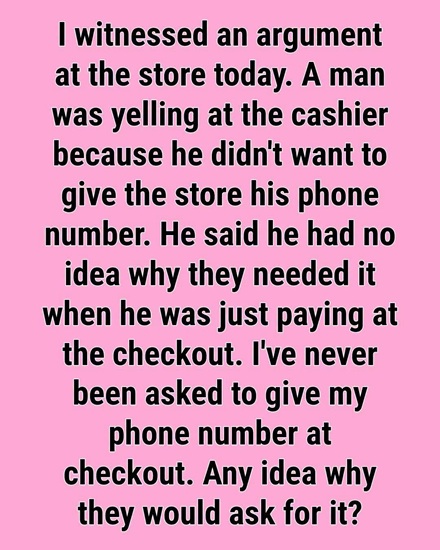
For many shoppers, a trip to the grocery store or a favorite retail chain follows a familiar routine. Items are placed on the checkout counter, scanned one by one, and just before payment, the cashier asks a question that has become almost universal: “Do you have a phone number with us?” For countless customers, the response comes automatically. Some hope to receive loyalty points or discounts, while others simply assume it is a standard part of the checkout process.
Although this interaction usually lasts only a few seconds, it raises important questions about how customer information is collected, stored, and used in today’s digital economy. Understanding these practices allows consumers to make informed decisions without unnecessary concern or misunderstanding. Loyalty programs have existed for decades and were originally designed to reward returning customers. Many retailers introduced membership cards, phone number registration, or mobile applications to offer discounts, personalized coupons, birthday rewards, and early access to sales.
From a business perspective, these programs help companies strengthen customer relationships while encouraging repeat visits. For shoppers, they can provide real financial savings over time, especially for frequently purchased household items. Participating in these programs is generally voluntary, allowing individuals to decide whether the benefits align with their personal preferences.
When customers provide a phone number during checkout, that number usually serves as an account identifier rather than simply a contact method. Instead of carrying a physical loyalty card, shoppers can enter their phone number to access their membership account. The number connects purchases to an existing customer profile, making it easier to apply discounts, earn reward points, or access digital receipts. Many consumers appreciate the convenience because they no longer need to remember another card or barcode every time they shop.
Retailers often analyze purchasing trends to better understand overall customer behavior. Rather than focusing on a single individual, businesses frequently examine large groups of purchases to identify broader patterns, such as seasonal demand, popular products, or inventory needs. This information helps stores manage stock levels, improve product selection, and plan future promotions. Data analysis has become an important part of modern retail operations, allowing companies to improve efficiency while responding more effectively to customer demand.
In many cases, loyalty programs also enable retailers to send personalized offers based on previous purchases. For example, a customer who regularly buys pet supplies may receive coupons related to pet food or accessories. Someone who frequently purchases baby products might receive notifications about future discounts in that category. Many shoppers find these personalized promotions useful because they focus on products they are already interested in purchasing. Others, however, prefer receiving fewer marketing messages and may choose not to participate in such programs.
It is important to recognize that privacy policies differ significantly between companies. Some businesses clearly explain how customer information is collected, stored, shared, and protected, while others provide more general descriptions. Most retailers publish privacy policies on their websites, allowing customers to understand what information is collected, why it is collected, and whether it may be shared with service providers or business partners. Reading these policies can help consumers make informed choices before enrolling in a loyalty program or providing personal information.
Many privacy experts encourage consumers to understand exactly what information they share with any organization, whether online or in physical stores. This recommendation applies not only to retailers but also to mobile applications, streaming services, social media platforms, financial institutions, and subscription websites. Developing awareness of personal data practices has become increasingly valuable as digital services continue expanding into everyday life. Making informed decisions does not necessarily mean avoiding technology; rather, it involves understanding how information is used and selecting the options that best fit individual comfort levels.
One reason privacy discussions have become more common is the increasing amount of digital information people generate each day. Shopping history, online searches, streaming preferences, location services, and mobile applications can all create data that companies use to improve products or personalize services. Different organizations follow different legal and regulatory requirements depending on the countries and regions where they operate. As technology evolves, both businesses and consumers continue adapting to changing expectations regarding transparency and data protection.
Another important consideration involves cybersecurity. Organizations that collect customer information generally invest in security measures designed to protect stored data. However, cybersecurity experts consistently recommend limiting the amount of personal information shared whenever possible because no system can guarantee absolute protection against every potential cyberattack. This recommendation does not suggest that every company is unsafe; instead, it reflects a broader principle of minimizing unnecessary exposure by sharing only the information needed for a particular service.
Consumers who prefer additional privacy have several practical options available. Before providing a phone number, they can simply ask whether it is required to complete the purchase or only necessary for loyalty rewards. In many retail environments, purchases can still be completed without joining the loyalty program, although certain discounts or promotional offers may not apply. Understanding this distinction allows customers to make decisions based on their own priorities rather than assumptions about store policies.
Some shoppers choose to participate in loyalty programs because they value the savings and personalized offers. Others prefer minimizing the amount of personal information associated with everyday purchases. Neither approach is universally correct, as individual preferences vary depending on comfort levels, shopping habits, and privacy expectations. The most important factor is ensuring that participation reflects an informed decision rather than an automatic habit made without understanding the available options.
For those who decide to enroll in loyalty programs, maintaining good digital security habits remains important. Using strong passwords for retailer accounts, enabling multi-factor authentication when available, reviewing account settings periodically, and keeping contact information updated can help reduce security risks. Consumers should also remain cautious about responding to unexpected emails or text messages requesting account verification, especially if they appear suspicious or ask for sensitive financial information.
As awareness of digital privacy continues growing, more consumers are asking thoughtful questions about how organizations collect and manage personal information. This shift encourages businesses to improve transparency, strengthen security practices, and provide customers with clearer explanations about data collection. In turn, shoppers gain greater confidence when deciding which services they wish to use and which information they choose to share.
Ultimately, providing a phone number at checkout is a personal choice in many retail settings. Understanding how loyalty programs operate, reading privacy policies, and recognizing the difference between required information and optional participation empowers consumers to make decisions that match their individual preferences. In an increasingly connected world, informed choices remain one of the most effective tools for balancing convenience, savings, and personal privacy.
As conversations about digital privacy continue to evolve, many consumers are becoming more interested in understanding how their personal information is handled after they share it with businesses. Rather than assuming every company follows identical practices, privacy specialists often recommend learning how individual organizations collect, use, store, and protect customer data. Becoming familiar with these practices allows shoppers to make informed decisions based on facts rather than assumptions. Greater awareness also encourages companies to communicate their policies more clearly and maintain higher standards of transparency.
One of the easiest ways to understand how a retailer manages customer information is by reviewing its published privacy policy. Most established businesses make these documents available through their websites or mobile applications. Although privacy policies can sometimes appear lengthy, they often explain important topics such as what information is collected, how long it may be retained, whether it is shared with service providers, and what choices customers have regarding marketing communications. Spending a few minutes reviewing these details can provide valuable insight into how personal information is managed.
Another helpful practice is distinguishing between information that is required to complete a purchase and information that is optional. In many stores, customers can complete a transaction without joining a loyalty program, although certain discounts or rewards may only be available to members. Asking polite questions during checkout, such as whether providing a phone number is optional, helps consumers better understand their available choices. Being informed allows individuals to decide which option best matches their personal priorities.
Many retailers have introduced mobile applications that allow customers to manage their loyalty accounts directly. These apps often include features such as digital coupons, purchase histories, reward balances, shopping lists, and electronic receipts. Some shoppers appreciate having these tools available in one convenient location, while others prefer limiting the number of applications connected to their personal information. Choosing whether to download and use these services depends entirely on individual preferences and comfort levels.
Digital privacy is not limited to shopping alone. Similar decisions arise when creating online accounts, subscribing to newsletters, downloading applications, joining streaming services, or registering for promotional events. In each situation, consumers have opportunities to consider what information they are comfortable sharing and whether the benefits offered justify the information requested. Developing consistent habits across different services can make personal data management much easier over time.
Cybersecurity professionals frequently encourage people to practice good account management regardless of which services they use. Creating unique passwords for different accounts, enabling multi-factor authentication whenever available, updating passwords periodically, and monitoring accounts for unusual activity are widely recommended security practices. These habits help reduce the likelihood that unauthorized individuals could gain access to personal accounts if login credentials become compromised through phishing attempts or unrelated security incidents.
Another useful habit involves regularly reviewing communication preferences within customer accounts. Many loyalty programs allow members to choose whether they wish to receive promotional emails, text messages, or special offers. Adjusting these settings enables shoppers to receive only the types of communications they find useful while reducing unnecessary notifications. Taking a few minutes to customize these preferences can significantly improve the overall customer experience.
Consumers should also remain cautious when receiving unexpected messages claiming to come from retailers. Cybercriminals sometimes create fraudulent emails or text messages that imitate legitimate businesses in an attempt to obtain passwords, payment information, or personal details. Before clicking any links, it is generally advisable to verify that messages originate from official company websites or verified contact channels. Remaining attentive to these warning signs helps reduce the risk of phishing scams and other forms of online fraud.
As technology continues advancing, businesses are investing in stronger security systems, improved encryption methods, and enhanced privacy controls. Governments in many regions have also introduced privacy regulations designed to strengthen consumer protections and establish clearer standards for organizations that collect personal information. While legal requirements differ between countries, the overall trend has been toward greater transparency and increased consumer control over personal data.
Many privacy experts emphasize that there is no single approach that works for everyone. Some individuals value personalized shopping experiences and are comfortable participating in loyalty programs because they enjoy the convenience and savings. Others prefer minimizing the amount of personal information connected to their everyday purchases. Both approaches are reasonable, provided they are based on informed decisions rather than misunderstanding or pressure. Personal privacy preferences naturally vary from one individual to another.
For consumers who appreciate loyalty rewards while also wanting additional privacy, several practical options may be available depending on the retailer. Some companies allow customers to manage communication preferences, update account information, or request changes through customer service. Reviewing available privacy controls and account settings can help individuals better understand how they can personalize their experience while maintaining the level of privacy they prefer.
The growing discussion around digital privacy has also encouraged businesses to improve communication with customers. Clearer privacy notices, simplified account settings, stronger security features, and more transparent explanations about data practices all contribute to building trust between companies and consumers. Organizations that communicate openly about how they handle customer information often help shoppers feel more confident when deciding whether to participate in loyalty programs.
Ultimately, the question asked at checkout—whether you would like to provide a phone number for a loyalty account—is one small part of a much broader conversation about digital privacy and informed consumer choice. Understanding how loyalty programs function, knowing what information is optional, reviewing privacy policies, and following good cybersecurity practices allow individuals to make decisions that reflect their own priorities. Rather than responding automatically, taking a moment to understand the available options helps ensure that every decision is intentional and well informed.
As digital services continue becoming part of everyday life, informed decision-making remains one of the most valuable skills consumers can develop. By learning how organizations manage personal information, practicing good account security, and understanding available privacy choices, shoppers can confidently enjoy modern conveniences while remaining aware of how their information is used. Balancing convenience, transparency, and personal privacy does not require avoiding technology—it simply involves making thoughtful choices that align with individual needs and preferences.

