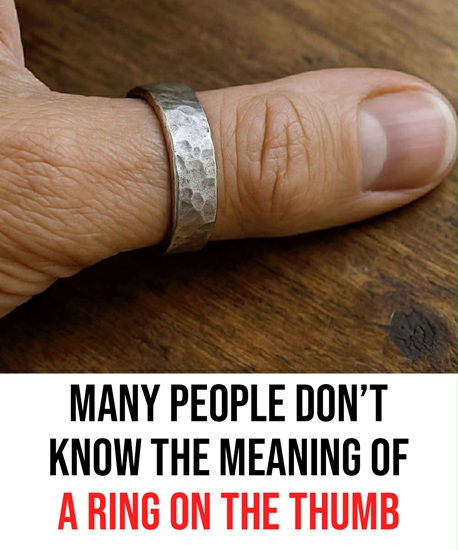
For many people, rings are simple fashion accessories used to enhance personal style, match outfits, or express personal taste. They are commonly worn on fingers such as the ring finger or index finger, where tradition or fashion trends often guide their placement. However, thumb rings stand out as a more unusual choice, often drawing attention due to their position and bold appearance. Because of this visibility, thumb rings have developed a variety of symbolic interpretations across fashion, culture, and history.
While these meanings are not universal rules, they reflect how people assign significance to personal style choices. In modern fashion culture, thumb rings are often associated with individuality and self-expression. People who choose to wear rings on their thumbs are frequently seen as confident in their personal style and unafraid to stand out. The thumb itself is a strong and independent finger, often symbolizing willpower and personal control in informal interpretations of body symbolism.
Because of this, accessories worn on the thumb are sometimes viewed as statements of boldness or independence. However, these interpretations are based on cultural perception rather than scientific fact or formal tradition. From a fashion psychology perspective, accessories worn in less conventional positions often attract attention and are interpreted as expressions of uniqueness.
Thumb rings fall into this category because they are less common than rings on other fingers. This rarity contributes to their association with nonconformity and creative identity. In contemporary style discussions, thumb rings are often described as part of alternative fashion or individualistic styling choices. They are not tied to a single meaning, but rather to the personality of the wearer and the context in which they are worn.
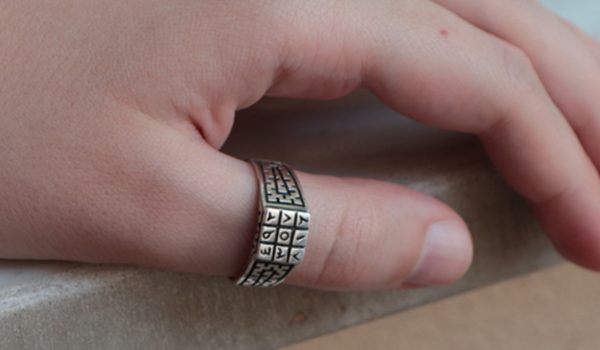
Historically, rings in general have held symbolic meaning in many cultures, often representing wealth, status, or social identity. In some ancient societies, jewelry was not only decorative but also functional or symbolic of rank. While thumb rings specifically were not universally significant across all cultures, there are historical examples where rings on different fingers, including the thumb, were associated with practical or social purposes. For instance, in some historical contexts, rings were used to indicate status or occupation rather than personal expression.
In certain ancient traditions, thumb rings were also connected to archery. Some historians note that thumb protection tools were used in archery practices in parts of Asia, where the thumb played a key role in drawing bows. These tools sometimes evolved into symbolic or decorative rings over time. In this context, the thumb ring was originally functional, helping protect the thumb during physical activity. As societies evolved, such practical items sometimes transitioned into decorative or symbolic accessories.
In modern times, the functional use of thumb rings has largely disappeared, and their meaning has shifted toward fashion and identity. Today, thumb rings are primarily worn for aesthetic reasons, chosen because they stand out visually and complement personal style. Jewelry designers often use thumb rings as statement pieces, creating bold designs that highlight individuality. This makes them especially popular among people who prefer unique or expressive fashion choices rather than traditional jewelry styles.
There are also modern cultural interpretations of thumb rings that appear in online discussions and fashion communities. Some people associate thumb rings with confidence, independence, or creativity, although these meanings are informal and vary widely between individuals. On social media platforms and fashion blogs, users often share personal interpretations of jewelry symbolism. These interpretations are not standardized and should not be understood as fixed cultural codes, but rather as personal or community-based ideas.
In some fashion discussions, thumb rings have been loosely linked to personality traits such as creativity, openness, or boldness. These associations are based on observation rather than research, and they reflect how people interpret visual style choices. Because thumb rings are less common, they naturally attract curiosity, leading to symbolic interpretations. However, it is important to emphasize that wearing a thumb ring does not have any universal or guaranteed meaning. Its significance depends entirely on the wearer.
In certain historical and cultural conversations, jewelry placement has sometimes been used to express identity or belonging. However, these systems vary widely and are not globally consistent. Unlike engagement rings or wedding bands, which have widely recognized meanings in many societies, thumb rings do not carry a universally accepted symbolism. Instead, their meaning is flexible and often personal. This flexibility is one reason why they remain popular in modern fashion, as they allow individuals to create their own interpretation.
From a style perspective, thumb rings are often chosen because they balance visibility and uniqueness. The thumb is naturally separated from the other fingers, making any accessory worn there immediately noticeable. This makes thumb rings effective as statement pieces, especially in minimalist or monochrome outfits where accessories play a key role. Fashion designers often recommend them as part of bold styling choices for individuals who want to add character to their appearance without relying on multiple accessories.
In men’s fashion, thumb rings are sometimes associated with strong or unconventional styling choices. They are often seen in alternative fashion scenes or among individuals who prefer distinctive accessories. In women’s fashion, thumb rings are frequently linked to empowerment and individuality, especially in modern styling trends that emphasize personal expression. However, these associations are not rules but rather common interpretations influenced by media and fashion culture.
It is also important to understand that jewelry meanings are highly subjective and change over time. What may be considered symbolic in one culture or era may have no meaning in another. Thumb rings are a good example of how fashion items can evolve from functional or symbolic origins into purely aesthetic accessories. Today, their meaning is largely defined by personal choice rather than tradition or formal cultural systems.
Ultimately, the meaning of a thumb ring depends on the individual wearing it. For some, it may represent confidence or creativity. For others, it may simply be a preferred fashion accessory with no deeper significance. In modern society, personal expression in fashion has become more important than fixed symbolism, allowing people to define their own style language. This makes thumb rings a flexible and expressive part of contemporary jewelry culture.
What remains consistent across all interpretations is that thumb rings draw attention. Whether worn for style, symbolism, or personal preference, they stand out visually and often spark curiosity. This visibility is what makes them unique in the world of jewelry. And while their meanings may vary, their role as a bold and expressive accessory remains constant across modern fashion trends.
