
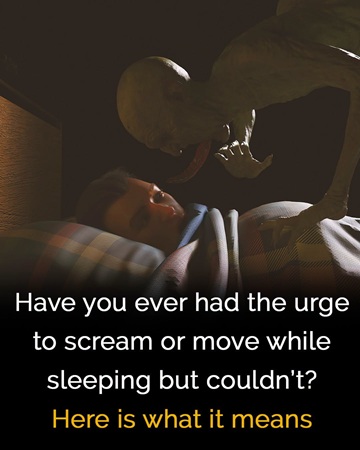
If you’ve ever woken up in the middle of the night unable to move or speak, while still being fully aware of your surroundings, you may have experienced sleep paralysis. It is a fairly common sleep-related phenomenon that can feel extremely real and often frightening. Many people go through it at least once in their lives, but because the experience can be so confusing and intense, it is not always openly discussed. Sleep paralysis is more common than most people realize.
Research suggests that a significant percentage of people will experience it at least once in their lifetime, although exact numbers vary depending on studies and populations. Despite its frequency, many individuals are unfamiliar with the term until they personally experience it, which often leads to fear or misunderstanding in the moment. This condition usually occurs during the transition between sleep and waking.
It can happen either when a person is falling asleep or when they are waking up. During these brief moments, the mind becomes conscious while the body remains temporarily “locked” in a state of muscle inactivity, which normally happens during REM sleep. This creates the sensation of being awake but physically unable to move or speak.
Medical sources such as the Cleveland Clinic explain that sleep paralysis happens when the brain is caught between REM sleep and wakefulness. REM sleep is the stage where dreaming occurs most intensely, and during this phase, the body naturally prevents movement so that dreams are not physically acted out. Sleep paralysis occurs when awareness returns before the body regains normal muscle control.
Episodes typically last from a few seconds to a couple of minutes, although they can feel longer because of the fear and awareness involved. While the experience can be very uncomfortable, sleep paralysis is not considered dangerous. It does not cause physical harm and is not classified as a life-threatening condition, even though it can feel distressing at the time.
One of the most common features of sleep paralysis is the presence of hallucinations. These can include visual, auditory, or sensory experiences. Some people report sensing a figure in the room, feeling pressure on the chest, or experiencing the feeling of floating outside their body. Others describe hearing noises, footsteps, or voices that are not actually present.
Because the brain is partly dreaming while also partially awake, these hallucinations can feel extremely real. This overlap between dream activity and awareness is what makes sleep paralysis such a powerful and sometimes terrifying experience. The mind is essentially blending REM dream imagery with real-world perception.
Experts have identified several factors that can increase the likelihood of experiencing sleep paralysis. These include lack of sleep, high stress levels, irregular sleep patterns, anxiety, and physical exhaustion. Disruptions to normal sleep cycles can make it more likely for the brain and body to become temporarily out of sync during transitions between sleep stages.
Sleep researchers and psychologists note that people who are sleep-deprived or under significant stress tend to report episodes more frequently. Maintaining consistent sleep schedules and reducing stress are commonly recommended steps to help lower the chances of experiencing sleep paralysis.
Although it can feel alarming, sleep paralysis is not classified as a disease. Instead, it is considered a type of parasomnia, which refers to unusual behaviors or experiences that occur during sleep. Importantly, it is widely recognized as harmless from a medical standpoint, even if it can be mentally and emotionally uncomfortable.
The phenomenon has been recorded throughout history and across many different cultures. Early descriptions of experiences similar to sleep paralysis appear in ancient medical writings, and modern science has since provided a neurological explanation for what was once misunderstood. Before this understanding, many cultures interpreted the experience in spiritual or supernatural ways.
Different societies have given sleep paralysis various cultural explanations. In Japanese folklore, it has been described as a form of being “pressed down,” while in Chinese tradition it has sometimes been called “ghost pressure.” In other cultures, it has been interpreted as a spiritual presence or unseen force sitting on the body during sleep.
Today, science explains these experiences as part of the brain’s natural sleep cycle rather than external forces. However, the intensity of the hallucinations and physical immobility still make the experience feel very real to those going through it, which is why it has remained a subject of fascination for centuries.
Some people who experience sleep paralysis describe strong emotional reactions, including fear, panic, or a feeling of danger. Even though there is no physical threat, the inability to move combined with vivid hallucinations can trigger the body’s natural fear response, making the moment feel overwhelming.
Public figures, writers, and researchers have also shared their experiences with sleep paralysis, helping to increase awareness of the condition. Their descriptions often match common reports, including sensations of pressure, presence in the room, and distorted perceptions during the episode.
Preventing sleep paralysis is often linked to improving overall sleep health. Experts generally recommend maintaining a consistent sleep schedule, ensuring enough rest, and reducing stress levels. Avoiding excessive screen time before bed, creating a calm sleeping environment, and supporting healthy sleep habits may also help reduce occurrences.
If an episode does happen, specialists often suggest focusing on slow breathing and trying to move small parts of the body, such as fingers or toes. These small movements can sometimes help “break” the episode and restore full control more quickly.
Even though sleep paralysis can be frightening, understanding what it is can significantly reduce fear when it occurs. Knowing that it is a temporary and scientifically explained sleep state helps many people feel more reassured if they ever experience it.
In the end, sleep paralysis is a natural part of how the human sleep cycle functions. While it can feel intense and unsettling, it is temporary, harmless, and fully explainable through modern sleep science.

