
Pamela Stephenson has lived a life defined by transformation. Known first as a talented comedian, actress, and performer, she later built a successful second career as a psychologist, author, and broadcaster. Her journey from the entertainment world of the 1970s and 1980s to a respected career in psychology is a story of ambition, resilience, and constant reinvention. Born in New Zealand and raised partly in Australia, Stephenson became internationally recognized for her sharp comedic talent, memorable performances, and ability to challenge expectations about women in comedy.
Born Pamela Helen Stephenson in Takapuna, Auckland, New Zealand, in 1949, she spent her early childhood surrounded by an intellectually focused family. Her parents were academics, and her upbringing placed a strong emphasis on education and achievement. When she was young, her family moved to Australia, where she grew up alongside her sisters. From an early age, Stephenson showed exceptional ability, developing interests in performance, creativity, and learning.
However, she has also spoken publicly about experiencing emotional difficulties during her childhood and adolescence, including feelings of pressure and a desire for greater affection and acceptance. In her autobiography, Stephenson described painful experiences from her teenage years, including a sexual assault when she was 16.
She has written that the event had a profound impact on her emotional life and relationships. She also described feeling rejected by her parents after they discovered she had contracted a sexually transmitted infection following the assault. These personal experiences, according to Stephenson, influenced her understanding of human behavior, emotional struggles, and the importance of compassion — themes that later became central to her work as a psychologist.
Despite difficult periods in her early life, Stephenson continued pursuing her ambitions. She studied acting at the National Institute of Dramatic Art (NIDA) in Sydney, one of Australia’s most respected performing arts institutions. After completing her training, she began building a career in theater and television. Like many young performers, she faced challenges finding opportunities and often had to work hard to establish herself in a competitive industry. Her determination eventually led her beyond Australia and toward the United Kingdom, where her career would experience a major breakthrough.
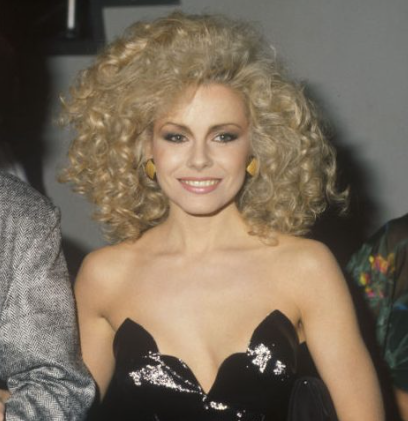
Stephenson gained widespread recognition in Britain through the groundbreaking comedy series Not the Nine O’Clock News, which aired from 1979 to 1982. The show became one of the most influential British comedy programs of its era, featuring performers such as Rowan Atkinson, Mel Smith, and Griff Rhys Jones. Stephenson stood out as one of the few women in a comedy environment that was largely dominated by male performers. Her performances combined physical comedy, satire, impressions, and fearless humor, helping her establish herself as one of the most recognizable female comedians of the period.
At a time when female comedians were often given limited roles, Stephenson helped challenge traditional expectations. She was not simply placed in supporting positions; instead, she became an important part of the comedy team, creating memorable characters and participating in sketches that addressed social attitudes, popular culture, and politics. Her confidence and willingness to experiment with different styles helped open doors for future generations of women in comedy.
Her success in British television eventually led to opportunities in Hollywood. In 1983, Stephenson appeared in Superman III, playing Lorelei Ambrosia, the glamorous girlfriend of villain Ross Webster, portrayed by Robert Vaughn. Although the film received mixed reviews overall, Stephenson’s performance attracted attention and demonstrated her ability to move between different areas of entertainment. Her role introduced her to a wider international audience and added another chapter to her already diverse career.
In the mid-1980s, Stephenson joined Saturday Night Live, becoming one of the few performers born outside North America to join the famous American sketch comedy program. During her time on the show, she became known for her impressions and character work, including portrayals of famous musicians and public figures. Although her time on the program was relatively short, she left an impression as a performer with strong comedic instincts and a distinctive style.
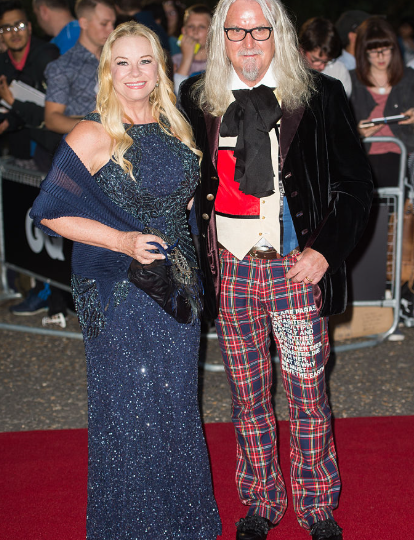
In 1989, Stephenson married Scottish comedian and entertainer Billy Connolly after the couple had been together for many years. Their relationship became one of the most well-known partnerships in the entertainment world. Together, they later moved to the United States and raised a family. While Connolly continued his successful career in comedy, film, and television, Stephenson began exploring a new professional direction that would eventually change the course of her life.
After achieving significant success in entertainment, Stephenson became increasingly interested in psychology and human behavior. She returned to education, studying psychology in the United States and eventually becoming a qualified clinical psychologist. This transition was not simply a career change but also a reflection of her lifelong interest in understanding people, relationships, emotions, and personal development.
Stephenson later combined her psychological knowledge with her communication skills, becoming an author and broadcaster. One of her notable works was a biography of her husband, titled “Billy,” published in 2002. The book explored Connolly’s life, career, and personal experiences while also reflecting Stephenson’s ability to examine human stories with psychological insight.
Her journey from comedy stages to psychology offices demonstrates an unusual ability to reinvent herself. Many performers spend their entire careers in one field, but Stephenson successfully created new identities while maintaining her connection with audiences. Her experiences in entertainment helped her develop communication skills, while her later psychological career allowed her to explore deeper questions about relationships, emotions, and human resilience.
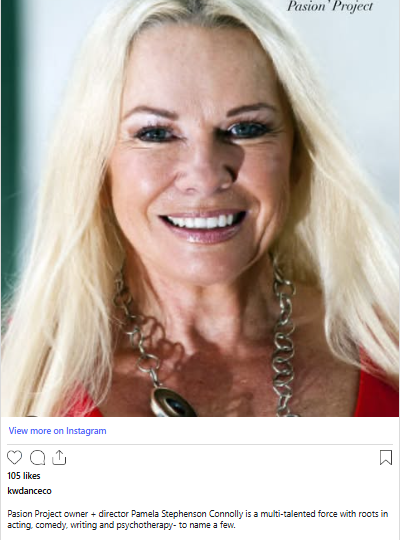
Today, Pamela Stephenson continues to live in the United States with Billy Connolly. In recent years, she has spoken about supporting her husband as he manages Parkinson’s disease, a condition he was diagnosed with in 2013. She has described their move to Florida as a decision made partly to provide a more comfortable environment for Connolly’s health and lifestyle needs.
From overcoming personal struggles to achieving success in comedy, acting, writing, and psychology, Pamela Stephenson’s story is one of remarkable adaptability. Her career reflects a willingness to change direction, learn new skills, and continue growing throughout life. Whether performing on television, studying the human mind, or writing about personal experiences, she has built a legacy based on creativity, intelligence, and determination.
