A group of small objects found inside an older family home created an unexpected mystery because their appearance seemed inconsistent with their weight. At first glance, the pieces reportedly looked decorative and could easily have been mistaken for ornaments or display items. Nothing about their size suggested that they would feel unusually heavy when picked up. That surprising difference immediately raised questions about what they might once have been used for.
Without packaging, labels, instructions or an obvious matching object nearby, however, their original purpose was not clear. The objects had apparently remained stored in a house associated with the same family for many years. Homes occupied across several generations often accumulate belongings that gradually become separated from their original purpose. Some items remain easy to recognize because similar objects are still commonly used today. Others become difficult to identify when fashions, household technology and everyday routines change.
An object that was once completely ordinary can look mysterious decades later when the people who knew how it was used are no longer available to explain it. The unusual weight of the pieces may provide an important clue, but it does not reveal a definite answer. Manufacturers often add weight to objects when stability or resistance to movement is necessary. At the same time, purely decorative pieces can also be surprisingly heavy when they are made from dense materials such as metal or stone. That means weight alone cannot determine whether the items were practical tools or simply decorative objects. It can only suggest that their mass may have played some role in their original design.
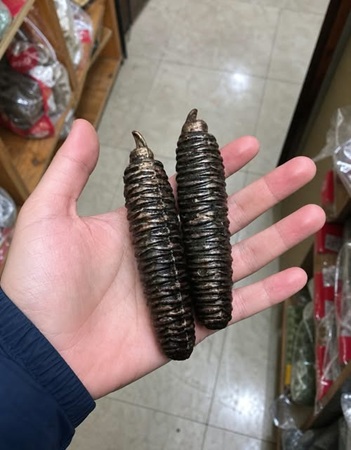
One possibility is that the objects may have functioned as decorative paperweights. Paperweights were often intentionally heavy while also being designed to look attractive on desks and tables. Their purpose was simple: enough weight helped keep papers, letters and other documents from moving. If these pieces were once kept in a study, office or room where correspondence was handled, such an explanation could make sense. There is currently no confirmed evidence in the available description, however, showing that the objects were actually stored with documents or other office equipment.
Another theory is that the objects might once have been connected with curtains, window treatments or other household furnishings. Older household hardware sometimes combined decorative shapes with practical functions. Weighted components could help fabric hang properly, stabilize cords or form part of a larger decorative fitting. Once separated from the original curtain or mechanism, a component might no longer resemble anything obviously functional. Its ornamental appearance could therefore lead someone to mistake it for a standalone decoration even if it had originally belonged to another household item.
There is also no conclusive evidence that curtain hardware is the correct explanation. Without visible attachment points, matching fittings or photographs showing how the pieces were once used, that possibility remains speculative. Many unrelated household objects can share similar shapes and materials. An accurate identification would require features that distinguish the pieces from other decorative or weighted items. Until such evidence becomes available, describing them as confirmed curtain components would go beyond what the available information supports.
A third possibility is that the objects were once pieces from a game or recreational set. Some older games included solid pieces that were heavier than modern plastic equivalents. Weight could help them stay in place during play, while decorative shapes made the set more attractive. If the original board, instructions or container were lost or discarded, the remaining pieces could eventually become difficult to recognize. This theory is plausible in a general sense, but there is no confirmed game associated with the objects in the description provided.
The place where unidentified objects are discovered can sometimes help investigators understand their purpose. Items found inside a desk drawer alongside writing materials might reasonably be associated with office work. Objects discovered with curtains, cords or sewing supplies might point toward household furnishings. Pieces found near board games or recreational equipment could suggest another explanation entirely. Unfortunately, objects in long-occupied homes are often moved repeatedly, meaning their final storage location may have little connection to the place where they were originally used.
The box containing the objects might also provide clues if its history could be established. A fitted case or container designed specifically for the pieces could suggest they were part of a set. A plain cardboard or miscellaneous storage box might indicate that someone simply placed unused objects together during cleaning. Labels, handwritten notes or old packaging would be particularly valuable, but those materials are often the first things to disappear over time. Once that information is lost, identification becomes much more difficult.
Family memories can sometimes solve a household mystery more effectively than the object itself. An older relative may recognize the pieces or remember seeing similar items in a particular room. Someone might recall that they once belonged on a desk, were attached to curtains or appeared during family games. Even a small memory about where the objects were kept could eliminate several possible explanations. Still, memories from decades earlier can be imperfect, so recollections are most useful when they can be supported by physical evidence or historical examples.
The age and history of the house may explain why the pieces now seem so unfamiliar. Household objects evolve as manufacturing, fashion and technology change. Items that were once common can disappear from everyday use, leaving later generations without an obvious point of comparison. A mysterious-looking object is therefore not necessarily rare or valuable. It may simply belong to a period when different household tools, fittings or decorative styles were normal. Losing that historical context can make even an ordinary object difficult to identify.
The material from which the objects were made could offer another important clue. Metal, brass, cast iron, stone and other dense materials were commonly used for very different household purposes. Examining surface wear could also reveal whether an object spent years being handled, attached to something or resting in one position. Scratches, flattened areas or worn edges can sometimes show how an item was used. Small holes, hooks, threaded sections or other construction details might provide even stronger evidence about whether the pieces were intended to connect with something else.
Measurements would also help narrow the possibilities. Exact height, width and weight can distinguish between objects that otherwise look similar in photographs. Knowing whether every piece has identical dimensions could indicate that they belonged to a manufactured set. Differences between them might suggest handmade construction or unrelated uses. Even information about whether the pieces are magnetic could help identify their material. Without such details, broad visual comparisons can easily produce incorrect conclusions.
Maker’s marks, numbers or symbols should also be examined carefully if they are present. Manufacturers frequently stamped identifying information into metal objects, including company names, patent numbers or model references. Even a partial marking can sometimes be traced to historical catalogs or advertisements. If an object lacks obvious markings on its visible surfaces, the base or interior areas may still contain information. A confirmed manufacturer could transform the mystery from speculation into a much more straightforward historical identification.
This illustrates why unidentified objects should not be named too quickly. People naturally compare unfamiliar items with things they already recognize, but visual resemblance can be misleading. A decorative paperweight may look like a game piece, while a piece of furniture hardware may resemble an ornament. An industrial or household component can become almost impossible to recognize once separated from the larger object it belonged to. Confidence should therefore come from matching several characteristics rather than simply finding another object with a similar shape.
Online communities can sometimes be helpful in these situations because thousands of people bring different areas of knowledge and experience. Someone may recognize an exact design from an antique shop, family home or specialist collection. However, popular guesses should not automatically be treated as verified answers. A reliable identification should explain why the object’s size, material, weight, construction and design all match a known use. Ideally, photographs of identical pieces in catalogs, museums or documented collections would provide independent support.
The heaviness of the pieces remains interesting because it may indicate that their mass served a practical purpose. Objects intended to hold something down, remain stable or provide counterweight often need substantial density. Yet the same property can exist in decorative items made from cast metal or stone. For that reason, weight is best treated as one clue among many rather than proof of a specific function. The most useful next step would be to combine information about weight with construction details and the history of where the pieces were found.
Even their bases could reveal important information. A flat, finished base might indicate that an object was designed to stand independently on a surface. A rough underside or attachment point could suggest that it originally fitted into another piece of equipment. Felt or protective material underneath could support the idea that the item was placed on furniture. By contrast, holes or threaded sections could suggest that it was mounted or connected to something. These small physical details often provide more reliable clues than decorative design alone.
Photographs from several angles would make identification considerably easier. A front-facing picture may show the overall shape but hide the very feature that explains how an object was used. Images of the bottom, back and sides could reveal attachment mechanisms or markings that are otherwise invisible. Placing a ruler beside the object would provide scale, while reporting its approximate weight would help people compare it with documented examples. Clear photographs are especially important when trying to identify older manufactured objects through historical references.
The objects also serve as an example of how ordinary homes can preserve small pieces of everyday history. Families frequently keep belongings without recording why they mattered or how they were used. Some items survive because they have sentimental significance, while others remain simply because nobody ever decided to discard them. Years later, the physical object may remain perfectly intact even though the story explaining it has disappeared. In this way, a simple household item can become an accidental historical artifact.
A home shared across generations can contain many examples of this process. One family member may place an object in storage after it stops being useful. Another may move it to a different box during renovation. A later generation may inherit that box without knowing where its contents originally came from. Each move weakens the connection between an item and its original context. Eventually, the only surviving information may be the object itself and the knowledge that it once belonged somewhere in the family home.
This is why the mystery does not necessarily require an exotic explanation. The pieces may turn out to have had a very ordinary household function. Their apparent mystery could simply result from the disappearance of the surrounding equipment and knowledge that once made their purpose obvious. Many antique objects seem unusual only because modern households no longer use anything similar. Identifying them often requires understanding how earlier generations arranged homes, handled documents, decorated rooms or spent their leisure time.
For now, several explanations remain possible. The pieces might have been decorative weights, components of older furnishings, parts of a game or something entirely different. None of those possibilities has been established conclusively from the description alone. Presenting one theory as certain would therefore risk replacing an unanswered question with an unsupported claim. The most accurate position is that small, decorative-looking and surprisingly heavy objects were found in an older family home and their original function remains uncertain.
That uncertainty does not make the discovery less interesting. In fact, the unanswered questions encourage closer examination of the house and its history. Understanding the objects may involve studying their materials, asking relatives, comparing old photographs or searching historical product catalogs. Even if the exact answer is eventually simple, the investigation can reveal information about the everyday lives of people who once used the home. Sometimes a forgotten household object becomes valuable not because of what it is worth, but because of the questions it raises.
The discovery is also a reminder that objects should be documented before family knowledge disappears. Photographing unusual belongings and recording any known history can preserve context for future generations. A short note explaining who owned an item or where it was used may prevent the same mystery decades later. Family history is often associated with major events and important photographs, but ordinary household objects can reveal just as much about daily life. The problem is that their stories are especially easy to lose.
Until additional evidence is available, the safest conclusion is therefore a limited one. The objects are notable because their decorative appearance does not immediately explain their surprising weight, and several practical uses could potentially account for that feature. Paperweights, furnishing components and game pieces are reasonable categories to investigate, but none should be treated as the confirmed answer. Physical examination, documented historical matches or reliable family information would be needed before assigning the objects a definite identity.
This account is based on the description of unidentified heavy objects reportedly discovered among belongings in an older family home. It is written entirely from an outside, third-person perspective and does not claim that the publisher found the objects, belongs to the family involved or personally inspected the house. It also does not present any proposed identification as established fact. The purpose is to describe the mystery accurately while distinguishing plausible theories from verified information and avoiding invented personal or local knowledge.
