
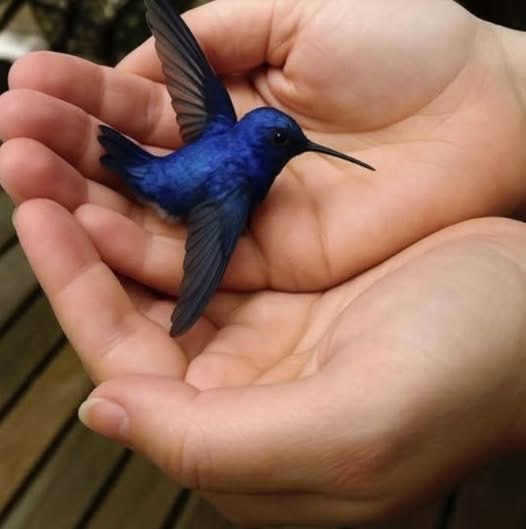
Across many cultures, the hummingbird has long been admired not only for its dazzling appearance but also for the subtle way its presence can transform a moment.
These small, iridescent birds, often no larger than a human thumb, possess a remarkable combination of energy, precision, and fragility that has fascinated humans for centuries.
Their shimmering feathers catch light in every direction, creating a fleeting spectacle that can make even a hurried glance feel like a pause in time.
Despite their tiny size, hummingbirds command attention with their rapid, almost imperceptible movements. They arrive without warning and depart just as suddenly, yet the impression they leave often lingers in memory, sometimes long after they have flown away.
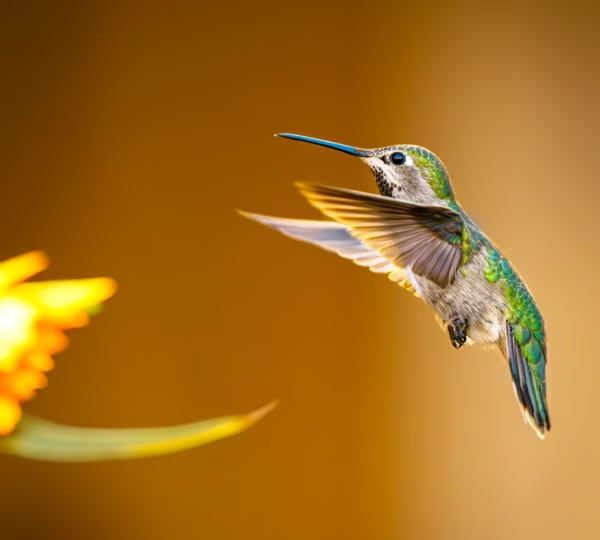
This duality—of being simultaneously ephemeral and unforgettable—is central to their enduring symbolism across the globe.
In the Indigenous traditions of North, Central, and South America, hummingbirds carry profound spiritual meaning. Among the Quechua and Incan peoples of the Andes, for example, the hummingbird is a messenger between the living and the dead, a symbol of resurrection and eternal life.
Its ability to hover in one place while flapping its wings at extraordinary speeds—a rate of up to 80 beats per second for some species—has made it a natural emblem of balance and adaptability.
Many Native American cultures regard the hummingbird as a harbinger of renewal and change, often associating its visit with positive transformations, new beginnings, or the subtle unfolding of opportunity.
In the folklore of the Hopi and Zuni tribes, hummingbirds are also messengers of hope, their vibrant energy a reminder that even in times of scarcity or hardship, life persists and beauty can be found.
Seeing a hummingbird in a garden, near a window, or even during a quiet walk in the woods is sometimes interpreted as a symbolic opening of the season.
It is not a promise of instant fortune or dramatic life shifts, but rather an invitation to notice the smaller rhythms of life—the gentle, often overlooked movements that signify growth, change, or emotional renewal.
For someone navigating grief or carrying emotional burdens, a hummingbird’s appearance can feel especially tender. Its presence may act as a soft reminder of enduring connection and love.
It does not communicate through words but through presence, stirring memory, comfort, and a subtle awareness that love and life continue even amidst absence and loss.
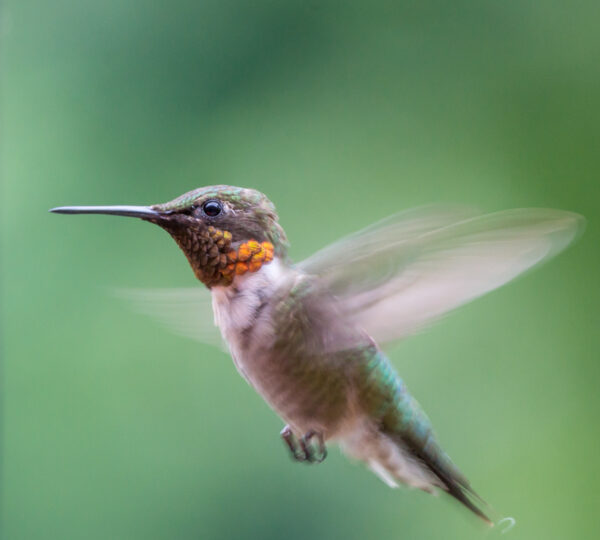
In these moments, the bird’s visit becomes a form of quiet reassurance, a living emblem of the idea that while circumstances may change, the bonds we hold in our hearts do not simply vanish.
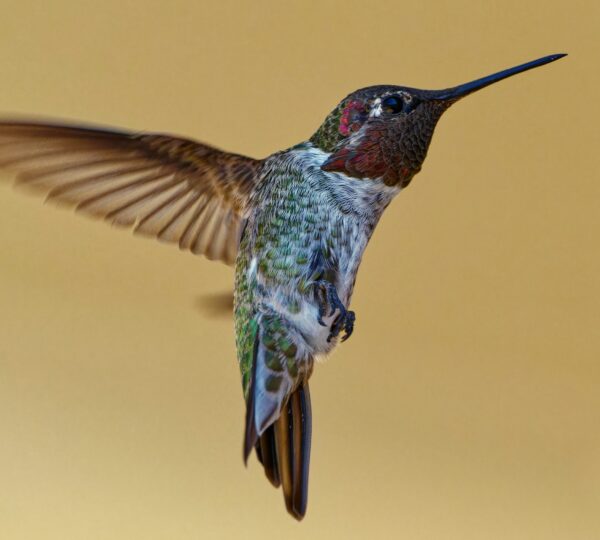
The hummingbird’s behavior itself carries symbolic resonance. Observers often note the fascinating paradox in its flight: the wings blur so quickly that they are nearly invisible, yet the bird can hover perfectly still, suspended mid-air with precision that seems almost supernatural.
This paradox offers a reflection on the human experience: life may rush past in a blur of responsibilities, worries, and distractions, but moments of stillness are always possible if we choose to notice them.
Watching a hummingbird can ground the observer, drawing attention away from racing thoughts and anchoring them in the present. Even a few seconds of attentive observation can reduce mental tension, slow the heartbeat, and restore a sense of calm.
In this sense, the bird’s visit is a gentle form of mindfulness—a reminder that tranquility can exist alongside motion, that peace can be found even within constant activity.
From a biological perspective, hummingbirds are extraordinary creatures. With over 300 species primarily distributed across the Americas, they possess adaptations that make them uniquely capable of sustained hovering flight, including unusually strong chest muscles, specialized wing joints, and extremely high metabolism.
They are also capable of migrating long distances, with some species traveling hundreds of miles across mountains, deserts, and open ocean.
This combination of delicacy and resilience mirrors the symbolic interpretations attributed to them: small yet powerful, transient yet enduring. Their iridescent plumage results not from pigment but from microscopic structures that refract light, creating colors that seem to shift and change with every movement.
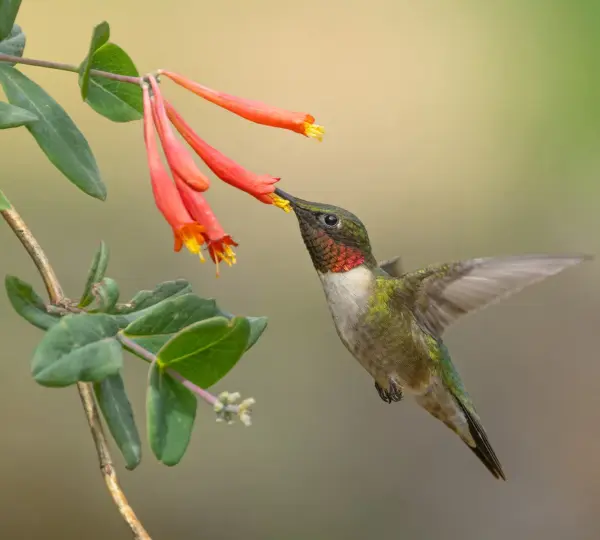
This natural brilliance reinforces their cultural symbolism as messengers of joy, beauty, and ephemeral wonder.
The scientific facts about hummingbirds—though precise and measurable—seem to align perfectly with the myths, stories, and spiritual reflections they inspire.
Across various cultures beyond Indigenous traditions, the hummingbird maintains a place as a symbol of hope, love, and lightness of being.
In Mexican folklore, for example, the hummingbird is connected to love and fertility, often associated with the legendary figure of Huitzilopochtli, the Aztec god of the sun and war. Hummingbirds were believed to carry the energy of the sun, capable of bringing warmth and life to the world.
Similarly, in Caribbean traditions, the bird can symbolize guidance, protection, and the presence of departed loved ones. Even in modern spiritual circles, seeing a hummingbird is frequently interpreted as a sign of encouragement or subtle guidance—a reminder to keep moving forward, to stay alert to beauty, and to remain open to the lessons that life offers in quiet, unexpected ways.
The psychological impact of witnessing a hummingbird should not be underestimated. Humans have a natural response to beauty and novelty, and the hummingbird’s vivid colors, rapid movements, and delicate grace can elicit feelings of awe, wonder, and joy.
Studies in environmental psychology show that observing birds and other wildlife can reduce stress, improve mood, and enhance feelings of connectedness to nature.
The hummingbird, in particular, with its dramatic contrast of speed and stillness, may heighten this effect. People report feeling lighter, more attentive, and emotionally recharged after even brief encounters.
The bird’s unpredictable presence in everyday life—a sudden flash of color at a window or a fleeting visit in the garden—creates a pause, a momentary interruption of routine that allows for reflection, gratitude, and mindfulness.
For those navigating seasons of loss, trauma, or grief, the hummingbird carries a special poignancy. Its visit can be interpreted as a small, gentle affirmation that the spirit and memory of those we love endure.
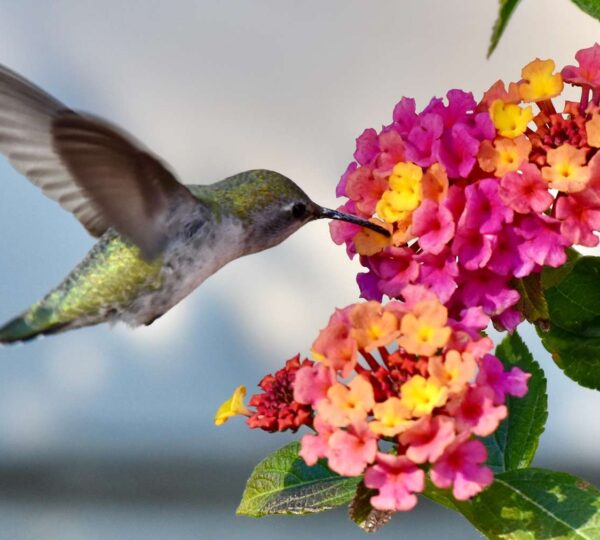
There is no claim of magical intervention here, but the simple, real experience of noticing the bird can create a meaningful emotional shift.
This subtle form of reassurance is consistent with both psychological principles and spiritual traditions: small, tangible signs in our environment can reinforce feelings of hope, connection, and presence.
The hummingbird does not demand attention, nor does it impose an interpretation. Instead, it offers an opportunity to pause, to breathe, and to engage with life in its fleeting, luminous form.
The symbolism of the hummingbird also extends to human emotional resilience. Its remarkable stamina, agility, and adaptability are qualities often admired in personal development and spiritual literature.
Hummingbirds must consume vast amounts of nectar to sustain their energy, yet they do so with elegance and efficiency. They teach us that sustenance, whether physical, emotional, or spiritual, requires effort, attention, and balance.
Observers can draw lessons from the bird’s behavior: how to navigate challenges gracefully, how to balance energy and rest, and how to find beauty and satisfaction in small, daily moments.
In essence, the hummingbird embodies the principle that life’s most profound transformations may emerge not in grand gestures but in continuous, quiet practice.
In literature, art, and poetry, the hummingbird frequently appears as a motif of lightness, fleeting beauty, and delicate power. Its image evokes a sense of the miraculous in the everyday—a reminder that even the most transient moments can carry significance and meaning.
The bird’s quick, darting flight mirrors the rapidity of human thought, while its ability to hover embodies the stillness and focus that we aspire to cultivate.
Writers and artists have long recognized this duality, using the hummingbird to explore themes of impermanence, attention, and the delicate interplay between action and reflection.
Finally, the ethical and ecological dimensions of hummingbirds further enrich their symbolic meaning. As pollinators, they play a crucial role in the health and sustainability of ecosystems.
By visiting flowers, they contribute to plant reproduction and the maintenance of biodiversity. Their presence indicates the vitality of natural habitats, linking human perception of beauty and symbolism with tangible ecological reality.
In this way, the hummingbird reminds us that our appreciation of beauty is intertwined with responsibility for the natural world, and that observing and protecting such creatures allows their symbolic and practical roles to continue.
In conclusion, the hummingbird’s significance is multifaceted, blending beauty, science, culture, and spirituality into a cohesive presence that inspires reflection, mindfulness, and hope.
Its brief, dazzling appearances can shift moments, calm minds, and reassure hearts. Whether interpreted as a spiritual messenger, a symbol of renewal, or a living marvel of nature, the hummingbird offers lessons that resonate across time, culture, and circumstance.
It does not promise miracles, yet it reminds us that life holds moments of light, grace, and renewal—often in the most unexpected forms.
Sometimes transformation does not arrive as a sweeping change but as a small, living presence passing through a day, quietly urging us to breathe, notice, and remain open to the beauty surrounding us. And that, in itself, is a profound and enduring blessing.
