
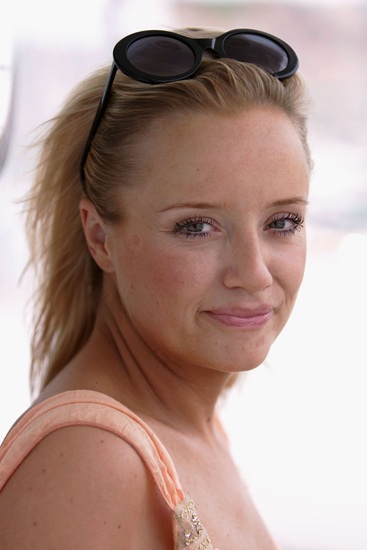
British actress Lucy Davis has publicly shared deeply personal news about her health, revealing that she is living with Stage 4 breast cancer. Davis, widely recognized for portraying Dawn Tinsley in the original British version of The Office, said she had been dealing with the diagnosis largely outside public view for roughly a year and a half before deciding to speak openly. According to Davis, the cancer has spread to areas of her bones, including her spine, right hip, and ribs. She has described her cancer as incurable and said chemotherapy is no longer an option in her individual case.
Davis’s announcement was understandably serious, but she did not want the diagnosis to become the only thing people associate with her. Instead, she explained that she is concentrating on enjoying the life she has, continuing activities that remain important to her, and maintaining the humor that has helped her through difficult periods. Her message combined openness about physical pain with a determination to preserve the personality, interests, and relationships that existed long before cancer became part of her life.
One particularly important part of Davis’s account concerned the first physical change she noticed. She explained that she did not initially discover what she considered an obvious lump. Instead, she noticed a very small hard area that seemed minor enough that she nearly decided not to have it examined. Looking back, Davis encouraged other people not to ignore unfamiliar or concerning changes in their bodies and to seek appropriate medical assessment.

Her experience should not be interpreted as a method for diagnosing breast cancer at home. Breast changes can occur for many reasons, and many are not cancerous. Likewise, breast cancer does not always present in exactly the same way. Davis was describing what happened specifically to her, not providing a universal checklist that can determine whether another person has cancer.
The practical message is therefore more measured: persistent, unexplained, or concerning changes deserve professional evaluation. A healthcare professional can consider someone’s symptoms, age, medical history, examination findings, and appropriate testing. Comparing a personal symptom with something described by a celebrity online cannot provide the same information.
By the time Davis received her diagnosis, she said the disease had already spread beyond the breast. Stage 4, or metastatic, breast cancer refers to breast cancer that has traveled to distant parts of the body. Davis specifically disclosed that her cancer had reached her spine, right hip, and ribs.
The presence of metastatic disease does not mean every person with Stage 4 breast cancer has the same symptoms, treatment options, or outlook. Breast cancer includes different biological subtypes, and treatment can vary considerably depending on tumor characteristics, previous therapies, overall health, and where the disease has spread.
Davis’s statement that chemotherapy is no longer an option should therefore be understood specifically in the context of her own medical situation. It would be inaccurate to interpret her experience as meaning chemotherapy is never used for metastatic breast cancer. Some patients may receive chemotherapy, hormonal treatment, targeted medicines, immunotherapy, radiation, or other therapies depending on their individual circumstances.
Treatment decisions belong with qualified healthcare teams familiar with each patient’s medical information. A celebrity health story can encourage awareness, but it cannot replace individualized medical advice.
Davis has also described the physical challenges created by her illness. Pain can sometimes be significant, she said, and standing or walking for extended periods may become difficult. She therefore occasionally uses a wheelchair when she needs additional mobility support.
Rather than discussing the wheelchair as something embarrassing, Davis incorporated humor into her explanation. She joked that people who see her moving around in one are welcome to help give her a push. The comment reflected the tone found throughout much of her announcement: the medical situation is serious, but she does not want seriousness to remove humor from every interaction.
Using a wheelchair occasionally also does not mean someone is completely unable to walk or participate in ordinary activities. People use mobility aids for many reasons and in different ways. Some may walk short distances while using a wheelchair when pain, fatigue, weakness, or other symptoms make longer distances difficult.
Davis herself emphasized that she still feels capable of working. She expressed a desire to continue acting for as long as circumstances allow because acting remains one of the great joys of her life. Her diagnosis has therefore changed aspects of what she can comfortably do, but it has not removed her interest in her profession.
Humor appears to be particularly important to the way Davis is approaching the situation. She described it as something vital to her and made clear that she does not want friends or other people around her to behave as though illness has suddenly replaced every other part of her identity.
She expressed discomfort with being treated exclusively as someone who is sick. That perspective reflects an issue many people living with serious conditions can encounter: concern from others may be well intentioned, but constant reminders of illness can sometimes make ordinary interactions feel very different.
Of course, different people want different forms of support. Some individuals may want to talk extensively about their diagnosis, while others prefer conversations that have nothing to do with illness. The respectful approach is to listen to the preferences of the person involved rather than assume there is one correct way to provide support.
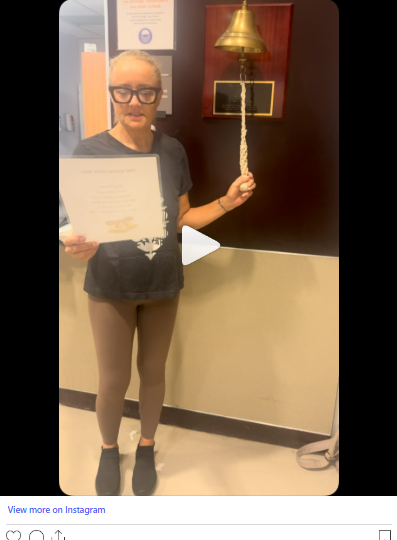
Davis has been unusually direct about another difficult subject as well: death. She said she is not frightened by what eventually comes next and described herself as being at peace with the possibility. Her explanation included a personal spiritual belief that leaving the physical body represents a form of returning home.
That statement should be understood as Davis’s personal spiritual perspective rather than a factual claim about what happens after death. People hold many different religious, spiritual, philosophical, and secular beliefs about mortality, and Davis was explaining the view that personally gives her comfort.
Her concern appears to be directed particularly toward her family. Davis acknowledged that the people closest to someone with an incurable illness can experience enormous emotional pain. She suggested that grieving may ultimately be harder for her relatives than for her because she feels personally at peace with what she is facing.
Serious illness can affect entire families in different ways. Relatives may experience fear, uncertainty, anticipatory grief, practical responsibilities, and changes to everyday routines. There is no single correct emotional response, either for the person living with cancer or for the people who love them.
Davis has nevertheless made clear that she does not intend to spend the present behaving as though her life has already ended. She wants to enjoy herself, continue meaningful work, spend time with people she cares about, and remain involved with causes that matter to her.
Animal rights remain particularly important. Davis has long cared about animal welfare and said she intends to continue that work despite her diagnosis. Maintaining involvement in causes she values appears to be another way of preserving continuity between life before cancer and life after the diagnosis.
Acting provides a similar connection. Davis has worked professionally for decades and described performing as one of her greatest sources of happiness. As long as she remains able and appropriate opportunities exist, she would like that creative work to continue.
For many viewers, Davis is inseparable from Dawn Tinsley, the receptionist she portrayed in Ricky Gervais and Stephen Merchant’s original version of The Office. The BBC series aired in the early 2000s and became one of the most influential British comedies of its era.
Dawn’s relationship with Tim Canterbury, played by Martin Freeman, provided much of the emotional warmth beneath the show’s deliberately uncomfortable workplace humor. Their understated connection gradually developed across the series, eventually becoming one of its most memorable storylines.
Davis’s performance worked partly because Dawn felt like a recognizable person rather than an exaggerated sitcom character. She was stuck in a job she did not particularly enjoy and a relationship that left her dissatisfied, while trying to determine what she actually wanted from life.
That combination of quiet comedy and emotional realism helped make Dawn an enduring character. Even viewers who discovered the British Office years after its original broadcast frequently remember the relationship between Dawn and Tim as one of the show’s defining elements.
Davis had already been acting before The Office made her internationally recognizable. One of her notable earlier credits was Maria Lucas in the BBC’s acclaimed 1995 adaptation of Jane Austen’s Pride and Prejudice.
That production, starring Jennifer Ehle and Colin Firth, became one of the best-known television adaptations of Austen’s novel. Davis’s appearance formed part of an early stage of a career that would eventually span British television, international movies, comedy, fantasy, and major studio productions.
Following The Office, Davis appeared as Dianne in Edgar Wright’s 2004 zombie comedy Shaun of the Dead. The movie combined horror with British comedy and developed an enduring international following.
Her role in the film provided another recognizable credit for audiences who might never have seen her television work. It also demonstrated her ability to move comfortably between different styles of comedy.
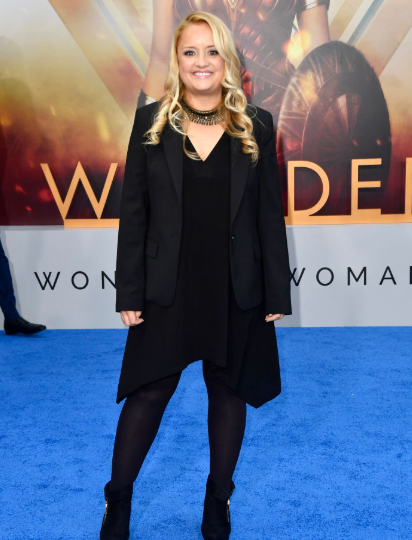
Years later, Davis joined a much larger Hollywood production when she appeared as Etta Candy in the 2017 superhero film Wonder Woman. The movie, starring Gal Gadot and Chris Pine, became a major commercial success and introduced Davis to yet another generation of viewers.
She subsequently took on the role of Hilda Spellman in Netflix’s Chilling Adventures of Sabrina. The series offered a darker interpretation of the Sabrina mythology while retaining the complicated family dynamic between Hilda, Zelda, Sabrina, and the other inhabitants of the Spellman household.
Davis’s Hilda combined warmth, eccentricity, humor, and resilience. The character became a favorite among many viewers and further demonstrated the range of roles Davis had accumulated since first becoming known through British television.
That lengthy career helps explain why her announcement generated such a strong reaction. Different audiences know Davis from different periods: some remember Pride and Prejudice, others discovered her through The Office, while younger viewers may primarily associate her with Wonder Woman or Chilling Adventures of Sabrina.
News of her diagnosis therefore reached people who had followed her work for decades as well as those who encountered it more recently.
Messages of support quickly followed the disclosure. Fans and colleagues expressed affection and concern while praising Davis for the openness with which she had discussed such a personal experience.
Supportive messages can be meaningful, but Davis’s own comments also provide guidance about how she wants to be treated. She does not appear to want every conversation reduced to sympathy or sadness.
That preference deserves respect. A cancer diagnosis is part of her current life, but it does not erase everything else she has been.
This distinction is particularly important in celebrity health reporting. Serious diagnoses can produce headlines that effectively begin writing someone’s obituary while the person is still living, working, laughing, and making plans.
Davis has described her condition as incurable, and that reality should not be minimized. At the same time, it would be equally inappropriate to write about her as though nothing meaningful remains ahead.
She has not publicly provided a precise life-expectancy timeline, and one should not be invented. Prognosis in metastatic cancer varies, and individual outcomes cannot responsibly be predicted from general statistics alone.
Davis’s own focus is on the time she has rather than assigning an exact number to it. She has said she wants that time to contain enjoyment whenever possible.
This does not mean she is pretending cancer is easy. Her comments about pain and mobility make clear that she understands the physical reality of her condition.
Instead, she appears to be allowing difficult and positive experiences to coexist. There can be pain and humor. There can be uncertainty and work. There can be an incurable diagnosis and still be plans for tomorrow.
That complexity is often missing from simplified discussions of serious illness.
People living with advanced cancer are not required to choose between being “brave” and being frightened. They can experience different emotions at different times.
Davis’s peaceful attitude toward her own situation should therefore not become another expectation imposed on other patients.
Someone else facing a similar diagnosis may feel angry, terrified, hopeful, exhausted, optimistic, or several of those things simultaneously. None of those responses automatically represents a failure to cope correctly.
Davis herself acknowledged that people dealing with cancer should be able to approach the experience in their own way.
That message may be one of the most compassionate parts of her announcement.
Her comments about humor describe what works for her rather than a prescription for everybody else. Laughter can help Davis preserve a sense of identity and connection, but another person may find comfort somewhere completely different.
The same applies to continuing employment. Davis wants to keep acting because she feels able to do so and because the work brings her joy.
Another person with metastatic cancer might need or want to stop working. Treatment effects, symptoms, financial circumstances, job requirements, and personal priorities vary significantly.
There is no universal standard for what living well with serious illness should look like.
Davis’s account of the small hard area she initially noticed also deserves similar caution.
Her experience can serve as a reminder to take unexplained changes seriously, but it should not create panic whenever someone notices something unusual.
Many breast symptoms are caused by conditions other than cancer. Proper medical evaluation is what distinguishes one possibility from another.
Likewise, not everyone with breast cancer discovers the disease through a noticeable lump or hard area.
This is why routine screening recommendations and individual medical advice remain important alongside awareness of physical changes.
Readers should follow appropriate guidance from qualified healthcare professionals based on factors such as age, medical history, and individual risk.
Online articles cannot determine an individual’s screening schedule or diagnosis.
The responsible lesson from Davis’s story is simply not to ignore persistent or concerning changes because they seem too small to matter.
Seeking evaluation does not mean assuming the worst. It means allowing a professional to determine whether further investigation is needed.
Davis’s own experience demonstrates why she personally believes that precaution is worthwhile.
Her disclosure also offers another reminder about assumptions based on public appearances.
For roughly a year and a half, she was reportedly living with an advanced cancer diagnosis without broadly sharing that information publicly.
People seeing her work, photographs, or social-media activity could not necessarily know what she was experiencing privately.
The same principle applies far beyond celebrities.
People encountered at work, in stores, online, or in everyday life may be managing circumstances that are not visible from the outside.
That does not mean assuming everyone is secretly ill. It simply provides another reason to avoid judging someone’s situation entirely from appearance.
For Davis, the decision to reveal her diagnosis came when she felt ready.
Keeping the information private beforehand was equally her choice.
People with serious medical conditions have no obligation to disclose their diagnoses publicly simply because others are curious.
Davis’s eventual disclosure allowed her to control the message and explain the situation in her own language.
She could describe what mattered to her rather than allowing speculation to define the story.
That included the difficult details: metastatic disease, pain, limited mobility, and the fact that she understands her cancer cannot be cured.
But it also included everything she refuses to surrender.
Humor.
Acting.
Animal-rights work.
Family.
Ordinary enjoyment.
And her own sense of peace.
Those elements make the announcement much more complete than a headline focused exclusively on Stage 4 cancer.
The diagnosis is undeniably important, but Davis has explicitly resisted allowing it to become her entire identity.
Her career alone contains decades of experiences unrelated to illness.
She has helped create characters that made audiences laugh, provided emotional warmth to beloved television series, appeared in globally successful films, and continued working across different genres.
Cancer cannot retroactively replace that history.
Nor does it automatically determine every remaining chapter.
What comes next medically belongs primarily to Davis and her healthcare team.
What she has chosen to share publicly is how she wants to spend the present.
That means continuing to find reasons to laugh even when circumstances are painful.
It means using a wheelchair when necessary without treating mobility assistance as defeat.
It means accepting that the future is uncertain without spending every remaining day fearing it.
And it means continuing work and advocacy whenever her body allows.
There is something particularly appropriate about humor remaining so important to an actress whose career has provided so much comedy.
But Davis’s message should not be romanticized into the idea that laughter makes cancer easy.
She has been clear that the pain can be extremely difficult.
Humor simply helps her navigate that reality.
That is different from pretending the reality does not exist.
The people around Davis are also part of the story.
Her acknowledgment of their grief recognizes that serious illness affects relationships in complicated ways.
Family members may want to remain optimistic while simultaneously fearing loss.
Friends may struggle to know what to say.
Colleagues may worry about offering help without treating someone as incapable.
Davis has provided one useful answer for those around her: continue seeing the person, not only the diagnosis.
That does not mean ignoring her medical needs.
It means remembering that assistance and ordinary human interaction can exist together.
Someone can need a wheelchair and still want jokes.
Someone can have an incurable illness and still want professional opportunities.
Someone can discuss death while also planning the next enjoyable experience.
Those realities are not contradictions.
They are part of living with uncertainty.
Davis’s public statement therefore works on several levels.
It informs fans about her health.
It encourages people to seek appropriate assessment for concerning changes.
It establishes boundaries around how she wants others to treat her.
And it explains the philosophy helping her navigate an extraordinarily difficult diagnosis.
The message does not promise a particular outcome.
It does not claim that optimism can cure disease.
It does not provide medical instructions for other patients.
Instead, it describes one woman’s experience.
That distinction makes the story both more accurate and more respectful.
Lucy Davis is living with Stage 4 breast cancer that she says has spread to her spine, right hip, and ribs.
She has described the cancer as incurable and said chemotherapy is no longer an option for her.
She sometimes experiences substantial pain and occasionally requires a wheelchair.
Those are the serious realities she has chosen to make public.
But they are not the final sentence of her story.
Davis still wants to act.
She still wants to advocate for animals.
She still wants people around her to laugh.
She still wants to enjoy whatever experiences remain available.
And she has said she is at peace with the uncertainty ahead.
For fans who have followed her from Dawn Tinsley to Hilda Spellman and the many characters in between, the disclosure is understandably difficult news.
Yet Davis herself has chosen not to frame the announcement solely through sadness.
Her message is about acknowledging reality without surrendering everything else to it.
It is about taking physical changes seriously without diagnosing yourself.
It is about accepting help without assuming that assistance removes independence.
It is about allowing each person facing cancer to choose how they navigate the experience.
Most of all, it is about continuing to live while life is still happening.
After keeping her diagnosis largely private for many months, Davis has now decided to share that part of her journey publicly.
She did so with directness about the medical reality, compassion for people facing similar situations, concern for her family, and the unmistakable humor that has accompanied much of her career.
Cancer is now part of Lucy Davis’s story.
But according to Davis herself, it is not the only part.
And as long as she remains able, she intends to keep working, advocating, laughing, and finding as much enjoyment as possible in the life that remains ahead.

