
If you have ever driven through the countryside in the United States, especially across Pennsylvania, Ohio, Indiana, or other rural communities in the East and Midwest, you may have noticed large decorative stars attached to old barns, farmhouses, and wooden buildings. These colorful five-pointed stars often catch the eye from a distance, standing proudly against weathered wood that has witnessed generations of family history. To many travelers, they simply appear to be attractive decorations that add rustic charm to an aging building.
However, for many farming families, these stars represent something much deeper than simple decoration. They reflect centuries of cultural heritage, craftsmanship, and traditions passed from one generation to the next. Barn stars have become one of the most recognizable symbols of rural America. Although they are commonly associated with Amish communities, many historians point out that their origins are actually more closely connected to the Pennsylvania Dutch, descendants of German-speaking immigrants who settled in Pennsylvania during the eighteenth century.
These settlers brought with them artistic traditions, woodworking skills, and symbolic designs that reflected both their cultural heritage and their appreciation for the natural world. Over time, many of these decorative symbols became part of everyday farm life, appearing not only on barns but also on houses, furniture, quilts, and household objects. One of the reasons barn stars remain so fascinating today is that they combine beauty with tradition.
Even people who know little about their history often feel drawn to these striking geometric designs. Some stars feature five points, while others display six, eight, or even twelve points surrounded by circles, flowers, or intricate patterns. Every design tells its own story, reflecting the artistic style and personal preferences of the family that displayed it. Although no two communities used the symbols in exactly the same way, they all shared a common appreciation for craftsmanship and meaningful decoration.
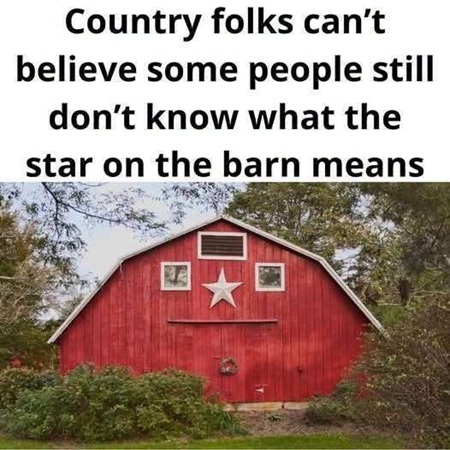
The earliest decorative barn stars began appearing during the late eighteenth and early nineteenth centuries, a period when farming families relied heavily on the land for survival. Agriculture was more than simply an occupation; it was a way of life that depended on weather, healthy livestock, fertile soil, and successful harvests. Because so much of daily life remained beyond human control, people naturally developed traditions that symbolized hope, protection, prosperity, and gratitude. Decorative stars gradually became one of the many visual expressions of these values, blending artistic creativity with local customs and community identity.
Many people mistakenly believe that every barn star was intended as a magical charm capable of protecting property from disaster. Historians caution that this interpretation is often oversimplified. While some families believed certain decorative symbols represented blessings, good fortune, or divine protection, there is little historical evidence that all Pennsylvania Dutch farmers viewed the stars as supernatural objects. Instead, researchers generally agree that the designs combined religious influences, European folk art, family pride, and regional traditions. For many households, displaying a beautifully painted star demonstrated craftsmanship and celebrated cultural identity just as much as it reflected personal beliefs.
Color has always played an important role in traditional barn star designs. Bright red stars became especially popular because red often symbolized strength, energy, courage, and good fortune. Blue represented peace, loyalty, and spiritual calm, making it a favorite choice for families seeking harmony within the home. Green commonly reflected growth, healthy crops, fertility, and the beauty of nature surrounding rural communities. White frequently symbolized purity, honesty, and hope, while black sometimes represented strength, endurance, or protection against hardship. Although interpretations varied from region to region, color selection allowed families to personalize each design according to their own values and traditions.
The geometric patterns found in many barn stars are equally fascinating. Rather than being random decorative shapes, these designs often reflected remarkable mathematical symmetry and artistic precision. Craftsmen carefully measured each point, angle, and circle to create balanced compositions that remained visually appealing from every direction. Some patterns resemble flowers, pinwheels, or sunbursts, while others feature repeating diamonds, hearts, tulips, birds, or stars arranged around a central point. These detailed designs demonstrate the impressive level of skill possessed by rural artisans long before modern manufacturing techniques became widely available.
Closely related to barn stars are the famous Pennsylvania Dutch hex signs, which many people mistakenly assume are exactly the same. While both feature colorful geometric artwork and often appear on barns or farm buildings, hex signs generally include more elaborate circular designs inspired by traditional folk art. Scholars continue to debate the exact origin of the word “hex,” with some suggesting it comes from the German word for six, while others associate it with folk traditions involving protection or blessings. Regardless of their precise origin, hex signs eventually became widely recognized as symbols of Pennsylvania Dutch culture throughout the United States.
As communities expanded throughout the nineteenth century, barn stars gradually evolved beyond symbolic artwork into expressions of family identity. A beautifully maintained barn represented not only economic success but also pride in one’s land, craftsmanship, and reputation within the local community. Adding a carefully painted star allowed families to personalize their property while demonstrating attention to detail and artistic appreciation. In many rural areas, neighbors became familiar with one another’s unique designs, making barn stars almost like visual family signatures passed down through multiple generations.
Despite tremendous technological and cultural changes over the past century, barn stars have never completely disappeared from the American landscape. Instead, they have experienced a remarkable revival as people seek to reconnect with traditional craftsmanship and rural heritage. Today these iconic symbols appear on modern homes, garden sheds, restaurants, community buildings, and decorative fences far beyond the farming communities where they first became popular. While many homeowners no longer attach spiritual meaning to the stars, they continue to appreciate the timeless beauty, history, and sense of belonging these simple yet meaningful symbols represent.
As America became increasingly industrialized during the twentieth century, thousands of traditional family farms disappeared or were transformed into larger commercial operations. Even so, many old barns remained standing, quietly preserving pieces of history that connected modern generations with their ancestors. Barn stars became one of the most recognizable reminders of that rural heritage. Visitors traveling through farming communities often found themselves curious about the colorful symbols decorating weathered wooden structures. What once served as a familiar part of everyday country life gradually became an object of fascination for historians, artists, photographers, and tourists eager to understand the traditions behind these enduring designs.
The popularity of barn stars expanded well beyond Pennsylvania as families carried their traditions into neighboring states. As settlers moved westward, they brought their artistic customs with them, introducing similar decorative symbols throughout Ohio, Indiana, Illinois, Maryland, Virginia, and many other regions. While styles varied depending on local culture and available materials, the central idea remained remarkably consistent. Farmers enjoyed creating beautiful buildings that reflected both their craftsmanship and their family’s identity. Over time, local artisans developed regional variations that made each community’s designs distinctive while still preserving the recognizable appearance of the classic barn star.
Many preservation experts emphasize that barn stars should not be viewed solely as decorative ornaments. Instead, they represent a fascinating blend of immigration history, folk art, architecture, and agricultural life. Every painted star tells part of a larger story about the people who settled new communities, built homes from local timber, cultivated the land, and created traditions that would survive for centuries. In this way, barn stars function almost like historical documents, offering clues about the cultural influences that shaped early American farming communities and the values those families hoped to preserve.
Another reason these symbols continue attracting attention is their connection to traditional craftsmanship. Long before factories produced decorative home accessories, every barn star had to be carefully designed, measured, cut, painted, and installed by hand. Craftsmen often spent many hours ensuring that each point remained perfectly balanced and every color contrasted beautifully with the surrounding wood. This attention to detail reflected the same pride that farmers invested in building sturdy barns, maintaining healthy livestock, and caring for productive fields. For many families, creating a beautiful barn star became another way to demonstrate dedication, patience, and respect for quality workmanship.
In recent decades, barn stars have experienced a remarkable revival as part of the growing appreciation for rural history and traditional American folk art. Homeowners now purchase metal, wooden, or hand-painted stars to decorate houses, garages, patios, gardens, and fences. Many interior designers incorporate barn stars into rustic or farmhouse-style décor, using them to create warm, welcoming spaces that celebrate simplicity and craftsmanship. Although most modern buyers are attracted primarily by their appearance, many also appreciate learning about the rich cultural traditions these symbols represent.
Community art projects have further expanded the popularity of barn stars through the development of barn quilt trails. Unlike traditional painted stars, barn quilts feature colorful geometric quilt patterns displayed on barns and public buildings throughout rural communities. These projects celebrate local history, support tourism, and honor generations of quilting traditions that have long been associated with farming families. Travelers often follow mapped routes to visit dozens or even hundreds of uniquely designed barn quilts, turning ordinary country roads into open-air museums that showcase local creativity and heritage.
Historians also remind us that symbols often evolve over time. While some early families may have associated barn stars with blessings, prosperity, or protection, modern interpretations are generally less focused on superstition. Today, most people view them as expressions of cultural identity, historical appreciation, and artistic beauty rather than objects possessing mystical power. This evolution reflects the way traditions naturally change across generations while still preserving their original cultural significance. Even when beliefs shift, the symbols themselves continue connecting people with the past.
One of the most remarkable aspects of barn stars is their ability to unite history, art, and everyday life within a single, simple design. Unlike expensive monuments or famous landmarks, these stars were created by ordinary families living ordinary lives. They decorated working barns where crops were stored, livestock was sheltered, and generations of children grew up learning the values of hard work and perseverance. Because of this, barn stars remain deeply connected to the lives of everyday people rather than political events or famous historical figures.
Photographers and historians frequently document old barns before they disappear, recognizing that many of these structures are gradually being lost to age, weather, and redevelopment. In countless photographs, the colorful star mounted on the front of the barn remains one of the building’s most recognizable features. Even after decades of exposure to sun, wind, rain, and snow, many of these stars continue standing proudly, serving as silent reminders of the families who once cared for the land. Their endurance symbolizes the lasting strength of community traditions that survive long after individual generations have passed.
Ultimately, the enduring appeal of barn stars lies in their ability to tell meaningful stories without using words. Whether viewed as symbols of heritage, family pride, artistic craftsmanship, or simple rural beauty, they continue inspiring curiosity among people from every background. The next time you notice a colorful star displayed on an old barn or farmhouse, take a moment to appreciate what it represents. Behind that familiar design may lie generations of history, countless hours of careful craftsmanship, and a family’s quiet desire to leave behind something meaningful that future generations would remember.

