
For an entire generation of television viewers, Lindsay Wagner is inseparable from one unforgettable character. Jaime Sommers.
The woman who survived a devastating accident and returned with extraordinary bionic abilities became one of the most recognizable television heroines of the 1970s.
But while “The Bionic Woman” made Wagner famous around the world, her life away from the cameras was considerably more complicated.
She married four times.
Every marriage eventually ended in divorce.
And after marriage number two, Wagner publicly questioned whether she should ever walk down the aisle again.
At the time, she seemed convinced.
But her story was far from finished.
Before the bionic fame
Lindsay Wagner was born in Los Angeles in 1949.
She worked as a model before establishing herself as an actress.
During the early 1970s, she began appearing in television productions and films.
Then came the role that changed everything.
Wagner was cast as Jaime Sommers in “The Six Million Dollar Man,” starring Lee Majors as Steve Austin.
Jaime was initially introduced as Austin’s former love interest.
Audiences responded strongly to the character.
Before long, Wagner was leading her own television series.
“The Bionic Woman” premiered in 1976.

The role transformed her career.
In 1977, Wagner won an Emmy for Outstanding Lead Actress in a Drama Series for her portrayal of Jaime.
She had become a major television star.
But by then, she had already experienced her first marriage and divorce.
Allan Rider was her first husband
Wagner married music publisher Allan Rider in 1971.
She was still years away from becoming internationally associated with Jaime Sommers.
The relationship did not last.
Wagner and Rider divorced in 1973.
She was still in her twenties and her biggest professional success remained ahead of her.
Before long, another relationship became serious.
This time, Wagner’s partner was someone who understood the unpredictable world of acting.
Michael Brandon.
Marriage number two
Wagner and actor Michael Brandon lived together before eventually marrying in 1976.
The timing coincided with one of the most important periods of Wagner’s career.
“The Bionic Woman” was turning her into a television star while both actors were navigating careers in entertainment.
Their relationship lasted several years overall.
But the marriage eventually broke down.
Wagner and Brandon separated in 1979 and later divorced.
Contemporary coverage surrounding the separation included claims about financial disagreements.
Brandon publicly disputed some of those reports and said he had not made the demands attributed to him.
He also acknowledged that the divorce remained painful.
For Wagner, the experience contributed to a very different attitude toward marriage.
At least temporarily.
She wondered whether two marriages were enough
In March 1980, Wagner appeared on the cover of People magazine.
She was discussing both her career and personal life while appearing in the television adaptation of “Scruples.”
Her character, Billy Ikehorn, had experienced multiple marriages.
Wagner noticed the parallel.
By that point, she had already been divorced twice herself.
She spoke candidly about the possibility of marrying again.
Her comments suggested she believed repeating the pattern could create unnecessary pain.
Another marriage did not seem like something she wanted.
It sounded almost final.
Then life changed again.
Henry Kingi became her third husband
Wagner eventually became involved with stunt performer and actor Henry Kingi.
Kingi had built a substantial career performing stunt work for film and television.
The two knew each other professionally before their relationship developed.

In 1981, they married.
For Wagner, this marriage marked the beginning of another major part of her life.
Motherhood.
Wagner and Kingi welcomed a son, Dorian, in 1982.
Their marriage, however, did not last.
The couple divorced in 1984.
Their connection nevertheless continued through family.
Wagner and Kingi also became parents to another son, Alex, born in 1986.
The actress who had once questioned whether she would marry again had now experienced a third marriage.
There would still be one more.
Lawrence Mortorff was husband number four
Several years later, Wagner again decided to marry.
In 1990, she married film producer Lawrence Mortorff.
Reports from the time described the wedding as a private ceremony in West Los Angeles.
It was Wagner’s fourth marriage.
For Mortorff, it was his second.
The marriage lasted approximately three years.
Wagner and Mortorff divorced in 1993.
She did not marry again.
Looking only at those dates creates a simple timeline.
Four marriages.
Four divorces.
But dates cannot explain everything that happens inside a relationship.
And they certainly cannot summarize an entire life.
Divorce records do not tell the complete story
Celebrity relationships often become simplified into winners, losers and blame.
Real relationships rarely work that neatly.
Public records can establish that a marriage occurred.
They can establish that it ended.
Interviews may provide additional perspectives from the people involved.
But outsiders cannot reliably reconstruct every private conversation or determine responsibility for an entire relationship from headlines alone.
That is particularly important when discussing Wagner’s marriage to Henry Kingi.
Some older entertainment stories made dramatic claims about how their relationship began.
Those claims should not automatically be repeated as established facts without strong evidence.
What is documented is much simpler.
Wagner and Kingi married.
They became parents.
Their marriage ended.
And Wagner continued moving forward.
Her career lasted much longer than the original series
“The Bionic Woman” ended its original television run in 1978.
Wagner’s association with Jaime Sommers did not.
She returned to the character in later television reunion movies connected with “The Six Million Dollar Man.”
Meanwhile, her broader acting career continued.
Wagner appeared in numerous television movies, series and films.
Her work included productions such as “Nighthawks” and “Martin’s Day,” along with a long list of television roles.
The bionic heroine remained her signature character.
But Wagner never stopped being more than Jaime Sommers.
Over time, another side of her public life became increasingly visible.
Her interests moved beyond acting
Wagner developed a strong interest in personal development and wellness.
She wrote books.
She participated in workshops.
She explored topics involving food, health and approaches to personal well-being.
Those interests gave her career an unusual second dimension.
Some performers spend decades trying to escape the character that made them famous.
Wagner did not need to reject Jaime Sommers.
Instead, she allowed other interests to exist alongside the character.
She could appear at an event celebrating classic television and then discuss subjects completely unrelated to fictional bionic technology.
That flexibility helped her public life continue long after the television landscape of the 1970s disappeared.
Motherhood became part of the story too
Away from acting, Wagner raised her sons, Dorian and Alex.
That chapter rarely receives the same attention as her marriages or television career.
But it became an important part of her life.
For audiences, Wagner existed inside television screens.
For her children, she was their mother.
Those two realities unfolded at the same time.
And as the decades passed, the actress who had once been presented as a glamorous young television star became something else.
A veteran performer with an increasingly long history behind her.
Fans never completely let Jaime Sommers go
Classic television has an unusual ability to preserve actors at a particular age.
Turn on an old episode of “The Bionic Woman,” and Wagner is instantly back in the 1970s.
The hairstyle returns.
The clothes return.
The famous slow-motion sequences return.
And, of course, so does that unmistakable bionic sound.
But the person who played Jaime continued living.
Wagner aged.
Her career evolved.
Her family grew.
Her priorities changed.
Decades later, fans still wanted to meet her.
Convention appearances and interviews kept connecting Wagner with audiences who remembered the original series and younger viewers discovering it later.
In 2026, that connection was still visible.
At 77, she remains connected with audiences
Ahead of Comic Con Northern Ireland in September 2026, Wagner participated in media appearances connected with the event.
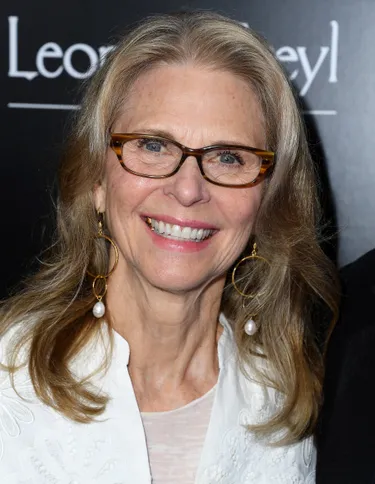
At 77, she remained recognizable to generations of fans.
Her appearance had naturally changed from the young actress permanently preserved in episodes of “The Bionic Woman.”
Her hair is now white.
The decades are visible.
That is simply aging.
And there is something striking about seeing the person who played an almost superhuman television character embracing an entirely human process.
Time.
Aging does not erase what came before
Public discussion of actresses can sometimes treat visible aging as though it needs to be explained or defended.
It does not.
Wagner has lived more than half a century since Jaime Sommers first made her famous.
Those decades contain a remarkable amount of experience.
She became an Emmy winner.
She raised two sons.
She continued acting.
She wrote.
She taught.
She explored new professional interests.
She experienced relationships that began and ended.
And she remained connected with people who first watched her work decades earlier.
The white hair and lines that come with age are not contradictions of the young woman audiences remember.
They are evidence that life continued after the credits rolled.
Four husbands are only four chapters
Allan Rider.
Michael Brandon.
Henry Kingi.
Lawrence Mortorff.
Those four names will always appear in biographies of Lindsay Wagner.
Each man was part of a different period of her life.
Each marriage ended.
But defining Wagner primarily through those divorces would miss most of her story.
Her professional relationship with audiences proved far more enduring.
“The Bionic Woman” survived in popular culture.
Her Emmy remains part of television history.
Her later work expanded far beyond one character.
And Wagner continued building a life after the period when celebrity magazines were documenting her marriages.
Perhaps that is the larger perspective her story deserves.
The irony is difficult to miss
Jaime Sommers became famous as a character who had to rebuild her life.
After catastrophe, she began again.
Wagner’s real life was obviously very different from that fictional story.
There were no bionic implants.
No superhuman abilities.
No dramatic television soundtrack.
But there were several moments when one chapter ended and another began.
A marriage ended.
Life continued.
A television series ended.
The career continued.
Hollywood changed.
Wagner adapted.
Years became decades.
And the young actress audiences remembered became a woman in her late seventies who could look back on an enormous amount of life.
In 1980, after two divorces, Lindsay Wagner wondered whether another marriage would simply repeat the past.
She eventually married twice more.
Neither marriage lasted permanently.
But perhaps permanence is the wrong measurement for the larger story.
Her four marriages ended.
Her role as a mother continued.
Her interests evolved.
Her work endured.
And nearly half a century after Jaime Sommers became a television phenomenon, people still want to hear from Lindsay Wagner.
Four marriages are part of her biography.
They are not its conclusion.
Because the most enduring relationship in Wagner’s public life may have been the one nobody could have predicted when she first stepped in front of a camera.
The connection between an actress, one unforgettable character, and generations of viewers who never completely forgot either one.
