
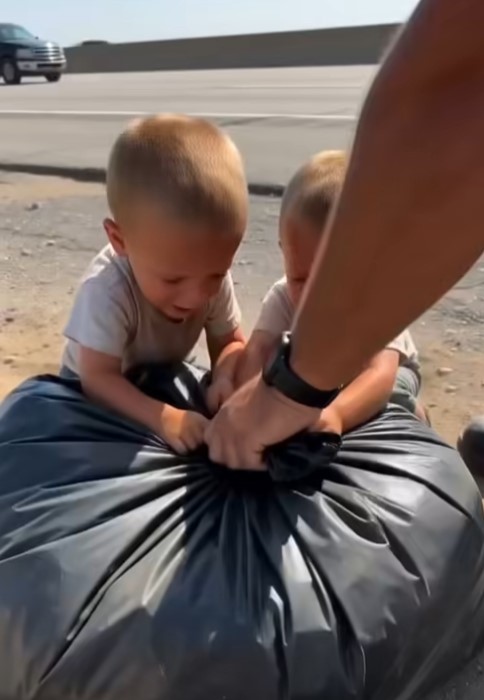
During a routine patrol on a remote desert highway in the middle of a hot summer afternoon, a highway officer encounters an unexpected situation that quickly escalates into a coordinated welfare and rescue response. The area is quiet, with long stretches of open road, intense heat, and very little traffic, making any unusual sight immediately noticeable to trained patrol officers. While driving along the interstate, the officer spots two very young children sitting near the roadside shoulder.
Their presence alone in such a dangerous and isolated environment immediately raises concern. The children appear to be very small, likely toddlers, and are sitting close to a large bag placed beside them. Their behavior suggests hesitation and a strong attachment to the item, which adds to the mystery of the situation.
The officer approaches carefully, ensuring not to startle them, and begins asking simple questions to assess their condition. The children, however, are unable to clearly explain how they arrived there or where their guardians might be. Instead, they remain focused on the bag, appearing cautious and uncertain. Given the extreme heat and risk of dehydration, the officer prioritizes their immediate safety.
The children are moved to a safer location, away from direct sunlight and traffic hazards. Once inside a cooled environment, they are given water and allowed to rest. At this point, they appear physically tired but stable. The officer then inspects the area where they were found, including the bag they had been guarding closely.
Inside the bag are personal belongings and clothing items, but nothing that immediately clarifies the situation. Instead of providing answers, the discovery deepens the uncertainty. Recognizing that the situation may involve missing persons or a larger incident, the officer contacts dispatch to request additional support and child welfare assistance.
As the situation develops, investigators and support teams begin gathering information. The children provide limited but important details, mentioning that they may have been traveling with family and referencing a nearby location that resembles an abandoned roadside rest area. Although the information is fragmented, it becomes the first key lead in the investigation.
Officers proceed to the described area, where they locate an old and largely unused rest stop in a remote section of the desert. The environment shows little recent activity, and the surrounding terrain is open and exposed. Behind one of the structures, they find a vehicle that appears to have been left there under unclear circumstances.
Despite locating the vehicle, there are no immediate signs of all family members present. This shifts the situation into a broader search effort. Officers begin examining the surrounding area for footprints or signs of movement, carefully following any trace that could indicate where individuals may have gone after leaving the vehicle.
The search expands into the surrounding desert terrain, where conditions are challenging due to heat, distance, and limited shelter. The situation becomes increasingly urgent, as exposure to such an environment can quickly become dangerous. Responders continue methodically, following subtle signs that suggest movement toward a more distant structure.
Eventually, the search leads officers to an isolated building further away from the main highway. Inside, they locate individuals who appear to be part of the same family group. One adult is found in need of medical attention, along with another young person who is initially frightened and confused by the arrival of authorities.
Once communication is established and the situation is explained calmly, it becomes clear that the individuals are connected to the two children previously found near the highway. Tension decreases as trust is built, and the focus shifts immediately to providing medical care and ensuring safety for everyone involved.
Emergency medical services are called to the scene, and a medical evacuation is arranged for the injured adult. Family members are transported to appropriate care facilities where treatment and evaluation can be provided. At this stage, the primary objective becomes stabilization, safety, and reunification.
As investigators review the sequence of events, it becomes clear that the family had experienced a difficult and stressful situation that led to confusion and separation. The children’s actions, including staying close to the bag, are later understood as instinctive behavior rather than deliberate choices, shaped by fear and limited understanding of their surroundings.
Support teams, including social services, medical staff, and investigators, work together to ensure the family receives care and assistance. The children are provided with comfort, food, and a safe environment while the adults receive medical treatment and further evaluation. Emotional support is also prioritized during the recovery process.
Over time, the incident is analyzed as part of emergency response procedures in remote environments. Officers involved reflect on how quickly situations can escalate in extreme conditions and how important early intervention and coordinated response are in protecting vulnerable individuals.
In the end, what began as a routine highway patrol turns into a successful rescue operation. The quick response of the officer and the coordinated effort of multiple agencies ensure that a vulnerable family is located, protected, and given access to the help they need.
The most important outcome of the entire event is the safe recovery and reunification of the family. It serves as a reminder that even in isolated and harsh environments, timely awareness and professional response can make a critical difference in preventing tragedy and ensuring safety.

