
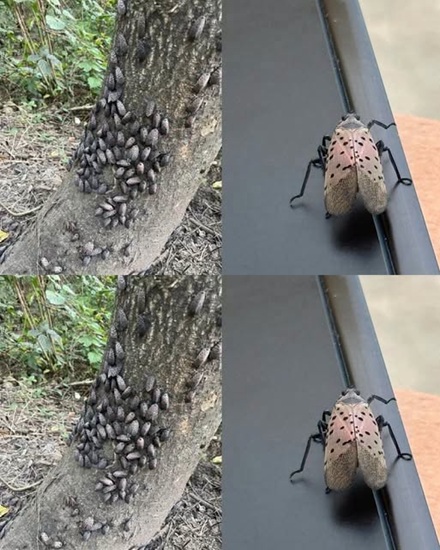
A peaceful afternoon in the garden can quickly become concerning when homeowners notice an unfamiliar insect gathering on trees, outdoor furniture, or even parked vehicles. In recent years, one invasive species has attracted growing attention across several regions of the United States because of the significant damage it can cause to plants and agricultural crops. Known as the Spotted Lanternfly (Lycorma delicatula), this colorful insect is native to parts of Asia but has established populations in the United States after first being detected in Pennsylvania in 2014.
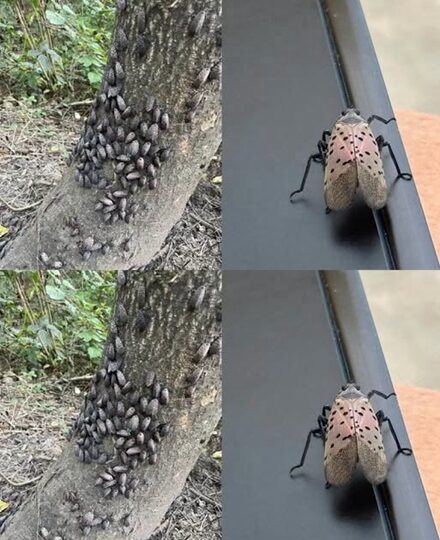
Since then, agricultural agencies and researchers have worked extensively to slow its spread and educate the public about recognizing and reporting the insect. Although the adult spotted lanternfly has an attractive appearance, its presence can create serious challenges for homeowners, farmers, vineyards, orchard managers, and forestry professionals. Adult lanternflies measure approximately one inch long and have gray forewings decorated with black spots.
When they open their wings, they reveal striking bright red hindwings with black and white markings, making them relatively easy to identify. Despite their colorful appearance, experts emphasize that these insects should not be mistaken for harmless garden visitors because large populations can place considerable stress on many types of trees and plants.
Unlike insects that damage plants by chewing leaves, spotted lanternflies feed by inserting specialized mouthparts into stems and trunks to extract sap from plants. As they consume large amounts of sap, they excrete a sugary liquid known as honeydew. While honeydew itself is not toxic, excessive amounts can create additional problems by coating leaves, branches, outdoor furniture, sidewalks, vehicles, and other nearby surfaces. The sticky residue often attracts ants, bees, wasps, and other insects while also encouraging the growth of a dark fungus called sooty mold.
Sooty mold develops on the honeydew rather than directly infecting the plant itself. However, when the black fungal growth covers leaves, it can reduce the amount of sunlight reaching the plant’s surface, interfering with normal photosynthesis. Over time, repeated heavy infestations may weaken trees and vines, reduce fruit production, slow plant growth, and increase vulnerability to other environmental stresses. Although healthy mature trees often survive lanternfly feeding, repeated infestations can significantly reduce their overall health, especially when combined with drought, disease, or other pests.
One reason the spotted lanternfly has spread so successfully is its complex life cycle. During late spring, newly hatched nymphs emerge as tiny black insects covered with bright white spots. These immature insects cannot fly but are highly active and frequently jump between plants while feeding. As summer progresses, the nymphs grow larger and develop distinctive red coloration mixed with black and white spots. By late summer and early autumn, they transform into fully winged adults capable of short flights and rapid movement between host plants.
Researchers explain that although adult spotted lanternflies possess wings, they are not considered strong long-distance fliers. Instead, they often rely on hopping, gliding, and short bursts of flight to move between nearby trees and vegetation. Even more importantly, the species spreads over much greater distances by accidentally hitchhiking on vehicles, trailers, outdoor furniture, firewood, landscaping equipment, shipping materials, and other objects transported by people. Because egg masses are well camouflaged, they can easily go unnoticed and be carried hundreds of miles before hatching.
The spotted lanternfly feeds on more than 70 different plant species, including maples, walnut trees, willow trees, birch trees, grapevines, hops, fruit trees, and numerous ornamental plants. However, one plant plays an especially important role in its life cycle: the invasive Tree of Heaven (Ailanthus altissima). Native to China, this fast-growing tree has become widespread throughout many parts of North America and serves as one of the lanternfly’s preferred host plants. Although lanternflies feed on many species, researchers frequently observe particularly large populations gathering on Tree of Heaven during parts of the year.
Because of the potential economic impact, agricultural agencies have devoted significant resources to monitoring spotted lanternfly populations. Vineyards are considered particularly vulnerable because heavy infestations may reduce grape production and weaken vines over time. Orchard owners and hardwood industries also monitor lanternfly activity carefully, as repeated feeding can negatively affect plant health and productivity. While not every infestation results in severe damage, early detection and management are considered essential for limiting long-term impacts on agriculture and natural ecosystems.
Fortunately, homeowners can take several practical steps if they discover spotted lanternflies on their property. Learning to identify each stage of the insect’s life cycle is one of the most important first steps. Early detection allows property owners to remove insects before populations become established. State agricultural departments also encourage residents to inspect vehicles, outdoor equipment, trailers, campers, and firewood before traveling from areas where lanternflies are known to occur. Preventing accidental transportation remains one of the most effective ways to slow the insect’s continued spread into new regions.
As scientists continue studying the spotted lanternfly, one of their primary goals is understanding how to manage its spread while minimizing harm to native wildlife and beneficial insects. Because the species has few natural predators in North America, its populations can increase rapidly under favorable conditions. Birds, spiders, praying mantises, and certain insects have occasionally been observed feeding on lanternflies, but researchers note that these predators currently do not provide enough natural control to significantly reduce large infestations. For this reason, state agriculture departments continue encouraging public participation in monitoring and reporting the insect.
One of the most effective preventive measures begins during the fall and winter months when adult lanternflies lay egg masses. These egg masses are often covered with a gray or brown protective coating that resembles dried mud, making them surprisingly difficult to notice. They may be found not only on tree trunks but also on fences, rocks, outdoor furniture, recreational vehicles, trailers, firewood, and even construction materials. Each egg mass can contain dozens of eggs, meaning that removing just one cluster may prevent many young lanternflies from hatching the following spring.
Agricultural experts recommend carefully scraping egg masses into a container filled with rubbing alcohol or hand sanitizer to destroy the eggs. Simply knocking the egg mass onto the ground is generally not sufficient because many eggs may survive. Property owners are encouraged to inspect outdoor equipment and vehicles before traveling, particularly if they live in or have visited areas where spotted lanternflies are already established. This simple habit helps reduce the accidental spread of the insect into unaffected regions.
Another important management strategy involves controlling Tree of Heaven, the invasive tree species that serves as one of the lanternfly’s favorite host plants. Because the tree spreads aggressively and competes with native vegetation, many landowners already remove it as part of invasive plant management programs. In some situations, professional arborists may recommend leaving a limited number of carefully managed “trap trees.” These trees can then be treated with approved systemic insecticides under professional guidance, attracting lanternflies while helping reduce local populations. Experts caution that pesticide use should always follow local regulations and manufacturer instructions to minimize risks to people, pets, and beneficial insects.
Some homeowners also use sticky bands wrapped around tree trunks to capture young lanternfly nymphs as they climb upward to feed. While these traps can reduce nymph populations, wildlife specialists strongly recommend installing protective wire mesh or hardware cloth over the sticky surface. Without these protective barriers, birds, squirrels, butterflies, and other non-target wildlife can become accidentally trapped. Using properly designed traps helps improve lanternfly control while protecting native species that play valuable roles in local ecosystems.
Public awareness has become one of the most valuable tools in managing this invasive insect. State Departments of Agriculture and Cooperative Extension Services regularly publish educational materials explaining how to identify spotted lanternflies, recognize egg masses, and report new sightings. In regions where populations are still relatively small, early reports from homeowners can help agricultural officials respond quickly before the insect becomes firmly established. Community cooperation has therefore become an essential part of slowing the lanternfly’s continued expansion across North America.
Researchers also continue investigating environmentally responsible methods for long-term control. Scientists are studying naturally occurring fungi, parasitic insects, biological control agents, and improved trapping techniques that may eventually help reduce lanternfly populations without causing unnecessary harm to native wildlife. Because invasive species management often requires years of research and coordinated effort, experts emphasize that no single solution currently exists. Instead, successful management depends on combining monitoring, public education, habitat management, and targeted control measures where appropriate.
Although the spotted lanternfly has received widespread media attention, experts encourage homeowners not to panic if they encounter one. A single insect does not necessarily indicate a severe infestation. Instead, residents should familiarize themselves with guidance provided by their local agricultural authorities regarding reporting procedures and recommended management practices. Remaining informed allows communities to respond appropriately while avoiding unnecessary concern or actions that could negatively affect beneficial insects and local biodiversity.
Ultimately, the story of the spotted lanternfly illustrates how interconnected modern ecosystems have become. Global trade and transportation make it possible for invasive species to reach entirely new environments where natural population controls may not exist. Protecting forests, vineyards, orchards, gardens, and native plants therefore depends not only on scientific research but also on public awareness and responsible action. By learning to recognize the spotted lanternfly, inspecting outdoor equipment, removing egg masses when appropriate, and following guidance from agricultural experts, homeowners can contribute to broader conservation efforts. Working together, communities, researchers, and land managers can help reduce the impact of this invasive species while preserving healthy landscapes for future generations.

