
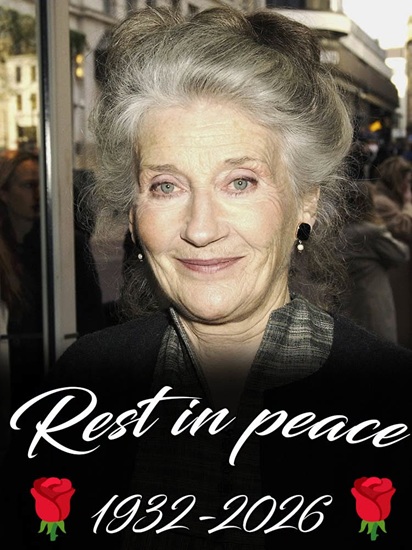
Phyllida Law, the respected Scottish actress whose work across theatre, television and film spanned more than six decades, has died at the age of 94. Law, also widely known as the mother of actresses Emma Thompson and Sophie Thompson, died on July 27, 2026. Her longtime personal manager, Jacky Leggo, later confirmed her death, saying that Law passed away peacefully at home while surrounded by members of her family. A specific cause of death was not publicly announced, and no further medical details have been released.
Born Phyllida Ann Law in Glasgow, Scotland, on July 6, 1932, Law developed creative interests early in life. Acting was not initially the career she imagined for herself. She was interested in drawing and originally considered working in stage design, a profession that would have kept her closely connected to theatre but primarily behind the scenes. Her path eventually changed when performance became increasingly important to her, leading to a professional acting career that would continue for generations.
Law trained at the Bristol Old Vic Theatre School, an institution closely associated with British theatrical tradition. Her early experience gave her a foundation in stage performance at a time when repertory theatre played an important role in developing young actors. She began working professionally during the 1950s and gradually established herself as a versatile performer capable of moving between dramatic and comedic roles.
During those early years, Law met actor, writer and broadcaster Eric Thompson. The couple married in 1957 and later had two daughters, Emma and Sophie. Thompson became especially familiar to British audiences through his involvement with the English-language version of the children’s television program The Magic Roundabout. Their home became deeply connected with acting, writing and storytelling.
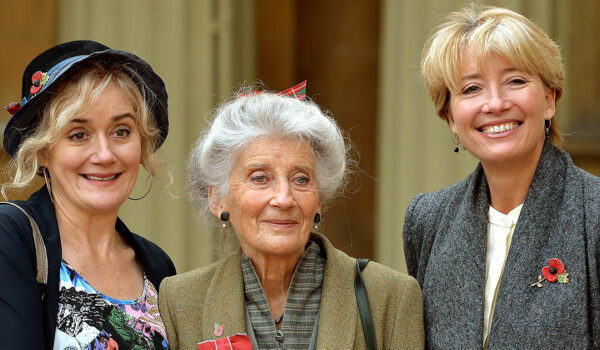
Eric Thompson died in 1982 at the age of 53. By that point, Law had already built a substantial professional career of her own, while their daughters were beginning to establish their paths in the performing arts. Emma Thompson would eventually become an internationally recognized actress and screenwriter, while Sophie Thompson developed an extensive career across theatre, television and cinema.
Long before either daughter became widely known, however, Law was already a working actress. Her early television credits included appearances in British programs such as Dr Finlay’s Casebook, Dixon of Dock Green and The Troubleshooters. Those roles were part of a career that steadily expanded as television became an increasingly important part of British entertainment.
The stage remained equally significant throughout Law’s professional life. She appeared in numerous theatrical productions and worked with respected actors, directors and playwrights. Among her notable stage credits was A Day in the Death of Joe Egg, a play by Peter Nichols that became an important work of modern British theatre.
In 1971, Law appeared alongside Alec Guinness in John Mortimer’s A Voyage Round My Father. She subsequently performed in Alan Bennett’s Habeas Corpus, demonstrating the comedic ability that became an important element of her stage career. Her work allowed her to move comfortably between emotionally restrained characters and performances requiring sharper comic timing.
Law later became part of the National Theatre company. During the late 1970s, her stage work included productions such as J.B. Priestley’s When We Are Married and W. Somerset Maugham’s For Services Rendered. Her theatre credits also included Alan Ayckbourn’s Absent Friends and work connected with other major British playwrights.
Her stage career continued into later decades rather than becoming merely an early chapter before television and film. Law appeared in the London production of La Cage aux Folles during the 1980s and continued taking theatrical roles while maintaining an increasingly active screen career.
This ability to move between mediums became one of the defining characteristics of Law’s professional life. She was equally at home appearing before a theatre audience or playing a supporting role for television and cinema. That flexibility helped sustain her career through enormous changes in the entertainment industry.
Film audiences became increasingly familiar with Law during the 1990s. One of the particularly interesting aspects of this period was her opportunity to work professionally with her daughters. Rather than being known solely because of their relationship, Law appeared alongside them as an experienced performer with decades of work already behind her.
She appeared in the 1992 ensemble comedy-drama Peter’s Friends, directed by Kenneth Branagh. The movie featured an ensemble cast that included Emma Thompson and several other prominent British performers. Law’s participation added another screen credit to a career that was becoming increasingly visible internationally.
The following year, she appeared in Branagh’s film adaptation of William Shakespeare’s Much Ado About Nothing. Law portrayed Ursula, while Emma Thompson played Beatrice. The film also featured Kenneth Branagh, Denzel Washington, Keanu Reeves and other well-known actors.
For Law, the project connected several strands of her professional life. Shakespeare and theatre had been important parts of her background, while cinema was introducing her performances to audiences far beyond the British stage. Working alongside her daughter added another personal dimension without diminishing Law’s individual contribution.
One of the most significant mother-daughter collaborations came several years later in The Winter Guest. Released in 1997 and directed by Alan Rickman, the film featured Law and Emma Thompson playing mother and daughter. The story explored grief, family relationships and emotional distance against a cold Scottish landscape.
Their real-life relationship inevitably attracted attention, but their performances stood on their own. The Winter Guest became one of the projects most closely associated with Law’s later film career and remains an important example of the professional connection she shared with Emma.
Law also appeared professionally with her younger daughter, Sophie Thompson. Both were part of the 1996 film adaptation of Jane Austen’s Emma, starring Gwyneth Paltrow. Sophie portrayed Miss Bates, while Law played her mother.
These collaborations created an unusual family legacy within British acting. Law had established her career decades earlier, and both daughters subsequently developed substantial careers of their own. Their occasional appearances together allowed audiences to see three members of the same family participating in productions while maintaining distinct professional identities.
Another widely recognized collaboration between Law and Emma Thompson arrived with the 2005 film Nanny McPhee. Thompson wrote the screenplay and starred as the title character, while Law appeared in the production as Mrs. Partridge. The family fantasy became successful with audiences internationally and introduced Law to another generation of viewers.
Her film work extended beyond projects involving her daughters. Law appeared in a range of productions during her long career, including the 2002 adaptation of H.G. Wells’ The Time Machine. Her screen credits demonstrate the variety of roles she accepted rather than a career built around one specific genre.
British television remained an important part of her work throughout later decades. Law appeared in recognizable series including Midsomer Murders, Waking the Dead, Foyle’s War, Rosemary & Thyme, Agatha Christie’s Poirot and Doc Martin. These appearances made her a familiar face even to viewers who may not have known her extensive theatrical background.
She also appeared in the television comedy-drama Kingdom, starring Stephen Fry. Law portrayed Aunt Auriel, a recurring character who allowed her to bring both warmth and humor to the series. By then, she had already been performing professionally for approximately half a century.
The length of Law’s career was itself remarkable. She began working in an era when television was still developing into the dominant cultural medium it would become and continued acting well into the age of streaming entertainment. Across those decades, styles of filmmaking, television production and theatre changed significantly.
Law adapted without losing the qualities that had originally established her as a performer. She could play serious drama, comedy, period material and contemporary characters. Supporting roles often benefited from the experience and understated presence she brought to them.
Acting was also not her only creative pursuit. The interest in art and design that originally attracted her to the theatre never completely disappeared. Law remained interested in visual creativity and also worked in areas connected to costume and design.
Later in life, she became an author as well. Her books offered readers glimpses into family relationships and personal experiences beyond her acting career. Among the subjects she addressed was the experience of caring for her mother as dementia affected their family.
Her writing combined difficult subjects with the humor that people familiar with Law’s personality often associated with her. Rather than presenting family life as simple or sentimental, she was able to discuss affection, frustration and responsibility with openness.
Law’s contributions to drama and charitable work eventually received formal recognition. In 2013, the University of Glasgow awarded her an honorary doctorate. The recognition connected her accomplished professional career with the Scottish city where she had been born more than eight decades earlier.
The following year, Law was appointed an Officer of the Order of the British Empire, commonly known as an OBE. The honor recognized her services to drama and charity. By then, she had spent more than half a century contributing to British cultural life.
Her charitable interests included support for people working throughout the theatre industry. She was associated with the Theatrical Guild, an organization that assists people working in backstage and front-of-house professions. That involvement had a particularly appropriate connection to Law’s original interest in working behind the scenes.
Although later headlines frequently identified Law as Emma Thompson’s mother, that description represents only one part of her story. Her professional career was already well underway long before Emma and Sophie became actresses. She worked with significant theatrical companies and appeared in important productions across several decades.
At the same time, Law’s relationship with her daughters was undeniably an important part of her life and public story. Their shared profession created opportunities for them to collaborate in ways relatively few families experience. Those projects preserved pieces of their real-life connection within performances that audiences can continue watching.
Emma Thompson eventually earned international recognition not only as an actress but also as a screenwriter. Sophie Thompson likewise became known for extensive work on stage and screen. Their accomplishments contributed to a family history deeply rooted in British entertainment.
Law nevertheless maintained her own identity throughout that history. She continued accepting roles rather than simply withdrawing from acting as her daughters became famous. Her career remained active into her later years, demonstrating an enduring connection to performance.
Her final screen role came in the 2020 romantic comedy Then Came You, written by and starring Kathie Lee Gifford. The appearance brought Law’s screen career into a seventh decade, an extraordinary span for any professional performer.
By the time of that final film, the entertainment world Law had entered during the 1950s had changed almost beyond recognition. Yet the essential skills behind her work—character, timing, observation and communication—remained relevant.
Law’s longtime manager, Jacky Leggo, confirmed that she died on July 27, 2026, shortly after celebrating her 94th birthday earlier that month. Leggo said Law died peacefully at home with her family around her.
No specific cause of death was publicly announced. In the absence of an official medical explanation, speculation about the circumstances of her death would be inappropriate. The confirmed information is that her final moments were spent at home surrounded by those closest to her.
Law is survived by her daughters, Emma and Sophie Thompson, as well as four grandchildren. For them, her death represents a personal family loss separate from the public attention surrounding her career.
For audiences, however, there remains an unusually extensive body of work through which Law can be remembered. Her career included classical theatre, contemporary plays, television mysteries, comedy, literary adaptations, family films and intimate dramas.
Someone who first encountered her through Nanny McPhee can discover a different performance in The Winter Guest. Someone familiar with her television appearances can look back at a theatrical career stretching to the middle of the 20th century.
That breadth helps explain why Law’s professional legacy cannot be reduced to one famous role. She was primarily a character actress whose strength came from repeatedly contributing memorable performances to larger stories.
Such careers are essential to theatre and film even when they do not always produce the level of celebrity associated with leading roles. Law’s longevity demonstrated the value of consistency, adaptability and craft.
Her collaborations with Emma and Sophie provide an additional dimension to that legacy. Audiences can watch Law performing alongside her daughters while knowing that all three women developed substantial careers independently.
The Thompson-Law family’s connection to performance also extended to Eric Thompson, making storytelling a central element of family life across generations. Law remained an important figure at the center of that artistic family for decades after her husband’s death.
Her passing therefore closes a significant chapter in their family’s history while also marking the loss of a performer whose career crossed generations of British entertainment.
From her early ambitions in stage design to more than six decades of acting, Law’s professional journey followed a path she could hardly have predicted as a young woman. What began around the theatre eventually became a lifetime spent contributing to it and to the expanding worlds of television and cinema.
She worked alongside celebrated performers and directors, appeared in productions by major playwrights and continued performing well beyond the age when many people retire.
Those achievements stand independently of the fame achieved by her daughters.
Phyllida Law was an actress, author and creative figure whose professional life stretched from the 1950s into the 21st century. She was also a wife, mother and grandmother whose private relationships remained important throughout her life.
Her death at 94 brings that extraordinary journey to an end, but the performances remain.
They preserve different stages of a career that changed alongside British entertainment itself.
For Emma Thompson and Sophie Thompson, the loss is that of their mother. For audiences who followed Law’s work, it is the passing of a performer whose presence quietly enriched theatre, television and cinema for decades.
Phyllida Law was born in Glasgow on July 6, 1932, and died peacefully at home on July 27, 2026, surrounded by family.
She leaves behind two daughters, four grandchildren and a substantial artistic legacy built over more than sixty years.
Phyllida Law, 1932–2026.

