
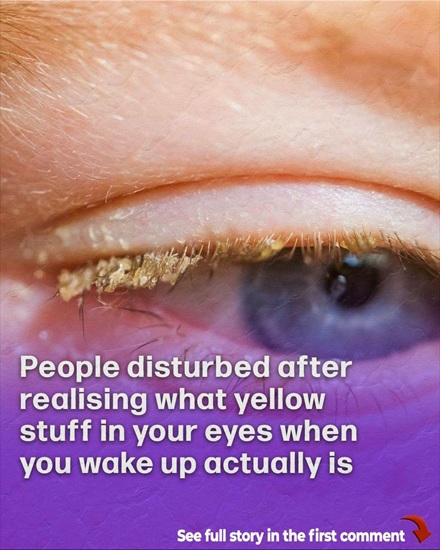
Waking up with a small amount of crust in the corners of the eyes is something most people experience from time to time. The material may appear white, pale yellow, slightly sticky, or completely dry depending on how much moisture remains after sleep. It is commonly called eye crust, sleep, eye discharge, or eye gunk, and it is usually harmless when only a small amount is present. Although it may not look pleasant, it is generally connected with the normal processes that protect and clean the surface of the eyes.
Understanding how it forms can make it easier to tell the difference between ordinary morning discharge and symptoms that may require medical attention. The surface of the eye is constantly protected by a thin tear film. Tears contain water, oils, mucus, and other substances that help keep the eye comfortable and maintain a smooth surface for clear vision. Each time a person blinks, the eyelids spread this tear film across the eye and help move small particles, mucus, and old cells away from the exposed surface. During waking hours, this continuous blinking prevents most debris from remaining in one place for very long.
As a result, the natural cleaning process usually happens without people noticing it. During sleep, however, normal blinking stops. The eyelids remain closed for long periods, but the eye continues producing mucus, oils, tears, and cellular debris. Because blinking is no longer moving these materials through the usual cleaning process, some of them can collect near the eyelashes and in the inner corners of the eyes. Moisture can gradually evaporate, causing the remaining material to become thicker or form a dry crust. By morning, this mixture may be visible as the familiar substance people wipe away after waking.
Normal eye crust is therefore not simply evidence that the body fought and defeated an infection during the night. That explanation is sometimes repeated online, but it oversimplifies what is happening. Ordinary morning discharge is mainly a mixture of natural secretions and debris that accumulates because the eyes are closed and blinking has stopped. The immune system does help protect the eyes from harmful microorganisms, but finding a little crust in the morning does not mean that the eyes were infected. In a healthy person without other symptoms, a small amount of discharge is usually part of normal eye function.
The exact appearance of normal discharge can vary. Some people see a tiny amount of dry white material, while others notice something slightly yellow or sticky. The important question is not whether there is any crust at all, but whether there has been a significant change from what is normal for that person. A small amount that disappears after gentle washing and is not accompanied by redness, pain, swelling, or changes in vision is usually not concerning. Large amounts of discharge or new symptoms deserve more attention.
Environmental conditions can affect how the eyes feel and how much discharge appears. Dry air, wind, dust, smoke, and pollen can irritate the eyes or affect the tear film. People with seasonal allergies may notice more watering, itching, or mucus during certain times of the year. Air conditioning or indoor heating can also make the eyes feel dry in some individuals. These changes do not necessarily indicate infection, but persistent irritation should still be taken seriously if symptoms become uncomfortable or interfere with vision.
One common condition associated with increased morning crust is blepharitis. Blepharitis involves inflammation around the edges of the eyelids and may be associated with problems involving the oil glands, bacteria around the lashes, or certain skin conditions. People with blepharitis may notice itching, burning, redness, swollen eyelids, flaky material around the eyelashes, or a gritty sensation in the eyes. Crusting may be more noticeable after sleeping because material can accumulate along the eyelid margins overnight. The condition often affects both eyes and may come and go over time.
Blepharitis is not necessarily a sign that someone has poor personal hygiene. The glands in the eyelids are important for producing the oily portion of the tear film, and problems with these glands can contribute to inflammation. Some people need regular eyelid care to keep symptoms under control. A medical professional may recommend warm compresses or gentle eyelid cleaning depending on the situation. Persistent symptoms should be evaluated because different forms of blepharitis may require different approaches.
Conjunctivitis is another possible cause of increased eye discharge. Often called pink eye, conjunctivitis is inflammation of the conjunctiva, the thin transparent tissue covering the white portion of the eye and the inner surface of the eyelids. It can result from viral infection, bacterial infection, allergies, or exposure to irritating substances. Common symptoms include redness, watering, itching, irritation, and discharge. In some cases, the eyelashes may become crusted together during the night.
Not every case of conjunctivitis requires antibiotics. Viral conjunctivitis does not respond to antibiotics, and allergic conjunctivitis is caused by an immune response rather than bacteria. Because symptoms can overlap, it can be difficult to determine the exact cause simply by looking at the eye. A healthcare professional may consider the pattern of symptoms, whether one or both eyes are affected, and whether other signs of illness are present. Treatment should be based on the underlying cause rather than the assumption that every red or sticky eye is bacterial.
A stye can also cause localized discharge and crusting. A stye usually appears as a painful or tender bump near the edge of the eyelid. It often develops when an oil gland or eyelash follicle becomes blocked and inflamed or infected. The surrounding area may look red and swollen, and some people notice additional yellowish material around the eyelid. Unlike conditions that affect both eyes, a stye often develops in one specific area.
Most uncomplicated styes can improve gradually, but they should not be squeezed or deliberately popped. Trying to force drainage can irritate the area or potentially spread infection. Warm compresses may sometimes be recommended to encourage natural drainage. Contact lenses and eye makeup may need to be avoided temporarily if they worsen irritation. A stye that persists, becomes very painful, spreads, or interferes with vision should be examined by a healthcare professional.
Blocked tear ducts can also lead to increased eye discharge. Tears normally drain through small openings near the inner corners of the eyelids and pass through a drainage system toward the nose. If that pathway becomes blocked, tears can collect and overflow instead of draining normally. Sticky or crusty material may also accumulate around the affected eye. Some people develop swelling or discomfort near the inner corner of the eyelid if the blocked area becomes inflamed or infected.
Blocked tear ducts can occur in both children and adults, although the causes may differ. Some babies are born with drainage pathways that have not fully opened. In adults, blockage may develop because of age-related changes, inflammation, injury, previous surgery, or other conditions. Persistent tearing from one eye or repeated discharge should not automatically be dismissed as normal sleep crust. An eye-care professional can determine whether the drainage system requires treatment.
Dry eye is another common reason people may notice sticky or stringy material around the eyes. Dry eye occurs when the eyes either do not produce enough tears or the tear film does not remain stable enough to properly lubricate the eye surface. Symptoms may include burning, stinging, scratchiness, redness, blurred vision, or sensitivity to light. Some people are surprised that dry eye can also cause excessive watering. This can happen because irritation triggers reflex tear production even though the underlying tear film remains unstable.
Many different factors can contribute to dry eye. Age, certain medications, health conditions, contact-lens use, and environmental conditions can all play a role. Long periods of screen use may also worsen symptoms because people often blink less while concentrating on digital devices. Reduced blinking can increase tear evaporation. Treatment depends on the cause and severity and may include artificial tears, changes in daily habits, prescription medication, or other options recommended by an eye-care professional.
Contact-lens wearers should be especially careful when abnormal discharge develops. Contact lenses sit directly on the eye surface, and poor lens hygiene can increase the risk of irritation and infection. Wearing lenses longer than recommended, sleeping in lenses that are not approved for overnight use, or using improper cleaning methods can create problems. Significant redness, pain, sensitivity to light, blurred vision, or unusual discharge should not be ignored in someone who wears contacts. Some corneal infections can become serious if treatment is delayed.
Inflammation or infection of the cornea can produce symptoms that are much more serious than normal morning crust. The cornea is the transparent front surface of the eye and is essential for focusing light properly. Keratitis can cause pain, redness, blurred vision, sensitivity to light, and abnormal discharge. Some forms are associated with bacterial, viral, fungal, or parasitic infections. Contact-lens misuse can increase the risk of certain infections involving the cornea.
Severe eye pain should always be treated differently from ordinary morning discharge. Normal sleep crust should not cause intense discomfort. Significant pain can indicate injury, infection, corneal inflammation, or another eye condition that requires evaluation. New light sensitivity is also an important warning sign, particularly when it appears with redness or pain. Sudden changes in vision should never be dismissed as a simple discharge problem.
The amount and texture of discharge can provide useful clues, although they cannot provide a complete diagnosis. A tiny amount of pale material after sleep is very different from thick discharge that repeatedly covers the eye throughout the day. Green or dark yellow discharge may be associated with infection, but color alone cannot determine the exact cause. Stringy mucus can occur with dry eye or irritation. Foamy material along the eyelids may sometimes be seen with eyelid inflammation.
A major change from a person’s normal pattern is often more important than a specific color. If someone normally wakes with almost no discharge and suddenly develops large amounts together with redness and swelling, that change deserves attention. Similarly, discharge that returns repeatedly after being cleaned away is different from a small amount that appears only after sleep. Associated symptoms help determine how concerning the situation may be. Pain, vision changes, fever, or severe swelling raise the level of concern.
Ordinary eye crust can usually be removed gently. Hands should be washed before touching the area around the eyes. A clean, damp cloth can be placed over closed eyelids to soften dried material before it is wiped away. There is no need to scrape aggressively along the eyelashes or corners of the eyes. Gentle cleaning reduces the chance of causing unnecessary irritation.
People who frequently experience eyelid crusting because of blepharitis may benefit from a regular eyelid-care routine recommended by a healthcare professional. Warm compresses may help loosen material and support normal oil-gland function. Gentle cleaning around the eyelids may also be useful. Harsh facial cleansers, strongly scented products, or substances not intended for use near the eyes can cause additional irritation. Treatment should be appropriate for the actual condition rather than based on random online remedies.
Removing eye makeup before sleeping is another useful habit. Mascara, eyeliner, and other cosmetics can remain along the eyelid margins if they are not removed properly. Makeup residues may contribute to irritation in sensitive people. Eye cosmetics and applicators should also be kept clean and should not be shared with others. Sharing makeup can transfer bacteria and other microorganisms between people.
Old eye makeup may need to be replaced periodically according to product guidance. Someone who develops an eye infection may also need to replace products that could have become contaminated. Continuing to use contaminated makeup can potentially reintroduce microorganisms to the eye area. Cosmetics should also not be used to hide severe redness or inflammation instead of addressing the underlying cause. Persistent problems deserve proper evaluation.
Rubbing the eyes should generally be avoided, especially with unwashed hands. Hands touch many surfaces throughout the day and can easily carry microorganisms or irritating substances. Rubbing can transfer those materials directly to the eyelids and eye surface. It can also make existing inflammation worse. People with allergies may find avoiding rubbing especially difficult because itching can be intense.
Treating the underlying allergy can sometimes reduce the urge to rub. Allergic eye problems often cause itching, redness, watering, and swelling. Symptoms may become stronger during particular seasons or after exposure to animals, dust, or other allergens. Allergic conjunctivitis is different from bacterial infection and should not automatically be treated with antibiotics. Appropriate allergy management can often provide better relief.
Contact-lens hygiene is another important part of maintaining healthy eyes. Hands should be cleaned before lenses are inserted or removed. Lenses should be replaced according to their recommended schedule and stored only in appropriate solution. Ordinary tap water should not be used to clean or store contact lenses because it may contain microorganisms that can cause serious eye infections. Lens cases also need regular cleaning and replacement.
Sleeping in contact lenses can increase risk unless the specific lenses are approved for overnight wear and an eye professional has recommended their use that way. Even approved extended-wear lenses may carry different risks than removing lenses each night. A person who develops pain, significant redness, or unusual discharge should remove the lenses and seek appropriate advice. Continuing to wear them may worsen some conditions. Eye health should take priority over convenience.
Children can also develop eye crust for many of the same reasons as adults. Babies may experience persistent discharge because of blocked tear ducts. Young children can also develop conjunctivitis, allergies, or other eye conditions. Since children may not be able to describe pain, blurred vision, or light sensitivity clearly, caregivers need to pay attention to visible changes. Significant swelling, persistent redness, fever, or apparent discomfort should be discussed with a healthcare professional.
Newborn eye symptoms deserve particular care because the causes and recommended treatments can differ from those in adults. Parents should avoid applying medications or home remedies that have not been recommended for the infant. A pediatric professional or eye specialist can determine whether discharge represents a common blocked tear duct or something requiring treatment. Prompt evaluation is particularly important when the eye itself appears very red or swollen.
Good hygiene becomes especially important when infectious conjunctivitis is suspected. Hands should be washed after touching the affected eye area. Towels, washcloths, pillowcases, and eye makeup should not be casually shared. This helps reduce the chance of spreading infectious material to another person or from one eye to the other. These precautions are reasonable without assuming that every case of discharge is contagious.
People should also avoid using another person’s prescription eye drops. A medication appropriate for one eye condition may not be suitable for another. Prescription drops can contain antibiotics, anti-inflammatory medicines, or other ingredients with specific uses. Using the wrong medication can delay proper treatment or potentially worsen certain conditions. Medication bottles can also become contaminated if the tip touches the eye.
Leftover antibiotic drops should not automatically be used whenever discharge appears. Antibiotics treat bacterial infections and provide no benefit for viral conjunctivitis or allergies. The presence of yellow discharge does not by itself prove that an infection is bacterial. Accurate diagnosis is important before medication is chosen. A healthcare professional can determine whether antibiotics are actually necessary.
Home remedies involving substances not designed for the eyes should also be avoided. The eye surface is delicate and can react badly to liquids or chemicals that seem harmless elsewhere on the body. Products intended for ophthalmic use are formulated differently from ordinary skin or household products. If simple external cleaning is not enough, professional advice is safer than experimenting with unverified substances. This is particularly important for people with contact lenses or previous eye surgery.
Eye examinations can provide information that cannot be obtained simply by looking at the color of the discharge. A clinician may examine the eyelids, eyelashes, tear film, conjunctiva, cornea, and drainage system. They may ask whether the problem affects one eye or both, how long symptoms have been present, and whether pain, itching, or vision changes occur. Recent illness, contact-lens habits, allergies, and exposure to someone with an eye infection can also provide useful clues. Diagnosis is based on the overall picture.
Treatment can therefore vary significantly. A person with dry eye may need lubrication or other tear-film management. Someone with blepharitis may need regular eyelid care. Allergic conjunctivitis may require allergy management, while certain bacterial infections may require antibiotics. A blocked tear duct may need a completely different approach. Treating every form of discharge in the same way would ignore these important differences.
There are also situations where immediate or prompt medical evaluation is particularly important. Severe pain, sudden blurred or reduced vision, intense redness, significant swelling, major sensitivity to light, injury to the eye, or exposure to harmful chemicals should not be treated as routine morning crust. Thick discharge that continues throughout the day can also justify evaluation. Contact-lens wearers with pain or vision changes should be especially cautious. Delays can matter when the cornea is involved.
Chemical exposure requires a different response from ordinary eye discharge. If a harmful substance enters the eye, urgent rinsing and medical guidance may be needed depending on the chemical involved. Waiting for crust or redness to disappear on its own may be unsafe. Likewise, a foreign object or scratch can cause significant irritation. Eye injuries deserve appropriate assessment when symptoms are substantial.
Mild morning crust without other symptoms is much less concerning. If both eyes feel comfortable, vision is normal, and only a small amount appears after sleep, gentle washing is generally all that is needed. Once blinking resumes after waking, the normal tear-cleaning process continues. Many people will experience this throughout their lives without developing any eye disease. The presence of a little discharge is therefore not something that should automatically create anxiety.
It can be helpful to think of morning crust as a normal byproduct of the eye’s maintenance system rather than as waste left after an infection. Tears, mucus, oils, and old cellular material continue to exist while a person sleeps. Without blinking, some of this material remains near the eyelids. When moisture evaporates, it becomes more noticeable. That simple explanation accounts for most ordinary cases.
Problems become more likely when the pattern changes significantly. A person who suddenly experiences intense crusting together with redness, itching, swelling, or pain may have inflammation or infection. Someone with persistent watering from one eye could have a drainage problem. Stringy mucus accompanied by burning and fluctuating vision may fit with dry eye. A localized painful bump may indicate a stye.
None of these patterns should be used as a substitute for diagnosis. Many eye conditions share similar symptoms, and several different problems can occur at the same time. An individual with blepharitis can also have dry eye, for example. Allergies can worsen irritation in someone who already has another eye condition. Professional evaluation becomes more useful when symptoms persist or repeatedly return.
Daily habits can reduce unnecessary irritation even though they cannot prevent every eye problem. Washing hands regularly, avoiding unnecessary rubbing, removing eye makeup before sleep, and caring for contact lenses correctly are all sensible practices. Protecting the eyes from excessive smoke, dust, or other irritants can also help susceptible individuals. Adequate breaks from prolonged screen use may improve comfort for people who experience dryness.
When using digital screens, remembering to blink normally can be helpful. People often blink less frequently while concentrating on a computer or phone. This can allow the tear film to evaporate more quickly and may contribute to dryness or eye fatigue. Looking away from the screen periodically and resting the eyes can improve comfort. Persistent symptoms still deserve professional advice rather than relying only on screen breaks.
Hydration and general health can influence comfort as well, but drinking extra water should not be presented as a cure for every dry-eye problem. Tear-film disorders can have many causes that cannot be corrected simply by increasing fluid intake. Similarly, supplements should not be taken specifically for eye discharge unless recommended for an appropriate medical reason. Simple health claims can become misleading when they are presented as universal treatments.
The same caution applies to claims about the color of discharge. Green or thick yellow material can be concerning, but a specific color does not provide a complete diagnosis. Pale yellow material can also appear in normal morning crust. Context matters more than a single visual characteristic. The amount, duration, discomfort, redness, and effect on vision all contribute important information.
Anyone uncertain about persistent eye symptoms can speak with an optometrist, ophthalmologist, or another qualified healthcare professional. Pharmacists may also provide guidance for some minor symptoms and help determine when medical evaluation is appropriate. People should seek urgent care when warning signs such as severe pain or sudden vision changes are present. Protecting vision is more important than trying to identify the problem through internet photographs.
For most people, however, the small amount of crust seen immediately after waking is simply a normal part of the body’s daily routine. It develops while the eyelids are closed and disappears with gentle cleaning. It does not automatically mean that bacteria have caused an infection, nor does it indicate that the eye is unhealthy. The eyes naturally produce substances that protect and lubricate their surface, and some of this material becomes visible after sleep.
The most useful approach is therefore to pay attention to change. Normal morning crust should remain relatively minor and should not cause major discomfort. Discharge that becomes excessive, persistent, painful, or associated with vision problems deserves a different response. Understanding that distinction can prevent unnecessary worry while helping people recognize symptoms that actually matter.
Ultimately, eye crust is a small but interesting example of how the body maintains itself while we sleep. Its ordinary ingredients include components of tears, mucus, oils, old cells, and small amounts of debris. Because blinking stops at night, these substances can collect and dry near the eyelids. In most cases, they are harmless and easily removed in the morning.
Good eye care remains straightforward. Keep hands clean, avoid rubbing the eyes unnecessarily, maintain proper eyelid and contact-lens hygiene, remove makeup before sleeping, and pay attention to unusual changes. Seek professional advice when discharge is accompanied by significant pain, severe redness, swelling, sensitivity to light, or changes in vision. A little morning crust is usually normal, but persistent or dramatic changes are worth taking seriously.

