

For much of his life, Ricky Nelson seemed almost inseparable from the television screen.
Millions watched him grow from a child performer into a teenage heartthrob, and then into one of the recognizable voices of early rock and roll.
His career produced hit records, sold-out appearances and a place in American entertainment history.
But the final chapter of Nelson’s life unfolded far away from a television studio.
On December 31, 1985, the 45-year-old singer was traveling to Texas for a New Year’s Eve performance when the aircraft carrying him developed a catastrophic fire.
Seven passengers died.
The two pilots survived.
Yet another part of the story would become especially significant to Nelson’s family.
His twin sons, Matthew and Gunnar, had originally expected to travel with him.
They were not on the plane.
And the reason came down to a change in plans shortly before the trip.
Ricky Nelson Grew Up in Show Business
Ricky Nelson was born Eric Hilliard Nelson on May 8, 1940.
Entertainment was part of his world almost from birth.
His father, Ozzie Nelson, was a successful bandleader, while his mother, Harriet Hilliard Nelson, was a singer and actress.
Together, Ozzie and Harriet became one of the most familiar married couples in American entertainment.
Their family comedy, The Adventures of Ozzie and Harriet, began on radio in 1944.
Ricky and his older brother, David, were initially portrayed by actors.
That eventually changed.
The real Nelson brothers joined the radio program in 1949.
Then television arrived.
In 1952, The Adventures of Ozzie and Harriet became a television series, allowing audiences to watch fictionalized versions of the Nelson family’s everyday life.
The program remained on television until 1966.
For Ricky, those years meant growing up before an enormous audience.
But television would soon give him something even bigger.
A music career.
One Song Opened a New Door
As a teenager, Nelson became interested in the rapidly expanding world of rock and roll.
In 1957, he performed “I’m Walkin’,” a song associated with Fats Domino, during an episode of his family’s television program.
The episode was titled “Ricky the Drummer.”
It proved to be an important turning point.
Nelson was no longer simply the younger son viewers recognized from television.
He could become a recording star in his own right.
His music career quickly gathered momentum.
The combination was unusually powerful.
Nelson already had access to a national television audience, meaning new performances could introduce his music directly to millions of potential listeners.
Hit records followed.
“Poor Little Fool” became one of his signature recordings and reached No. 1 on the Billboard Hot 100.
Other memorable releases included “Travelin’ Man,” “Hello Mary Lou,” “It’s Late,” “For You” and “Fools Rush In.”
Years later, Nelson would score another enduring success with “Garden Party.”
By then, however, the musical landscape had changed dramatically.
So had Nelson.
More Than a Teen Idol
It would be easy to remember Ricky Nelson only as a handsome teenager whose family’s television program helped promote his records.
His career was more substantial than that image suggests.
Nelson worked with accomplished musicians and helped bring rockabilly and rock and roll into mainstream American homes during the genre’s formative years.
As the 1960s progressed, changing musical tastes made it more difficult for many early rock stars to maintain their earlier commercial dominance.
Nelson continued recording and performing.

He also gradually began presenting himself as Rick rather than Ricky.
His 1972 hit “Garden Party” became one of the defining recordings of that later period.
The song was inspired by Nelson’s experience performing at a rock-and-roll revival concert at Madison Square Garden.
It also carried a broader message about artistic independence and the impossibility of pleasing everyone.
Away from music, Nelson was building a family.
And two members of that family would eventually become central to the story of his final trip.
Ricky Nelson Became a Father of Four
Nelson married Kristin Harmon in April 1963.
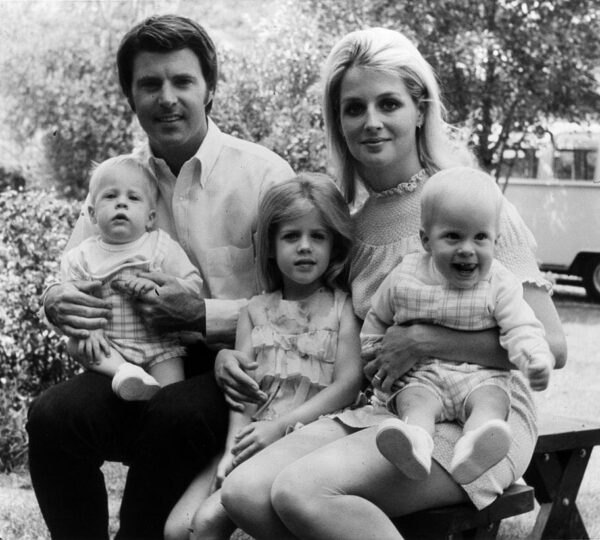
The couple eventually had four children.
Their oldest child, Tracy Nelson, pursued acting.
Twin sons Matthew and Gunnar Nelson were born in 1967.
Their youngest son was Sam Nelson.
Matthew and Gunnar developed musical ambitions of their own.
Their father’s influence was impossible to ignore, but they would eventually establish careers separate from his.
Before that happened, however, they were simply two teenage sons who wanted to spend New Year’s Eve with their father.
In December 1985, they thought they would get that opportunity.
The original plan involved traveling with him.
Then their father changed it.
A Last-Minute Change
Nelson was touring during the final days of 1985.
His schedule included a New Year’s Eve performance in Dallas.
Matthew and Gunnar expected to join him.
Years later, the Nelson family discussed what happened during an interview with Larry King.
The twins had planned to travel with their father and meet up with him as he continued toward Dallas.
But Nelson contacted them and changed the arrangement.
Instead of traveling aboard his private aircraft, the twins would fly separately and meet him in Dallas.
There was no way for them to understand how important that decision would become.
Their father boarded the aircraft without them.
The twins remained safely elsewhere.
And on the afternoon of December 31, the situation aboard Nelson’s plane began to deteriorate.
The Aircraft Was a Douglas DC-3
Nelson was traveling aboard a Douglas DC-3.
The aircraft carried nine people on its final flight: two pilots and seven passengers.
Among the passengers were Nelson, his companion Helen Blair and members of his touring group.
The flight departed from Guntersville, Alabama, and was headed toward Dallas.
Problems developed during the journey.
According to the subsequent investigation by the National Transportation Safety Board, the crew had experienced difficulty with the cabin-heating system.
Eventually, smoke appeared.
At around 5:08 p.m. Central Standard Time, the flight crew contacted air traffic control and reported a problem.
The situation escalated rapidly.
A few minutes later, the pilots reported smoke in the cockpit.
Continuing normally to Dallas was no longer an option.
They needed somewhere to land.
And they needed it quickly.
An Emergency in the Texas Sky
The pilots attempted to bring the aircraft down near De Kalb, Texas.
It was not a conventional airport landing.
During the emergency descent and landing attempt, the aircraft encountered obstacles on the ground.
It struck wires and a utility pole before continuing into trees.
Fire caused extensive damage.
The two pilots managed to escape through cockpit windows.
Both survived, although they suffered serious injuries.
The seven passengers in the cabin did not survive.
Ricky Nelson was among them.
He was only 45.
The New Year’s Eve performance he had been traveling toward would never happen.
And for his children, the tragedy was almost impossible to process.
Matthew Heard the News on the Radio
Years later, Matthew Nelson recalled learning about his father’s death through a radio broadcast.
The circumstances made the moment particularly painful.
He and Gunnar had expected to spend that New Year’s period with their father.
Instead, they were separated from him because Rick had changed their travel arrangements.
The same decision that prevented them from being with him also kept them off the aircraft.
That fact inevitably raised a question.
Why had Nelson changed his mind?
Over time, the story was sometimes described as a mysterious premonition.
But the verified facts require more caution.
Was It Really a Premonition?
There is no established evidence proving that Ricky Nelson knew or somehow predicted that the aircraft would suffer a fatal accident.
His decision should therefore not be presented as a confirmed supernatural warning.
What is supported by the family’s account is still remarkable.
Matthew and Gunnar had expected to travel with their father.
Nelson changed the arrangement and told them to travel separately.
As a result, they were not aboard the DC-3 when the fire occurred.
Why he made that decision is a different question.
It is possible to recognize how consequential it became without claiming that Nelson foresaw the disaster.
And the same caution is important when discussing what caused the fire.
Rumors Followed the Crash
Major celebrity deaths often generate speculation, and Nelson’s was no exception.
One particularly sensational rumor attempted to connect drug use aboard the aircraft with the fire.
That allegation became widely repeated.
But repetition did not make it fact.
The official investigation did not establish that cocaine use caused the fire.
Investigators instead examined physical evidence from the aircraft and paid particular attention to the cabin-heating system and the location where the fire developed.
Their findings provide a much more reliable account.
But they did not answer every question.
Investigators Narrowed Down the Fire’s Location
The National Transportation Safety Board determined that the fire originated in the aft portion of the passenger cabin, on the right-hand side near the floor.
That location was significant because the aircraft’s cabin heater was situated in the same general area.
Investigators also documented difficulties involving the heater before smoke became an emergency.
Those facts naturally made the heating system an important focus.
However, investigators were unable to determine conclusively the exact source of ignition and the precise fuel source that sustained the fire.
That distinction matters.
It would be inaccurate to say investigators definitively proved that one particular mechanical component caused the accident.
The evidence pointed investigators toward the area of the cabin heater, but the precise sequence that started the fire could not be established with certainty.
That uncertainty remained.
One thing, however, was not uncertain.
Matthew and Gunnar were supposed to have been much closer to the tragedy.
Two Empty Places Changed the Nelson Family’s Future
Had Matthew and Gunnar followed the earlier travel plan, they could have been aboard their father’s aircraft.
Instead, Nelson’s decision separated their journey from his.
They survived.
Their father did not.
There is no need to transform that fact into a supernatural story for it to carry enormous emotional weight.
A father changed his sons’ travel arrangements.
Shortly afterward, the aircraft he boarded suffered a fatal in-flight fire.
That decision meant the Nelson family lost Rick, but did not lose Matthew and Gunnar with him.
And the twins eventually did something their father would certainly have recognized.
They made music.
Matthew and Gunnar Built Careers of Their Own
The twins formed the rock band Nelson and achieved major commercial success around the beginning of the 1990s.
Their breakthrough album, After the Rain, produced several successful singles.
“(Can’t Live Without Your) Love and Affection” reached No. 1 on the Billboard Hot 100.
That accomplishment gave the Nelson family a remarkable place in American music history.
Ozzie Nelson had been a successful bandleader.
Rick Nelson became one of rock and roll’s early stars.
Then Matthew and Gunnar reached the top of the charts as another generation of Nelson musicians.
Yet their connection to their father extended far beyond commercial success.
Over the years, the twins have performed projects celebrating Rick’s music and legacy.
For them, revisiting those songs has never been simply an exercise in nostalgia.
It is personal.
Rick Nelson’s Legacy Continued
Rick Nelson was inducted posthumously into the Rock & Roll Hall of Fame in 1987.
The recognition came less than two years after the crash.
His career had stretched from the golden age of American radio through early television and into several generations of popular music.
Few performers had grown up so publicly.
Audiences first encountered him as part of the Nelson family.
Then they watched him become a teenager.
They watched him sing.
And eventually, the younger member of a television family became a major recording artist whose influence extended far beyond the sitcom that introduced him.
That alone would have made his story remarkable.
But the final days of his life left his family with another story entirely.
The Most Important Decision Was Surprisingly Simple
There was nothing glamorous about it.
No hit record was involved.
There was no television audience watching.
It was simply a change in travel plans.
Matthew and Gunnar wanted to be with their father as he headed toward his New Year’s Eve performance.
Rick Nelson told them to travel separately and meet him in Dallas.
They followed that plan.
He boarded the DC-3.
They did not.
Hours later, the aircraft was burning during an emergency landing attempt in Texas.
Nelson and the six other passengers were gone.
The twins were still alive.
Calling that decision a proven premonition would add something to the historical record that cannot be demonstrated.
The documented reality is powerful enough on its own.
Rick Nelson made a last-minute decision that kept his two sons away from the aircraft on its final journey.
Matthew and Gunnar would never meet their father in Dallas as planned.
But they survived to grow older, build families, make their own music and preserve the legacy of the man they knew not as a television star or rock-and-roll icon, but simply as their dad.
And that may be the most haunting detail of Rick Nelson’s final journey.
The choice probably seemed small when it was made.
Only hours later did its enormous significance become clear.

