
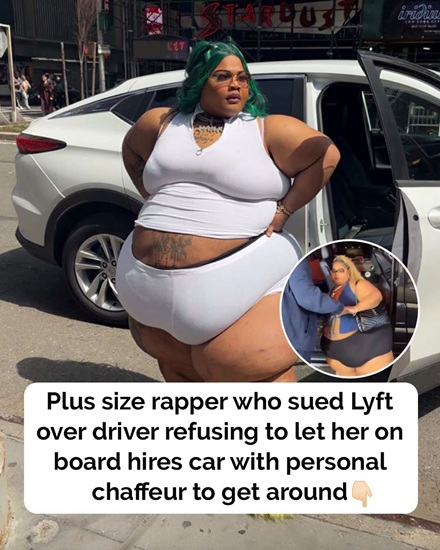
More than a year after attracting national attention through a highly publicized legal dispute involving a rideshare service, Detroit rapper and entrepreneur Dank DeMoss has once again become a topic of discussion across social media platforms. The artist, whose real name is Dajua Blanding, recently appeared in videos showing her traveling in a spacious luxury van with a personal chauffeur, a development that has sparked a new wave of online reactions and public commentary.
The renewed attention comes after a controversy that first emerged in early 2025. At the time, DeMoss filed a lawsuit against Lyft following an incident involving one of the company’s drivers. According to reports, the driver allegedly refused to provide transportation after determining that she would not fit comfortably inside the vehicle that had arrived for the ride request.
The incident quickly gained widespread attention online, generating discussions about transportation accessibility, customer service standards, body image, and discrimination. As details of the encounter circulated through news outlets and social media platforms, many people expressed differing opinions regarding the situation and its broader implications.

Before the controversy, Dank DeMoss was already known within Detroit’s music community. In addition to pursuing a career as an independent recording artist, she serves as the chief executive officer of FSD Records, a music label originally established by her late father, who was known professionally as Big Mixx CEO.
Over the years, DeMoss has worked to build her brand through music, entrepreneurship, and social media engagement. Her catalog includes songs such as Feel My Pain, No Love, and Big Girls, tracks that often reflect themes of personal experiences, confidence, resilience, and self-expression…
The rapper also gained visibility through live performances and industry events. One notable appearance came during SXSW 2024, where she participated in activities connected to the well-known festival that attracts artists, media professionals, and entertainment executives from around the world.
Outside of music, DeMoss has frequently used her platform to promote messages centered on self-confidence and body positivity. Through interviews and social media content, she has encouraged individuals to embrace themselves while also speaking openly about personal challenges related to health and weight management.
The incident that brought her into the national spotlight reportedly began when she requested a Lyft ride. According to accounts published by multiple media outlets, the driver arrived in a Mercedes-Benz sedan before allegedly determining that she would not fit safely inside the vehicle. Reports indicate that the driver did not proceed with the trip and instead suggested that she request a larger vehicle. The encounter was recorded, and portions of the interaction later circulated online, drawing significant public attention and prompting extensive debate.
According to media reports, DeMoss challenged the driver’s assessment during the conversation. She reportedly insisted that she was capable of fitting inside the vehicle and expressed frustration with the driver’s refusal to complete the ride.

The exchange became a major topic of discussion because it touched on several sensitive issues simultaneously. Some observers viewed the situation primarily as a matter of vehicle capacity and safety considerations, while others saw it as a possible example of unfair treatment based on body size.
As public interest grew, news organizations across the country covered the story. Interviews, commentary segments, and social media discussions analyzed various aspects of the incident, including rideshare policies, customer rights, driver discretion, and anti-discrimination laws.
In interviews following the event, DeMoss explained that the experience had affected her emotionally. She stated that she had previously traveled in vehicles that were similar in size or even smaller than the one involved in the incident.
She also expressed disappointment over how the situation unfolded. According to her public statements, the issue extended beyond transportation and involved the personal impact of feeling rejected or judged based on physical appearance. Shortly after the incident became public, DeMoss initiated legal action. The lawsuit was filed under Michigan’s Elliott-Larsen Civil Rights Act, legislation that includes protections against discrimination in public accommodations and specifically recognizes weight as a protected characteristic.
Her legal team argued that the refusal of service constituted unlawful discrimination. Attorneys representing DeMoss maintained that individuals should not be denied access to services solely because of assumptions related to body size.
The lawsuit attracted substantial media coverage because Michigan is one of the few jurisdictions in the United States with explicit legal protections concerning weight discrimination. As a result, legal experts and commentators closely followed the case.
Public reaction remained sharply divided throughout the legal proceedings. Supporters argued that businesses and service providers should ensure equal treatment for all customers, regardless of appearance, body type, or physical characteristics.
Others questioned whether practical concerns related to vehicle dimensions, passenger comfort, or safety requirements should be considered separately from issues involving discrimination. These differing viewpoints fueled ongoing debate across numerous online platforms.
As discussions continued, DeMoss remained active on social media, where she regularly shared updates about her life, music career, and personal experiences. Many followers praised her willingness to address difficult topics publicly.
Months later, the legal dispute reached a resolution. Reports indicated that the parties agreed to a private settlement. Although details of the agreement were not released publicly, DeMoss later stated that she was satisfied with the outcome.
Because the settlement terms remained confidential, no official information regarding financial compensation or additional conditions was made available. As is common in private settlements, both parties moved forward without disclosing specific details.
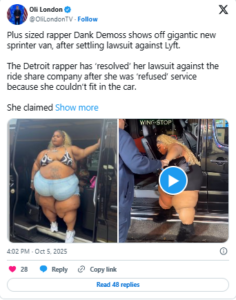
Around the same period, new videos featuring DeMoss began appearing online. The footage showed her traveling through Detroit in a customized luxury van that offered considerably more interior space than a standard sedan typically used for rideshare services.
The vehicle quickly became a topic of conversation among internet users. Some commenters viewed the luxury van as a practical transportation solution that provided additional comfort and convenience for long-distance travel.
Others interpreted the situation differently, suggesting that the spacious vehicle indirectly reinforced arguments that larger accommodations were more appropriate for her transportation needs. These comments generated another round of online discussion.
Despite the mixed reactions, many supporters defended DeMoss and argued that her choice of transportation was a personal decision unrelated to the legal dispute. They emphasized that individuals often select vehicles based on comfort, lifestyle preferences, and professional requirements.
For public figures, transportation choices can attract attention simply because of their visibility. As videos of the luxury van circulated online, thousands of users offered opinions, observations, and interpretations regarding its significance.
DeMoss herself presented the upgrade in a positive light. Rather than focusing on controversy, she appeared to frame the vehicle as part of her personal and professional growth, reflecting changes in her lifestyle and daily routine.
The renewed attention also led many people to revisit discussions about her broader personal journey. Over the years, DeMoss has spoken openly about living with a thyroid condition that she says has significantly affected her weight and overall health.
According to her public statements, managing her weight has been a long-term challenge that began during childhood. She has described the process as a continuing journey rather than a problem with a quick or simple solution.
Medical experts note that thyroid disorders can influence metabolism, energy levels, and body weight. However, the effects vary from person to person, and treatment outcomes can differ depending on numerous individual factors.
Throughout interviews and social media appearances, DeMoss has frequently emphasized the importance of maintaining a positive mindset while addressing health concerns. She has encouraged others facing similar challenges to remain patient and persistent.
The rapper has also discussed efforts she has made to improve her health. According to her statements, those efforts include exercising regularly, taking vitamins, and making lifestyle adjustments intended to support long-term wellness goals.
One aspect of her story that has received particular attention is her claim that she has lost more than 100 pounds. Supporters have pointed to this achievement as evidence of her commitment to improving her health while balancing a demanding professional schedule.
For many observers, her experience highlights the complex relationship between health, body image, and public perception. Public figures often face intense scrutiny regarding their appearance, and discussions about weight frequently generate strong opinions.
The situation has also underscored the growing role social media plays in shaping public narratives. A single encounter that might once have remained private quickly evolved into a national news story viewed by millions of people.
As online platforms continue to influence public discourse, stories involving celebrities and influencers often become larger conversations about cultural values, legal standards, and personal experiences. The case involving DeMoss illustrates how quickly such discussions can develop.
Today, Dank DeMoss remains active in music, business, and online content creation. While the controversy surrounding the Lyft incident brought her significant attention, she continues to focus on expanding her career and sharing her personal journey.
Although opinions regarding the original dispute remain divided, the story continues to generate interest because it touches on issues that many people find relevant, including accessibility, fairness, health, confidence, and self-image.
Ultimately, the renewed attention surrounding her luxury van demonstrates how public interest in the rapper has persisted long after the legal case concluded. Whether viewed as a practical choice, a lifestyle upgrade, or simply a personal preference, the vehicle has once again placed DeMoss at the center of public conversation.
As she continues pursuing her goals in music and entrepreneurship, her story remains an example of how personal experiences, legal disputes, health challenges, and social media exposure can intersect in unexpected ways. For supporters and critics alike, Dank DeMoss remains a figure who continues to spark discussion well beyond the entertainment industry.

