
In many rural storytelling traditions and modern online narratives, tales of unexpected discoveries often emerge from ordinary moments on large agricultural properties, especially in regions shaped by changing weather conditions and long environmental cycles.
One such widely shared narrative describes a ranching property in West Texas, where extended drought conditions significantly altered the landscape and exposed areas of land that had remained untouched for decades beneath soil and vegetation.
In this type of story, the setting is often portrayed as a vast and remote ranch, managed by a family with deep generational ties to the land, where daily life is closely connected to weather patterns and natural conditions.
The rancher, often described as experienced and familiar with the land, is shown adapting to difficult environmental conditions, particularly prolonged droughts that reduce water availability and impact livestock management across wide rural areas.
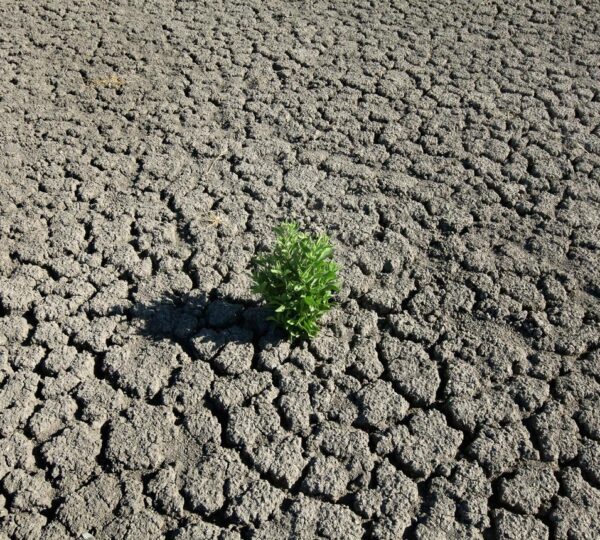
During extended dry periods, natural water sources such as creeks and small rivers often shrink or disappear entirely, leaving behind dry riverbeds that reveal previously hidden materials beneath layers of sediment and soil.
In this narrative, a particular creek bed becomes central to the discovery, as long-term drought conditions gradually expose unusual shapes and materials that would normally remain buried under natural water flow and sediment accumulation.
The rancher’s routine inspection of the land is described as a daily responsibility, involving careful observation of livestock areas, water sources, and terrain conditions to ensure the stability and safety of agricultural operations.
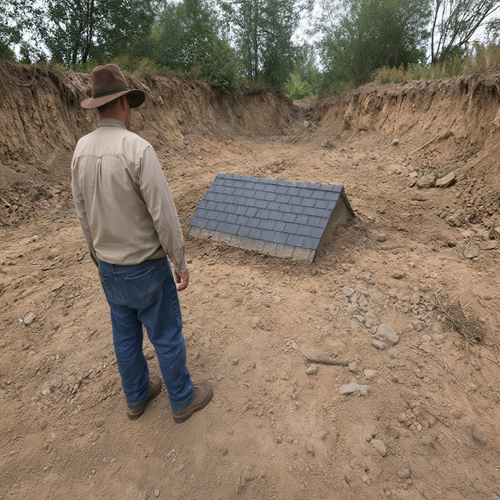
On one such inspection, attention is drawn to an unusual metallic surface partially exposed within the dry creek bed, appearing different from natural geological formations or typical debris found in rural waterways.
At first glance, such objects in rural environments are often assumed to be discarded agricultural materials, old machinery parts, or remnants of past flooding events that carried debris across the land.
However, in this story, the shape and structure of the metal surface appear unusually precise, suggesting intentional construction rather than random displacement caused by natural environmental forces.
As more soil is carefully removed from the area, the outline of a structured surface begins to emerge, revealing that the object is part of a larger concealed construction beneath the ground level.
The process of excavation is gradual and deliberate, reflecting caution and curiosity, as the rancher works to uncover what appears to be a man-made structure hidden beneath layers of soil and sediment.
Over time, the shape becomes clearer, showing that the metal surface is part of a larger roof-like structure that has been buried for an extended period, likely due to natural environmental changes.
Further investigation reveals the presence of a rusted hatch mechanism, suggesting that the structure was designed for controlled access and may have served a specific functional purpose in the past.
In this narrative, the discovery is unexpected, as there is no prior knowledge within the family history suggesting the presence of any underground facility in that specific area of the ranch property.
Curiosity and caution guide the next steps, as the rancher carefully examines the hatch mechanism, which appears aged and resistant due to long-term exposure to soil pressure and environmental conditions.
After several attempts, the hatch eventually opens, releasing a rush of cooler air from below, a common narrative detail used to emphasize the contrast between surface conditions and underground environments.
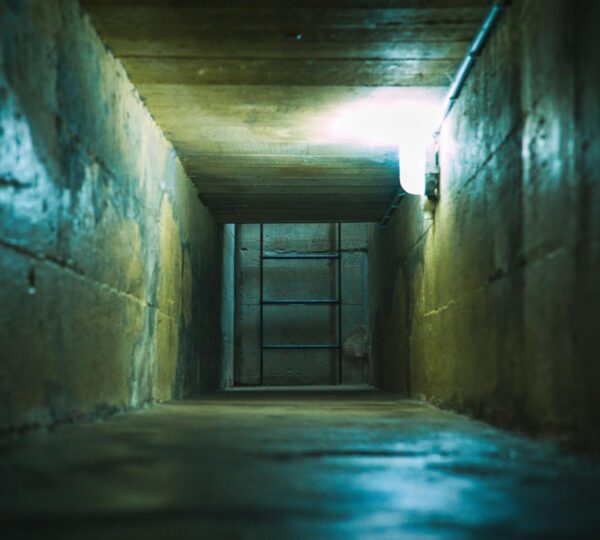
A ladder is revealed beneath the hatch, extending downward into darkness, indicating that the structure contains a subterranean chamber constructed with intentional engineering and reinforced materials.
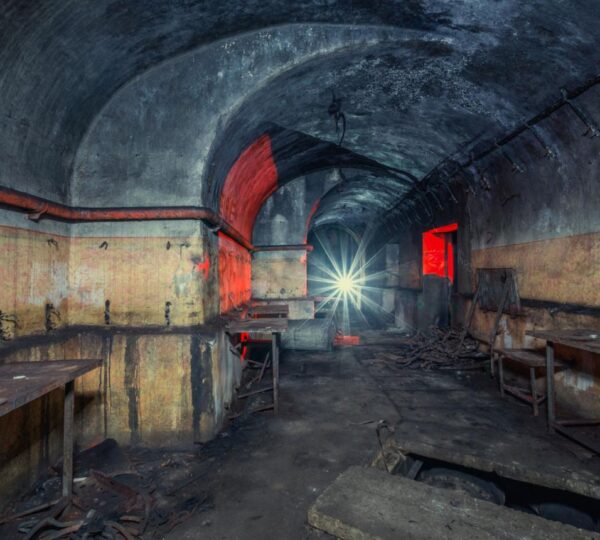
Using a flashlight, the descent into the underground space is described as careful and slow, reflecting both uncertainty and curiosity about what may exist within the hidden structure.
Upon reaching the lower level, the interior is revealed as a large underground chamber constructed with concrete walls and supporting beams designed to maintain structural stability over long periods of time.
Dust and age-related deterioration cover many surfaces, but the structure itself appears intact, suggesting it was built with durability in mind and possibly intended for long-term use or emergency shelter purposes.
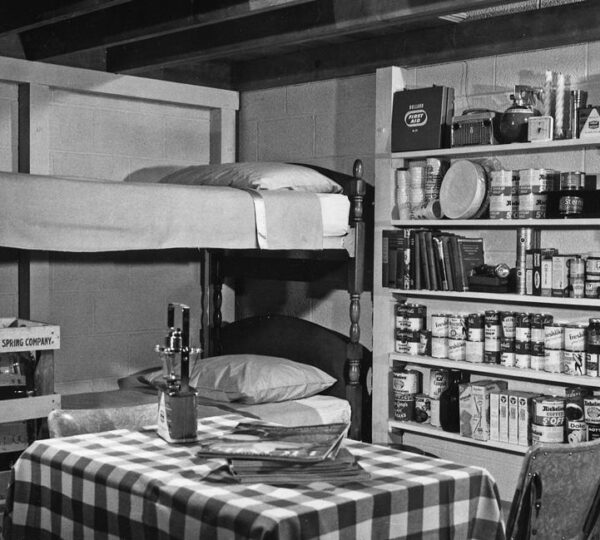
Inside the chamber, shelves and storage containers are arranged along the walls, indicating that the space was once organized for storing supplies and essential survival materials.
Some containers are described as sealed or partially preserved, containing food supplies, tools, and equipment that reflect mid-twentieth-century manufacturing styles and labeling practices.
In many similar narratives, such discoveries are linked to historical periods marked by global uncertainty, where communities prepared for potential emergencies by constructing underground shelters.
The presence of dated materials within the structure suggests a connection to mid-century historical contexts, often associated with Cold War-era preparedness initiatives in rural and urban areas.
A photograph found within the underground space typically plays a central emotional role in such stories, linking the discovery to personal or family history in a meaningful and unexpected way.
In this narrative, the photograph is described as showing individuals standing near construction equipment on ranch land, indicating coordinated efforts to build the underground structure many years earlier.
The identification of a familiar family member within the photograph creates a strong emotional connection between past and present generations, adding historical significance to the discovery.
Accompanying written materials, often described as journals or notebooks, provide additional context about the purpose of the structure and the motivations behind its construction.
These writings typically reference historical periods of uncertainty, during which communities prepared for emergencies by building shelters intended for collective safety and protection.
The narrative often explains that such shelters were designed not only for individual use but also as communal spaces intended to support multiple families in times of crisis.
Over time, many of these structures were abandoned or forgotten as perceived threats diminished and priorities shifted, leaving them unused and gradually hidden by natural environmental changes.
In this story, natural forces such as flooding and sediment accumulation are described as key factors that eventually covered the structure, concealing it beneath layers of soil for decades.
As the discovery becomes known within the local community, interest grows among neighbors, historians, and researchers who are intrigued by the preservation and condition of the underground structure.
Experts in historical preservation often note that intact underground structures from earlier decades are rare, especially when they remain sealed and relatively undisturbed for extended periods of time.
The condition of stored supplies and equipment becomes a point of interest, as preserved materials offer insight into historical preparation methods and survival planning strategies of earlier generations.
Restoration efforts are typically described as careful and respectful, focusing on preserving original materials while ensuring structural safety for future visitors or educational purposes.
Over time, such sites may be transformed into educational locations where visitors can learn about historical contexts, community preparedness, and rural life during past decades.
The emotional center of the story often remains tied to the connection between past family members and the rediscovery of their efforts to prepare for uncertain futures.
The discovery serves as a symbolic reminder of how human planning, environmental change, and time can intersect in unexpected ways within rural landscapes.
Ultimately, narratives like this emphasize themes of history, memory, and rediscovery, showing how ordinary landscapes may contain hidden layers of human effort and forgotten infrastructure.
Such stories continue to resonate because they combine mystery, history, and emotional connection, while also reflecting the relationship between people and the land over generations.

