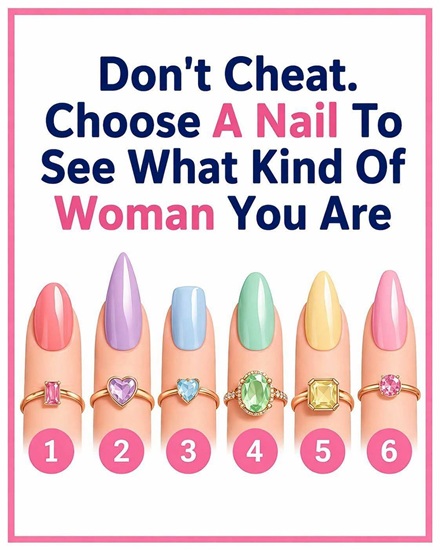
Sometimes an ordinary visual choice can become a fun reason to think about personal taste. The image presents six different purple nail designs, each featuring its own combination of shape, decoration, gemstones, and visual details. The idea is simple: look at all six options and notice which design attracts your attention first. After making a choice, you can explore a playful interpretation connected with that particular style. This activity should not be considered a scientific personality test, and a nail design cannot determine someone’s character.
Instead, it can be enjoyed as a lighthearted look at fashion preferences, visual associations, and the different ways people express themselves through style. Personal taste is influenced by many things, which is why a single fashion choice cannot reveal someone’s complete personality. Mood, occupation, comfort, cost, trends, special occasions, and practical needs can all affect which design someone prefers. A person might choose an elegant and simple manicure for everyday life but select something much more elaborate for a wedding or celebration.
Another person might admire decorative nails while preferring shorter ones because they are easier to maintain. With that in mind, the descriptions below are symbolic interpretations inspired by the appearance of each nail rather than factual psychological assessments.
Nail No. 1 — Clean, Simple and Well-Balanced
The first nail has a structured appearance and a relatively small decorative detail. Compared with some of the more elaborate alternatives, it feels controlled, polished, and understated. In this playful interpretation, the design can symbolize reliability, organization, patience, and quiet confidence. Its simple lines may appeal to someone who enjoys fashion without wanting every element of an outfit to attract attention. There is a certain elegance in keeping things visually uncomplicated, and this nail represents that approach particularly well.
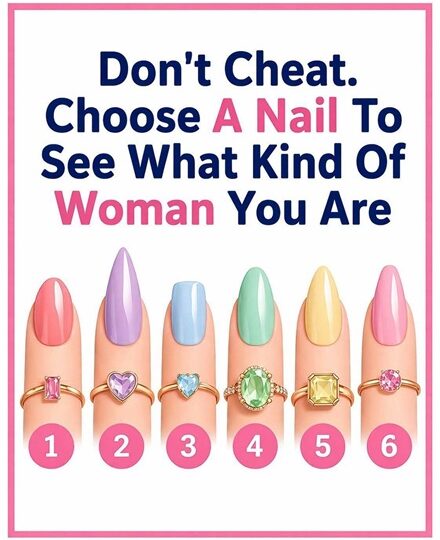
Choosing this design, however, does not automatically mean that someone is naturally organized or disciplined. There are countless reasons why the first nail might look attractive. Perhaps its shape seems more comfortable. Maybe the decoration feels appropriate for work or everyday activities. A person could also simply prefer clean lines and smaller accessories. Two people can choose exactly the same design for completely different reasons, which demonstrates why visual preferences should not be treated as reliable measurements of personality.
Simplicity can also be a practical fashion decision. Large decorations may require more maintenance, while a restrained manicure can be easier to manage during daily activities. Someone who works frequently with their hands might naturally prefer something that looks elegant without becoming inconvenient. Others simply enjoy minimalist aesthetics. If Nail No. 1 caught your attention, consider which feature appealed to you most. The answer may reveal more about your current fashion preference than any predetermined personality description ever could.
Nail No. 2 — A Romantic Touch
The second design immediately introduces a recognizable symbol: a heart. Because hearts are commonly associated with affection and romance, this nail naturally inspires interpretations involving warmth, emotional expression, intuition, and appreciation for meaningful connections. The heart gives the manicure a softer and more sentimental visual identity compared with several of the other options. Someone looking for a design that feels playful or affectionate may therefore notice this one immediately.
That symbolic connection should not be mistaken for evidence about someone’s emotional personality. A person can enjoy heart-shaped jewelry, decorations, or nail art without being particularly romantic. The choice might be influenced by an upcoming celebration, an anniversary, Valentine’s Day, or simply an appreciation for the shape. Fashion symbols often carry familiar cultural meanings, but people remain free to enjoy those symbols for entirely personal reasons.
If Nail No. 2 was your first choice, think about what specifically attracted you. Perhaps the heart was the most noticeable feature. Maybe you liked the relationship between the gemstone and the surrounding purple color. It is also possible that the design reminded you of something pleasant. These explanations are all reasonable because personal taste does not require a complicated psychological meaning. Sometimes we simply like what we see.
Nail No. 3 — Decoration With a Sense of Balance
The third nail occupies an interesting middle ground. It includes decorative elements but does not appear as dramatic as some of the bolder alternatives. In a playful interpretation, this visual balance can represent thoughtfulness, stability, patience, and an appreciation for moderation. The design seems carefully composed, making it easy to associate with someone who enjoys noticeable details without wanting them to dominate the entire look.
These associations come from the appearance of the design rather than from psychological evidence. Words such as “balanced,” “thoughtful,” and “stable” can describe many people at different moments in their lives. Someone may behave cautiously in one situation and spontaneously in another. The same person can enjoy minimalist fashion during the week and elaborate fashion on weekends. Human personality cannot be accurately compressed into a single category based on which illustrated nail someone chooses.
Even the position of a design within an image can influence preference. People may notice certain options sooner because of placement, contrast, lighting, or surrounding objects. If all six nails were rearranged, some viewers might make a different selection. Changing the background color or gemstone placement could produce another result as well. The viewer’s personality would not have changed; only the presentation would have changed.
Nail No. 4 — Designed to Stand Out
The fourth option contains a large central gemstone that immediately draws attention. It is one of the more visually prominent designs in the collection, giving it a glamorous and expressive appearance. Because of that bold presentation, a playful interpretation may connect it with confidence, ambition, enthusiasm, and a willingness to experiment with attention-grabbing fashion. Someone searching for a manicure that makes a strong visual statement could easily be attracted to this option.
Selecting a noticeable design does not mean someone constantly wants attention. Fashion allows people to explore different sides of themselves without those choices becoming permanent personality labels. A quiet person may love dramatic accessories, while an extremely outgoing person may prefer simple clothing and nails. Appearance and behavior do not always follow the same pattern. This is one reason visual personality games should remain entertainment rather than being presented as factual assessments.
Special occasions can also influence the appeal of Nail No. 4. A person attending a wedding, birthday party, graduation, holiday celebration, or formal event might deliberately select something more decorative than usual. Large gemstones can complement jewelry or clothing chosen for an important occasion. In that situation, the manicure communicates celebration and style rather than revealing a hidden psychological characteristic.
Nail No. 5 — Geometric and Structured
The fifth design uses a noticeable square decorative element, creating a strong sense of geometry and structure. In this symbolic interpretation, those visual characteristics can be associated with practicality, planning, organization, and careful thinking. Straight lines and balanced geometric shapes often create an impression of order, which helps explain why this particular personality story can feel appropriate for the design.
The connection remains visual rather than scientific. Selecting a square gemstone does not demonstrate intelligence or prove that someone plans further ahead than another person. A viewer might simply prefer geometric jewelry or feel that the shape works particularly well with the nail. Personal preferences can emerge from extremely simple aesthetic reactions, and there is no need to transform every fashion decision into a statement about someone’s character.
Someone might also choose Nail No. 5 because it feels like a compromise between minimal and elaborate styling. It contains a clear decorative feature while maintaining a structured appearance. For people who enjoy noticeable accessories but prefer visual symmetry, that combination can be especially appealing. Once again, what matters most is the individual’s reason for liking the design rather than the label attached to it.
Nail No. 6 — Sleek and Understated
The sixth option appears sleek and comparatively restrained. Its reduced decoration gives it a different visual character from the nails featuring larger gemstones. In a lighthearted interpretation, this style can represent independence, subtle confidence, privacy, and an appreciation for simplicity. The design does not rely on a large central element to create its appearance, which can make it attractive to people who enjoy quieter forms of fashion.
It would be misleading, however, to say that selecting Nail No. 6 proves someone is independent or mysterious. The viewer may simply find the design comfortable or visually appealing. Perhaps larger decorations seem inconvenient. Maybe a subtle manicure works better with their clothing or daily activities. Practicality frequently influences fashion decisions, and those considerations are often more important than any symbolic personality explanation.
Different jobs and hobbies can also affect nail preferences. People who regularly type, cook, care for children, participate in sports, play musical instruments, or work extensively with their hands may prefer designs that interfere less with everyday activities. Maintenance, cost, nail health, and personal comfort can influence the decision as well. A person may admire elaborate nail art while consistently wearing simpler designs because they better suit everyday life.
Why These Descriptions Can Sometimes Feel Accurate
Many entertainment personality tests use broad descriptions that can apply to large numbers of people. This can help explain why a result occasionally feels surprisingly personal. Psychology commonly refers to a related phenomenon as the Barnum effect. People may recognize themselves in generalized personality statements, particularly when those statements combine positive or flexible qualities that are common across many individuals.
Consider descriptions such as being independent but caring, emotional but strong, confident while occasionally uncertain, or private while still valuing close relationships. These combinations can describe many people because human behavior changes depending on circumstances. Someone may immediately remember experiences that support a description while paying less attention to situations where it does not apply. This normal process can make a general statement feel much more individualized than it actually is.
That does not prevent people from enjoying these games. The important distinction is between entertainment and scientific assessment. Reading a symbolic interpretation can be amusing and may even encourage reflection. Problems arise only when entertainment is presented as though it can reliably diagnose someone’s personality or predict their behavior. Six decorative nail designs simply cannot provide enough information to accomplish that.
The Image Itself Can Influence Your Decision
The way options are presented can affect what people notice. Lighting, brightness, screen settings, color saturation, image size, and placement can all change how attractive a design appears. One gemstone might look brighter on one screen than another. A centrally positioned nail could attract attention sooner than one placed near the edge. These seemingly small visual factors can influence selection before the viewer consciously considers every option.
Imagine changing all six designs from purple to another color. Some viewers who originally selected Nail No. 2 might suddenly prefer Nail No. 5. Now imagine exchanging the gemstones between the designs. Preferences could change again. Yet the viewers themselves would remain the same people. This illustrates why the result cannot reasonably be treated as a permanent personality category.
Even the shape of the hand used to display a manicure can matter. Certain nail shapes and decorations may look different depending on finger proportions and nail length. A person might like a design in an illustration but prefer another after seeing how both look on their own hands. Personal style is partly about the relationship between an object and the individual wearing it, not merely the object viewed in isolation.
Real-Life Nail Choices Include Practical Considerations
Fashion decisions happen in the real world, where practicality matters. A highly decorative manicure may be attractive but difficult for someone whose work requires frequent use of their hands. Other people may have workplace guidelines that encourage shorter or simpler nails. Musicians, athletes, healthcare workers, people involved in food preparation, parents caring for young children, and individuals in many other situations may consider convenience before appearance.
Cost can influence preference as well. More complicated nail art may require additional materials, appointments, maintenance, or repairs. Someone might genuinely love the most elaborate option while deciding that a simpler manicure is more practical. That decision does not mean their personality changed. It simply demonstrates that aesthetic preference and everyday choice are not always identical.
Personal comfort is another important consideration. Nail length, gemstone size, adhesives, and other materials can affect how a manicure feels. Some people enjoy experimenting with long and decorative nails, while others prefer shorter designs. Neither preference represents a superior personality or fashion sense. Style works best when individuals can select what fits their own needs.
Personal Style Is Flexible
People do not have to maintain the same style every day. Someone might wear simple nails for several months and suddenly decide to experiment with something elaborate. Another person might enjoy colorful designs during summer and prefer understated styles at another time of year. Trends, events, clothing, mood, and simple curiosity can all inspire changes.
This flexibility is one of the enjoyable aspects of personal style. Fashion allows experimentation without requiring permanent commitment. Trying a dramatic manicure does not require someone to become a dramatic person. Wearing a minimalist design does not require someone to have a minimalist personality. Appearance can reflect mood, creativity, convenience, celebration, or simply curiosity.
The same person can also behave very differently depending on context. Someone may be reserved in a professional meeting but extremely expressive around close friends. They may carefully plan important financial decisions while being spontaneous about travel or entertainment. They can enjoy attention during a presentation while preferring privacy afterward. Human beings are too complex to fit neatly into six categories based on a visual selection.
There Is No Right or Wrong Choice
None of the six nails represents a better type of person. Nail No. 1 is not superior to Nail No. 4, and Nail No. 6 does not indicate a better personality than Nail No. 2. The options are simply different designs accompanied by different symbolic stories. The purpose of the activity is curiosity and entertainment, not ranking people according to their preferences.
For that reason, there is no benefit in trying to choose the design associated with the description that sounds most flattering. Simply look at the options and select the one you genuinely prefer. Your immediate reaction is part of what makes the activity entertaining. Afterward, you can compare your selection with the symbolic interpretation and decide for yourself whether any part feels familiar.
If the description seems accurate, think about which part resonates with you and why. If it feels completely inaccurate, that response is equally valid. You know your experiences and personality better than an illustration does. The interpretation does not become factual simply because some sentences seem familiar, nor does choosing a particular nail place you into a permanent category.
What Your Choice Can Actually Represent
The most reliable conclusion from this activity is remarkably simple. At the moment you viewed the six designs, one of them probably appealed to you more than the others. That preference is real. What cannot be established from the choice alone is the deeper reason behind it. The design might match your usual style, remind you of something, complement jewelry you like, or simply contain a shape that catches your attention.
Instead of asking what the nail supposedly proves about your personality, consider asking what you enjoy about it. Perhaps you like simplicity. Maybe you prefer gemstones. Perhaps geometric shapes appeal to you, or you enjoy romantic symbols such as hearts. You may simply love purple. These observations provide a more grounded way to understand the selection while keeping the activity entertaining.
Try making the same choice again at another time. You may select exactly the same nail, or another design might suddenly seem more appealing. Either outcome is normal. Personal taste can remain consistent or change according to mood and circumstances. A different selection does not mean that your identity has changed.
Enjoy the Game Without Turning It Into a Label
Visual choice games are most enjoyable when their limitations are clear. They provide a quick moment of entertainment and can encourage people to think about style, symbols, and aesthetic preferences. They should not be used to diagnose personality, determine intelligence, evaluate emotional health, predict relationships, or make important decisions about another person.
Each of these six nails offers a different visual impression. The first emphasizes simplicity and structure. The second uses a familiar romantic symbol. The third combines decoration with balance. The fourth makes a stronger visual statement through its central gemstone. The fifth emphasizes geometry and symmetry, while the sixth offers a sleeker and more restrained appearance. These visible differences are real; the personality stories attached to them remain playful interpretations.
So take another look at all six designs and notice which one attracts your attention first. Choose it because you genuinely like the way it looks, not because you are trying to reach a particular result. Then enjoy the accompanying description for what it is: a creative story inspired by visual style. It may remind you of certain qualities you recognize in yourself, or it may not resemble you at all.
Either response is perfectly reasonable. A manicure can communicate elegance, celebration, creativity, simplicity, glamour, or personal taste, but it cannot capture the complete complexity of a human life. People change their style, behave differently across situations, and make choices for countless practical and personal reasons. Six illustrated nails can offer six interesting possibilities, but they cannot define who someone truly is.
In the end, perhaps the most interesting question is not “What does this nail reveal about my personality?” but “What made this design catch my attention today?” That question leaves room for personal taste without turning a decorative preference into a permanent psychological label. Fashion can simply be fashion, and a playful visual exercise can remain enjoyable without claiming more than it can reasonably show.
Choose the design you like, enjoy the interpretation, and remember that there is no correct result to discover. Tomorrow you may prefer another design, and that is completely normal. Personal style is allowed to change, experiment, and remain playful. The six nails provide a fun starting point for reflection, but the person making the choice will always be far more interesting and complicated than any single result.
