
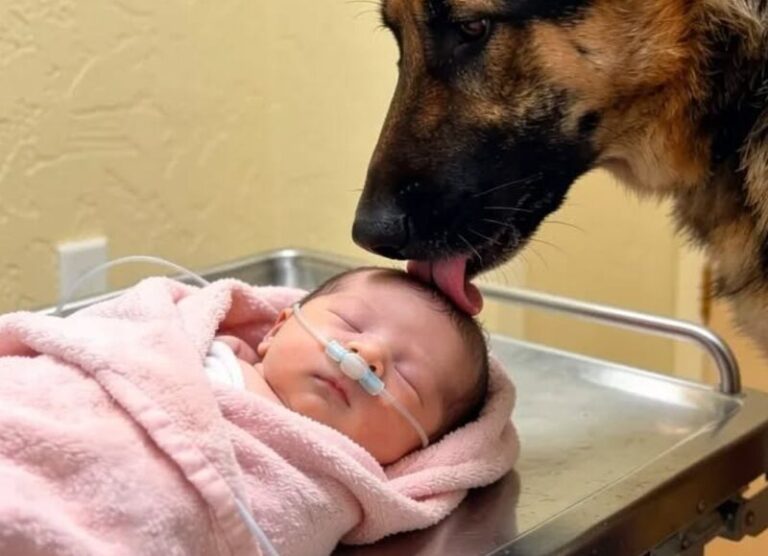
The hospital room was filled with the quiet rhythm of machines, each beep marking the fragile state of a six-month-old baby named Lucas. For his mother, Sarah, those sounds had become unbearable over time. They were no longer just medical signals—they felt like reminders that every passing second could be the last chance her son had at life. She sat beside his small crib constantly, holding his tiny hand and watching for even the slightest movement.
Doctors had been honest with her from the beginning, explaining that Lucas’s condition was critical and not responding as hoped. Despite the advanced care and constant monitoring, his body was struggling. Eventually, a conversation came that shattered what little hope she had left. Medical staff explained that continuing aggressive treatment might no longer change the outcome. To Sarah, those words felt like an ending she was not ready to accept.
Even after being told there was little more that could be done, she refused to let go emotionally. She stayed close to Lucas day and night, believing that presence alone still mattered. Every breath he took became something she observed with intense focus. In her mind, as long as he was still fighting, she would fight too. That emotional bond became stronger than any medical explanation offered to her.
Outside the hospital environment, Lucas had another source of comfort—Rex, a German Shepherd known for his calm and protective nature. Rex had been part of Lucas’s daily life since birth, often lying near his crib and reacting instantly whenever the baby cried or became restless. The bond between them had become natural and deeply emotional, something Sarah often described as instinctive connection rather than simple companionship.
When Lucas was admitted to the hospital, Rex was left behind due to strict medical facility regulations. The separation affected him noticeably. According to Sarah, the dog became restless at home, pacing near doors and reacting to sounds that reminded him of Lucas. His behavior suggested confusion and concern, as if he understood that something had changed in the household dynamic.
As Lucas’s condition worsened, Sarah became convinced that Rex’s presence might offer emotional comfort that no medical equipment could provide. However, hospital rules strictly prohibited animals inside critical care areas. The administration emphasized hygiene protocols, patient safety, and strict regulatory compliance. Despite repeated emotional appeals, Sarah’s request to bring Rex inside was denied.
Faced with emotional desperation, Sarah eventually received quiet support from a nurse who sympathized with her situation. With the help of Rex’s handler, a carefully coordinated decision was made to bring the dog into the hospital without official authorization. The intention was not disruption, but comfort—allowing a final moment of connection between a child and his companion.
When Rex finally entered the hospital room, his behavior immediately changed. Instead of approaching Lucas calmly as expected, he stopped and scanned the room with unusual intensity. His posture became alert, his movements precise. He circled slowly, focusing not on the baby first, but on specific areas of the environment, particularly near medical equipment and supply bags.
The atmosphere in the room shifted quickly. What had begun as an emotional reunion turned into something tense and uncertain. Rex began reacting to specific objects with growing urgency, including scratching near feeding equipment and staring intensely at a section of the wall beside Lucas’s crib. His behavior suggested detection of something abnormal rather than simple emotional response.
A handler present in the room immediately recognized that this was not ordinary behavior. German Shepherds trained for protection and detection often respond to environmental changes that humans cannot perceive easily. Rex’s actions suggested he was reacting to a potential threat rather than emotional distress.
Moments later, hospital staff entered after being alerted to the unauthorized presence of the animal. Before the situation could be resolved, a sudden technical issue emerged inside the room. Lights flickered, alarms briefly triggered, and a faint burning smell began spreading. Medical personnel quickly realized that an electrical malfunction was occurring behind the hospital wall.
Technicians were called immediately. Upon inspection, they discovered overheating within hidden electrical wiring systems that could have led to a serious fire if left undetected. The malfunction posed a risk not only to Lucas’s room but to the surrounding pediatric unit. Rex’s persistent focus on that exact area suddenly gained new meaning.
At the same time, further investigation into the medical environment revealed irregularities in some of the feeding supplies stored in the unit. Certain batches showed signs of contamination concerns that required urgent review. Hospital staff acted quickly to remove potentially affected materials and reassess treatment procedures for vulnerable patients, including Lucas.
Lucas was immediately transferred to a safer monitored environment as doctors adjusted his treatment plan. For Sarah, the emotional weight of the situation was overwhelming. She had entered the day believing she might lose her son, yet suddenly found herself in the middle of a rapidly unfolding medical and safety investigation.
Over the following hours, Lucas’s condition began to show subtle but important signs of stabilization. While doctors remained cautious, the improvement was enough to justify continuing treatment. For Sarah, even the smallest positive change felt like a reversal of the devastating outcome she had been preparing for.
The hospital incident triggered a full internal review. Investigations were launched into both the electrical failure and the supply contamination concerns. Administrators and external partners involved in hospital logistics faced scrutiny regarding maintenance, oversight, and safety compliance procedures.
Amid the investigation, Rex’s role became a central point of discussion among hospital staff. Many who initially viewed his presence as a violation of protocol began reconsidering his behavior in light of what had been discovered. His reactions appeared to align precisely with the hidden dangers that were only uncovered after his arrival.
For Sarah, the experience changed everything she believed about intuition, connection, and persistence. What had begun as a moment of despair transformed into a sequence of events that potentially prevented a far worse outcome. She no longer viewed Rex as just a pet, but as an active presence in her son’s survival journey.
In the days that followed, Lucas continued to recover under close supervision. The hospital environment stabilized after repairs and safety corrections were implemented. The investigation continued, but for Sarah, the focus shifted entirely to her son’s gradual improvement and recovery milestones.
The emotional impact of the event remained strong for everyone involved. Medical staff, technicians, and family members reflected on how multiple failures and hidden dangers were uncovered in such a short time. The situation reinforced how unpredictable critical care environments can sometimes be.
Ultimately, what remained most powerful in the story was not technology or medical intervention alone, but the unexpected chain of events triggered by instinct and observation. Rex’s behavior, though initially misunderstood, became part of a sequence that led to critical discoveries inside the hospital.
For Sarah, the experience left a lasting belief that awareness can come from unexpected places. In her case, it was not only trained professionals or advanced systems that revealed danger—but a loyal German Shepherd whose instinctive behavior helped uncover problems no one else had noticed in time.

